
Why Do My Cookies Spread Flat? Butter, Sugar, and Chill Time
Quick diagnosis: Flat cookies almost always trace to two things: butter that was too warm and dough that went into the oven unchilled. If your butter looked shiny or greasy before mixing and you skipped the chill, those two alone explain the pancake. Fix them first — they solve 8 out of 10 flat-cookie cases.
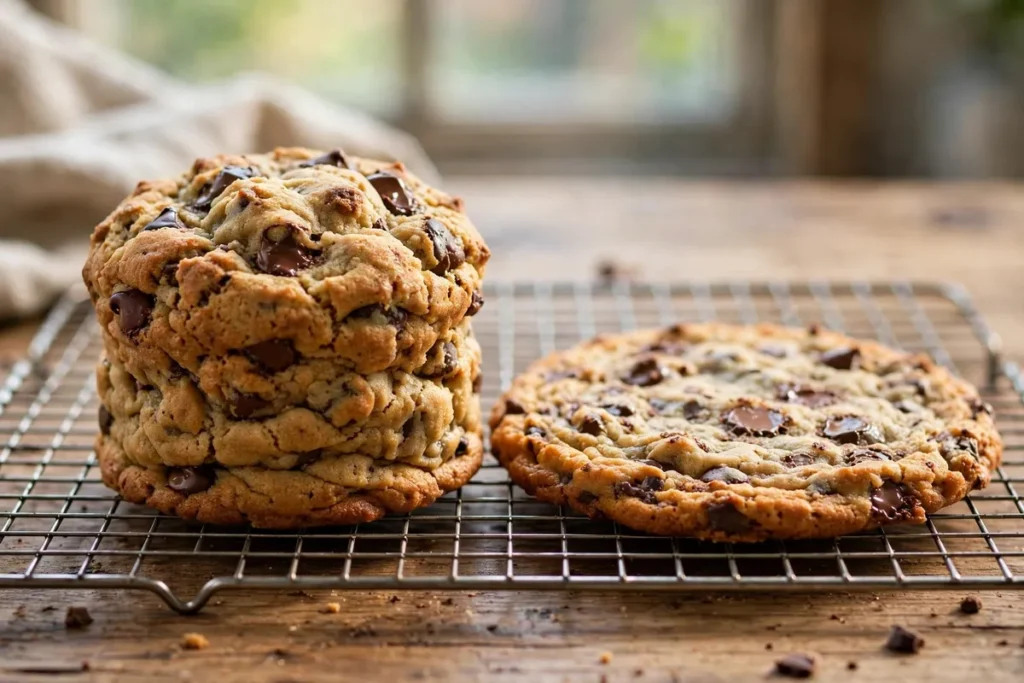
Cookie spread is a race: fat melts and sugar liquefies, pushing the dough outward, while heat sets the structure and stops the flow. A thick cookie is simply dough whose structure set before it could travel far. Every cause below is a lever on that race — slow the melt, speed the set, and your cookies stay tall.
1. The butter was too warm (or melted)
The number one cause, and the one I see most in reader photos. Butter for cookies should be softened — cool to the touch at 65–68°F (18–20°C), holding its shape but giving slightly when pressed. Melted or greasy-warm butter is already liquid, so it starts flowing the second the dough hits the oven, long before the structure sets.
How to tell: Think back to mixing. Did the butter look shiny, slump in the bowl, or leave a grease slick? Did the creamed mixture look more like a batter than a fluffy paste? That’s too-warm butter.
The fix: Cut cold butter into cubes and let it sit 30–45 minutes — no microwaving, no warm spots. Cream it with sugar 2–3 minutes until light and fluffy, not soupy. When I deliberately baked one batch with melted butter against a properly creamed control, the melted-butter batch spread nearly twice as wide.
2. Too much white sugar (wrong sugar ratio)
White sugar melts cleanly and encourages spread. Brown sugar contains molasses, which is hygroscopic — it holds onto moisture — so it spreads less and bakes up chewier and thicker. A recipe heavy on white sugar will always spread more than one leaning on brown.
How to tell: Compare your recipe’s sugar ratio. If it’s all white sugar, or white outnumbers brown two-to-one, sugar is contributing to the spread.
The fix: Shift the ratio toward brown sugar — try replacing a quarter to half of the white sugar with packed brown sugar. You’ll get thicker cookies with chewier centers and a deeper flavor. This is also the single biggest lever if you want chewy rather than crisp cookies (more on that in Why Are My Cookies Cakey Instead of Chewy?).
3. The dough wasn’t chilled
Chilling firms the butterfat back up so it melts slowly in the oven instead of all at once. It also hydrates the flour, which means less free moisture and better flavor. Skipping the chill is the fastest way to turn a good recipe flat.
How to tell: Did the scooped dough feel soft and room-temp when it went onto the tray? That’s unchilled dough.
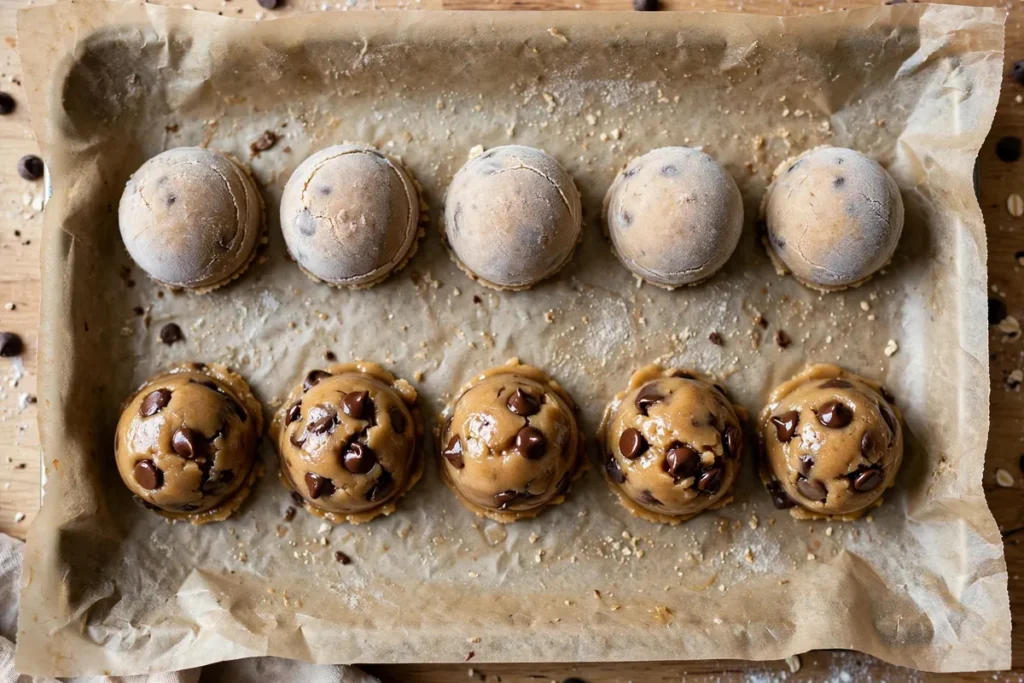
The fix: Chill scooped dough balls at least 30 minutes; an hour is better, and overnight develops noticeably deeper flavor. Keep a tray of portioned dough in the fridge and bake straight from cold — the difference in height is dramatic. If you’re in a hurry, 20 minutes in the freezer works as an emergency chill.
4. The oven ran too cool
Spread happens while the fat is melting but the structure hasn’t set. A cool oven stretches that window — the fat liquefies fully while the proteins and starches are still catching up, so the dough flows outward for longer. Most home ovens run 15–25°F off, usually cool.
How to tell: Cookies took longer than the recipe’s time range and still look pale, or everything you bake seems to need “a few more minutes.”
The fix: Verify with an oven thermometer — they’re cheap and every serious baker owns one. Most drop cookies want 350°F (175°C); for extra-thick cookies, 375°F (190°C) sets the edges faster. Preheat fully, a full 15–20 minutes past the beep.
5. The baking sheet was warm (or greased)
Dough placed on a warm tray starts melting on contact — the bottoms liquefy before the oven heat even reaches the tops. And greasing the sheet, an old habit from the shortening era, actively encourages spread. Modern nonstick or parchment-lined sheets need no grease at all.
How to tell: The first tray spread fine but the second batch — scooped onto the still-warm tray — went flat. Or you greased the pan “just in case.”
The fix: Cool trays completely between batches (run cool water over the back, dry thoroughly), and line with parchment instead of greasing. Use light-colored aluminum sheets; dark pans absorb more heat and over-brown bottoms while encouraging spread.
6. Too little flour went in
Flour is the structure that stops the flow. Under-measure it and there’s nothing to hold the dough’s shape. The classic error is scooping the cup straight from the bag, which compacts flour — except here the danger is the reverse: a hurried, heaped-then-shaken scoop that actually delivers less than a proper measure, or a recipe developed with weighed flour that you cup-measured loosely.
How to tell: The dough felt slack, sticky, or batter-like rather than a firm scoopable dough.
The fix: Weigh flour — 120g per cup, spooned and leveled if you must use cups. If the dough seems slack, add flour one tablespoon at a time until scoops hold a clean dome. Don’t overdo it; past the right point you trade spread for dryness.
7. Too much baking soda
Baking soda is alkaline. It raises dough pH, which weakens gluten slightly, speeds browning, and — crucially — encourages spread. A heavy hand with soda gives thin, lacy cookies with a soapy aftertaste. (Baking powder, which contains its own acid, puffs upward instead — that’s why cakey-cookie recipes lean on powder.)
How to tell: Cookies spread excessively AND taste faintly soapy or metallic, with very dark, lacy edges.
The fix: Measure soda precisely — most drop-cookie doughs use about 1 teaspoon per 2¼ cups of flour. Level the spoon. If your recipe already spreads well, don’t “add a little extra for lift”; extra soda buys spread, not height.

Can I rescue the flat batch?
Yes — the cookie scoot. While the cookies are still hot and pliable on the tray, take a round cookie cutter slightly larger than the cookie, place it over each cookie, and swirl gently. The cutter tucks the spread edges back under, and as the cookie cools it holds a thicker, rounder shape. It won’t fix the texture completely, but it turns pancakes into presentable cookies. I use this on every imperfect batch.
FAQ
Are flat cookies safe to eat?
Yes, completely. Spread is a texture issue, not a safety one. As long as the centers are set — no wet, raw-looking dough — flat cookies are fine to eat. They’ll be crisper and more caramelized than intended, which some people actually prefer.
Can I fix cookies that already spread too much?
While they’re hot, yes: use the cookie scoot described above — a round cutter swirled around each warm cookie pulls the edges back in. Once fully cooled and set, the shape is permanent, so work fast, within 2–3 minutes of leaving the oven.
Does chilling the dough really make that much difference?
More than any other single step. In side-by-side tests, chilled dough bakes up visibly thicker with better flavor (the resting flour hydrates fully). Thirty minutes is the minimum useful chill; overnight is the gold standard. It’s the highest-return habit in cookie baking.
Should I use melted or softened butter for thick cookies?
Softened, always, for thick cookies. Melted butter is a legitimate choice when you want thin, chewy, toffee-edged cookies — many excellent recipes use it deliberately. But if your goal is height, melted butter works against you from the first minute.
Why did my second tray spread when the first was fine?
The tray was still warm. Dough hitting a hot sheet starts melting on contact. Cool the sheet completely between batches, or rotate between two sheets so one is always cooling while the other bakes.
Do silicone baking mats cause more spreading?
Slightly, sometimes — silicone insulates, so bottoms set a touch slower. The effect is small compared to butter temperature and chilling. Parchment on a light aluminum sheet is the most predictable setup; if you love your mat, add 5 extra minutes of chill to compensate.
Related troubleshooting: Why Are My Cookies Cakey Instead of Chewy? · Puff Pastry Not Puffing: Lamination Mistakes to Avoid