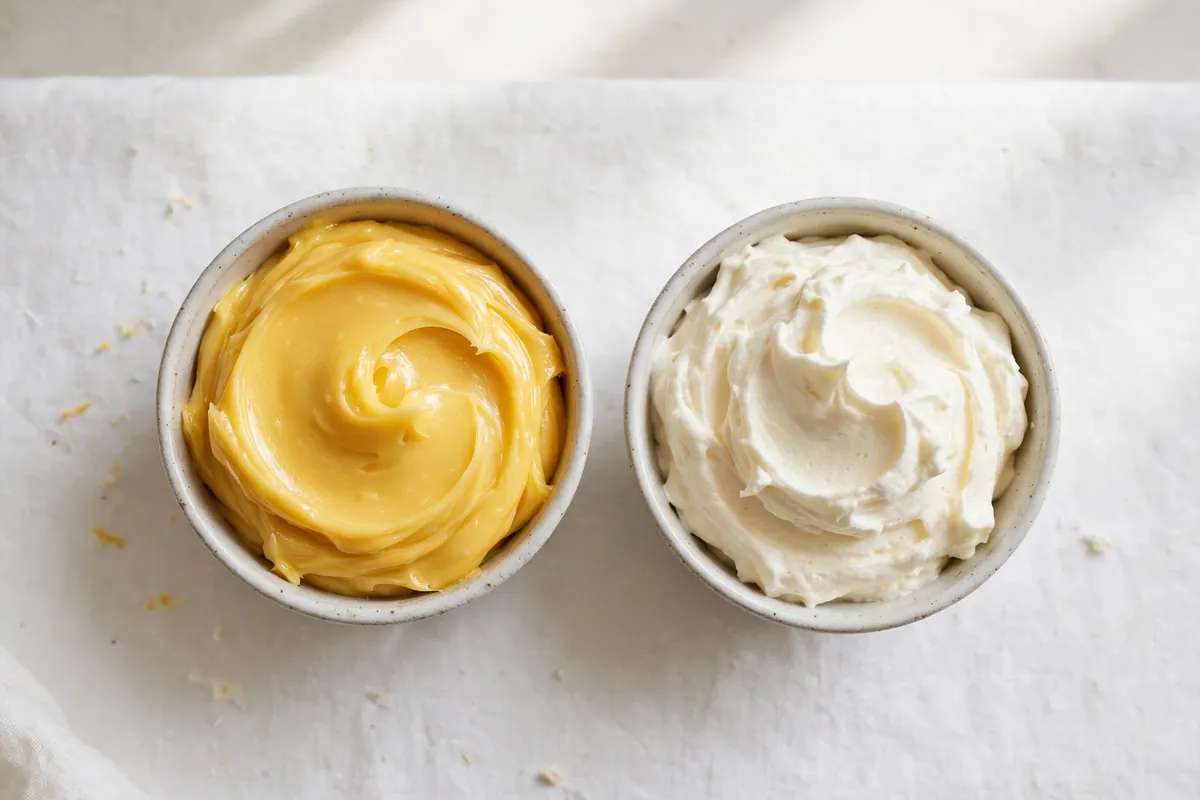
You followed the recipe exactly — butter, powdered sugar, a splash of milk — and the result tastes like sweetened butter rather than frosting. The problem isn’t your palate. It’s a balance problem, and buttercream balance is fixable with a short list of adjustments that professionals use every day.
Quick diagnosis: Butter-forward frosting comes down to three things in nearly every case: the butter-to-sugar ratio skewed buttery, no salt to frame the sweetness, and butter that was too warm when mixed. If you used equal parts butter and sugar by volume, skipped the salt, and the butter was soft and shiny — start with fixes #1, #2, and #3.
Buttercream is an emulsion of fat, sugar, and a little liquid. When the fat shouts and the sugar whispers, you taste butter. Every fix below turns down the fat’s volume or turns up everything else.
1. The ratio skewed buttery
American buttercream lives or dies on ratio. The classic working ratio is roughly 1 part butter to 2 parts powdered sugar by weight — for example, 225g (2 sticks / 1 cup) butter to 450g (about 3¾ cups spooned) powdered sugar. Many home recipes drift buttery: “1 cup butter, 2 cups sugar” by volume is far less sugar than it sounds, because powdered sugar is light — 2 volume cups is only about 250g. That’s nearly 1:1 by weight, and at 1:1 you taste butter with sugar in it, not frosting.
How to tell: Compare your recipe by weight, not volume. If butter and sugar are close to equal in grams, the ratio is the problem.
The fix: Rebalance to 1:2 by weight. If the frosting is already made, beat in sifted powdered sugar ¼ cup at a time until the butter recedes — taste after each addition. You’re done when sweetness leads and butter supports.
2. You skipped the salt
Salt doesn’t make frosting salty — at the right dose, it makes frosting taste more like itself. A pinch of salt suppresses the flat, fatty perception of butter and sharpens sweetness, the same way salted caramel reads sweeter than plain caramel. Unsalted butter plus no added salt is the double fault behind most butter-bomb frostings.
How to tell: The frosting tastes rich and coating but oddly bland — buttery without brightness.
The fix: Add ¼ teaspoon fine salt per batch (per ~450g sugar), beat 30 seconds, and taste. The change is immediate: the butter steps back, the vanilla and sweetness step forward. If you used salted butter, skip this — but most recipes (correctly) call for unsalted.
3. The butter was too warm
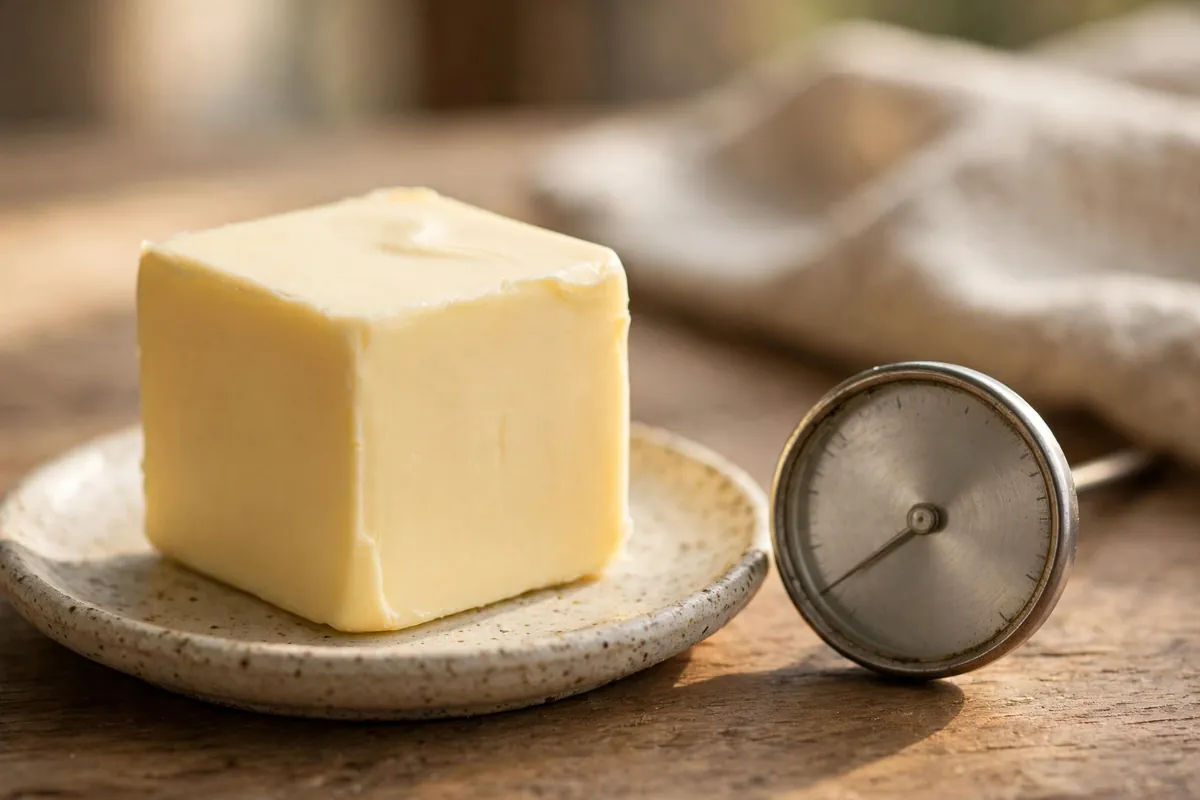
Butter at 65–68°F (18–20°C) creams into a fluffy, aerated base. Butter that’s soft, shiny, or greasy — 75°F+ (24°C+) — can’t hold air. It mixes into a dense, slick paste that coats the tongue with fat instead of melting into sweetness. Warm-butter frosting always tastes more buttery because, physically, more of it is liquid fat on your palate.
How to tell: The butter looked glossy or slumped before mixing, and the finished frosting feels greasy rather than fluffy.
The fix: If it’s already made, chill the bowl 15–20 minutes, then re-whip — cold firms the fat and whipping re-aerates it. Next time, use butter that’s cool to the touch and holds its shape when pressed. (The same temperature discipline that keeps cookies from spreading flat keeps frosting fluffy.)
4. Not enough liquid or flavoring
Buttercream needs a small amount of liquid — 1–2 tablespoons of heavy cream or milk per batch — and real flavoring. Without them, there’s nothing in the bowl except butter and sugar, and butter wins that fight. Vanilla extract (1–2 teaspoons) doesn’t just add vanilla notes; its alcohol carries aroma and its flavor complexity distracts from pure fat.
How to tell: The ingredient list is three lines long and the frosting tastes one-dimensional.
The fix: Beat in 1 tablespoon heavy cream and 1 teaspoon vanilla, then taste. Cream adds milk solids and water that lighten the fat’s grip; vanilla adds the aromatic top notes your nose reads as “frosting.” Cocoa powder works the same way for chocolate buttercream — ¼ to ½ cup sifted cocoa transforms the balance entirely, which is why chocolate frosting rarely has this problem.
5. It wasn’t beaten long enough
Under-beaten buttercream is dense, and dense reads as fatty. Proper beating — 3–5 minutes after the sugar is incorporated, on medium-high — whips microscopic air into the emulsion. Air is flavorless, which is exactly the point: it dilutes the butter’s presence on the tongue and turns the texture from paste to cloud.
How to tell: The frosting is smooth but heavy, with no lightness when you lift the beater.
The fix: Beat it longer. Seriously — most home bakers stop a full two minutes early. The frosting should visibly lighten in color (pale ivory, not yellow) and hold soft, billowy peaks. If it was made with warm butter, chill first (fix #3), then beat.
6. Consider a less buttery style
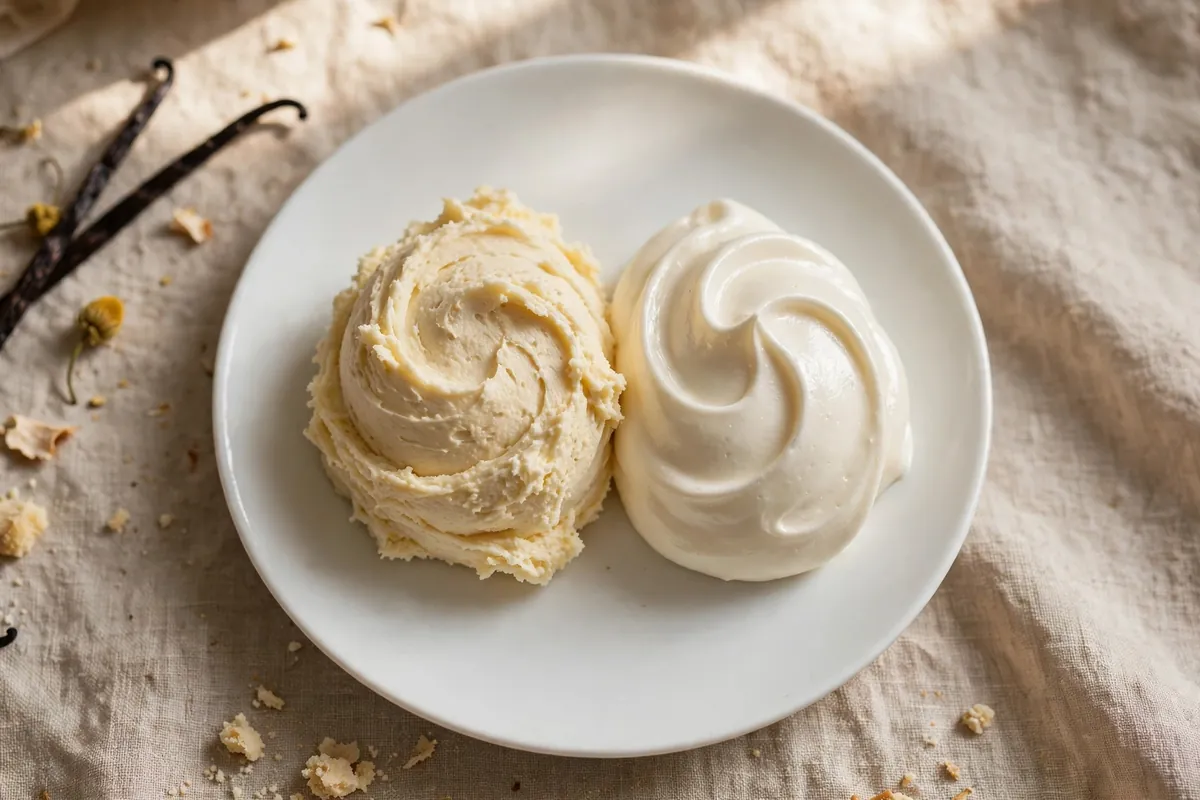
If you’ve fixed the ratio, salt, temperature, and beating and it still tastes too buttery for your liking, the issue may be the style itself. American buttercream is the most butter-forward frosting in existence by design. Two alternatives:
- Swiss meringue buttercream: egg whites and sugar heated to 160°F (71°C), whipped to meringue, then butter beaten in. The meringue structure means less butter per bite and a silkier, less fatty mouthfeel. More work, completely different eating experience.
- Cream cheese frosting: the tang of cream cheese cuts through butterfat like nothing else. For anyone who finds plain buttercream cloying, this is usually the real answer — which is also why dairy-free frosting recipes lean on tangy or chocolate bases rather than pure fat.
Frequently Asked Questions
Can I fix frosting that’s already made and tastes like butter?
Yes — beat in sifted powdered sugar ¼ cup at a time, add ¼ teaspoon salt and 1 teaspoon vanilla, and re-whip for 2–3 minutes. If it was made with warm butter, chill the bowl 15–20 minutes first. These three moves rescue nearly every butter-bomb batch.
Does using less butter and more sugar make it too sweet?
It can, which is why salt matters so much — salt lets you carry more sugar without the frosting reading as cloying. The 1:2 butter-to-sugar ratio by weight with ¼ teaspoon salt is the tested sweet spot: sweet-led, buttery-supported, not saccharine.
Why does my frosting taste buttery even though I followed the recipe?
Most likely the recipe measured by volume, where “1 cup butter, 2 cups sugar” is nearly 1:1 by weight — far more butter-forward than it looks on paper. Convert to weight (225g butter : 450g sugar) and the problem usually disappears.
Is European-style butter worse for frosting?
It has more butterfat (82–86% vs ~80%), so yes — it tastes more buttery in American buttercream. It’s wonderful for flavor in cakes and pastry, but for frosting where butter is already the risk, standard butter gives you more control.
Should frosting be served cold or room temperature?
Room temperature, always. Cold firms the butterfat, which mutes sweetness and emphasizes the fatty mouthfeel — the exact problem you’re fixing. Pull the frosted cake from the fridge 30–60 minutes before serving.
Can I just use all shortening instead of butter?
You can, and it eliminates butter flavor entirely — but shortening has its own waxy mouthfeel and no flavor of its own, so the frosting tastes purely of sugar. A half-butter, half-shortening split is the common compromise: butter flavor present but restrained, with better heat stability.
Related troubleshooting: Dairy-Free Frosting That Holds Its Shape · Why Are My Cookies Cakey Instead of Chewy? · Why Does My Frosting Taste Like Butter?