How to Freeze Cookie Dough (and Bake It Straight From Frozen)
Quick diagnosis: Scoop the dough into balls FIRST, freeze them solid on a tray (1–2 hours), then bag them airtight. Bake straight from frozen at the recipe’s temperature, adding 1–3 minutes. Never thaw on the counter first — thawed dough spreads flat. Frozen dough keeps 3 months at peak quality.
There’s a special kind of magic in pulling warm cookies from the oven on a Tuesday night with zero prep. Freezing cookie dough is how you get there — a stash of portioned dough in the freezer means fresh-baked cookies in under 20 minutes, any day, with no mixing bowls to wash. I’ve kept a running freezer stash for years, and the method below is the one that survives every dough type I throw at it.
Which cookie doughs freeze best (and which don’t)
Freeze beautifully: drop-cookie doughs (chocolate chip, oatmeal, peanut butter, double chocolate), slice-and-bake/shortbread logs, snickerdoodles. These are sturdy, high-fat doughs whose structure doesn’t depend on delicate foams.
Freeze fine with care: sugar-cookie dough for cutouts (freeze as a flattened disc, roll and cut after a 10-minute counter rest), gingerbread, thumbprints (freeze the balls plain; add the jam or Hershey’s kiss after baking — fillings get weepy in the freezer).
Don’t freeze: meringue-based doughs (they weep and collapse), very delicate lace cookies (Florentines — the caramelized sugar goes sticky), and anything with a fresh-cream filling. These are bake-fresh-only cookies.
The rule of thumb: if the dough is scoopable or sliceable and leavened with baking soda or powder, it freezes. If its texture depends on whipped egg whites or paper-thin caramel, it doesn’t.
Step 1: Portion before you freeze
This is the step people skip, and it’s the whole game. Frozen dough is nearly impossible to portion — you’ll be chiseling at a rock with a knife, which is how countertops get scarred and tempers get lost.
Scoop the fresh dough into balls exactly as you would for baking (a #20 scoop, about 3 tablespoons, for standard cookies). For slice-and-bake logs, shape the log, wrap it, and freeze the whole log — slice while still frozen, which is actually easier than slicing soft dough.
Step 2: Flash-freeze on a tray
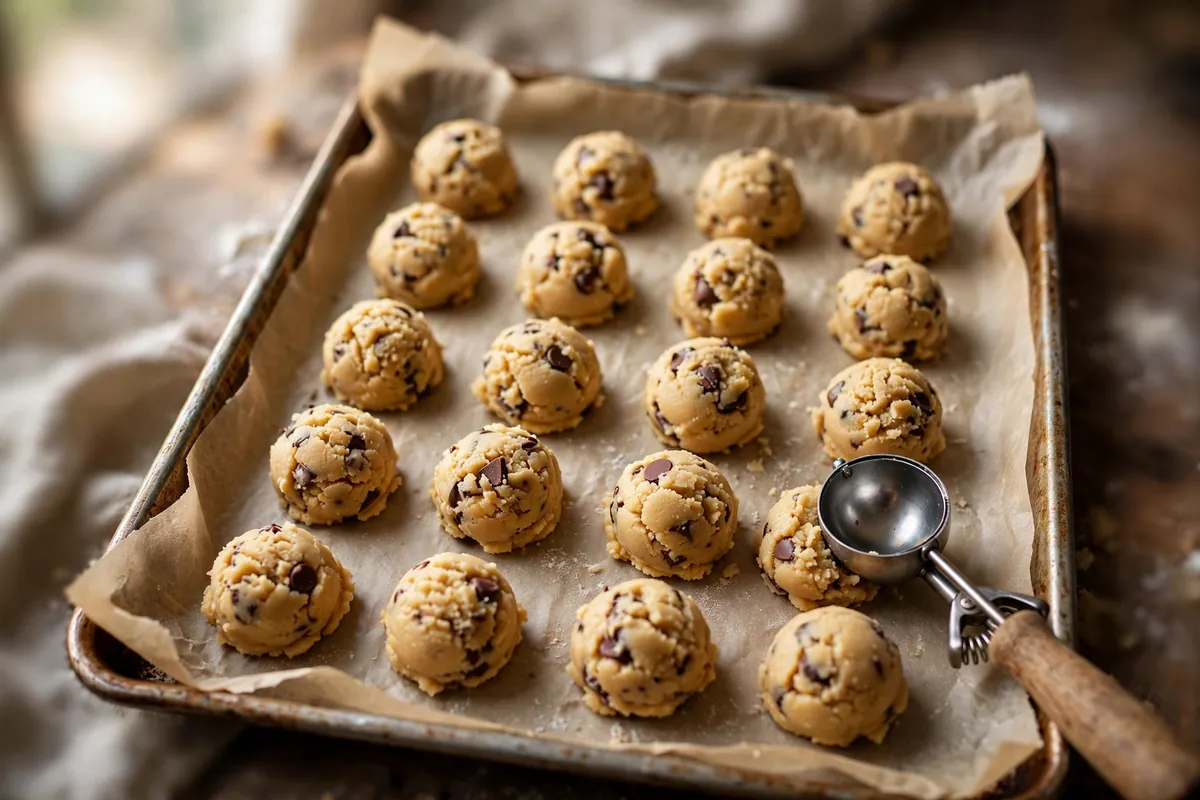
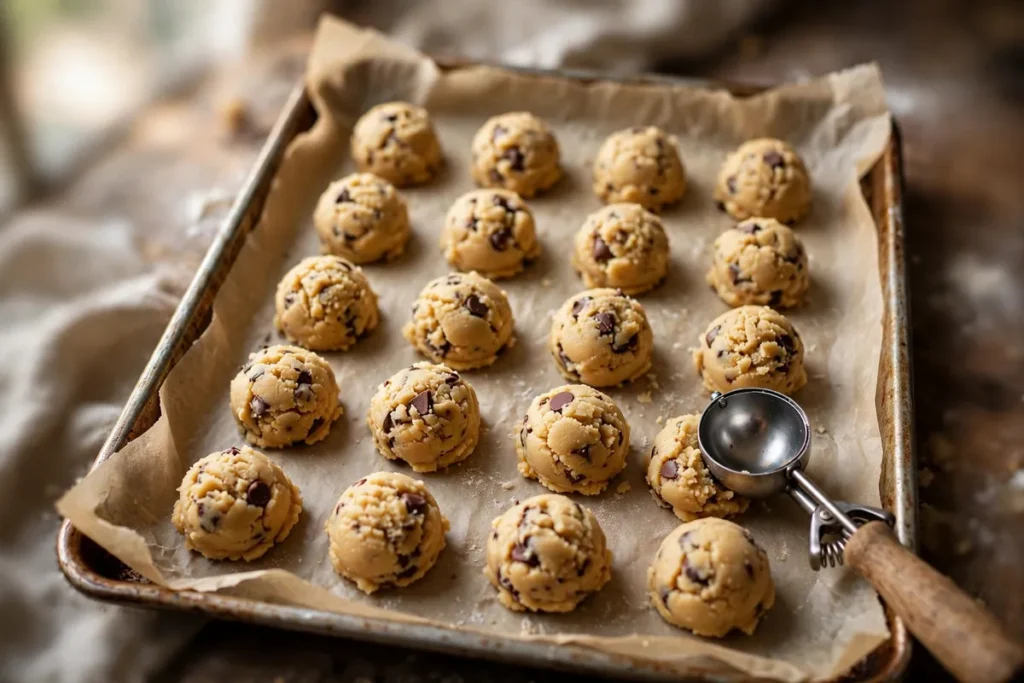
Spread the portioned balls on a parchment-lined sheet pan with space between them and freeze uncovered for 1–2 hours, until rock solid. This is called flash-freezing, and it keeps the balls from fusing into one dough boulder in the bag.
Skip this step and bag soft dough, and you’ll pull out a single inseparable mass. Flash-freezing means every ball stays individual — grab exactly as many as you want, any time.
Step 3: Pack it airtight
Transfer the frozen balls to a heavy-duty freezer bag. Press out as much air as possible before sealing — air is what causes freezer burn, those dry gray patches that taste like the freezer smells. For extra insurance on dough you’ll keep past a month, wrap the bag’s contents in a second bag or a layer of plastic wrap.
Label everything: dough type, date frozen, bake temp, and bake time. Frozen dough balls all look identical after a month. A strip of masking tape and a marker takes ten seconds and saves you from the mystery-bag gamble. I write it like this: “Choc chip — 1/12 — 350°F — 11–13 min +2 frozen.”

How long frozen dough keeps
At 0°F (-18°C) or below, portioned cookie dough holds peak quality for 3 months. It’s still safe well past that — frozen food doesn’t spoil — but quality slides: fats pick up off-flavors, leaveners lose punch, and the baked texture gets progressively flatter and duller. My rule: if it’s been 4+ months, bake a test batch of two before committing to a full tray.
Keep the freezer at a steady 0°F. A freezer that’s constantly opened (or a frost-free model cycling through defrost) shortens the window — store dough in the coldest, least-disturbed spot, usually the back.
Baking straight from frozen: the method
Here’s the payoff. No thawing, no planning ahead.
- Heat the oven fully — a full 15–20 minutes past the preheat beep. Frozen dough hitting a half-hot oven spreads before it sets (the same too-cool-oven problem behind flat cookies).
- Place frozen balls on a parchment-lined sheet, spaced as the recipe directs. They go on the tray frozen solid, straight from the bag.
- Bake at the recipe’s temperature — don’t raise it. The frozen center needs steady heat, not a blast.
- Add 1–3 minutes to the recipe’s bake time. Start checking at the original time; most doughs need just 1–2 extra minutes. The visual cues don’t change: set edges, slightly underdone-looking centers.
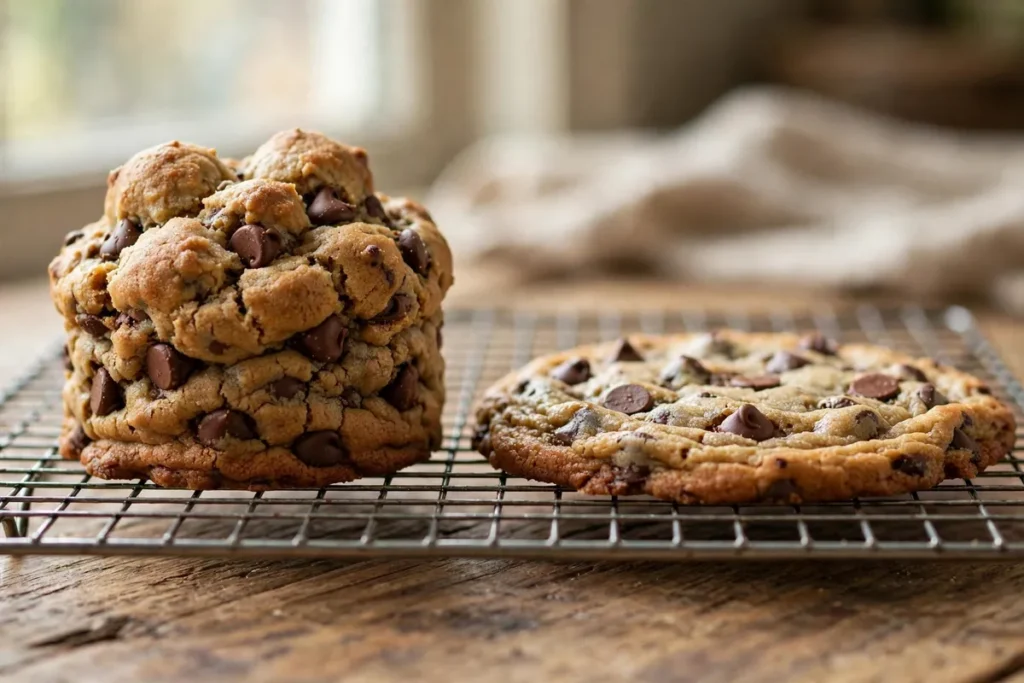
The result is arguably better than fresh dough: baking from frozen gives thicker cookies with chewier centers, because the fat melts slowly while the structure sets — the same principle as chilling dough, taken further. Frozen versus fresh batches side by side: the frozen batch consistently comes out taller.
Thaw-first vs. bake-from-frozen
You’ll see advice to thaw dough in the fridge overnight. Here’s my honest take after testing both: thawing works, but it’s strictly worse. Thawed dough is soft dough — it spreads more, bakes up thinner, and you’ve added 8+ hours of planning for a worse cookie.
The one exception: slice-and-bake logs and cutout sugar cookies. A log that’s rock solid is hard to slice cleanly — give it 10 minutes on the counter, no more, just until the knife goes through. Cutout dough needs a brief rest to become rollable. Everything scoopable goes in frozen.
The 5 mistakes that ruin frozen dough
- Freezing unportioned dough. The chisel problem. Always portion first.
- Skipping the flash-freeze. One fused dough boulder instead of grab-and-go balls.
- Thin bags with air inside. Freezer burn in weeks. Press the air out; double-bag for long storage.
- No labels. Mystery dough is how good cookies go unbaked. Date, type, temp, time.
- Thawing on the counter. Room-temp thaw = soft dough = flat cookies. Bake from frozen or don’t bother.
Frequently asked questions
Can you bake cookie dough from frozen without thawing?
Yes — that’s the best method. Place frozen dough balls directly on a parchment-lined sheet, bake at the recipe’s temperature, and add 1–3 minutes. The cookies come out thicker than from fresh dough because the fat melts slowly while the structure sets.
How long does cookie dough last in the freezer?
Peak quality for 3 months at 0°F (-18°C). It’s safe beyond that, but fats absorb off-flavors and leaveners weaken, so texture declines. Bake a 2-cookie test batch before committing a full tray of older dough.
Should you thaw frozen cookie dough before baking?
No, for drop cookies — thawing makes the dough soft, which causes spreading. The only doughs that need a brief rest are slice-and-bake logs (10 minutes, for clean slicing) and cutout sugar cookie dough (10 minutes, to become rollable).
Can you freeze cookie dough with raw eggs in it?
Yes. The eggs are fully incorporated into the dough and will be baked to a safe internal temperature. Standard food-safety guidance applies: keep the dough frozen solid until baking, and don’t refreeze thawed raw dough.
Does freezing change how cookies taste?
Properly packed dough (airtight, 3 months or less) bakes up indistinguishable from fresh — in blind tests, tasters actually preferred the frozen-baked batch for thickness. Poorly packed dough (air exposure, 5+ months) picks up stale, flat flavors. The packing matters more than the freezing.
Can you refreeze cookie dough?
Don’t refreeze thawed raw dough — each freeze-thaw cycle degrades texture and raises food-safety questions. But you can absolutely bake thawed dough and then freeze the baked cookies, which keep 2–3 months airtight.
Related troubleshooting: Why Do My Cookies Spread Flat? · Why Are My Cookies Cakey Instead of Chewy? · How to Store Homemade Bread So It Stays Fresh for Days