Sourdough Starter Smells Like Acetone — What It Means and the Fix
Quick diagnosis: That sharp, nail-polish-remover smell is alcohol and acetic acid produced by a hungry starter — it has run out of food and is telling you so. Your starter is not ruined. Stir the dark liquid back in (or pour it off), discard down to a spoonful, and feed it a generous meal. Two to three days of proper feeding and it’ll smell yeasty and sweet again.

Open your starter jar and get hit with acetone instead of that pleasant yeasty tang, and it’s natural to panic. But this smell is one of the most common and most fixable starter issues there is. Here’s exactly what’s happening and the feeding protocol that fixes it.
What the acetone smell actually is
A sourdough starter is a culture of wild yeast and lactic acid bacteria living in flour and water. When they’re well fed, they produce CO₂ (the rise), mild lactic acid (the tang), and pleasant estery aromas. When the food runs out, the yeast switches to survival metabolism and produces ethanol and acetic acid in larger quantities — and acetic acid at concentration smells sharply like acetone or nail polish remover.
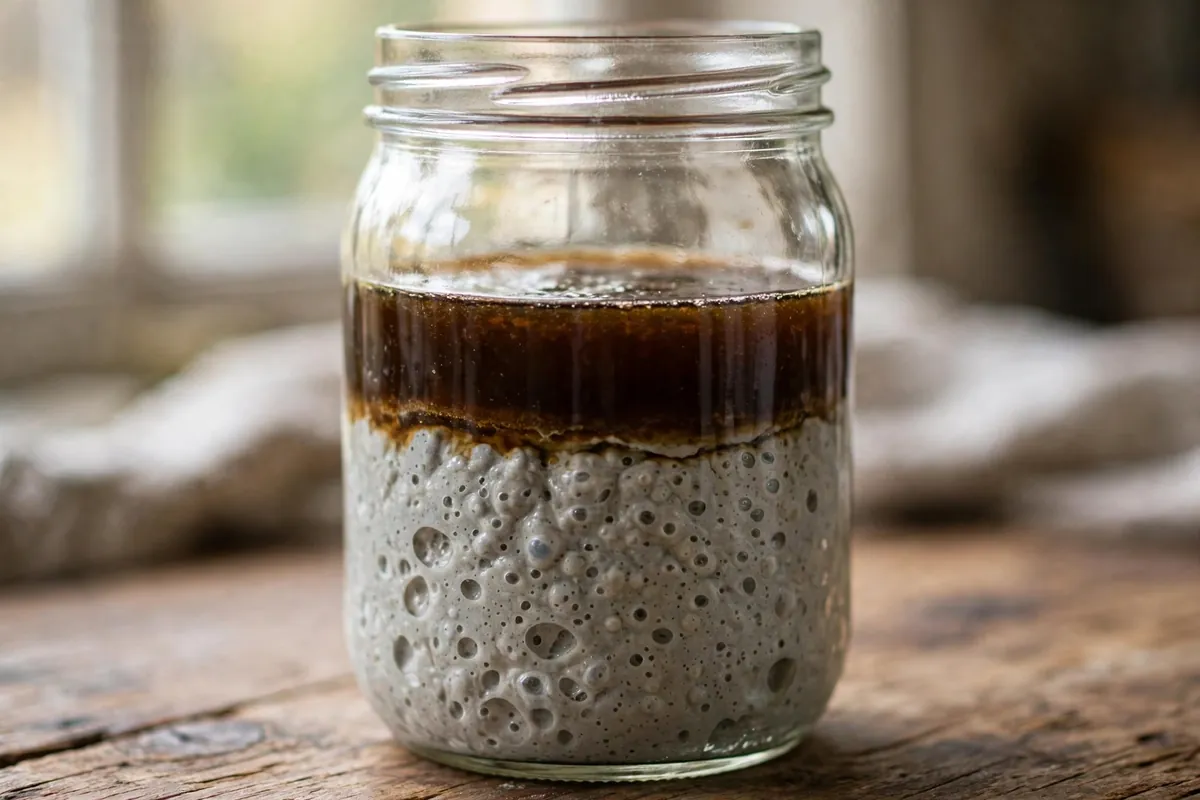
You’ll often see a dark liquid on top too. That’s hooch — mostly alcohol — and it’s part of the same story: hunger, not death. The culture is dormant and stressed, not gone.
Why it happens
Three triggers, usually in combination:
- Too long between feeds. A room-temperature starter burns through its flour in 8–12 hours. Miss a day or two and it’s starving.
- A warm kitchen. Heat accelerates fermentation — at 80°F+ (27°C+) a starter can go from fed to famished in half the usual time. Summer neglect produces acetone smell fast.
- Too small a feed. Feeding 1:1:1 (equal parts starter, flour, water by weight) gives a small meal that runs out quickly. In warmth, or after neglect, the culture needs a bigger ratio.
Is my starter ruined? (Probably not — check this)
Hooch plus acetone smell = hungry, salvageable. There is exactly one thing that means discard: pink, orange, or red streaks, or any fuzzy mold (white, green, black fuzz). That’s contamination, and no feeding fixes it — throw it out, sterilize the jar, and start fresh. Everything else — dark liquid, sharp smell, grayish color, sluggish rise — is recoverable.
One more reassurance: the acetone smell itself is not a safety issue. You’re smelling volatile acids and alcohol, the same compounds (at lower levels) that give sourdough its characteristic tang. Once the starter is fed and active again, the smell normalizes.
The fix: a 3-day revival feeding protocol
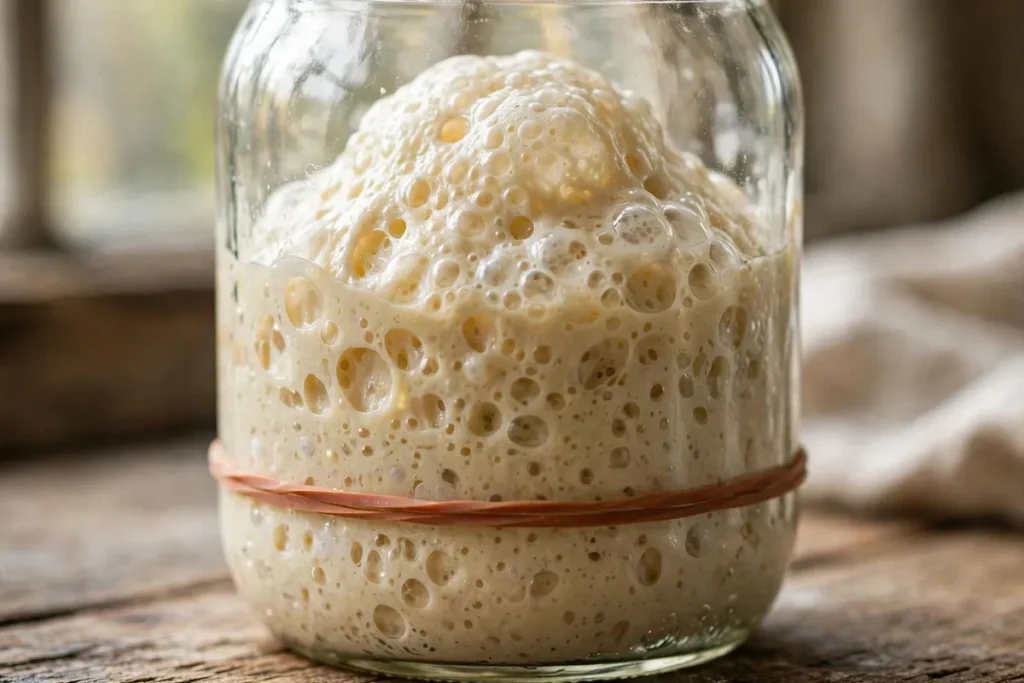
Day 1 — the reset feed. Pour off the hooch or stir it in (pouring off slightly reduces acidity; stirring in keeps hydration stable — either is fine). Discard all but about a tablespoon of starter, then feed it generously: 1 part starter to 3 parts flour to 3 parts water by weight (1:3:3). Use a 50/50 mix of bread flour and whole wheat or rye if you have it — the extra nutrients wake sluggish cultures faster. Mark the level with a rubber band.
Day 2 — feed at peak, not by the clock. Watch for the starter to rise and just begin to fall (the dome flattens). That’s peak — feed it again 1:3:3 at that moment, even if it’s only been 8 hours. Feeding at peak, called peak-to-peak feeding, rebuilds a vigorous population fastest. A neglected starter usually shows real life by the second peak-to-peak feed.
Day 3 — confirm the rhythm. By now it should be doubling (or more) predictably within 4–8 hours of feeding at room temperature, smelling yeasty, sweet, and mildly tangy — the acetone edge gone. It’s ready to bake with, or to go back on a maintenance schedule.

Keeping it from coming back
- Room temperature: feed every 12 hours (twice daily) with at least 1:2:2. In hot kitchens, go 1:3:3.
- Fridge storage: feed it, let it start rising (1–2 hours), then refrigerate. Feed once a week — set a reminder. It’ll develop mild hooch between feeds; that’s normal. Just feed before baking, and give it 1–2 room-temperature feeds after long fridge stays to wake it fully.
- Bigger feeds before neglect: if you know you’ll skip days, feed 1:5:5 before the gap. More food = longer runway.
Frequently asked questions
Is a starter that smells like acetone safe to use?
The smell itself isn’t dangerous — it’s alcohol and acetic acid, normal fermentation byproducts at high concentration. But don’t bake with it in this state: a starving culture won’t leaven properly. Revive it with the 3-day protocol first, then bake once it doubles predictably.
Should I pour off the hooch or stir it in?
Either works. Pouring off removes some acidity and alcohol (slightly milder flavor, marginally lower hydration). Stirring in keeps everything consistent. Pour off very dark hooch and stir in light hooch — but honestly, the feeding protocol matters far more than this choice.
Why does it smell like nail polish remover specifically?
Acetic acid — the same acid that gives vinegar its bite — at high concentration has a sharp, solvent-like aroma our noses read as acetone or nail polish remover. Starving yeast and bacteria overproduce it. A healthy starter makes small amounts of it too; that’s part of sourdough’s tang.
How often should I feed my starter?
At room temperature (70–75°F / 21–24°C): every 12 hours. In the fridge: once a week. After any neglect, do 2–3 peak-to-peak feeds at room temperature before trusting it for bread.
Can I bake with it right now, acetone smell and all?
Not yet. A hungry starter has a depleted yeast population and excess acidity — your loaf will rise poorly and taste harshly sour. Wait until it doubles within 4–8 hours of feeding and smells yeasty-sweet. Usually 2–3 days of proper feeding.
My starter smells like acetone even though I feed daily — why?
Your feeds are too small for your conditions. Move from 1:1:1 to 1:2:2 or 1:3:3, or feed twice daily. Warm kitchens (above 78°F / 26°C) burn through flour fast — match the meal size to the metabolism.
Related troubleshooting: Why Is My Sourdough Gummy Inside? · Why Didn’t My Bread Rise? · Why Is My Bread Dense?