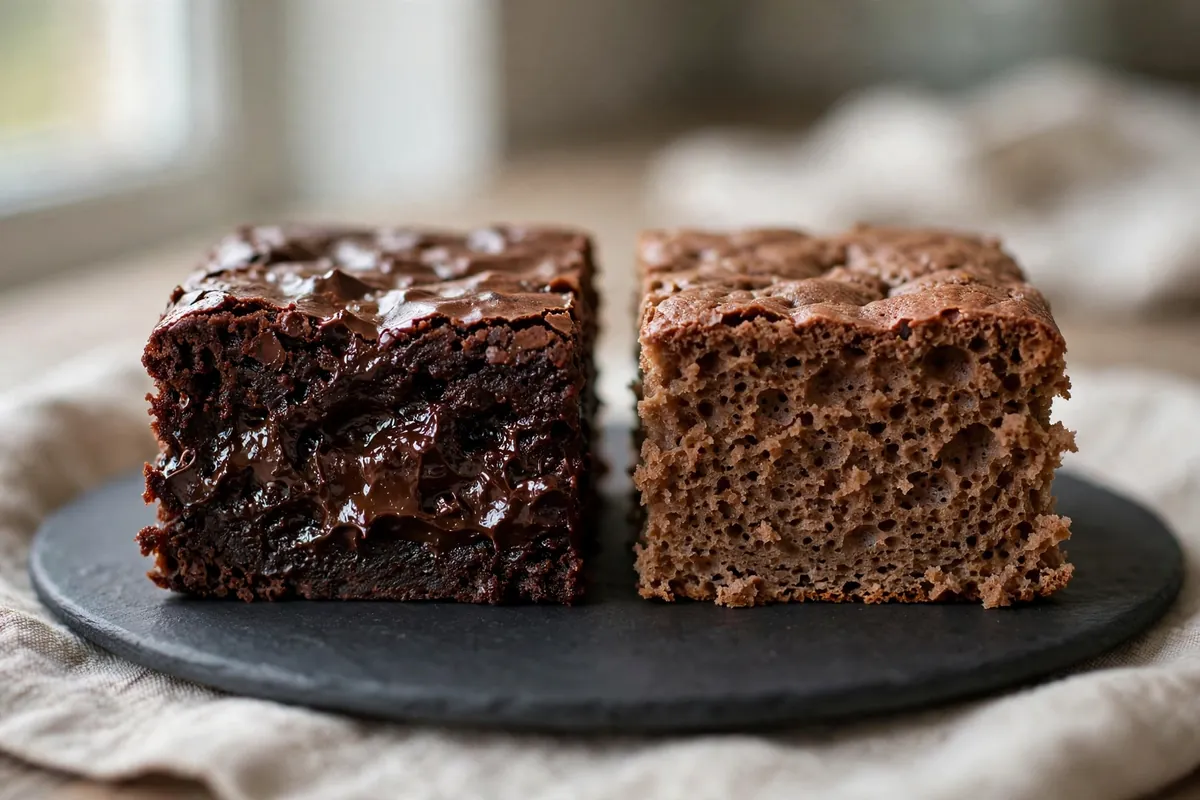
You wanted dense, fudgy, truffle-like brownies. You got something that eats like chocolate cake. I’ve made both by accident and on purpose enough times to know: the difference isn’t luck, it’s five specific variables, and every one of them is controllable. Here’s the actual science.
Quick diagnosis: Cakey brownies come from too much flour and too much air. If you scooped your flour, used three eggs, creamed the butter, or added baking powder, that’s your answer — probably in combination. Fudgy brownies are built the opposite way: weighed flour, two eggs, melted butter, little or no leavening.
Fudgy vs cakey: the actual science
Five variables decide the texture, in rough order of impact:
| Variable | Fudgy | Cakey |
|---|---|---|
| Fat-to-flour ratio | High (more butter/chocolate, less flour) | Low (more flour relative to fat) |
| Eggs | Fewer (2) — less structure, less lift | More (3+) — protein sets a cake-like crumb |
| Leavening | None or a whisper | Baking powder — literally makes cake |
| Mixing method | Melted butter, stirred — minimal air | Creamed butter — deliberately aerated |
| Bake | Slightly underbaked, carryover finishes | Baked through — dries and sets firmly |
Every cakey batch fails on at least two of these. Run through them.
1. Too much flour
Flour is structure. More flour relative to fat = more crumb = more cake. And the usual delivery mechanism is the scooped cup: 150g scooped versus 120g weighed is 25% extra structure you never intended. Two extra tablespoons can visibly shift a brownie from fudgy toward cakey.
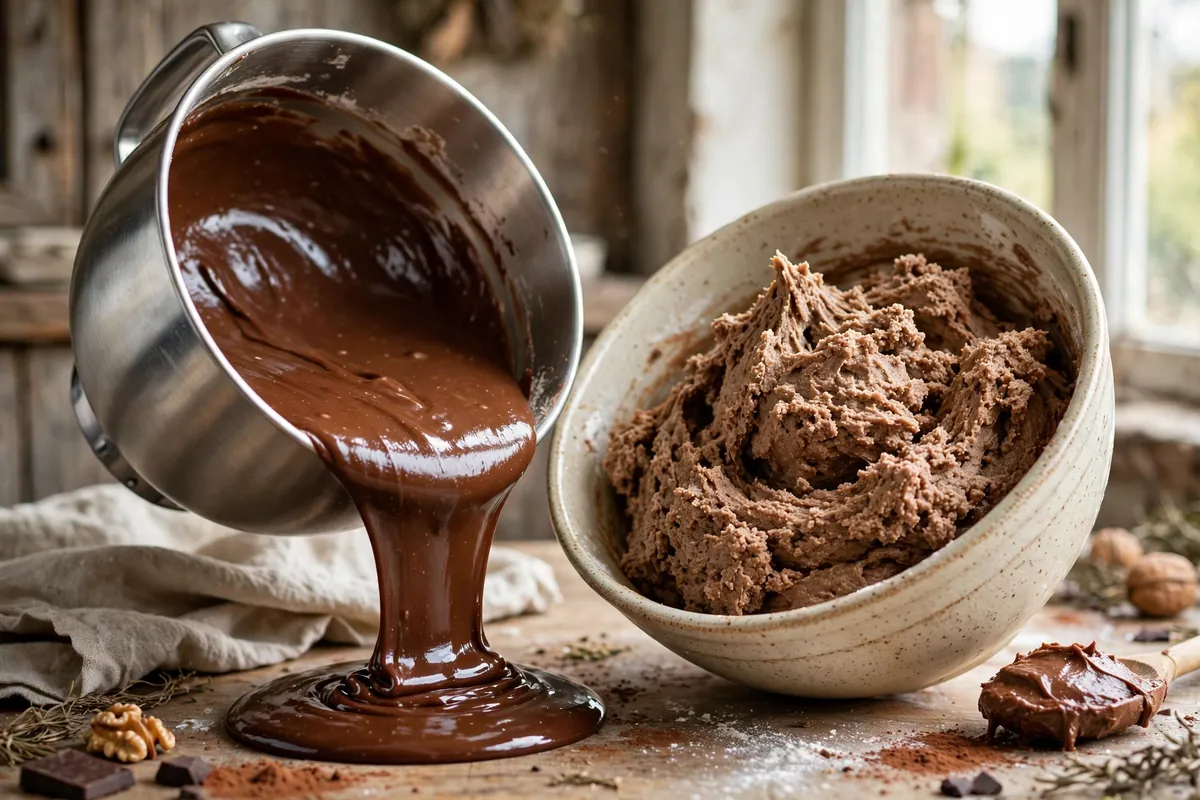
How to tell: The batter looked thick and dough-like rather than glossy and pourable. The baked brownie is tall and bread-like.
The fix: Weigh flour at 120g per cup. Fudgy brownie recipes typically use less flour than you expect — around 3/4 to 1 cup for an 8×8 pan. If your recipe calls for more than that plus multiple eggs plus leavening, it’s a cake recipe wearing a brownie costume.
2. Too many eggs (or the wrong handling)
Eggs are the main structural protein in brownies. Two eggs in an 8×8 batch gives richness with a dense set. Three eggs — especially beaten hard — builds a protein network that reads as cake. This is the single most common recipe-level cause I see.
How to tell: Your recipe called for 3+ eggs, or you whisked them vigorously into foam before adding.
The fix: Two large eggs for a standard 8×8 fudgy batch. Beat them in gently — just until combined. You’re hydrating, not aerating. (Making them egg-free instead? Flax eggs actually work beautifully in brownies — see Eggless Cake That Actually Works.)
3. Baking powder — the cake-ifier
Baking powder’s entire job is making cake rise. In brownies, even a teaspoon creates lift and airiness — the opposite of fudgy density. Many all-purpose brownie recipes include it as insurance; fudgy recipes omit it deliberately.
How to tell: Your recipe listed baking powder (or worse, baking soda and powder).
The fix: For fudgy brownies, use none — or at most 1/4 teaspoon if the recipe needs a slight lift for a thick pan. Read the leavening line of any new recipe before you commit: it’s the fastest texture predictor on the page.
4. Overbaked — the silent killer
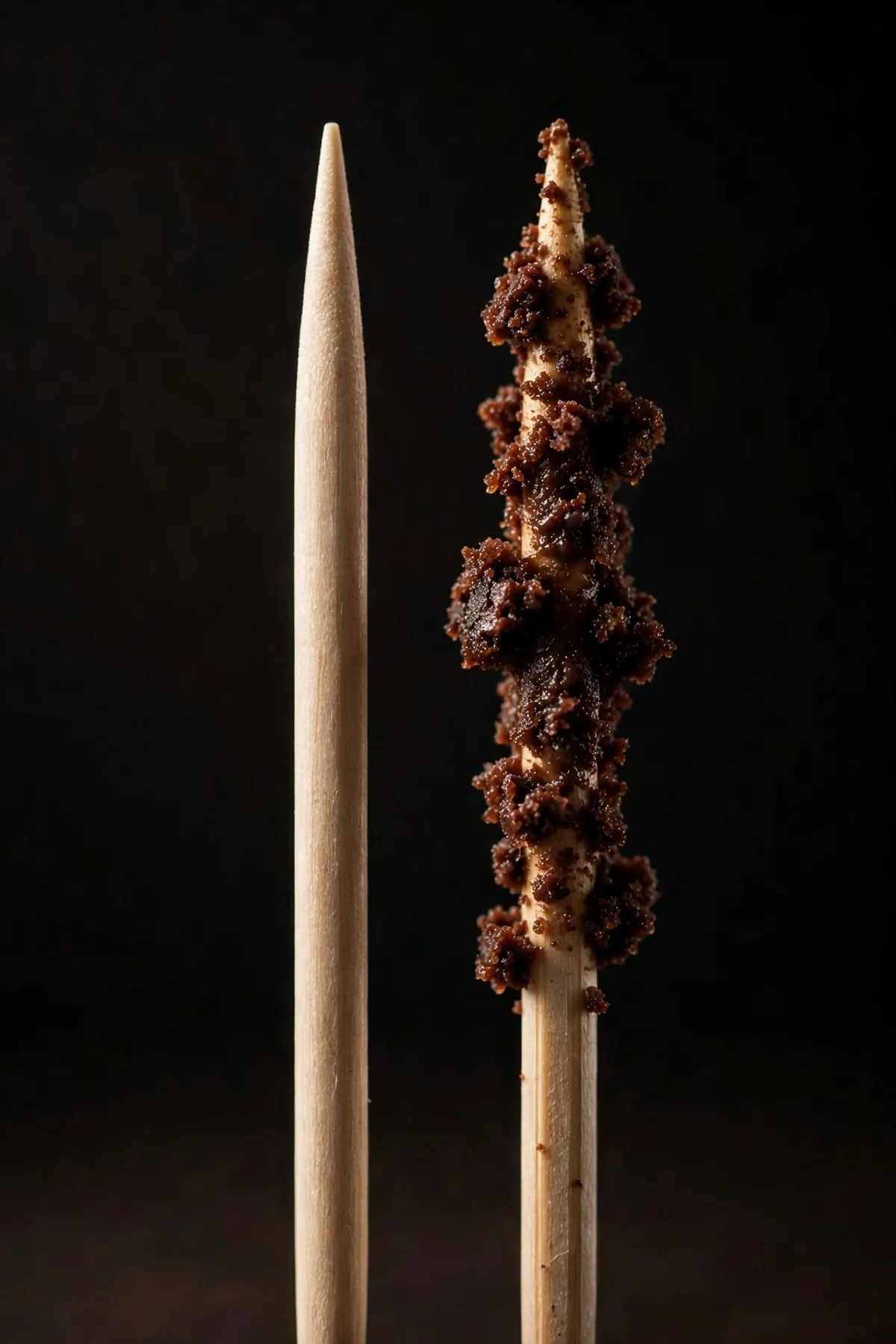
Brownies continue cooking in the hot pan after leaving the oven (carryover), and the line between fudgy and dry-cakey is about three minutes. A toothpick emerging completely clean means overbaked — for fudgy brownies, you want moist crumbs clinging to it.
How to tell: The edges are hard and dark, the center is fully firm with no wobble, the toothpick came out clean.
The fix: Start checking 5 minutes before the recipe’s earliest time. Pull when the edges are set but the center still looks slightly underdone and a toothpick shows moist crumbs. It firms as it cools — trust the carryover. This is the same carryover principle as cheesecake (see Why Did My Cheesecake Crack?).
5. Wrong pan size
A recipe developed for an 8×8 pan baked in a 9×13 spreads thin — thin batter overbakes in the time meant for thick batter, and thin brownies can’t be fudgy. Pan size is bake time.
How to tell: Your brownies came out noticeably thinner than the recipe photo, or you scaled the pan up “because it was all I had.”
The fix: Match the recipe’s pan. For thick fudgy brownies, 8×8 metal is the standard. Glass and ceramic bake slower than metal — if substituting, drop the temp 25°F and watch closely.
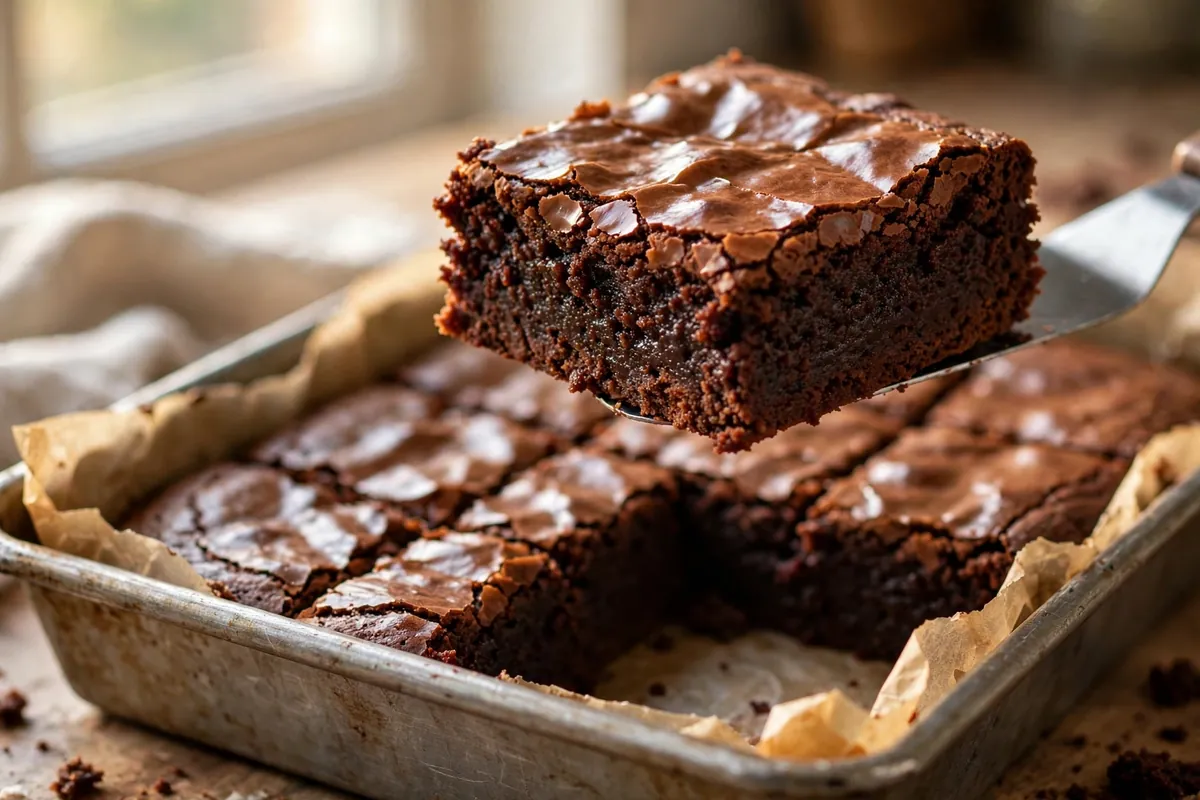
The fudgy formula (memorize this)
Melted butter + chopped dark chocolate (not just cocoa — the cocoa butter matters), 2 eggs stirred gently, ~3/4 cup weighed flour, a pinch of salt, little or no leavening, 8×8 pan, pulled at moist crumbs. That’s the whole architecture. Everything else is flavoring.
Frequently asked questions
Are cakey brownies safe to eat?
Yes — this is purely a texture preference, not a safety issue. And cakey brownies have their fans; serve them warm with ice cream and nobody complains. You’re fixing a preference, not a failure.
Can I fix cakey brownies after baking?
The texture is set — you can’t un-bake structure. But you can serve around it: warm them and add ice cream or hot fudge, which reads as intentional dessert. Or cube them for a trifle, where cakey crumb is actually an asset.
Fudgy vs chewy — aren’t they the same?
Related but distinct. Fudgy = dense, moist, truffle-like (high fat, minimal structure). Chewy = dense with pull — slightly more gluten development and often brown sugar’s moisture. A brownie can be both, but the levers differ: chew comes from rest time and sugar type as much as fat ratio.
Why are my brownies dry AND cakey?
Overbaked plus too much flour — the two compound each other. Dry-cakey is the most common brownie complaint I see, and it’s always this pair. See Why Is My Cake Dry? for the full moisture science; it applies directly.
Butter vs oil for fudgy brownies?
Butter for flavor, oil for a softer room-temperature texture (oil doesn’t firm up when cool the way butter does). Both make fudgy brownies if the ratios are right — the fat amount matters more than the fat type. I use butter for the flavor and accept slightly firmer cold brownies; ten seconds in the microwave fixes that.
Related troubleshooting: Why Is My Cake Dry? Moisture Science for Home Bakers · Eggless Cake That Actually Works: Tested Replacements