Eggless Cake That Actually Works: Tested Replacements
You’re halfway through a cake recipe and the egg carton is empty. Or eggs are off the menu — an allergy, a vegan household, a dietary choice. Either way, you need a cake that rises, sets, and tastes like cake, not a sweet brick.
The encouraging part: some beloved chocolate cakes never contained an egg. But the wrong substitute in the wrong cake gives gummy centers and flat tops. Every common replacement behaves differently in real batters — here’s what works.
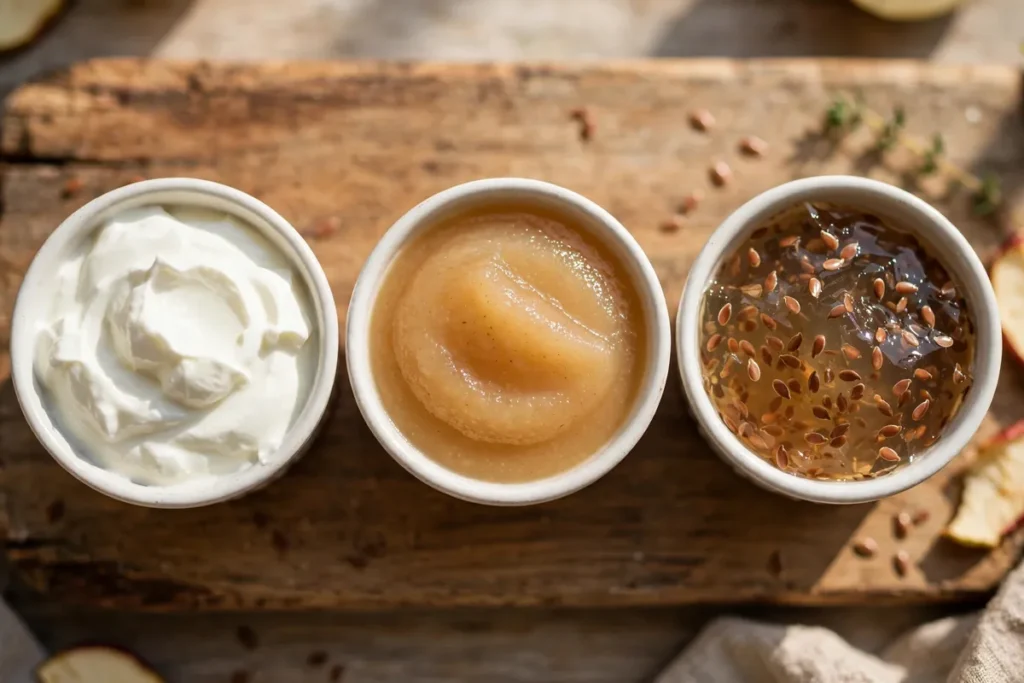
Quick diagnosis: Replace each egg with 60g (1/4 cup) plain yogurt + 1/4 tsp extra baking soda (best all-rounder), 60g (1/4 cup) unsweetened applesauce (moist, mild), or 3 tbsp aquafaba, whipped (lightest texture, best for sponge cakes). Don’t replace more than 2–3 eggs — beyond that, bake a recipe designed eggless from the start.
What Eggs Actually Do in a Cake (Read This Before Substituting)
You can’t pick the right replacement until you know which job the egg was doing. In cake batter, eggs do four things:
- Structure. Egg proteins coagulate in the heat and set the crumb — they’re part of the scaffolding that keeps the cake from collapsing after the leavening gases escape.
- Leavening. Beaten eggs trap air; the egg’s moisture converts to steam in the oven. In foam cakes (sponge, chiffon), this is the primary lift.
- Moisture and tenderness. The yolk’s fat shortens gluten strands, and lecithin in the yolk emulsifies fat and liquid into a smooth, even batter.
- Flavor and color. Richness and that golden crumb.
No single substitute does all four jobs. So match the substitute to the job your cake needs most: a dense chocolate cake mostly needs moisture and binding (easy); a tall vanilla sponge mostly needs structure and lift (harder).
The 7 Replacements I Trust (Each Tested in Real Batters)
1. Plain yogurt — the best all-rounder
Ratio: 60g (1/4 cup) plain whole-milk yogurt per egg. Add 1/4 tsp extra baking soda if the recipe doesn’t already call for it.
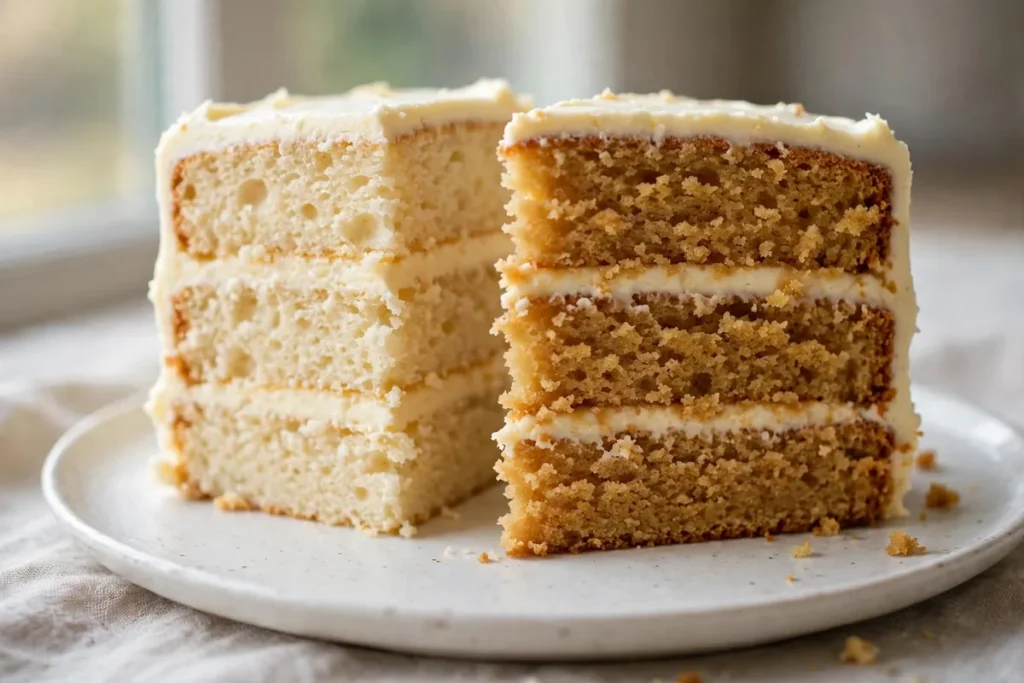
Why it works: Protein for structure, fat for tenderness, acidity that supercharges baking soda. In side-by-side tests, yogurt vanilla cakes were nearly indistinguishable from the egg version.
Best for: Vanilla, yellow, and chocolate layer cakes.
Watch out: Plain only — thin Greek yogurt with a tablespoon of milk. Skip if the eater is dairy-free too.
2. Unsweetened applesauce — the moisture play
Ratio: 60g (1/4 cup) unsweetened applesauce per egg.
Why it works: Moisture and gentle binding from fruit pectin. No lift — but in cakes with solid leavening already, it keeps the crumb tender for days. My applesauce spice cakes stay fresher longer than the egg versions.
Best for: Spice cakes, carrot cake, chocolate cake, muffins — anything dense and moist where fruit flavor fits.
Watch out: It adds sweetness — cut sugar 1–2 tablespoons per egg if using sweetened. Don’t use it in delicate white cakes; the flavor shows.
3. Mashed banana — the dense-cake specialist
Ratio: 60g (1/4 cup) well-mashed ripe banana (about half a banana) per egg.
Why it works: Starches and sugars bind, moisture keeps things tender. Banana bread exists for a reason — this is that principle applied to cake.
Best for: Banana cake, chocolate cake, dense snacking cakes.
Watch out: The flavor is not subtle — never in vanilla or lemon cake. It also densifies the crumb: the opposite of a sponge’s needs.
4. Aquafaba — the light-texture secret
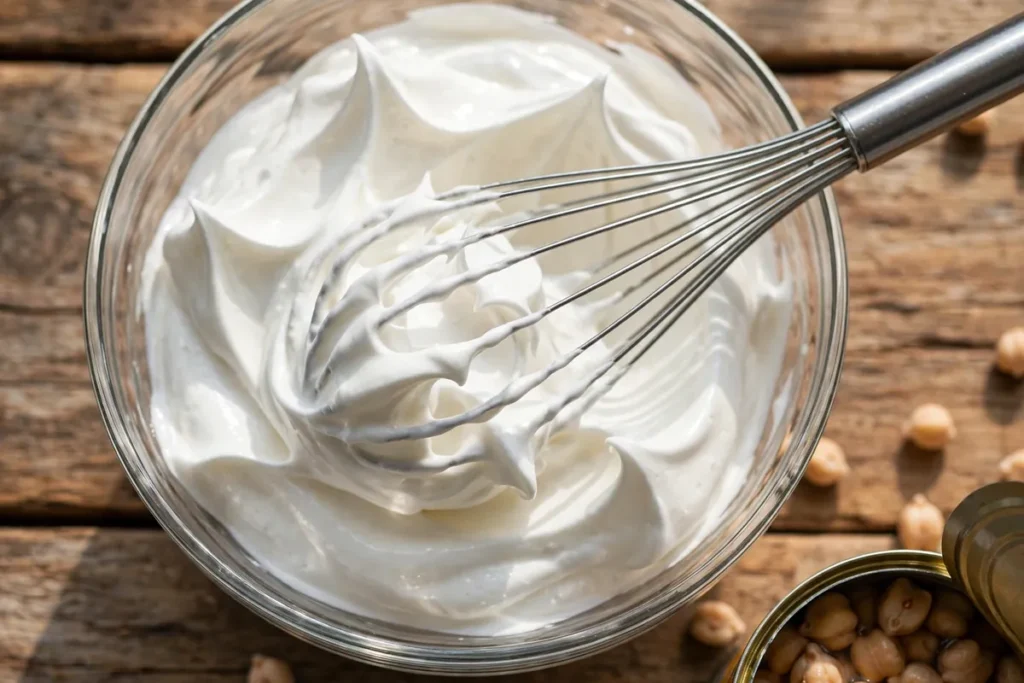
Ratio: 3 tablespoons aquafaba (the liquid from a can of chickpeas) per whole egg; 2 tablespoons per egg white. Whip to soft peaks for maximum lift.
Why it works: Chickpea proteins whip into a foam remarkably like egg whites. Folded into chiffon batter, my aquafaba cake rose within half an inch of the egg version. Nothing else here can do that.
Best for: Sponge, chiffon, angel-food-style cakes, meringue toppings — anywhere the egg’s foaming mattered most.
Watch out: It must be whipped; unwhipped it’s just bean water. Use unsalted liquid — the smell bakes off completely.
5. Baking soda + vinegar — the leavening booster
Ratio: 1 teaspoon baking soda + 1 tablespoon white vinegar per egg (in addition to the recipe’s existing leavening).
Why it works: It replaces the egg’s lift, not its structure or moisture — a burst of CO2 as the batter hits the oven. Best used alongside another replacer (applesauce for moisture + soda/vinegar for lift).
Best for: Pairing with options 1–3 in cakes that need extra rise.
Watch out: Work fast — the reaction starts on contact, so get the pan in the oven within minutes. A tablespoon of vinegar per egg is the ceiling; more leaves a tang.
6. Ground flaxseed — the binder
Ratio: 1 tablespoon ground flaxseed + 3 tablespoons water per egg. Stir and rest 5 minutes until gel-like (“flax egg”).
Why it works: Soluble fiber forms a gel that binds like egg protein — the most reliable pure binder here.
Best for: Brownies, dense chocolate cakes, hearty muffins.
Watch out: Dark specks, faint nutty flavor, almost no leavening — pair with the soda/vinegar booster when height matters. Grind fresh; whole seeds do nothing.
7. Buttermilk — the tender-crumb classic
Ratio: 60ml (1/4 cup) buttermilk per egg. Reduce another liquid in the recipe by the same amount.
Why it works: Acidity tenderizes gluten and activates baking soda — the backbone of Southern layer cakes for a century, with an exceptionally fine, soft crumb.
Best for: Layer cakes, sheet cakes, coffee cakes.
Watch out: None on hand? 60ml milk + 1 teaspoon lemon juice, rested 5 minutes — nearly as good.
Which Replacement for Which Cake
| Cake type | Best picks | Avoid |
|---|---|---|
| Chocolate layer cake | Yogurt, buttermilk, applesauce | Banana (unless you want the flavor) |
| Vanilla/yellow cake | Yogurt, aquafaba (whipped) | Banana, flax (specks show) |
| Carrot/spice cake | Applesauce, banana | Aquafaba (unnecessary) |
| Light sponge/chiffon | Aquafaba (whipped) | Banana, flax, applesauce (too heavy) |
| Brownies/blondies | Flax egg, banana | Aquafaba (too airy for fudgy) |
| Muffins/quick breads | Applesauce, yogurt, banana | — (all work) |
The Rule of Three: When to Stop Substituting
Here’s the honest limit: don’t replace more than 2–3 eggs in a single recipe. Each substitution is an approximation, and the errors compound. One or two eggs? Any option above gets you 90%+ of the way there. Five eggs in a rich pound cake or tall chiffon — that cake is built on eggs, and no combination of substitutes rebuilds the architecture. Past three eggs, bake a recipe engineered eggless from the start.
Frequently Asked Questions
Can I just leave the egg out without replacing it?
For a single egg in a sturdy recipe, sometimes — add 2–3 tablespoons of extra milk or water. But the cake will be denser and more crumbly. A proper substitute always beats omission.
Is eggless cake safe for someone with an egg allergy?
Yes, if every ingredient is egg-free — check baking powder, frosting, and mix-ins, and guard against cross-contamination for severe allergies. These substitutes contain no egg protein.
Which egg replacer is best for vegan cake?
Aquafaba for light cakes, flax or applesauce for dense ones — plus dairy-free fat and milk. For the frosting, see Dairy-Free Frosting That Holds Its Shape.
Can I use store-bought egg replacer powder?
Yes — follow the package ratio (usually 1 tablespoon powder + 2–3 tablespoons water per egg). Best in cookies, muffins, and brownies; for cakes I still prefer yogurt or aquafaba.
Will eggless cake taste different?
Banana and flax add noticeable flavor; the rest are essentially neutral. In blind tastings, nobody identified the yogurt and applesauce cakes as eggless.
Related troubleshooting: Dairy-Free Frosting That Holds Its Shape · Why Did My Cake Sink in the Middle? · Why Is My Cake Dry?