Why Is My Cake Dry? Moisture Science for Home Bakers
Quick diagnosis: Dry cake is almost always overbaked or over-floured. If the edges are dark and the crumb is tough, it baked too long or too hot. If the texture is fine but just parched, check your flour measuring — a scooped cup can pack in 25% too much flour.
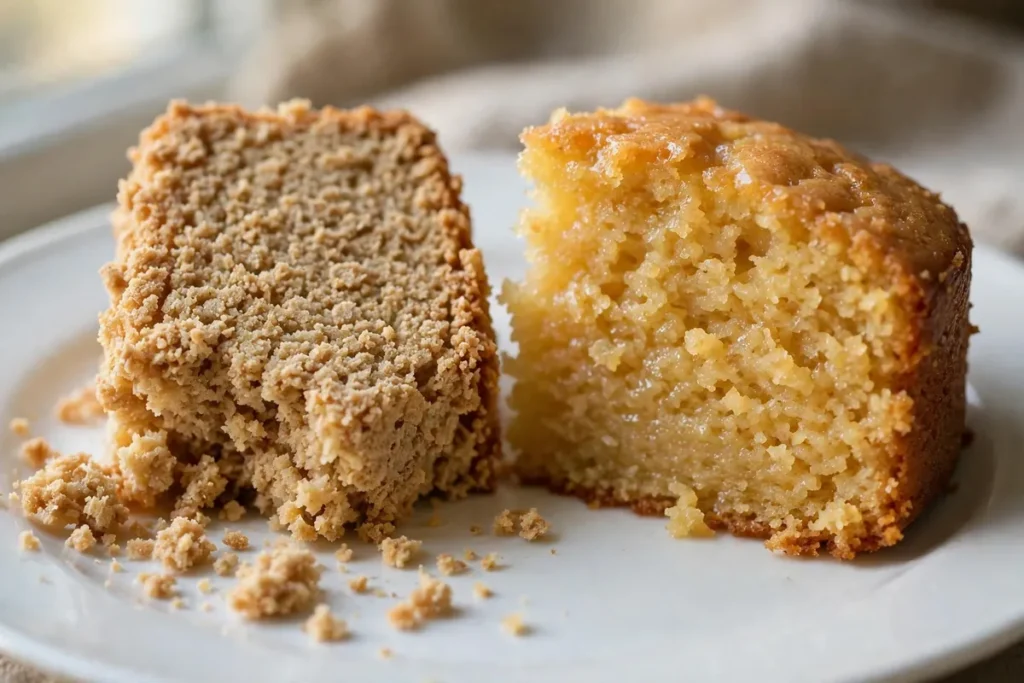
Moisture in cake isn’t just water — it’s a partnership between water, sugar, and fat. Sugar is hygroscopic: it grabs water and holds it in the crumb. Fat coats flour proteins, slowing gluten for a tender texture. Eggs emulsify it all. Shortchange any partner and the cake dries out.
1. It was overbaked
The number one cause, by a wide margin. Cake goes from perfectly moist to dry in about five minutes — the line between “moist crumbs on the toothpick” and “bone dry” is razor thin at the end of a bake. Recipes give ranges for a reason; ovens vary.
How to tell: Dark, firm edges, a dry surface, cottony crumb. The toothpick came out completely clean — which most bakers misread as “done” when it means “done five minutes ago.”
The fix: Start checking 5–8 minutes before the earliest time in the range. The target is a toothpick with a few moist crumbs clinging — not wet batter, not clean. An instant-read thermometer removes the guesswork: most butter cakes are done at 200–210°F (93–99°C) in the center. And calibrate your oven with a thermometer; a hot oven overbakes everything on schedule (see Cake Domed and Cracked on Top).
2. Too much flour
Flour is the usual suspect behind “I followed the recipe exactly.” Scooping the measuring cup straight into the flour bag compacts it — a scooped cup can weigh 150g versus the 120g the recipe assumed. That’s 25% extra flour silently absorbing moisture meant for the crumb. In side-by-side tests, the scooped-flour cake comes out visibly drier and denser.
How to tell: The batter looked thick and stiff rather than pourable, and the baked crumb is dense as well as dry.
The fix: Weigh flour — 120g per cup, every time. No scale? Spoon it into the cup and level off; never scoop. This one habit fixes more dry cakes than any recipe change.
3. Not enough fat or sugar
Fat and sugar aren’t just flavor — they’re moisture infrastructure. Fat coats flour proteins so less gluten forms (tender crumb) and adds richness that reads as moistness. Sugar holds water in the crumb for days. “Healthier” swaps — cutting the butter, slashing the sugar, replacing oil with applesauce — reliably produce drier cake.
How to tell: You reduced fat or sugar from the recipe, or used a “light” recipe that was dry from the start.
The fix: Keep the recipe’s fat and sugar ratios intact. Oil-based cakes stay moist longer than butter cakes (oil is liquid at room temperature; butter firms up) — if moistness is the priority, choose oil-based recipes. Add moisture after baking instead of cutting structure before it: a simple-syrup soak is the professional fix (more below).

4. The wrong flour
Protein content decides crumb texture. Cake flour (7–9% protein) gives a fine, tender crumb. All-purpose (10–12%) is the safe middle. Bread flour (12–14%) builds strong gluten — great for chew in bread, terrible in cake: tough, dry-feeling crumb. Using bread flour, or a high-protein all-purpose, dries out the eating experience even at correct moisture.
How to tell: The crumb is tough and bready rather than tender, especially in a recipe that should be delicate.
The fix: Use the flour the recipe specifies. If you only have all-purpose and want a more tender crumb, replace 2 tablespoons of flour per cup with cornstarch — a reasonable homemade cake-flour approximation. Never use bread flour for cake.
5. Over-mixing the batter
Once flour meets liquid, gluten starts forming. Beat it too long and you build a strong gluten network — the crumb turns tough and elastic, and tough crumb tastes dry even when the moisture content is technically fine. Mouthfeel is half of perceived moistness.
How to tell: The crumb is rubbery or tunnels run through it, and the cake bounced back aggressively when pressed.
The fix: Mix on low speed only until the flour disappears, then finish by hand. The creaming stage (butter + sugar) is where vigorous beating belongs — after flour goes in, restraint wins. This is the same principle behind dense bread from over-kneaded dough (see Why Is My Bread Dense?).
6. The oven was too hot
High heat drives moisture out of the crumb before the interior finishes baking. The outside over-browns, the inside dries, and you get a cake that’s both dark and parched. Convection/fan ovens run effectively hotter — a fan oven set to 350°F (175°C) behaves like 375°F (190°C) conventional.
How to tell: Dark crust, dry crumb, and the cake finished well before the recipe’s minimum time.
The fix: Verify with an oven thermometer and reduce by 25°F (15°C) for fan/convection or dark pans. Bake on the center rack for even heat.
7. It was stored wrong
A perfect cake dries out in hours if left uncovered — the crumb’s moisture migrates straight into dry room air. Slicing exposes even more surface. Refrigeration makes it worse: cold accelerates starch retrogradation (staling), so fridge-stored cake tastes dry and stale fast.
How to tell: The cake was moist on day one and dry by day two, sitting cut-side exposed or uncovered.
The fix: Wrap layers tightly in plastic while still slightly warm — the trapped steam redistributes into the crumb. Press plastic wrap directly against cut surfaces. Store at room temperature for up to 2 days; freeze (double-wrapped) for longer. Only refrigerate cakes with perishable fillings, and bring slices to room temperature before serving.
The professional rescue: simple-syrup soak
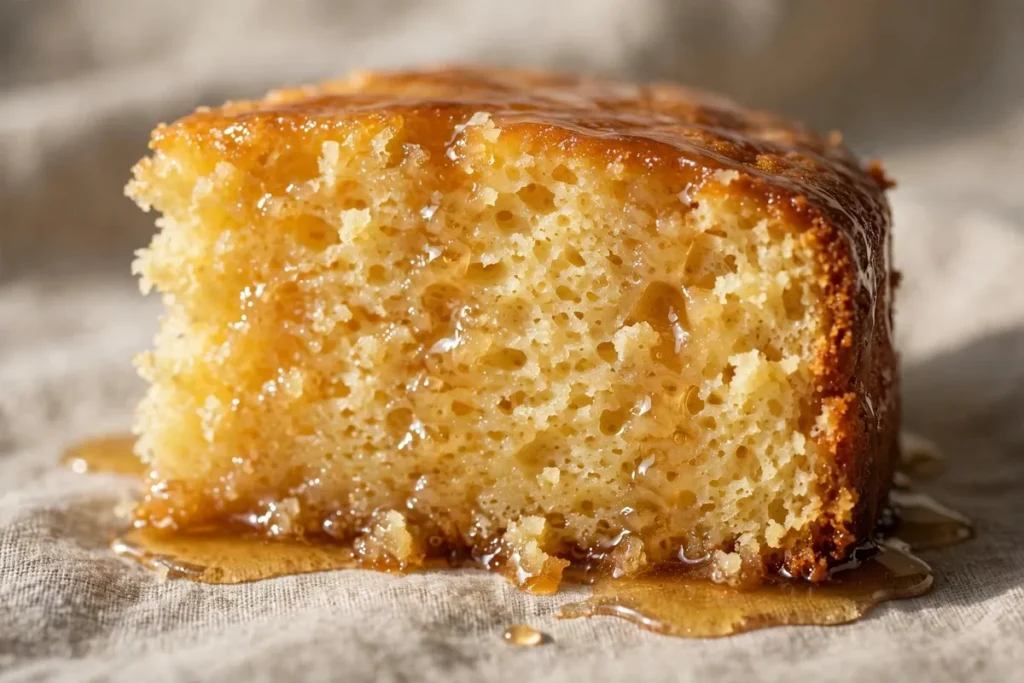
If the cake is already baked and dry, don’t despair — bakeries fix this routinely. Simmer equal parts sugar and water (1:1) until the sugar dissolves, cool it, and brush it generously over each layer before frosting. A standard 8-inch layer takes 2–3 tablespoons. The syrup soaks in within minutes and the cake tastes freshly moist. Flavor it if you like: a splash of vanilla, citrus zest, or espresso for chocolate cake. This is the same trick that saves an overbaked sponge every time.
Frequently asked questions
Can I still eat a dry cake?
Absolutely — dry is a texture problem, not a safety problem. Serve it with ice cream, custard, or fruit compote, or convert it into a trifle. Nobody complains about dry cake buried under whipped cream.
Why is my cake dry even though I followed the recipe?
The most likely culprit is flour measurement — scooped versus weighed flour is the biggest silent variable in home baking. Second is oven temperature: if your oven runs hot, “following the recipe” still overbakes. Fix those two and most mystery dryness disappears.
Does sour cream or yogurt really make cake moister?
Yes — they add both moisture and acidity, and acid tenderizes crumb by weakening gluten slightly. Buttermilk, sour cream, or full-fat yogurt in place of some milk is one of the most reliable moistness upgrades. Use full-fat versions; nonfat adds water without the tenderizing fat.
Can I fix a dry cake after baking?
Yes — the simple-syrup soak above is the standard professional fix. Brush 2–3 tablespoons of cooled 1:1 syrup onto each layer before frosting. For cupcakes, a light brush on the tops works the same way.
Why does my cake dry out the next day?
Moisture migrates from crumb to air, and starch retrogradation (staling) firms the crumb — refrigeration accelerates both. Wrap tightly in plastic while slightly warm, keep cut faces covered, and store at room temperature. Oil-based cakes stale noticeably slower than butter cakes.
Related troubleshooting: Why Did My Cake Sink in the Middle? · Cake Domed and Cracked on Top · Why Is My Bread Dense?