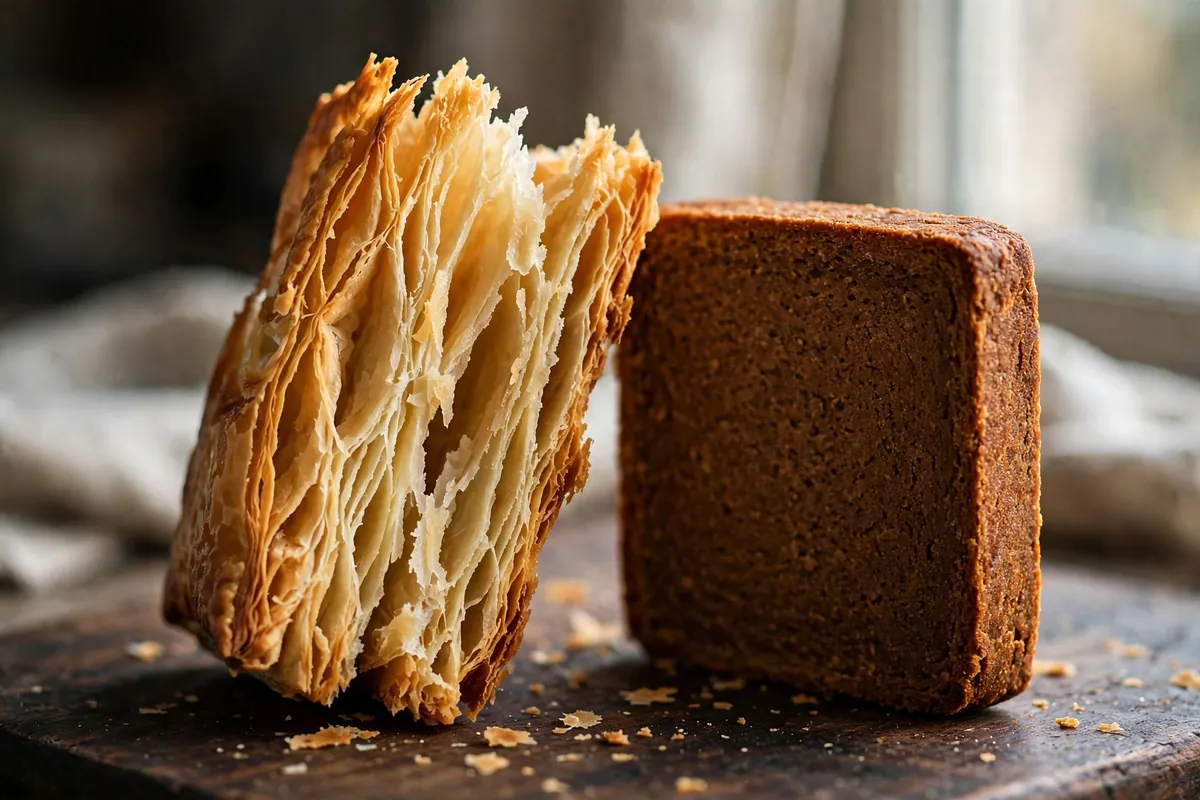
Quick diagnosis: Puff pastry rises on steam trapped between butter layers — no distinct layers, no lift. Flat puff comes down to butter at the wrong temperature (melted into the dough, or so cold it shattered), cut edges that got sealed shut, or an oven that wasn’t hot enough to flash water into steam. Check those three first; they account for nearly every failed puff.
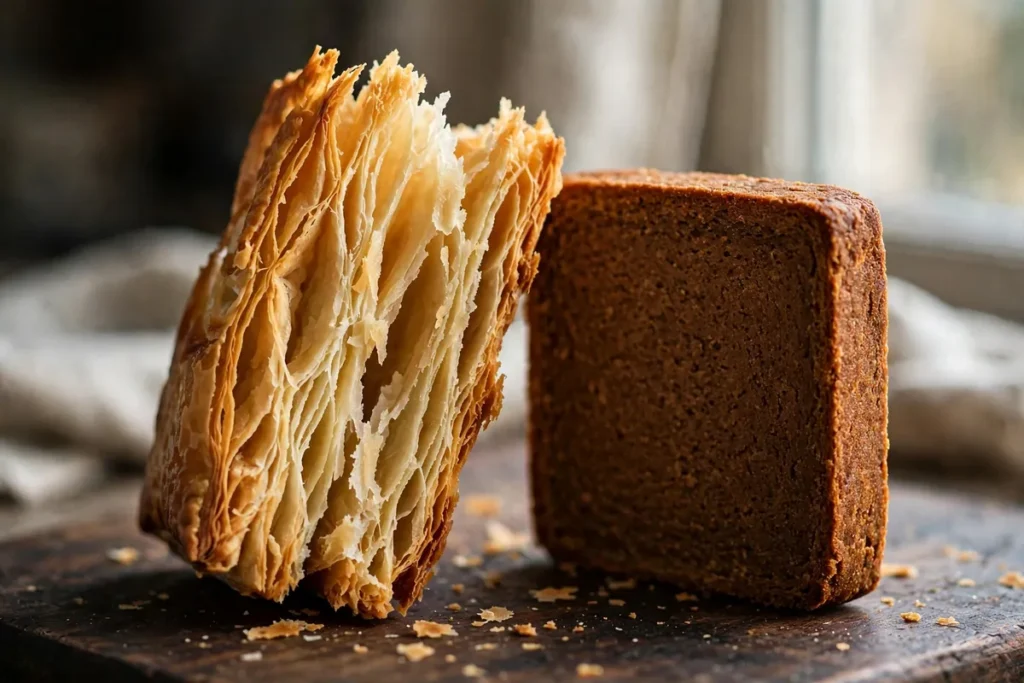
Puff pastry is architecture: hundreds of alternating layers of dough and butter (a classic six-turn puff has 729 of them). In a hot oven, the water in the butter flashes to steam, and each steam pocket jacks its dough layer upward. The whole structure depends on those layers staying separate until the heat hits. Every mistake below is a way the layers got destroyed, glued, or never formed.
1. The butter melted into the dough
The cardinal sin of lamination. Butter and dough must stay as separate strata. If the butter gets warm, it absorbs into the surrounding dough — and absorbed butter can’t make steam pockets. You end up with what is essentially a rich shortcrust: tasty, but flat as a board.
How to tell: The dough felt greasy or soft while rolling, butter visibly smeared instead of staying in a distinct sheet, or you could see buttery patches soaking through the dough surface.
The fix: Keep everything cool and work in a cool kitchen. The butter block should be pliable but cold — around 60°F (16°C): bendable without cracking, but firm to the touch. If at any point the dough feels soft, greasy, or the butter starts peeking through, stop immediately and refrigerate 30 minutes. There is no penalty for chilling mid-process; there is a total penalty for pushing through warm. Use European-style butter (82%+ fat) if you can — it stays pliable at cooler temperatures than standard butter, giving you a wider working window.
2. The butter was too cold and shattered
The mirror image of cause #1, and just as fatal. Butter straight from the fridge is brittle — roll it and it cracks into shards that pierce straight through the dough layers instead of rolling out into a continuous sheet. Shattered butter means broken, discontinuous layers, which means weak, uneven lift.
How to tell: You heard or felt cracking while rolling the butter block in, or you can see distinct yellow chunks and cracks through the dough rather than smooth marbled layers.
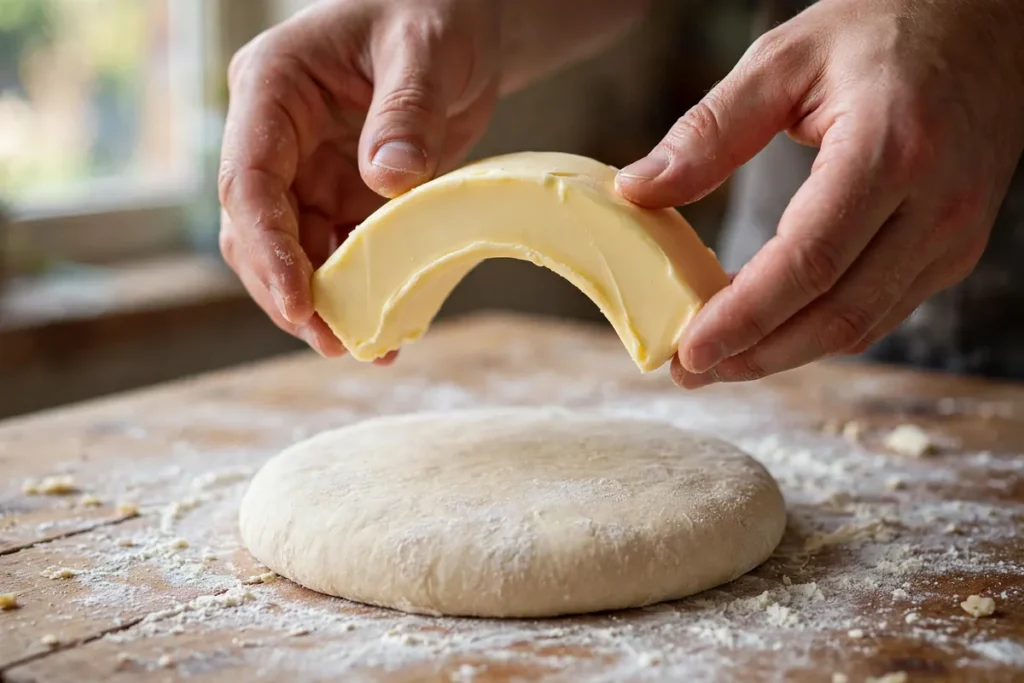
The fix: Temper the butter block first: pound it with a rolling pin between parchment sheets until it’s the same cool-pliable state as the dough — bendable, not brittle, not soft. The butter and the dough (détrempe) must be the same consistency when they meet; if one is firmer than the other, the firmer one wins and the layers lose. This temperature matching is the single most important skill in lamination, and it applies to pie crust too (see Pie Crust Shrinking in the Oven).
3. The edges got sealed shut
Puff rises because steam escapes upward between the layers, pushing them apart. If the cut edges are pressed, pinched, or crimped together, the layers are glued shut at the perimeter — steam can’t lift what it can’t get between. This is why a carelessly cut vol-au-vent rises in the middle and stays welded at the rim.
How to tell: The center puffed but the edges stayed flat and dense, or the whole piece rose unevenly with one sealed side.
The fix: Cut with a sharp knife or cutter in one firm downward motion — no sawing, no dragging, which smears the layers together. Never pinch or crimp puff pastry edges the way you would a pie. And keep egg wash off the cut sides: brush only the top surface, because wash running down the edges glues the layers exactly where they need to separate.
4. Not enough resting between turns
Each fold (turn) develops gluten and warms the butter. Roll the next turn immediately and you’re working tense, elastic dough with softening butter — the layers smear instead of staying distinct, and the dough fights back, springing out of shape. Resting re-firms the butter and relaxes the gluten.
How to tell: The dough resisted rolling, shrank back between passes, or felt soft and greasy by the third turn.
The fix: Rest 30–60 minutes refrigerated between turns, wrapped airtight so the surface doesn’t dry. Mark each turn with a fingertip indent so you don’t lose count. The standard build is six single turns; fewer gives coarse, bready layers, while past seven or eight the layers get so thin they merge back together — more is not better.
5. The oven wasn’t hot enough
Steam needs violence. Water flashes to steam explosively only at high heat; in a moderate oven, the butter simply melts and soaks outward before enough steam pressure builds to lift anything. Puff pastry in a 350°F oven is just expensive shortbread.
How to tell: The pastry looks greasy and flat with butter visibly leaked onto the tray, rather than risen and dry-layered.
The fix: Bake at 400–425°F (200–220°C), fully preheated — give it 15–20 minutes past the beep. The initial blast is everything: it flash-converts water to steam while the structure is still flexible enough to rise. Don’t open the door for the first 15 minutes; the temperature drop collapses partially-lifted layers. This is the same hot-start principle that sets pie crusts and cookie edges (see Why Do My Cookies Spread Flat?).
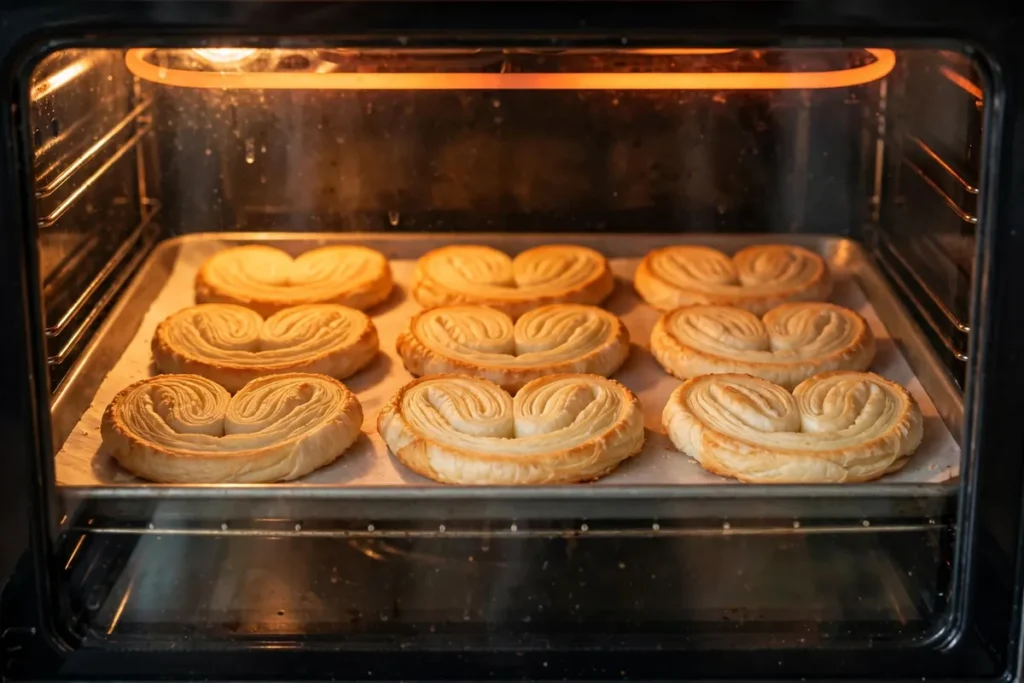
6. Store-bought pastry was mishandled
Most home puff failures involve commercial pastry, and the mistakes happen before baking: thawed at room temperature until limp, re-rolled aggressively (destroying the factory lamination), or left sitting out while the oven preheated.
How to tell: The pastry was soft, sticky, or floppy when it went into the oven.
The fix: Thaw overnight in the fridge, never on the counter — you want it just pliable enough to unfold. Handle it minimally: unfold, cut, and bake. If you must re-roll to thin it, one light pass only. And keep the shaped pieces refrigerated until the moment they go into the fully preheated oven; cold pastry hitting hot air is the entire mechanism.
FAQ
Is flat puff pastry safe to eat?
Yes — it’s fully baked dough and butter, just without the lift. It will taste rich and buttery, closer to a cracker or shortbread. The failure is textural, not a safety issue. Repurpose it: flat puff makes excellent tart bases and cheese straws where height doesn’t matter.
Can I re-bake puff pastry to make it puff?
No — once the butter has melted out and the structure has set, the steam mechanism is spent. Puff is a one-shot process. The rescue is repurposing (see above), not re-baking.
Why did my puff pastry leak butter all over the tray?
Butter leaked because it melted before steam pressure could trap it — the classic signature of too-cool oven or butter that was already too warm going in. A little weeping is normal; a pooled lake means revisit causes #1 and #5.
How many layers does puff pastry actually have?
A standard six-turn single-fold puff has 729 layers (3^6). Blitz/rough puff, where butter is folded in chunks rather than as a sheet, has far fewer but still puffs respectably — it’s the honest shortcut I recommend to beginners before attempting classic puff.
Can I make puff pastry without a stand mixer?
Absolutely — the dough (détrempe) is just flour, water, salt, and a little butter, mixed by hand in minutes. Lamination is all rolling pin work. No special equipment is needed beyond a rolling pin, parchment, and patience between turns.
Does humidity affect puff pastry?
Yes, on two fronts: humid air softens butter faster (work colder, chill more often), and flour absorbs ambient moisture, which can make the détrempe sticky. On very humid days, hold back a tablespoon of water from the dough and add only if needed.
Related troubleshooting: Pie Crust Shrinking in the Oven · Why Do My Cookies Spread Flat? · Soggy Bottom Pie: How to Get a Crisp Base Every Time