
That near-black top on your Basque cheesecake is probably not a mistake — it’s the entire point of the dessert. Basque cheesecake bakes deliberately hot so the surface caramelizes deep and dark while the center stays soft and custardy. The real question isn’t whether it’s dark, but whether it’s caramelized (bitter-sweet, delicious) or carbonized (acrid, ashy, actually burnt).
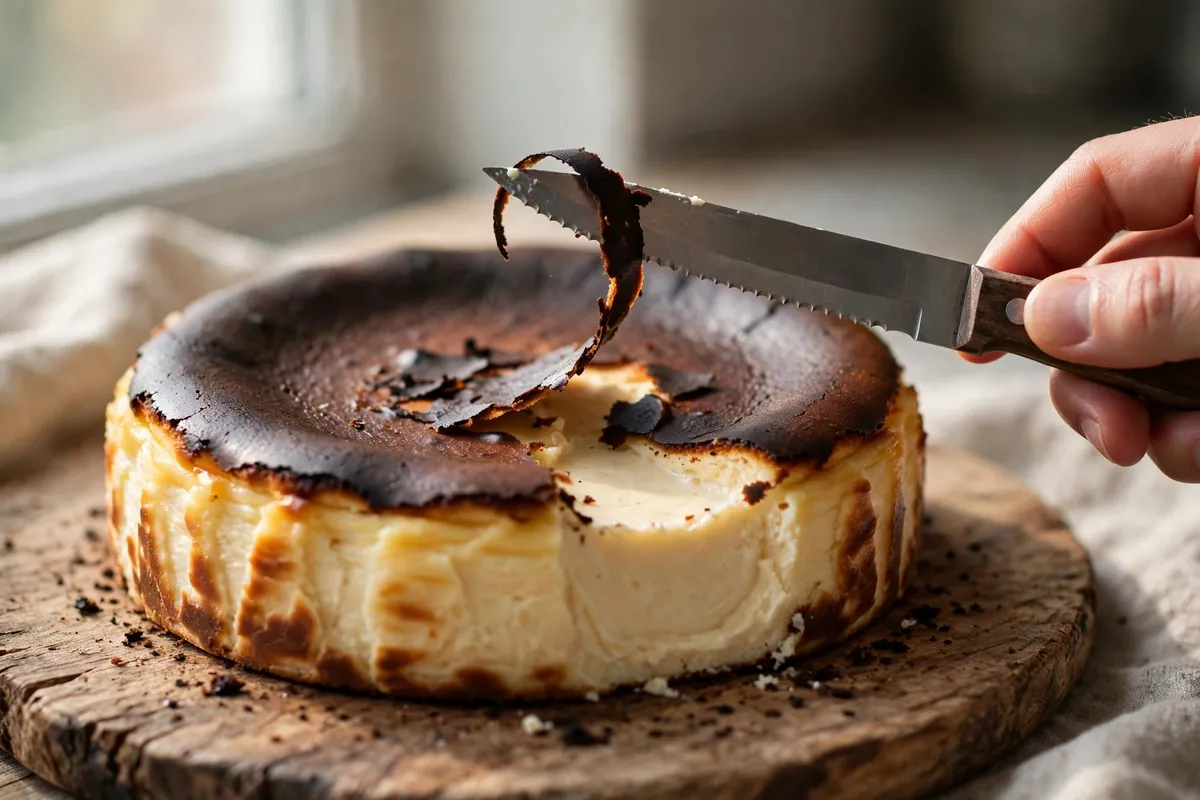
Quick diagnosis: A deeply browned, almost-black top is normal and correct — taste it before panicking. Truly burnt (bitter, ashy) comes from an oven running hot, a rack too close to the top element, or baking too long. If only the surface is overdone, shave it off with a serrated knife — the inside is almost always fine.
Tested baseline: 900g (2 lb) full-fat cream cheese at room temperature, 300g sugar, 6 large eggs, 480ml heavy cream, 30g flour, 1 tsp vanilla, 1 tsp fine salt. 10-inch springform lined with pleated parchment sticking above the rim. Baked at 425°F (220°C), middle rack, 55 minutes — deeply browned top, a 2–3 inch jiggle in the center. Cooled 1 hour, chilled 6 hours before slicing.
1. The dark top is the recipe — don’t confuse caramelized with burnt
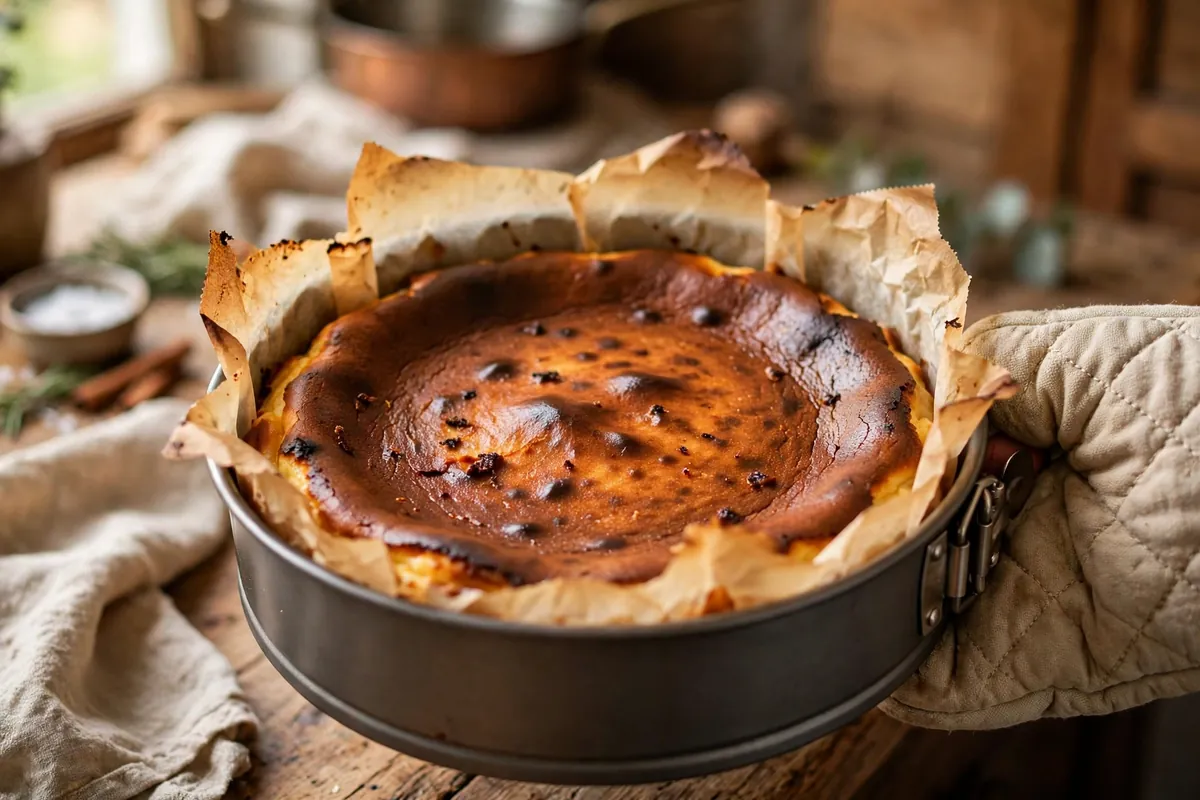
This is the number-one “problem” with Basque cheesecake, and it isn’t one. The dessert was born in San Sebastián baked at fierce heat; the scorched-looking top is its signature, with bitter caramel notes balancing the sweet, creamy interior. If yours looks like crème brûlée’s darker cousin, you nailed it.
How to tell: Caramelized tops smell like toffee and taste pleasantly bitter-sweet. The color is uneven — mahogany in spots, near-black in others. Truly burnt tops smell acrid, taste ashy, and the blackness is uniform and dull.
The fix: Taste the top before doing anything drastic. Bitter-sweet and delicious means serving it proudly. Genuinely ashy means shaving off the blackened 2–3mm with a long serrated knife — what’s underneath is almost always perfect.
2. Your oven runs hot — the most common real cause
Home ovens routinely run 25–50°F (15–30°C) hotter than the dial says, and at 425°F (220°C) that margin is the difference between caramelized and carbonized. A cheesecake that was perfect at a friend’s house can scorch in your oven from this alone.
How to tell: Everything you bake browns faster than recipes say; the top went from golden to black in the last 10 minutes.
The fix: Put an oven thermometer on the middle rack and trust it, not the dial. If yours runs hot, set 400°F (200°C) instead and add 5–10 minutes. Start checking color at 40 minutes — you can always add time, but you can’t un-burn a top.
3. The rack was too high — the top element scorched it
Most ovens heat from the top element during baking, and Basque cheesecake rises dramatically — the domed top can end up inches from the element even from a safe starting position.
How to tell: The very center of the top is darkest; sides and bottom are fine; the rise brought the surface up toward the heat.
The fix: Bake on the middle rack or one notch below, never the top third. If the top colors too fast mid-bake, lay a loose sheet of foil over it — tented, not touching — for the remaining time. Same rescue as overbaked cakes.
4. You baked too long chasing a set center — the jiggle is correct
The classic Basque error: the center still wobbles at 55 minutes, so you give it “just 15 more” — and the top goes from dark to destroyed. The center should jiggle like set gelatin when you pull it; it finishes setting during 4–6 hours of chilling. A fully firm center out of the oven means a dry, overbaked cheesecake.
How to tell: You baked past 70 minutes; the top is black and the texture is firm and cakey rather than creamy.
The fix: Pull it when a 2–3 inch circle in the center still jiggles and the edges are puffed and set. Chill 6 hours minimum, overnight if you can. A properly baked Basque slices like a firm custard.
5. A dark pan or sugared top accelerated the browning
Dark nonstick pans absorb and radiate more heat than light aluminum — the same batter browns 10–15 minutes faster. Extra sugar on the surface (some recipes call for it) caramelizes harder and crosses into burnt sooner.
How to tell: Bottom and edges are darker than the interior too; the recipe had you sprinkle sugar on top.
The fix: Use a light-colored pan, or drop the temperature 25°F (15°C) with dark nonstick. Skip surface sugar — the batter has plenty. Always line with parchment: it insulates slightly and makes the tall, rustic sides easy.
6. You used the broiler for color and walked away
Some recipes suggest a minute under the broiler for extra char. A broiler takes a cheesecake top from perfect to cremated in under 60 seconds — the fastest way to genuinely burn one.
How to tell: The burn happened in the final moments; the top is black but the interior is underdone.
The fix: Skip the broiler — 425°F (220°C) gives all the color you need. If you must, watch without blinking, door cracked, 60–90 seconds max. The broiler isn’t worth the risk.
Can you fix a burnt Basque cheesecake after the fact?
Usually, yes. Cool it completely, then shave the blackened layer off with a serrated knife — the creamy interior underneath is almost always untouched. Taste as you go; stop when the bitterness is gone. Serve at room temperature (cold mutes the creamy texture) with something that complements the caramel notes: macerated berries or good coffee. If the whole cheesecake tastes ashy through and through, it can’t be saved — but that’s rare; surface burning is the norm.
FAQ
Is a burnt-looking top on Basque cheesecake safe to eat?
Yes. The dark top is caramelized sugar and milk proteins — the intended flavor, not anything harmful. Only discard it if it tastes acrid throughout, which is a flavor problem, not a safety one.
Why is my Basque cheesecake burnt on top but raw inside?
Too much heat from above — rack too high or oven too hot. The top scorched before the interior set. Use the middle rack, verify temperature with a thermometer, and tent with foil if the top darkens early.
Should the center of Basque cheesecake jiggle?
Yes — a 2–3 inch wobble is exactly right out of the oven. It sets during chilling. A fully firm center means overbaked and dry rather than custardy.
Can I prevent the top from getting too dark?
Tent loosely with foil once it reaches your preferred color, bake at 400°F (200°C) instead of 425°F (220°C), and use the middle rack. But don’t aim for pale — deep color is where the flavor lives.
How long should Basque cheesecake chill before serving?
Minimum 4–6 hours, ideally overnight, for the custardy center to set sliceable. Serve at room temperature — take it out 30 minutes before slicing.
Why did my Basque cheesecake sink in the middle?
Some settling is normal — it puffs dramatically and falls as it cools. A dramatic crater means underbaked; give it 5 more minutes next time.
Related troubleshooting: Why Did My Cheesecake Crack? (And the Water Bath Fix) · Overbaked Cake? 5 Rescue Methods That Actually Work · Panna Cotta Troubleshooting: Won’t Set, Rubbery