
One minute your ganache is glossy chocolate silk; the next it’s a grainy, oily mess with pools of fat floating on top. Your ganache hasn’t died — the emulsion simply broke. Chocolate ganache is a suspension of cocoa butter and milk fat in water (from the cream), and like every emulsion, it can be rebuilt. Most split ganache is rescued in under five minutes with nothing but warm cream and a whisk.
Quick diagnosis: Ganache splits when the emulsion breaks — usually from overheating the chocolate or adding cream at the wrong temperature. Rescue it by whisking in 1 tablespoon of warm cream at a time, or blitz it with an immersion blender. Both rebuild the emulsion in minutes.
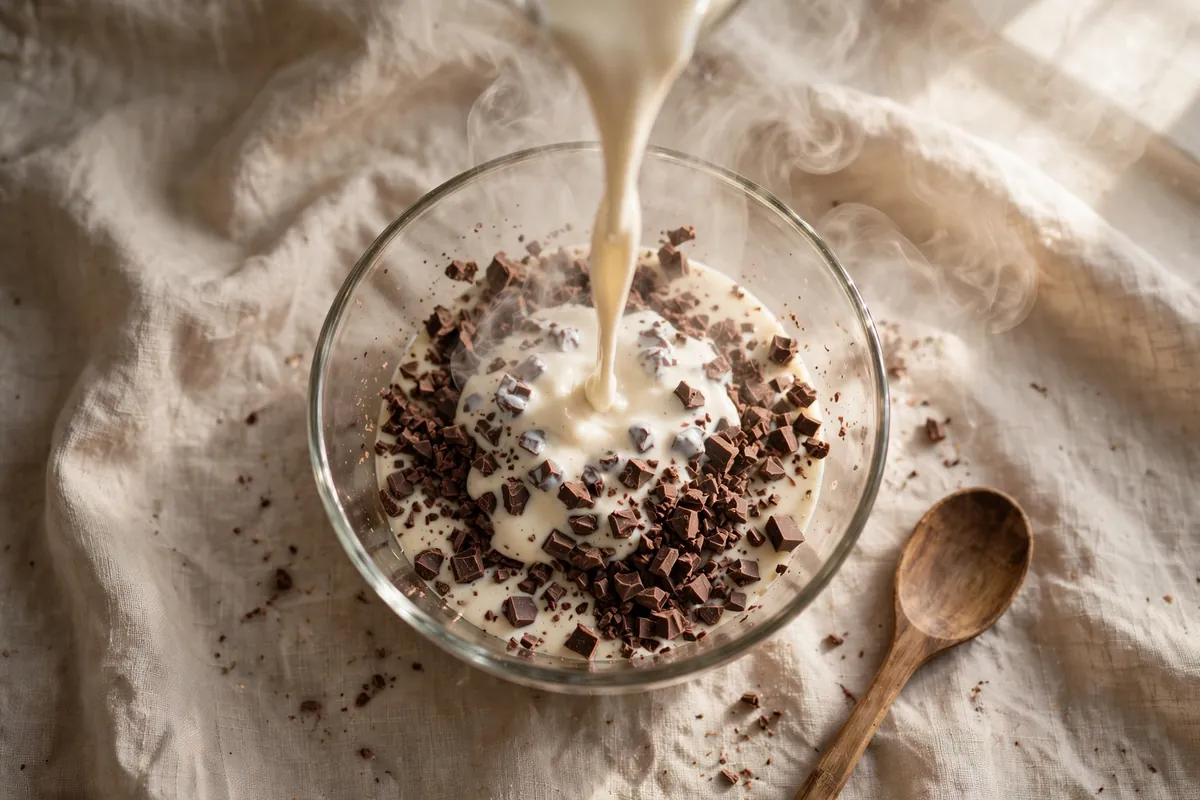
The baseline: ratios by weight — 1:1 chocolate to cream for a pourable glaze, 2:1 for firm truffles. Chop chocolate to pea-sized pieces, heat the cream to just simmering, about 180°F (82°C) — bubbles at the edges, never boiling. Pour over, wait 2 full minutes untouched, then stir slowly from the center outward. The center melts first and the emulsion spreads; stirring the whole bowl at once breaks it.
Why did my ganache split? The three culprits
Overheated chocolate. Cocoa butter separates from cocoa solids when overheated. Boiling cream poured over chocolate can scorch the mixture before the emulsion forms — the fat renders out and floats. This usually happens when someone boils the cream hard “to be sure it’s hot enough.”
Cream added at the wrong temperature or too fast. Cooled cream makes chocolate seize into lumps; cold cream hitting warm chocolate shocks the forming emulsion. The two components must meet at compatible temperatures — warm cream, room-temperature chopped chocolate, combined gently.
Water contamination — the seizing trap. A few drops of water seize melting chocolate into a stiff, grainy paste — a different failure from splitting, though the rescue is the same. Prevention: keep every utensil bone dry.
How to tell which one you have: Greasy oil pools over grainy chocolate = broken emulsion. Stiff, matte paste that seized on contact = water contamination. Both fix the same way.
Rescue method 1: Warm cream, one tablespoon at a time
This is the classic fix and it works on most broken ganaches. Warm 2–3 tablespoons of cream (or whole milk) to about 110°F (43°C) — warm to the touch, not hot. Add one tablespoon to the split ganache and whisk firmly in small circles from the center. You’ll see the mixture start to come together and gloss up. Add the next tablespoon only after the first is fully incorporated. Usually 2–3 tablespoons is enough for a batch made with 8 oz (225g) of chocolate.
The broken emulsion is missing its water phase — the fat has nothing to suspend in. Warm cream reintroduces water and milk proteins at a temperature that coaxes the fat back into suspension. Add gradually: a flood of cream overwhelms the mixture.
Rescue method 2: The immersion blender
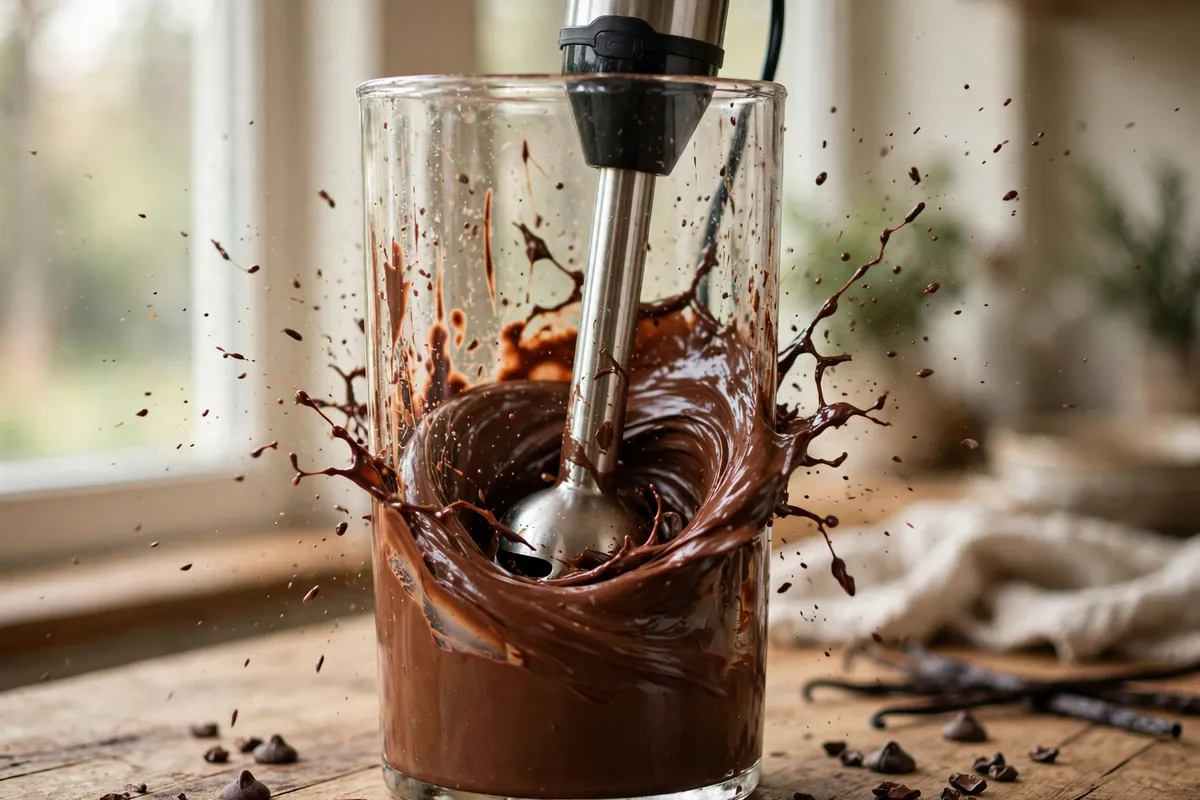
When whisking isn’t enough — the ganache is badly separated with real oil slicks — bring out the immersion blender. Add a tablespoon of warm cream, then blitz the ganache in short 5-second bursts, keeping the blender head fully submerged to avoid whipping in air. The high shear forces physically smash the fat droplets small enough to re-suspend.
Three 5-second bursts with a tablespoon of warm milk bring a visibly split batch back to full gloss. It’s just physics — an emulsion is a mechanical state, and shear force rebuilds it.
Caution: Don’t over-blend: more than 15–20 seconds total whips in air and turns glaze into mousse. Short bursts, check between each one.
Rescue method 3: The butter knob (for stubborn cases)
If cream and blending haven’t fully fixed it, whisk in a small knob of soft room-temperature butter — about 1 tablespoon per 8 oz (225g) of chocolate. Butter is itself an emulsion (butterfat suspended with water and milk solids), so it donates ready-made emulsifiers to the mixture. Whisk vigorously until glossy. This slightly softens the set of the ganache, so it’s best for glazes and fillings rather than truffles that need to hold a firm shape.
When ganache is beyond saving
Honesty matters here: not every broken ganache comes back. If the chocolate scorched — it smells burnt, tastes bitter and acrid, or has dark brown-black flecks — no amount of whisking fixes burnt. Sugar burns, cocoa solids burn, and burnt is a flavor, not a texture. Throw it out and start over; the chocolate is cheap compared to the dessert it’s supposed to cover.
Also beyond saving: a wildly off ratio (equal volumes instead of weights means far too much cream — always weigh). A soupy ganache isn’t broken, it’s just wrong; whisk in more melted chocolate until the ratio is right.
How to prevent split ganache next time
Five rules, in order of importance:
- Weigh, don’t volume-measure. Chocolate and cream have different densities. 1:1 by weight is the only ratio that means anything.
- Chop fine. Pea-sized pieces melt evenly; big chunks force you to overheat the already-melted portion waiting for the centers to catch up.
- Cream to 180°F (82°C), no hotter. Small bubbles at the edges. Boiling cream is the #1 cause of split ganache in home kitchens.
- Rest 2 minutes, stir from the center. The pause lets residual heat do the melting; center-outward stirring builds the emulsion instead of breaking it.
- Keep water away. Dry bowls, dry spatulas, dry hands. A few drops cause seizing.
Cold-kitchen habit: below about 65°F (18°C), warm the bowl with hot water and dry it first — cold bowls steal heat and the chocolate sets before the emulsion forms.
Frequently asked questions
Is split ganache safe to eat?
Yes. A broken emulsion is a texture failure, not a safety issue — every ingredient is still cooked and fine. Taste it: if it tastes like chocolate (not burnt), it’s safe to rescue and serve.
Can I use water instead of cream to fix ganache?
A tablespoon of warm water works — the emulsion needs a water phase. But cream works better because milk proteins act as emulsifiers. Never use cold water.
Why did my ganache get thick and grainy the moment I added liquid?
That’s seizing — a few drops of water hit the chocolate. Ironically, the fix is more liquid: add warm cream a tablespoon at a time while whisking until it relaxes back.
Can I reheat ganache that already split?
Yes — set the bowl over barely simmering water (not touching), stir until fluid, then apply the warm-cream rescue. Never microwave on high; hot spots scorch chocolate.
My rescued ganache looks fine but won’t set firm. What happened?
Too much rescue liquid — each tablespoon softens the set. For truffles, whisk in extra melted chocolate to compensate.
Can I fix ganache that split in the fridge overnight?
Yes — warm gently over a water bath until fluid, then whisk in warm cream. Cold ganache often just looks separated from crystallized cocoa butter; rewarming alone usually fixes it.
Related troubleshooting: How to Fix Broken Buttercream · How to Fix Grainy Fudge · Why Does My Frosting Taste Like Butter?