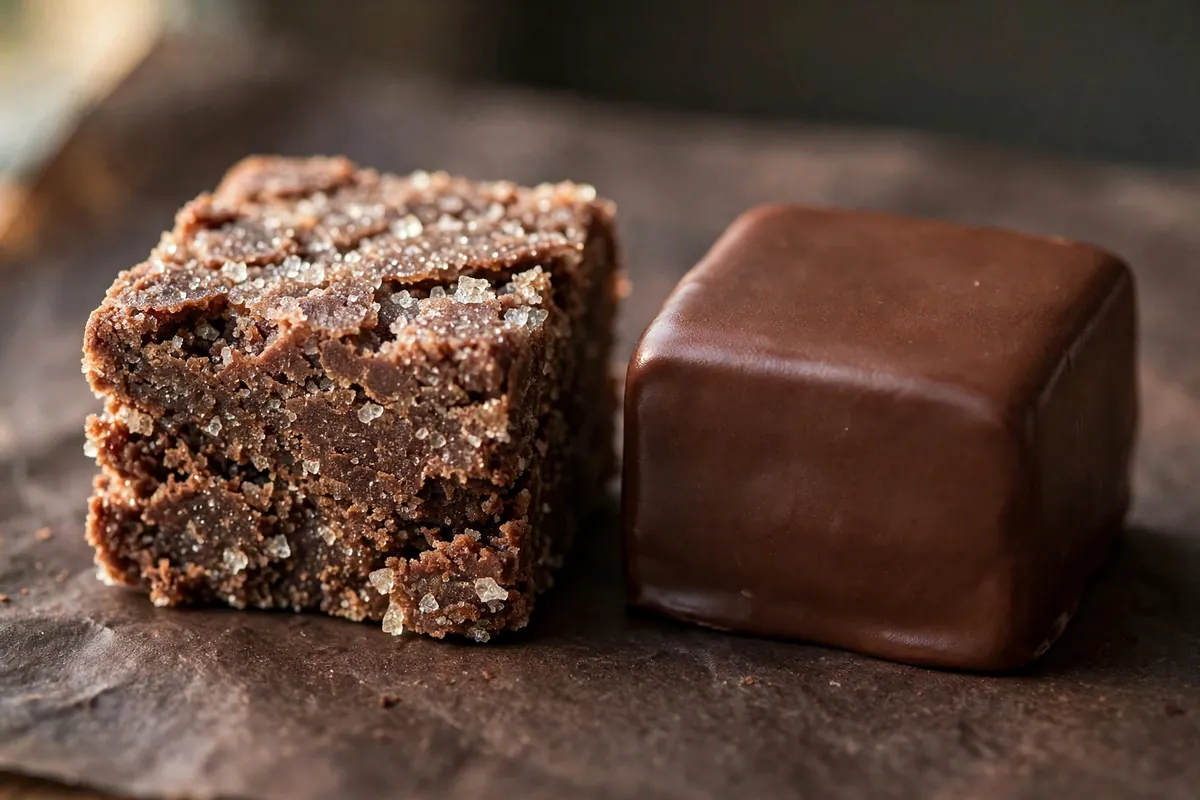
Grainy fudge is one of the most fixable failures in candy making — and one of the most misunderstood. That sandy texture isn’t bad chocolate or a bad recipe. It’s sugar chemistry: your sucrose formed crystals too large, and large crystals feel gritty while tiny ones feel smooth. The entire game of fudge is controlling when and how big those crystals grow.
Quick diagnosis: Grainy fudge is a crystallization-timing problem: you almost certainly stirred the syrup while it cooled (cause #1) or cooked it to the wrong temperature (cause #2). The good news: grainy fudge can be fully rescued by reheating and redoing it correctly.
The 30-second science
Fudge is a supersaturated sugar solution — more sugar dissolved than the water can comfortably hold at room temperature. As it cools, the sugar wants to crystallize. Your job is to force millions of microscopic crystals (smooth) instead of a few large ones (grainy). Two levers control this: temperature (sets the sugar-to-water ratio) and agitation timing (decides when crystallization starts).
1. You stirred it while it cooled — the classic mistake
Cause #1 by a wide margin. Once fudge syrup comes off the heat, it must cool completely undisturbed — no stirring, no scraping the pan, no jiggling the thermometer — down to about 110°F (43°C). Stirring hot supersaturated syrup seeds crystallization early, and early crystals grow large in the warm, mobile syrup. One impatient stir at 180°F can grain the whole batch.
How to tell: You stirred, scraped, or “checked” the fudge during cooling, or started beating while it was still warm to the touch.
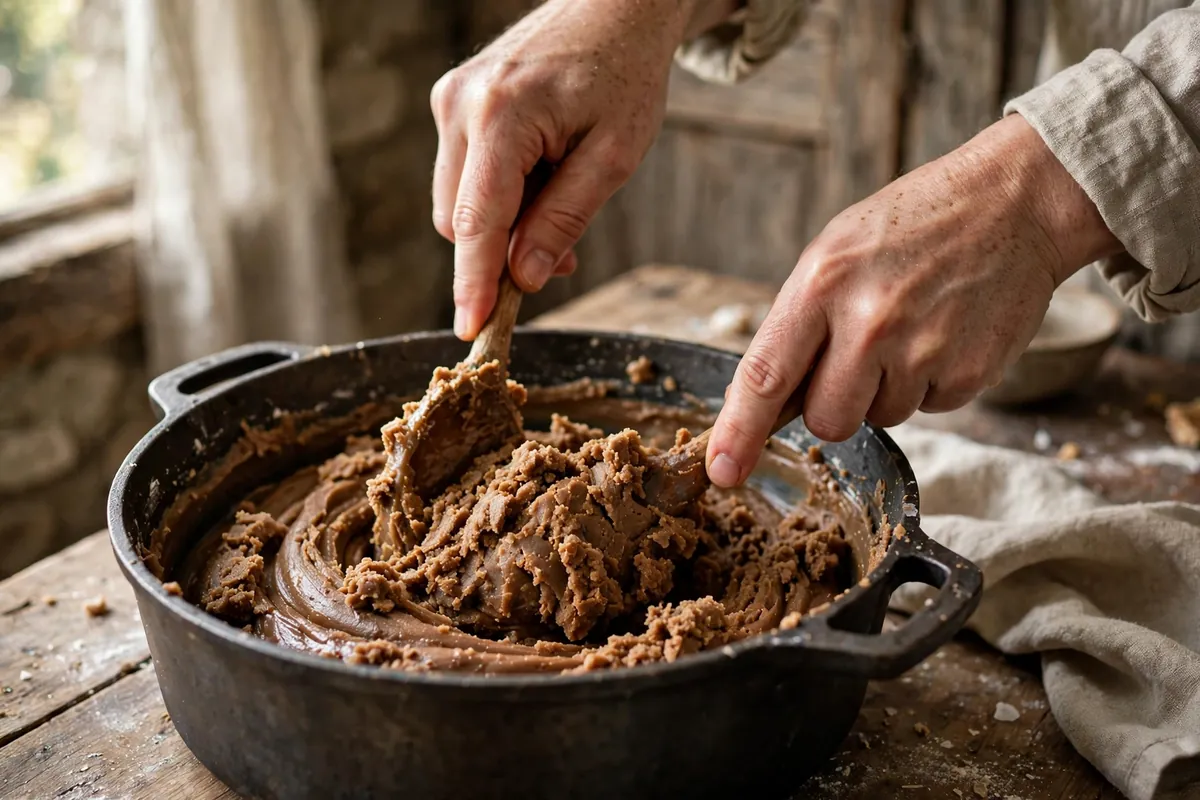
The fix: After the syrup hits temperature, leave the pan undisturbed until it reads 110°F (43°C) — lukewarm, about 45–60 minutes. Then beat vigorously until it thickens and loses its gloss. Beating at the right moment shatters forming crystals into tiny ones. The rule is absolute: hot syrup, hands off; cool syrup, beat hard. When I stopped “helping” my fudge during cooling, the grain stopped.
2. You cooked it to the wrong temperature
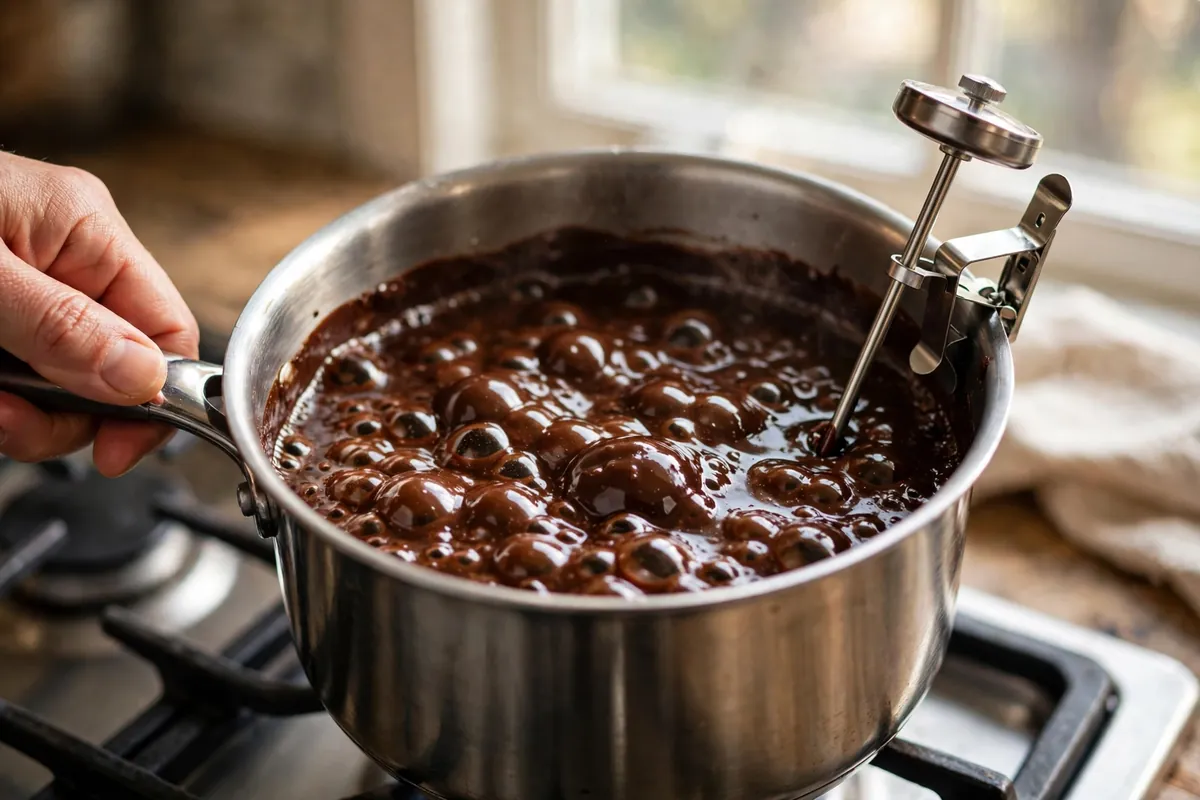
Fudge must reach soft-ball stage: 234–238°F (112–114°C). Undercook it and too much water remains — it won’t set. Overcook it past ~240°F and too much water boils off — the sugar concentration is so high that crystals form aggressively, turning the fudge dry, crumbly, and grainy. A few degrees matter enormously.
How to tell: Undercooked fudge is soft and won’t hold shape; overcooked is hard and dry as well as grainy. No thermometer at all? This is very likely your cause.
The fix: Use a calibrated candy thermometer — test in boiling water first (should read 212°F/100°C at sea level; adjust targets by the difference). Clip it so the bulb sits in the syrup, not touching the pan bottom. Pull at 236°F (113°C), the middle of the range. Learn the cold-water backup: a spoonful dropped in ice water should form a soft ball that flattens in your fingers.
3. No interfering agent — nothing stopping big crystals
Good recipes include an “interfering agent” — 1–2 tablespoons corn syrup or ¼ teaspoon cream of tartar per batch. These molecules physically block sucrose crystals from growing large. Skip them and you’re relying purely on technique, which works but leaves zero margin for error.
How to tell: Your recipe had no corn syrup, cream of tartar, or glucose, and the fudge grained despite decent temperature and stirring discipline.
The fix: Add 2 tablespoons light corn syrup per batch with the sugar and liquid — too little to taste, enough to insure against large crystals. Butter dotted on top during cooling (not stirred in) helps too: its milk proteins and fat interfere with crystal growth.
4. Sugar crystals from the pan sides seeded the batch
Undissolved crystals clinging to the pan walls are seeds — each can trigger a cascade of large crystals through the batch. Scraping the sides down into the syrup planted them yourself.
How to tell: You saw crusty sugar on the pan walls, or scraped the sides while bringing the syrup up to temperature.
The fix: Stir only until the sugar fully dissolves — then stop stirring for the rest of the boil. Wash the sides with a wet pastry brush, or put the lid on for 2 minutes once it boils: trapped steam washes the walls clean by itself. Hands off from then until it hits temperature.
5. Humidity or a lying thermometer
On humid days the syrup absorbs airborne moisture, effectively undercooking itself — and an uncalibrated thermometer can be off 5°F, the entire difference between silky and sandy. If it failed on a rainy day despite good technique, or your thermometer never met boiling water, make fudge on dry days, calibrate every thermometer, and trust the cold-water test over a suspect reading.
Yes, you can rescue grainy fudge
Chop it up, return it to the pan with 2–3 tablespoons of milk or cream per pound, and melt gently over low heat until completely smooth. Then treat it as a fresh batch: back to 234–238°F (112–114°C) without stirring once boiling, cool undisturbed to 110°F (43°C), beat until it loses its gloss. The second attempt almost always comes out smooth — I’ve rescued every grainy batch I’ve made this way.
The smooth-fudge checklist
Dissolve sugar fully. Wash down sides. Boil undisturbed to 236°F (113°C). Cool untouched to 110°F (43°C). Beat until the gloss disappears; pour immediately. Add corn syrup for insurance, calibrate your thermometer, pick a dry day. Nail the cooling-then-beating sequence and the rest is detail — that single discipline separates silky from sandy.

FAQ
Is grainy fudge safe to eat?
Completely — graininess is oversized sugar crystals, a texture defect, not spoilage. It tastes the same, just sandy. And it’s fully fixable: reheat with a little milk and redo the process correctly.
Can I fix fudge that’s already grainy?
Yes. Chop it, melt gently with 2–3 tablespoons milk or cream per pound, bring back to 234–238°F (112–114°C), cool undisturbed to 110°F (43°C), then beat until it loses its gloss. Rescued batches routinely come out smoother than most first attempts.
Why can’t I stir fudge while it cools?
Cooling syrup is supersaturated — holding more dissolved sugar than it stably can. Agitation seeds crystallization while it’s still hot, and hot crystals grow large, which reads as grainy. Waiting until 110°F (43°C) then beating forces millions of tiny crystals instead — tiny feels smooth.
What temperature is soft-ball stage?
234–238°F (112–114°C). Below it, fudge won’t set; above it, it turns dry and crumbly. Aim for 236°F (113°C) with a calibrated thermometer, and confirm with the cold-water test: a spoonful in ice water should form a soft ball that flattens in your fingers.
Can I make smooth fudge without corn syrup?
Yes, but you lose your safety net. Corn syrup (or ¼ teaspoon cream of tartar) blocks large crystal formation. Without it, temperature and no-stir discipline must be perfect. If fudge keeps graining, 2 tablespoons of corn syrup per batch is the easiest fix.
Why is my fudge soft AND grainy?
Undercooking plus early crystallization: the syrup never reached soft-ball (too much water, won’t set) and got agitated warm (large crystals). Reheat to the full 236°F (113°C) and cool undisturbed this time.
Related troubleshooting: How to Fix Broken Buttercream (Curdled, Soupy, Too Sweet) · Why Is My Cake Dry? Moisture Science for Home Bakers