Panna cotta has exactly one structural ingredient — gelatin — so every setting failure traces back to it: too little (soupy), too much (rubbery), boiled (dead), unbloomed (grainy), sabotaged by fresh fruit enzymes, or simply not chilled long enough. The ratios are precise and forgiving once you know them, and both failures are rescuable.
Quick diagnosis: Soupy panna cotta = too little gelatin, gelatin added to boiling liquid, or fresh pineapple/kiwi/papaya enzymes digesting it. Rubbery = too much gelatin. Fix: 2¼ tsp (7g) powdered gelatin per 2 cups (480ml) liquid, bloom 5 minutes in cold water, melt into warm — never boiling — cream, chill 4–6 hours minimum.
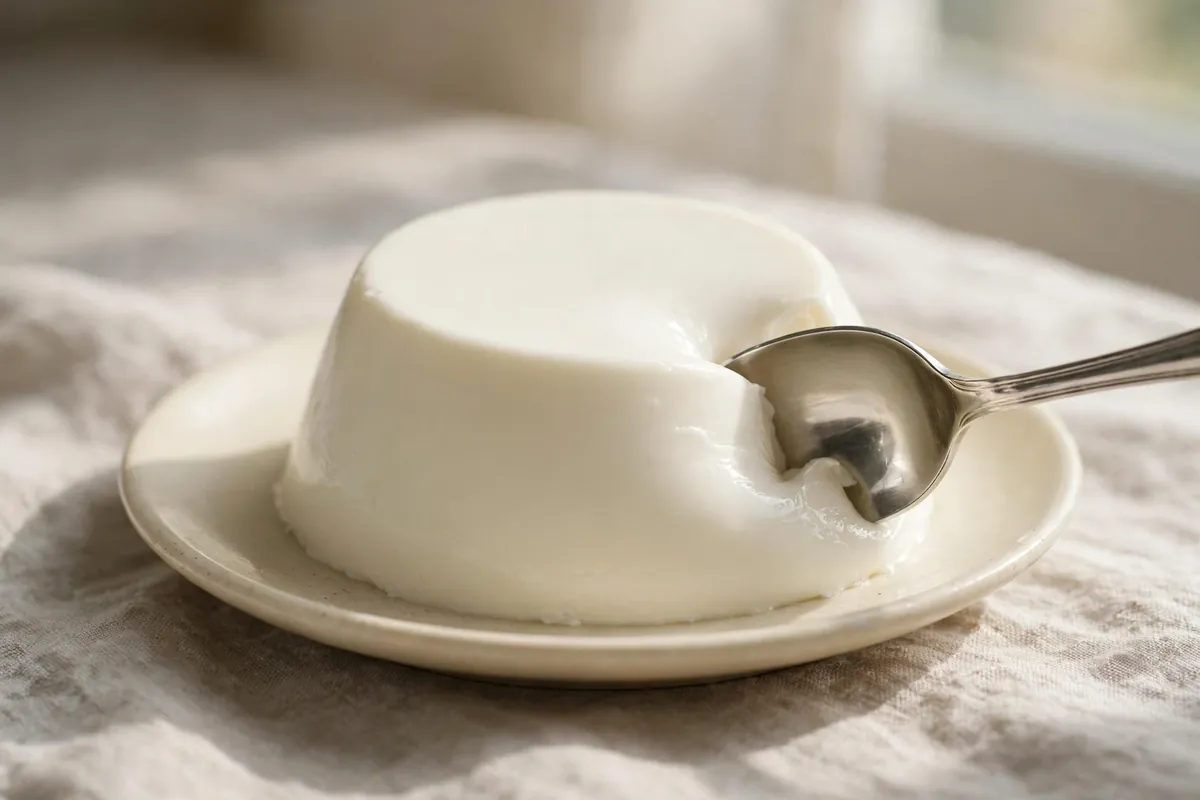
My tested baseline: 2¼ tsp (one 7g packet) powdered gelatin sprinkled over 3 tbsp cold water, bloomed 5 minutes. 2 cups (480ml) heavy cream plus ⅓ cup (65g) sugar heated until steaming — never boiling — then off the heat. Bloomed gelatin stirred in until dissolved, 1 tsp vanilla added. Six ½-cup ramekins, chilled 6 hours. Result: holds its shape unmolded, trembles when nudged, melts on the tongue.
1. Too little gelatin — the classic soupy failure
The standard ratio is 2¼ teaspoons (one 7g packet) of powdered gelatin per 2 cups (480ml) of total liquid. Below that — a short-measured teaspoon, a “light” version with extra milk — there isn’t enough protein network to trap the liquid, and the result pours rather than wobbles.
How to tell: Refrigerated 6+ hours and still flows like thick cream; tilting the ramekin sends it sliding.
The fix: Measure properly — level teaspoons, or a scale: 7g per 480ml. Halving a recipe means halving the gelatin exactly; eyeballing small gelatin quantities is where most failures start. Sugar and alcohol slightly weaken the set, so boozy or very sweet versions need the full measure, not less.
2. You boiled the gelatin — heat kills its setting power
Gelatin is a protein, and prolonged boiling denatures it. Cream brought to a rolling boil with gelatin in it loses much of its gelling strength — the panna cotta half-sets: spoonable, but never unmoldable.
How to tell: The cream boiled vigorously with gelatin in it; it set softly but collapses on unmolding no matter how long you chill.
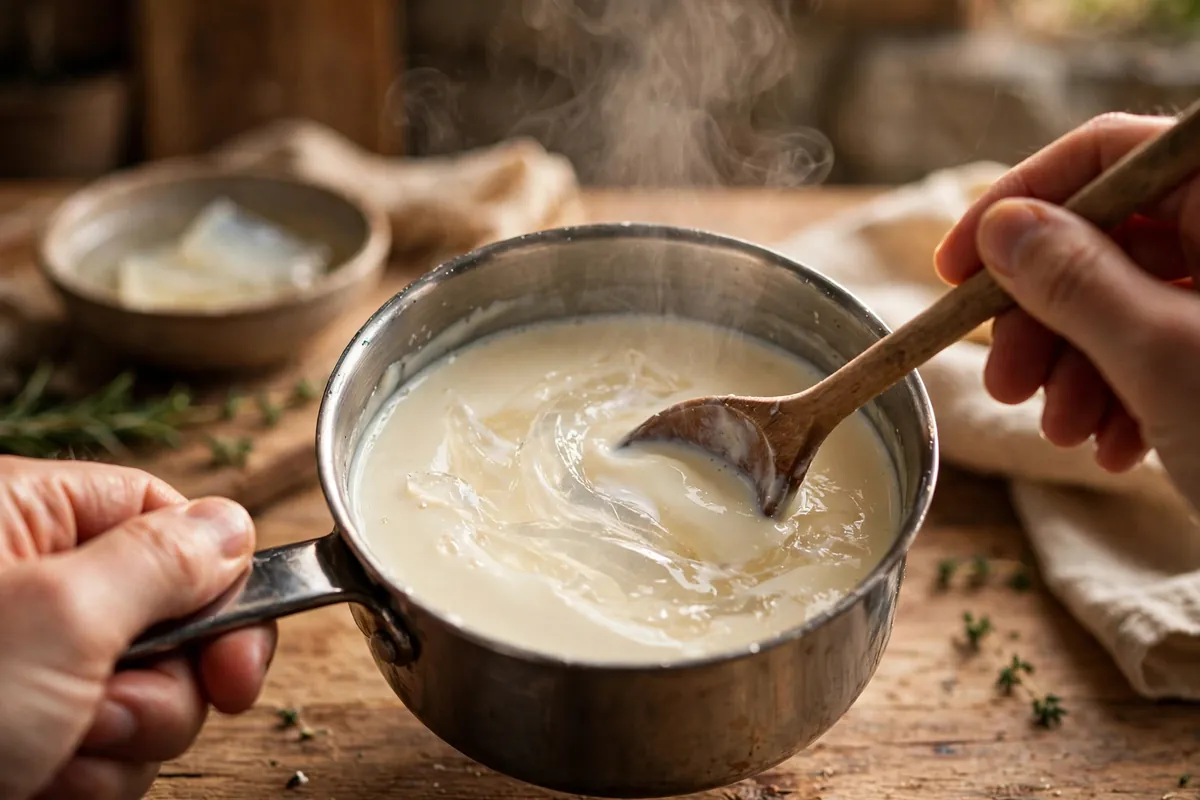
The fix: Heat the cream only until steaming and the sugar dissolves — small bubbles at the edges, never a boil — then take it off the heat before stirring in the bloomed gelatin. Residual heat around 140–160°F (60–70°C) dissolves gelatin fully without damage. Boiled gelatin can’t be revived, but the batch can be rescued (see below).
3. You skipped the bloom — grainy, weak set
Powdered gelatin sprinkled directly into hot cream clumps on contact: each clump’s surface hydrates instantly and seals dry powder inside — the same physics as lumpy batter. Those clumps never fully dissolve, so you get a weaker set plus grainy specks.
How to tell: Tiny translucent grains in the finished dessert; it set softer than the ratio says it should.
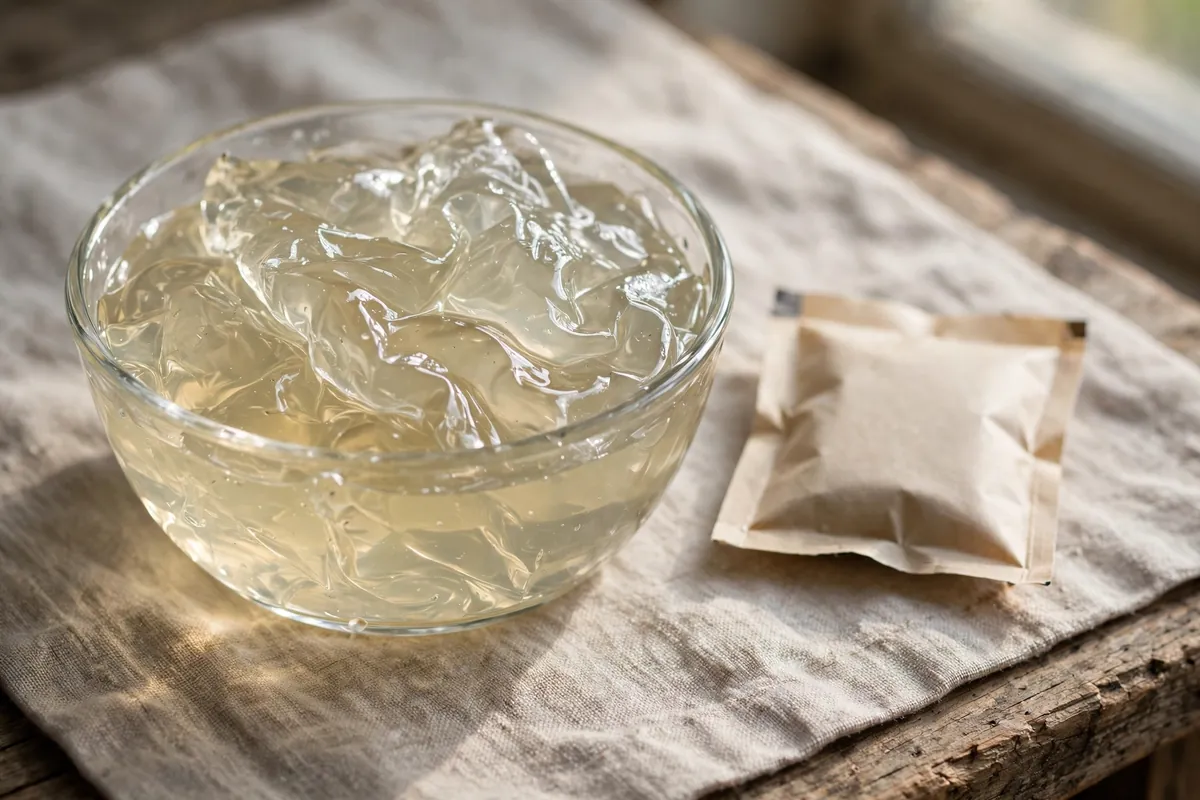
The fix: Bloom every time: sprinkle gelatin evenly over 3 tablespoons of cold water, wait 5–10 minutes until it looks like wet sand, then melt into the warm cream. With sheet gelatin, soak 5 minutes in cold water and squeeze dry before melting in.
4. Too much gelatin — the rubbery, bouncy failure
More gelatin isn’t “extra safe” — it’s bouncy. Double it and panna cotta stops being delicate cream and becomes dessert-flavored rubber: it bounces when tapped, squeaks on the teeth, and won’t melt in the mouth. The most common overcorrection after one soupy batch.
How to tell: Unmolds perfectly but jiggles like firm jelly; texture is chewy; you used more than 2¼ tsp per 2 cups.
The fix: Respect the ratio — 7g per 480ml. If nervous, chill a spoonful 20 minutes as a test before portioning: it should just barely hold a soft shape. The ideal trembles when nudged and dissolves on the tongue.
5. Fresh tropical fruit sabotaged it — enzyme attack
Fresh pineapple, kiwi, papaya, mango, and guava contain protease enzymes (bromelain, actinidin, papain) that digest protein — including your gelatin network. Fold fresh pineapple into panna cotta and it will never set, however perfect everything else was.
How to tell: Technique and ratios were right, but the batch with fresh fruit stayed liquid while a plain batch set fine.
The fix: Heat destroys these enzymes — canned fruit works because it’s heat-processed; simmering fresh fruit 2–3 minutes does the same. Use cooked or canned tropical fruit, never raw. Citrus, berries, stone fruit, and melon are safe fresh.
6. You didn’t chill it long enough — gelatin sets slowly
Gelatin firms gradually: at 2 hours it’s softly thickened, at 4 sliceable, at 6+ fully set. Unmolded at 3 hours it slumps — not a ratio problem, just an unfinished network. Warm fridge spots and deep ramekins slow it further.
How to tell: Thick but not firm; holds shape in the ramekin, collapses on unmolding; chilled under 4 hours.
The fix: Chill 4–6 hours minimum; overnight is ideal. Keep ramekins on a cold shelf, not the door. To unmold: dip in warm (not hot) water 5–10 seconds, run a thin knife around the edge, invert. If it resists, 5 more seconds in the water — patience, not force.
Can you fix panna cotta after the fact?
Yes — one of the most rescuable desserts in baking. Soupy: gently rewarm until just fluid (don’t boil), bloom extra gelatin (1 tsp per 2 cups of mixture), stir in until dissolved, re-portion, chill 6 hours. Rubbery: you can’t remove gelatin, but serve in glasses layered with macerated fruit or tart coulis — the texture reads as intentional — or melt it into hot chocolate. Grainy: rewarm gently, stir until smooth, strain through a fine sieve, re-chill. The only lost cause is enzyme-sabotaged gelatin: remelt, add fresh gelatin, and keep the raw fruit as a topping.
FAQ
Is unset panna cotta safe to eat?
Yes — it’s heated, refrigerated sweetened cream; a failed set is a texture problem only. Serve in glasses as “panna cotta cream” with fruit.
Can I use agar instead of gelatin?
Yes, but the texture differs: agar sets firmer, less creamy, at room temperature. Use ~1 tsp agar powder per 2 cups liquid, boiled 2 minutes to activate (agar needs boiling; gelatin must never boil).
Why is my panna cotta grainy?
Unbloomed gelatin clumped instead of dissolving. Bloom 5–10 minutes in cold water next time. For the current batch, rewarm gently and strain through a fine sieve.
How do I know if my gelatin is still good?
Sealed, cool, and dry, powdered gelatin lasts years. If an old packet fails twice on a correct recipe, replace it — but rule out technique errors first; dead gelatin is rare.
Can I make panna cotta without dairy?
Yes — coconut cream sets beautifully at the same ratio. Almond or oat milk give a softer set; add an extra ½ tsp gelatin per 2 cups.
Why did my panna cotta separate into layers?
It was portioned too warm and fat rose before the gelatin network formed. Cool to room temperature, stirring occasionally, before filling ramekins, then chill promptly.
Related troubleshooting: How to Fix a Split Custard (And Why It Curdled) · Why Did My Tiramisu Turn Watery? · How to Fix Lumpy Batter