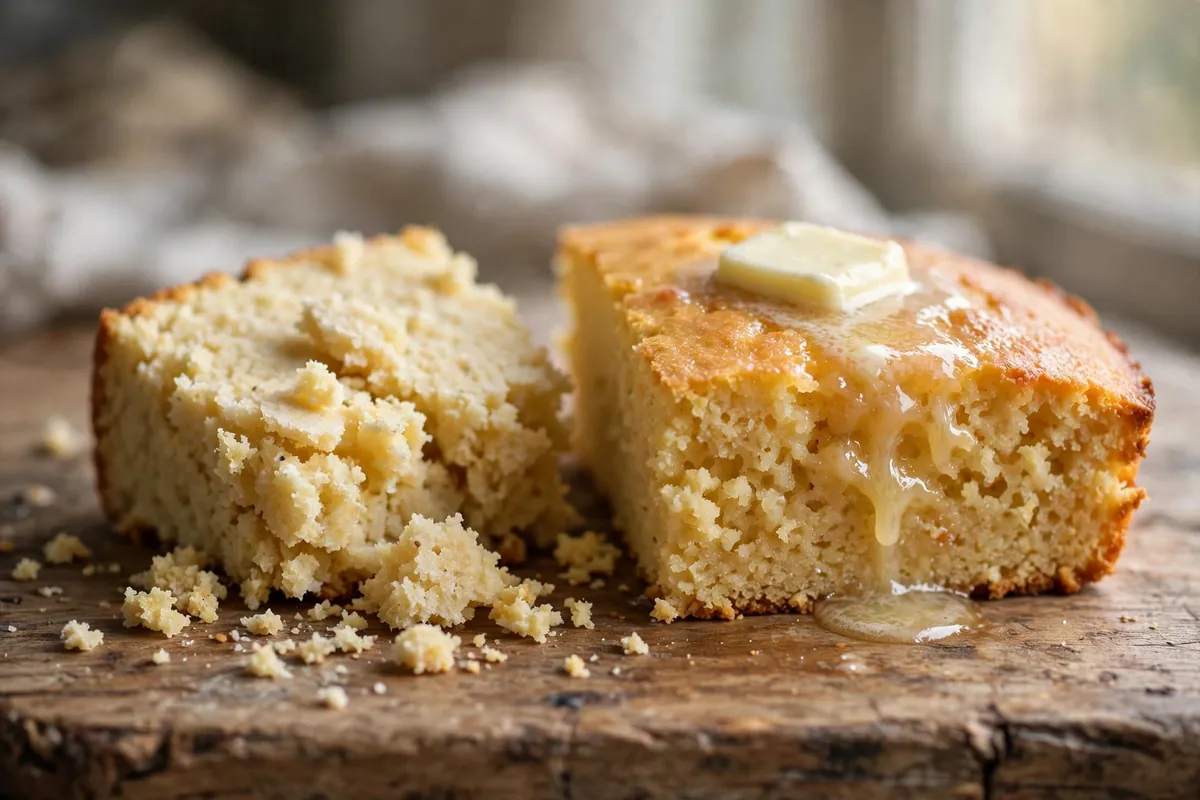
Dry cornbread is a special kind of disappointment — it looks golden and perfect, then crumbles into sawdust in your mouth. The good news: dryness in cornbread is almost never a mystery. It’s a lean formula, too much oven time, or the wrong pan, and each one has a specific fingerprint you can read in the crumb.
Quick diagnosis: Dry cornbread is usually overbaked (cause #1) or made with a lean recipe low in fat and sugar (cause #2). Pull it at 18–20 minutes when the center is just set, and make sure your recipe has real fat — butter, oil, or bacon drippings.
Style note: there are two cornbreads. Southern-style is lean and savory — mostly cornmeal, little or no sugar, baked in a screaming-hot cast iron skillet with bacon fat: crisp crust, coarse crumb. Northern-style is sweeter and cakier, with flour, sugar, and butter. Judge dryness against the right tradition — a crisp-crusted Southern cornbread isn’t “dry,” it’s correct.
1. You overbaked it — the #1 cause, and it’s minutes, not tens of minutes
A 9-inch skillet of batter is barely an inch deep, so the window between done and dry is about three minutes. Most recipes say 20–25 minutes at 400–425°F (200–220°C), but that’s written for the slowest oven — many are done at 18.
How to tell: Dry all the way through with a hard, dark bottom, 22+ minutes in the oven, edges pulled well away from the pan.
The fix: Start checking at 15 minutes: golden top, center springs back when pressed, toothpick with a few moist crumbs. Pull it then — carryover heat finishes the center. The same batter at 18 vs 24 minutes is the difference between tender and chalky. Verify with an oven thermometer; 25°F hot turns a 20-minute bake into 17.
2. The recipe is too lean — cornmeal needs fat to stay tender
Cornmeal has almost no gluten and a coarse, thirsty structure. Without enough fat and moisture, the crumb can’t hold together. A “healthy” cornbread with halved fat and no sugar will always bake dry — you removed the two ingredients doing the moisture work.
How to tell: Crumbly and coarse even with perfect timing — falls apart when sliced, flat starchy flavor instead of rich.
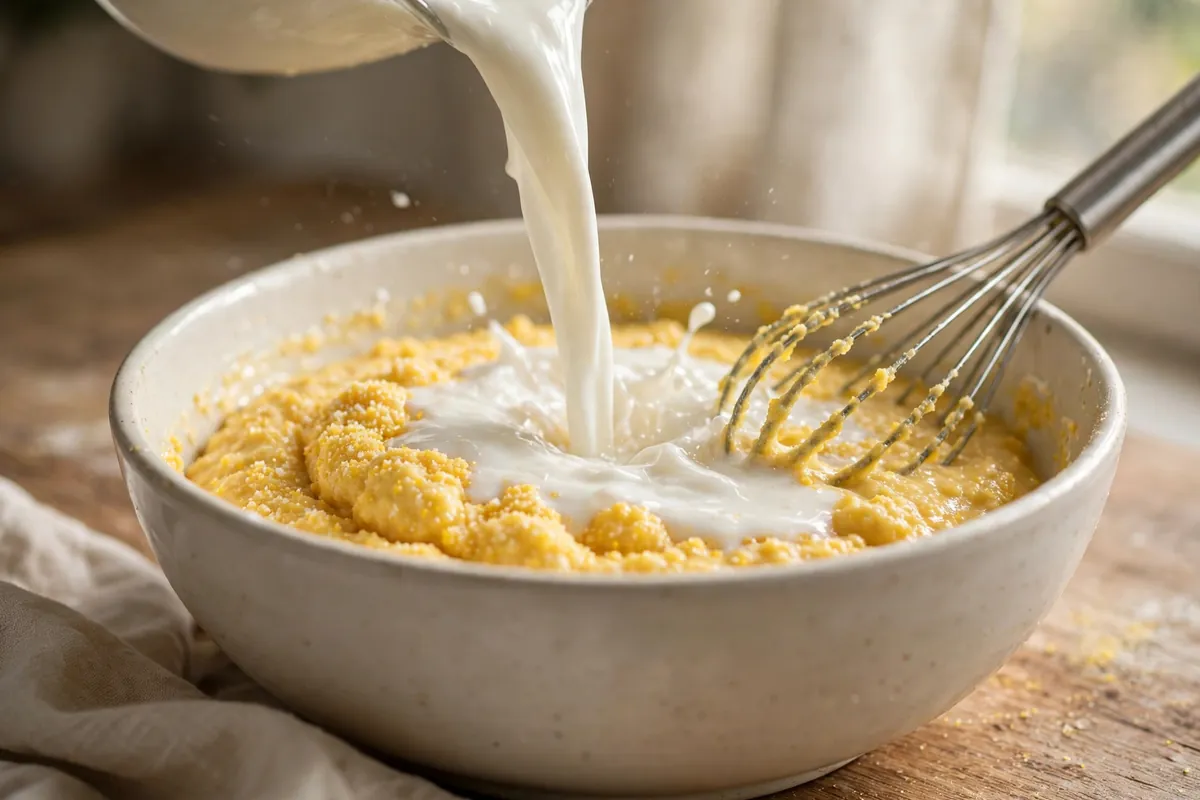
The fix: Baseline for a 9-inch skillet: at least 4 tablespoons (60g) fat — butter, oil, or bacon drippings — and 1 to 1¼ cups (240–300ml) liquid, ideally buttermilk. No buttermilk? Add a tablespoon of lemon juice per cup of milk and wait 5 minutes. And don’t fear sugar: 1–2 tablespoons tenderizes without real sweetness — sugar is hygroscopic and holds moisture.
3. The batter never rested — dry cornmeal stayed dry
Cornmeal hydrates slowly. Mix and bake immediately and the coarse particles never absorb the liquid — gritty, dry crumb. The fix costs nothing: rest the batter.
How to tell: Gritty or sandy texture even with the right bake time, uneven crumb — moist pockets next to dry ones.
The fix: Rest the mixed batter 10–15 minutes — you’ll see it thicken as the cornmeal drinks up the liquid. (Same hydration principle as Why Is My Cake Dry?.) Don’t exceed 20 minutes; the baking powder starts reacting on contact with liquid.
4. Wrong pan or a cold skillet — the crust never had a chance
A preheated cast iron skillet flash-sets the bottom crust on contact, sealing in moisture, and its even heat bakes fast — less oven time means less moisture lost. A cold glass or thin metal pan does the opposite: slow warm-up, longer bake, steamed instead of crisped bottom.
How to tell: Pale, soft bottom with a steamy texture — or a burnt bottom with a gummy middle (thin dark pans transmit heat too aggressively).
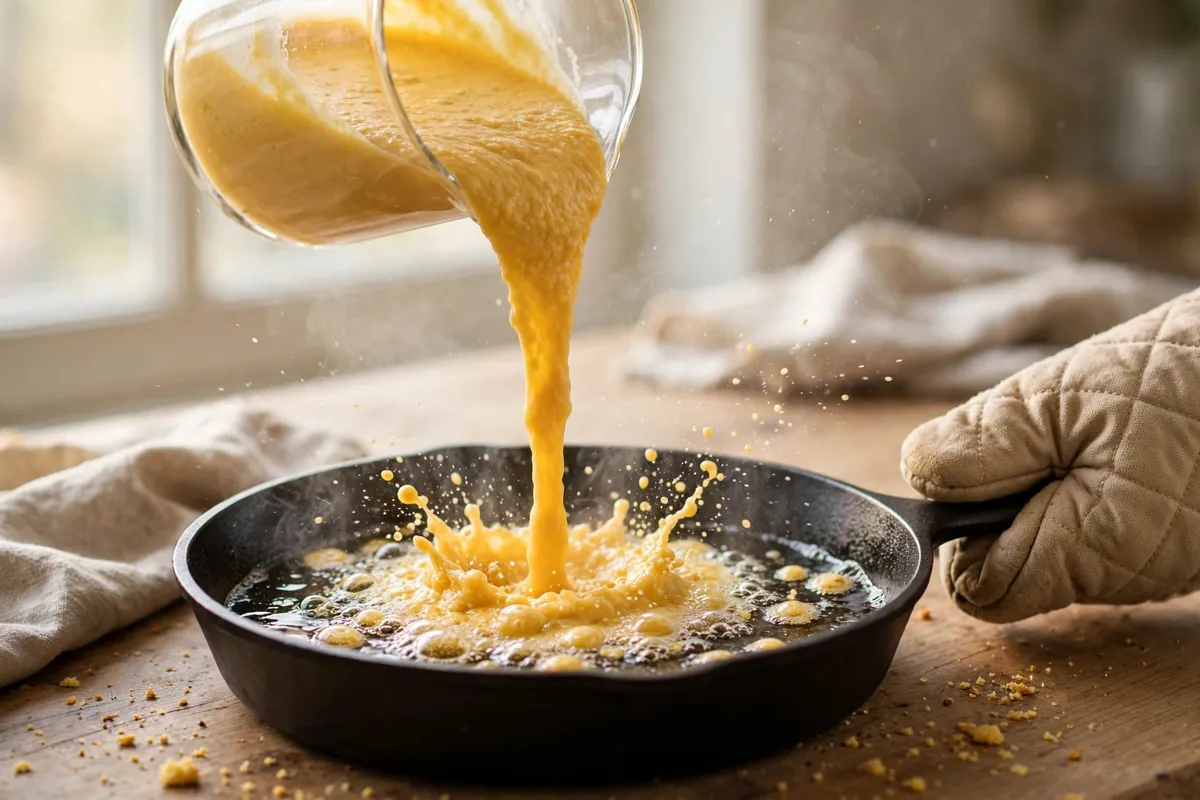
The fix: Heat the skillet in the oven during preheating with a tablespoon of fat in it. When the fat shimmers, pour in the rested batter — it should sizzle on contact — and return immediately to the oven. No cast iron? Use light-colored metal (dark nonstick over-browns — see Baking Pan Materials) and add 2–3 minutes.
5. You used the wrong grind or stale cornmeal
Cornmeal goes stale — the germ oils turn rancid and stale meal absorbs liquid poorly, baking up dry and flat no matter what you do. Grind matters too: coarse stone-ground needs more liquid and a longer rest than fine; swapping without adjusting hydration guarantees a mismatch.
How to tell: Dull, cardboard-like or faintly bitter flavor even with a good recipe, and the bag has been open in the pantry for months.
The fix: Smell it: fresh is sweet and corny, stale is musty or flat. Buy small bags; store in the freezer. For coarse stone-ground, add 2–3 tablespoons liquid and rest a full 20 minutes.
Rescue: what to do with the dry batch you already baked
Don’t throw it out. Warm it and serve with salted butter and honey. Crumble it into chili, cube and toast it into croutons, or pulse into crumbs for cornbread dressing — slightly dry cornbread is actually preferred for dressing because it absorbs stock without turning to mush. Or split, butter, and griddle it crisp — fried cornbread with a runny egg is a legitimate breakfast.
Frequently asked questions
Is dry cornbread safe to eat?
Yes — dryness is texture, not safety. As long as it baked through (no wet, gummy raw center), dry cornbread is perfectly safe. Warm it, butter it, or repurpose it.
How do I moisten cornbread after baking?
Serve warm with butter and honey. For a whole loaf, brush with melted butter, wrap in foil, warm 10 minutes at 300°F (150°C) — trapped steam softens the crumb.
Should cornbread be sweet or savory?
Both are authentic — it’s regional. Southern: savory, little sugar, bacon fat, cast iron. Northern: sweeter, cakier, butter. Neither should be dry.
Can I use regular milk instead of buttermilk?
Yes, with a fix: add 1 tablespoon of lemon juice or white vinegar per cup of milk and let it stand 5 minutes. The acidity tenderizes the crumb almost as well as real buttermilk. (Dairy swaps are covered broadly in Dairy-Free Frosting for the frosting side of substitutions.)
Why is my cornbread crumbly and falling apart?
Not enough binder or fat, or sliced too hot. Rest 10 minutes in the pan before slicing — starches firm as it cools. If it still crumbles, the recipe needs more egg or fat.
Can I make cornbread ahead?
Bake it the day before and rewarm wrapped in foil — it actually slices cleaner the next day. For dressing, deliberately bake it 1–2 days ahead and let it go stale; stale cornbread absorbs stock better.
Related troubleshooting: Why Is My Cake Dry? · Why Did My Muffins Turn Out Tough? · Why Is My Banana Bread Dense?