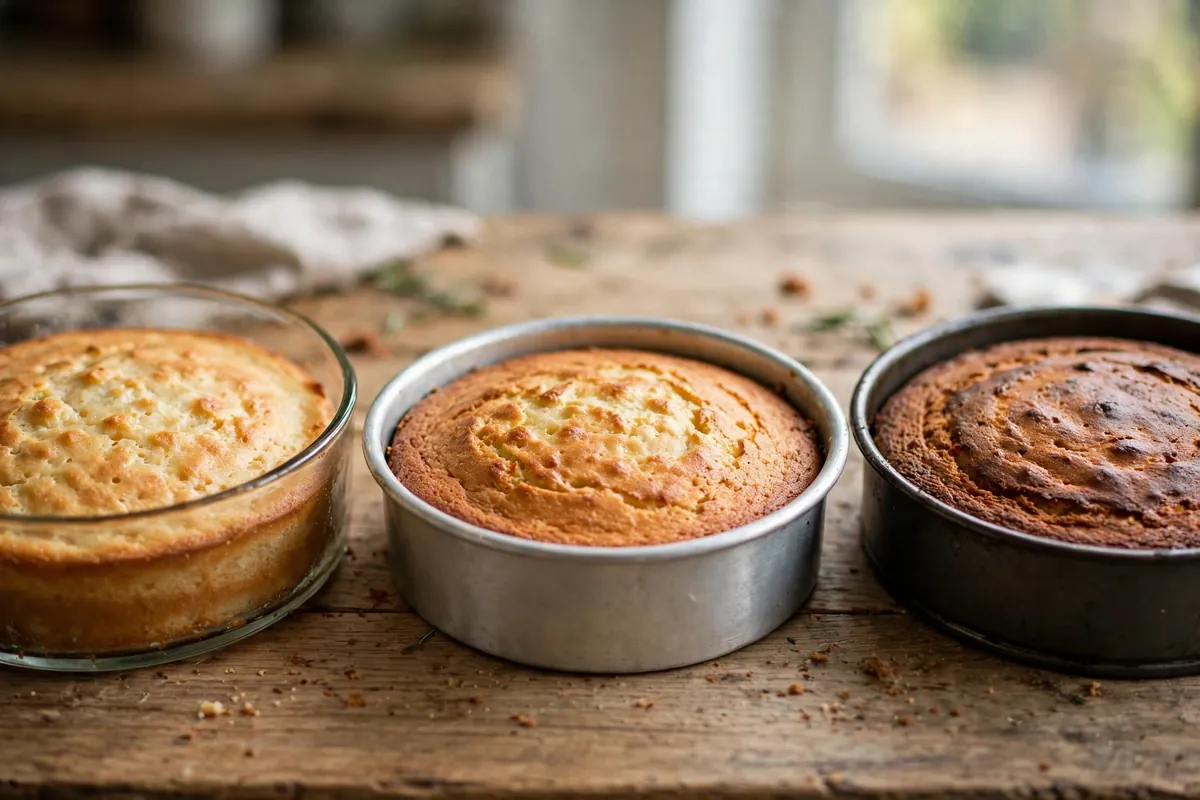
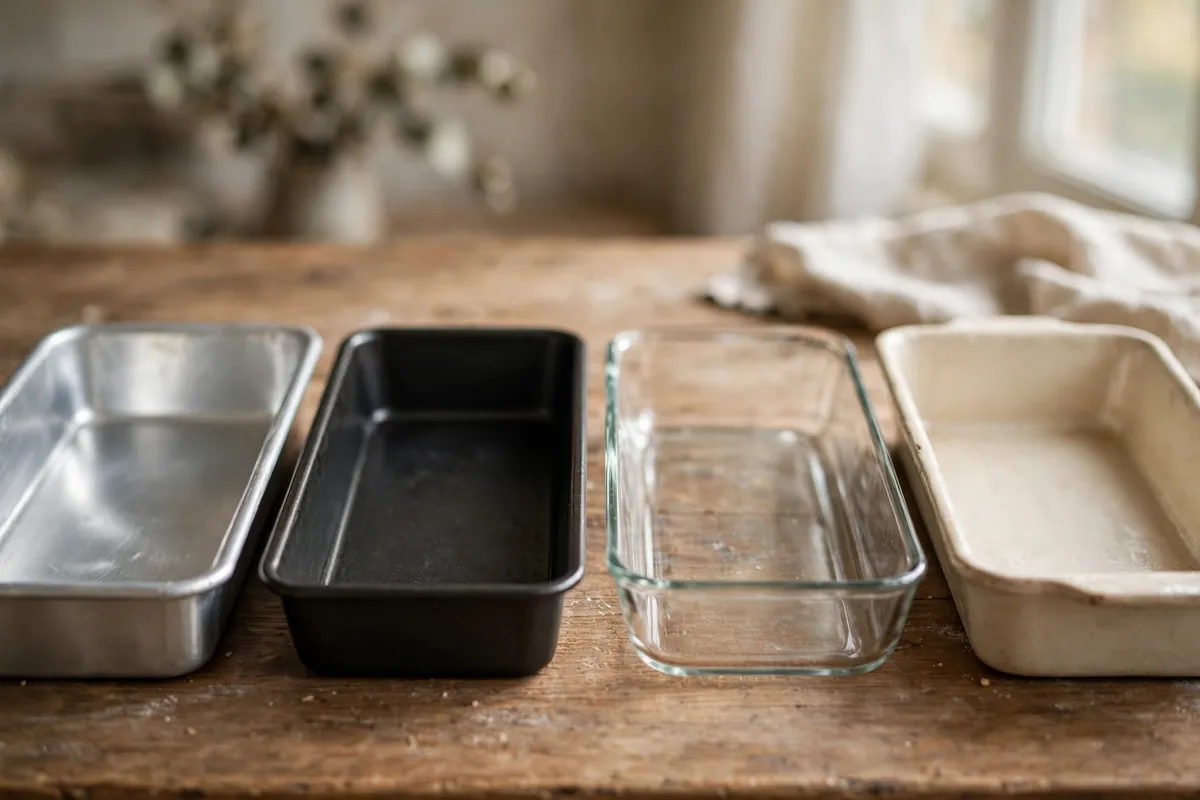
Your recipe says “bake in a 9×5 loaf pan” — but it doesn’t say glass, light aluminum, or dark nonstick, and that omission matters more than most bakers realize. The same batter in three different pans comes out three different ways: different browning, different rise, sometimes a different bake time entirely. The same recipes baked across all three pan types show consistent, repeatable differences. Here’s what actually changes, and the adjustments that make any pan work.
Quick diagnosis: Pan color and material change how fast heat reaches your batter. Dark pans absorb more radiant heat — browner, thicker crusts, faster baking: reduce heat 25°F (15°C). Glass is a slow insulator — paler bakes that need more time: same reduction, or add 5–10 minutes. Light aluminum is what nearly every recipe was developed in — when in doubt, that’s the baseline.
The physics in 60 seconds
Ovens heat food three ways: conduction (direct contact with the hot pan), convection (hot air circulating), and radiation (infrared energy from the oven walls and elements). Pan material changes the first and third dramatically:
- Dark surfaces absorb radiant heat; light surfaces reflect it. A dark pan soaks up infrared energy and runs hotter than the oven air around it. A shiny light pan bounces much of it away.
- Metal conducts heat fast; glass conducts it slowly. Aluminum moves heat into the batter quickly and evenly. Glass is an insulator — it heats slowly, holds heat long, and delivers it gently.
Every difference below follows from those two facts.
Light aluminum: the baseline
This is the pan nearly every recipe was tested in — light-colored, usually aluminum, sometimes aluminized steel. It conducts heat quickly and evenly, browns moderately, and behaves exactly the way the recipe author expected.
What changes: Nothing. Follow the recipe as written — temperature, time, all of it.
Best for: Everything, honestly. Cakes, cookies, quick breads, sheet pans. If you’re buying one pan type to cover a whole kitchen, light aluminum is it. Heavy-gauge (thicker) pans resist warping and heat more evenly than thin cheap ones — worth the small premium.
Watch out for: Thin, flimsy aluminum sheets warp and buckle in a hot oven (that alarming bang mid-bake). It doesn’t ruin anything, but heavy-gauge avoids it.
Dark metal: the browning accelerator
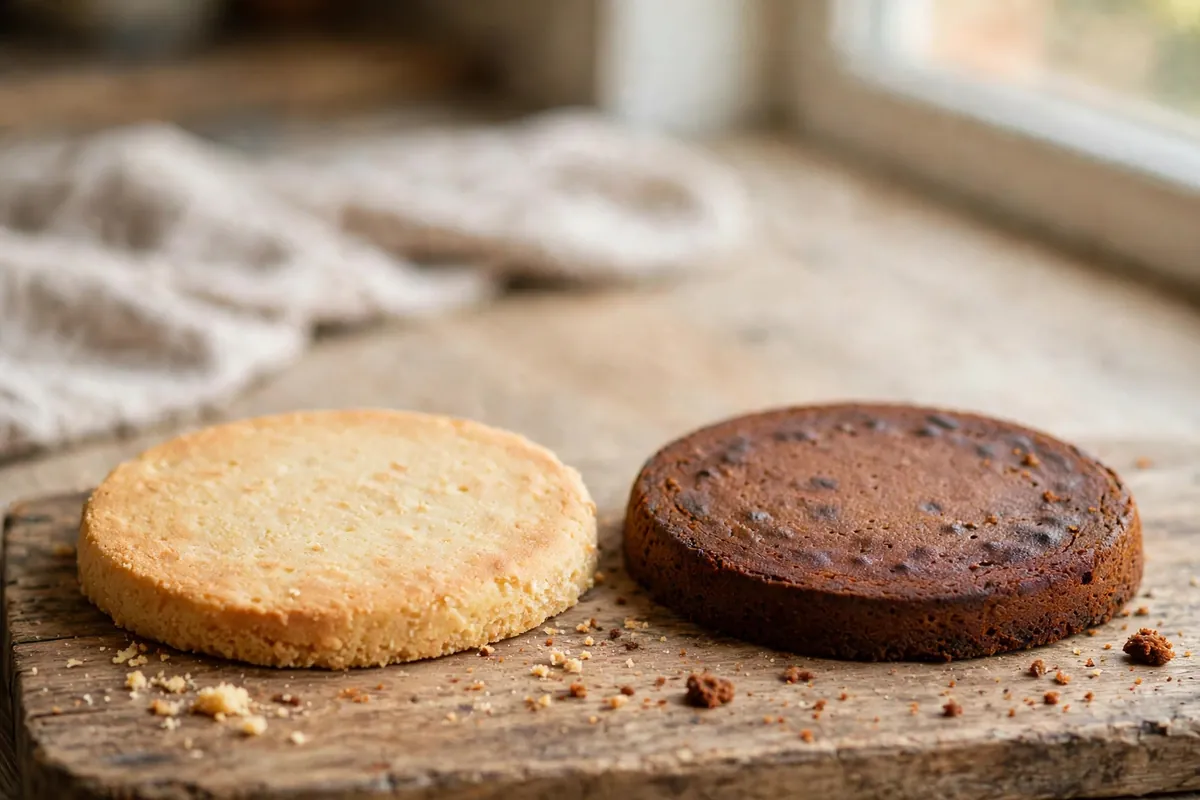
Dark nonstick pans, black steel, dark anodized aluminum — these absorb radiant heat aggressively and run significantly hotter than the oven setting. The result: deeper browning, thicker and crisper crusts, and faster baking.
What changes:
– Reduce oven temperature by 25°F (15°C). This is the standard, tested adjustment — a 350°F recipe bakes at 325°F in a dark pan.
– Check 5 minutes early. The faster heat transfer shortens the bake.
– Expect darker bottoms and edges. Even with the temperature cut, dark pans brown more.
Best for: Pizza (crisp bottoms), artisan bread bottoms, anything where deep browning is the goal. Roasting pans, too.
Watch out for: Delicate cakes, sugar cookies, and anything pale — dark pans over-brown them before the center sets. If a dark pan is all you have for a layer cake, the 25°F reduction is non-negotiable, and consider a light-colored cake strip around the outside. (Dark-pan over-browning is a frequent accomplice in dry cake — see Why Is My Cake Dry?.)
Glass: the slow insulator
Glass (Pyrex and friends) heats slowly and holds heat long. It doesn’t brown aggressively — glass is transparent to radiant heat rather than absorbing it — but it keeps cooking after you pull it from the oven, thanks to retained heat.
What changes:
– Reduce oven temperature by 25°F (15°C) — same rule as dark pans, but for the opposite reason: not because glass runs hot, but because it holds heat and overcooks the carryover.
– Or keep the temperature and add 5–10 minutes. Glass needs more time to get heat into the batter in the first place.
– Expect paler crusts. Glass browns less — fine for cobblers and custards, less ideal when you want a deep golden crust.
– Cool in the pan briefly, then turn out. Food keeps cooking in hot glass; don’t leave it sitting.
Best for: Pies (you can see the bottom crust browning through the glass — genuinely useful), cobblers, crisps, baked custards, lasagna-style bakes. Transparency is glass’s superpower: visual doneness cues you can’t get from metal.
Watch out for: Thermal shock — never move glass straight from freezer to hot oven or plunge hot glass into cold water; it can shatter. And never use glass under the broiler.
Ceramic and stoneware: glass’s cousins
Ceramic and stoneware behave like glass — slow to heat, long retention, gentle browning. Same 25°F (15°C) reduction; excellent for bread pudding, gratins, and deep-dish pie. Same thermal-shock caution as glass.
The quick-reference table
| Pan | Heat behavior | Temp adjustment | Time adjustment | Browning |
|---|---|---|---|---|
| Light aluminum | Fast, even (baseline) | None — follow recipe | None | Moderate |
| Dark metal / nonstick | Absorbs radiant heat, runs hot | −25°F (−15°C) | Check 5 min early | Deep, fast |
| Glass | Slow insulator, holds heat | −25°F (−15°C) | +5–10 min (or reduce temp) | Pale |
| Ceramic / stoneware | Like glass | −25°F (−15°C) | +5–10 min | Gentle |
What if the recipe doesn’t specify?
Assume light aluminum — that’s what the author used. Then apply the table above for whatever you actually own. And when a bake goes wrong in an unfamiliar pan, check the pan before blaming the recipe: a dark pan at full recipe temperature explains a remarkable number of “why did this burn on the bottom” mysteries. (See Cake Domed and Cracked on Top — pan choice is a frequent accomplice there too.)
Frequently asked questions
Can I use a glass pan instead of metal for cake?
Yes, with the adjustments: reduce heat 25°F (15°C) or add 5–10 minutes, and expect a paler crust. For layer cakes where even browning matters, metal is better — but glass works fine for sheet cakes, snacking cakes, and quick breads.
Why do my cookies burn on the bottom with my dark cookie sheet?
The dark surface is superheating the bottoms. Drop 25°F (15°C), and consider lining with parchment (which adds a thin insulating layer) or switching to a light aluminum sheet — the single best upgrade for a cookie baker.
Is it safe to bake in a dark nonstick pan at high heat?
Standard nonstick coatings are rated safe to around 450–500°F depending on the manufacturer — check yours. Above that, or with a damaged/scratched coating, switch to uncoated metal or glass. Never preheat an empty nonstick pan.
Do I need to adjust for a shiny new pan vs an old darkened one?
Yes, actually — aluminum darkens with age and use, and a well-seasoned darkened sheet behaves more like a dark pan than a light one. If your old sheet suddenly browns faster than it used to, that’s why. The 25°F rule of thumb applies by color, not by what the pan was when new.
What about silicone pans?
Silicone is an extreme insulator — even slower than glass — and it doesn’t brown at all. It also flexes, so place it on a rigid sheet pan. Fine for muffins and molded shapes; poor for anything where crust matters. Reduce expectations for browning rather than adjusting temperature much.
Can the wrong pan ruin an otherwise good recipe?
“Ruin” is strong, but it can turn a good bake mediocre — burnt bottoms, pale tops, raw centers. When a trusted recipe misbehaves in a new kitchen, check the pan right after oven temperature.
Related troubleshooting: Cake Domed and Cracked on Top · Why Is My Cake Dry? · Why Did My Cupcakes Overflow?