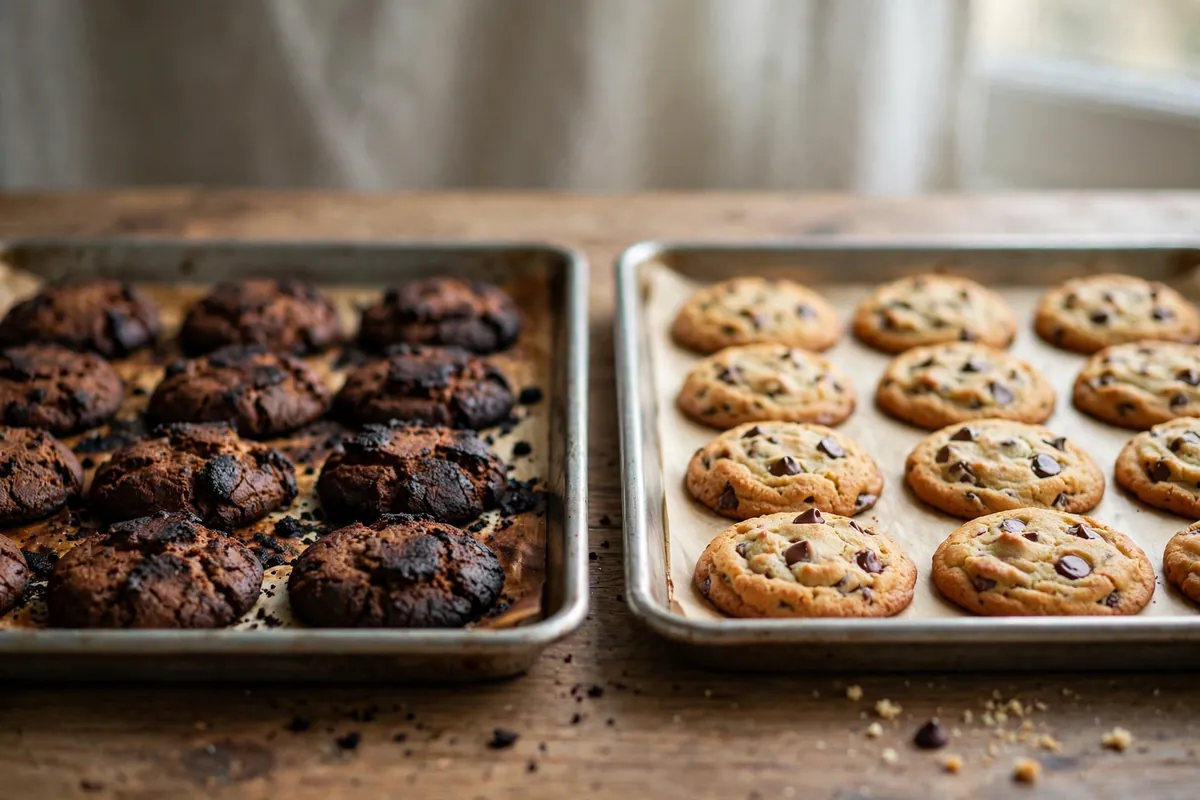
You turned around for one minute — or the timer lied, or the recipe lied — and now the tray is full of cookies that went too far. Too crisp. Too dark. Edges like charcoal, centers like crackers. The first thing to know: you cannot un-bake a cookie. But you can absolutely salvage most batches, and the prevention side is one of the easiest fixes in all of baking, because overbaked cookies are almost never the recipe’s fault. They’re a timing and temperature problem, and both are fixable tonight.
Quick diagnosis: Overbaked cookies are a carryover-cooking problem more than anything: cookies keep baking on the hot tray for 3–5 minutes after you pull them. If your cookies look “done” in the oven, they’re already overdone. Pull them when the edges are set but the centers still look slightly underdone (cause #1). If they’re burnt on the bottom only, your pan or oven rack position is the culprit (cause #4).
What you can actually salvage (and what you can’t)
Let’s be honest about the physics first. Once the sugars have caramelized past the point of no return and the moisture has baked out, no trick puts softness back into the crumb. A cookie that’s merely too crisp is salvageable. A cookie that’s genuinely burnt — black, bitter, acrid-smelling — is not. Taste one first: if the flavor is bitter rather than just dry, skip to repurposing — that batch is an ingredient now, not a cookie.
Rescue 1: The bread-slice trick (for too-crisp, not burnt)
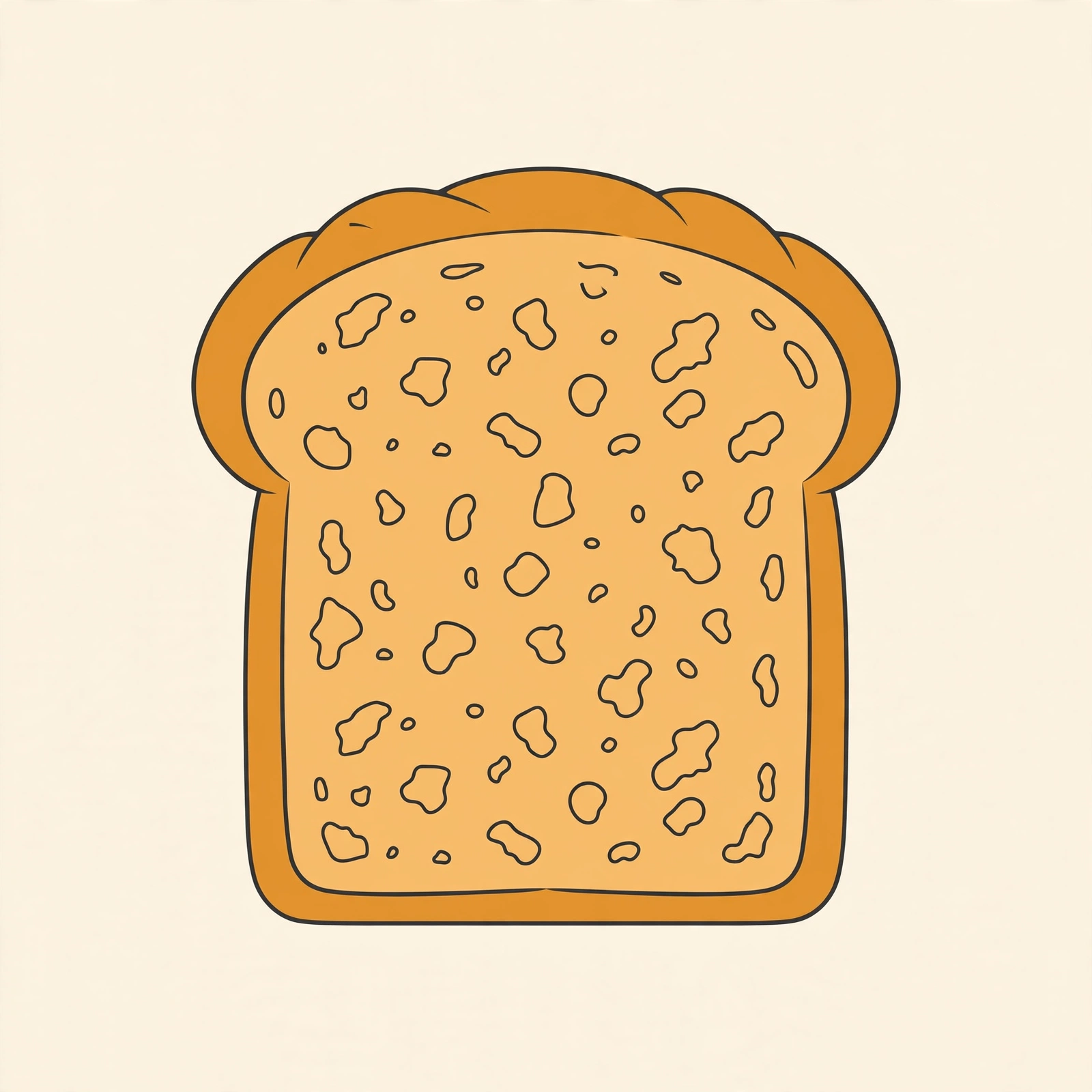
This is the classic for a reason: it works. Place the cooled cookies in an airtight container with a slice of fresh bread (or half an apple) and seal it overnight. The cookies absorb moisture from the bread through the enclosed air, and by morning a too-crisp cookie is noticeably softer. It won’t fix a burnt cookie — moisture can’t un-bitter carbon — but for the “I left them in 3 minutes too long” batch, this is genuine rescue. (The same principle keeps Christmas Cookies Fresh for Weeks.)
Rescue 2: Repurpose the batch — crumbs are an ingredient
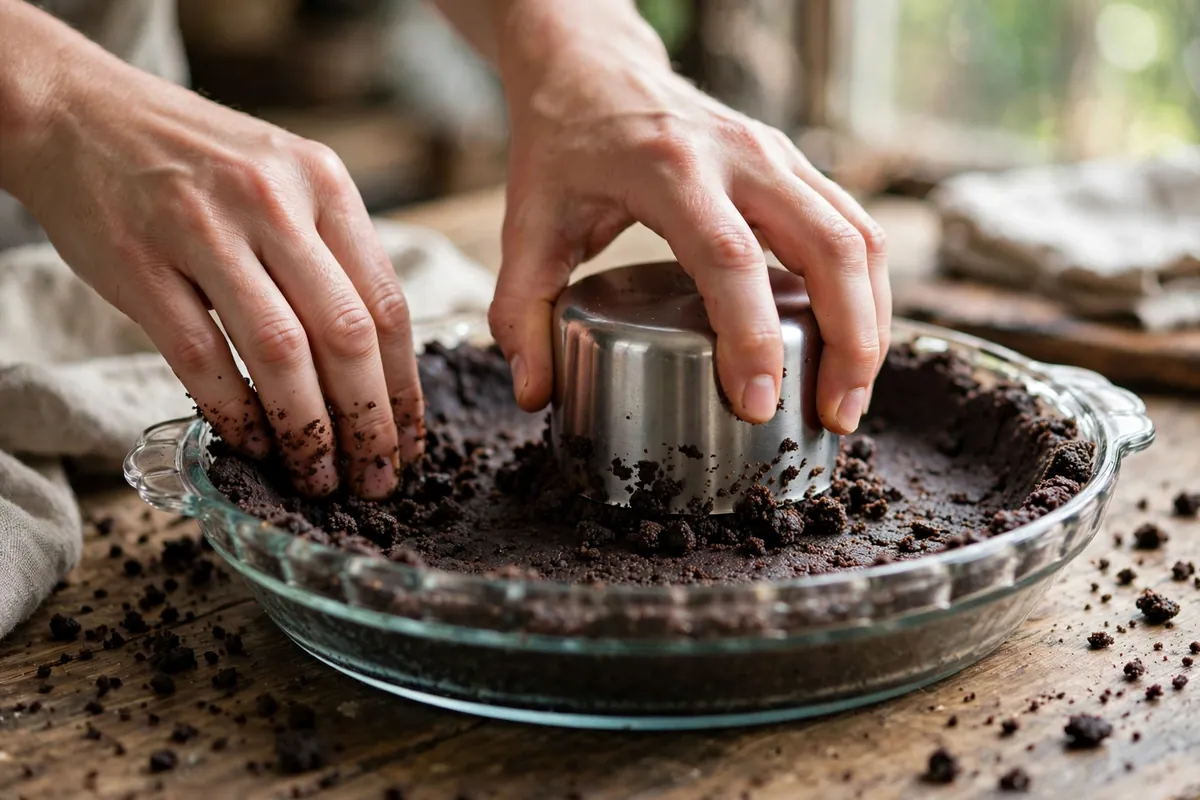
Cookies that are too far gone to serve whole are still perfectly good raw material. Pulse them into crumbs in a food processor and you have: pie and cheesecake crust base (mix with melted butter, press into a pan — nobody will ever know), ice cream topping, trifle layers, or cookie truffles (crumbs + a spoonful of cream cheese or frosting, rolled and dipped in chocolate). A batch of overbaked chocolate chip cookies makes a spectacular icebox-cake layer, because the filling’s moisture softens them overnight. The batch isn’t a failure anymore; it’s a component.
Rescue 3: Serve them warm with something wet
A too-crisp cookie served warm with ice cream, or dunked in coffee, stops being a problem — heat softens the crumb and the moisture does the rest. Ten seconds in the microwave, a scoop on top, and nobody is diagnosing your bake time.
Prevention 1: Pull them early — carryover cooking is the real timer
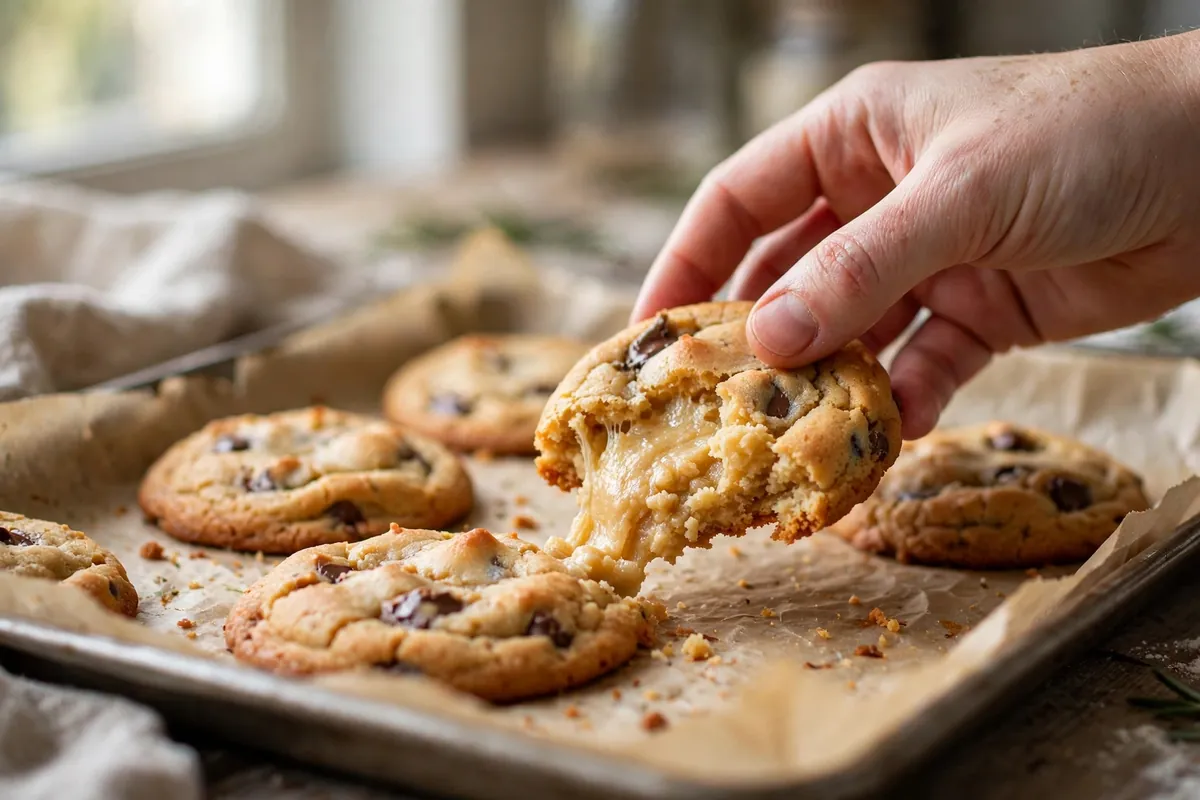
Here’s the rule that fixes 80% of overbaked-cookie complaints: cookies are done when the edges are set and lightly golden but the centers still look slightly soft and underdone. They will finish setting on the hot tray as they cool — this carryover cooking takes 3–5 minutes and it’s doing real baking work. If a cookie looks perfectly done through the oven door, it’s going to be overdone by the time it cools. Pull trays a full 2 minutes before you think they’re ready and overbaking all but disappears.
The sensory test: Nudge a cookie gently with a spatula. The edge should hold its shape; the center can look pale and soft. That’s done. If the whole cookie is uniformly golden and firm in the oven, you’ve overshot.
Prevention 2: Your oven is lying about its temperature
Most home ovens run 15–25°F off the dial, and cookies — thin, sugary, fast-baking — punish temperature errors harder than almost anything else. A 25°F-hot oven turns a 12-minute bake into a 9-minute bake, and if you’re still timing for 12, every batch burns. An oven thermometer costs less than one ruined batch of butter and tells you the truth. Preheat fully — a full 15–20 minutes past the beep — because cookies dropped into a half-heated oven spread before they set (a whole separate failure; see Why Do My Cookies Spread Flat?).
Prevention 3: Know your pan — dark pans bake faster
Dark, thin baking sheets absorb more radiant heat and can overbake cookie bottoms while the tops still look pale — the classic “burnt bottom, raw-looking top” complaint. If your cookies consistently burn underneath, the pan is the prime suspect, not the recipe.
The fix: Switch to light-colored, heavy aluminum half-sheet pans. Line with parchment (it insulates slightly and prevents sticking). Bake one rack above center, never on the bottom rack. And never put a fresh batch on a hot tray — the residual heat starts baking the bottoms before the oven does. Cool the tray between batches, or rotate two trays.
Prevention 4: Chill the dough, watch the sugar
Two subtler contributors. Warm, soft dough spreads fast and thin, and thin cookies overbake in the time a thick cookie needs — chilling dough 30 minutes before baking gives you thicker cookies with more margin for error. And sugar content matters: high-sugar doughs brown faster (sugar caramelizes), so a recipe heavy on brown sugar needs a watchful eye in the last 2 minutes. Set a timer for 2 minutes under the recipe time and check from there — you can always add time, but you can’t subtract it.
The timing cheat sheet I actually use
For a standard drop cookie at a true 350°F (175°C) on a light aluminum pan: start checking at 10 minutes regardless of what the recipe says. Look for set edges, pale centers. Pull at 11–12 minutes for chewy, 13–14 for crisp — but always 1–2 minutes before they look “done.” Cool on the tray 5 minutes (this is still baking), then move to a rack. Write your oven’s behavior on the recipe card — “mine runs 15°F hot, pull at 11 min” — and the next batch is automatic.
Frequently asked questions
Can I fix burnt cookies?
Not really. You can scrape off badly burnt bottoms with a grater, which helps mildly burnt cookies, but bitter, blackened cookies can’t be saved as cookies — crumb them and repurpose as crust or topping, where the bitterness gets diluted.
Why do my cookies burn on the bottom but look raw on top?
Dark pan, bottom rack position, or an oven with a fierce lower element. Move to a light-colored pan, bake on the center or upper-center rack, and line with parchment.
Is it safe to eat underbaked cookies?
Slightly soft centers that set as they cool are fine and intended. Truly raw, wet dough centers should go back in — raw flour and egg aren’t ideal. The “pull early” advice means soft-set, not raw.
Can I re-soften cookies that went hard days later?
Yes — the bread-slice trick works on stale cookies too, not just overbaked ones. Airtight container, fresh bread slice, overnight. It restores softness remarkably well.
Should I trust the recipe’s bake time?
Recipe times assume a calibrated oven, a specific pan, and a specific dough temperature — you likely differ on at least one. Always check 2 minutes early.
Do convection/fan ovens change cookie timing?
Yes — drop the temperature 25°F (about 15°C) for fan ovens, and check even earlier. Forced air browns cookie surfaces fast.
Related troubleshooting: Why Do My Cookies Spread Flat? · Why Are My Cookies Cakey Instead of Chewy? · How to Rescue an Overbaked Cake