
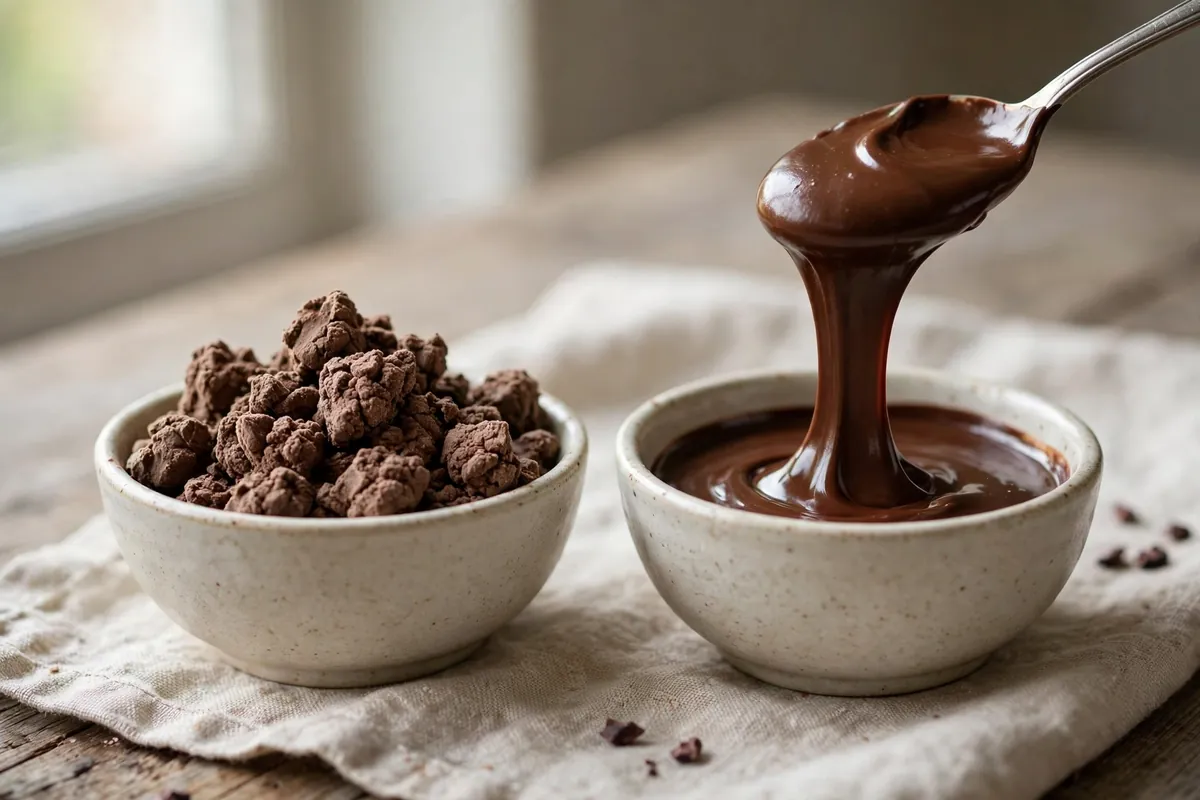
Seized chocolate looks like a cruel joke: one minute you have silk, the next you have grainy sludge — all because a single drop of water fell in. It feels like it should be ruined. It isn’t, mostly. And the fix is gloriously counterintuitive: the thing that destroyed your chocolate is more of the same thing, added deliberately.
Quick diagnosis: A tiny amount of water dissolved the sugar in your chocolate, turning it into sticky syrup that glued the cocoa particles into clumps. Rescue it by stirring in more hot liquid — 1 tablespoon of boiling water or hot cream per 30g (1 oz) of chocolate — until it smooths into a glossy sauce or ganache. It won’t be dippable again, but it’s perfectly usable.
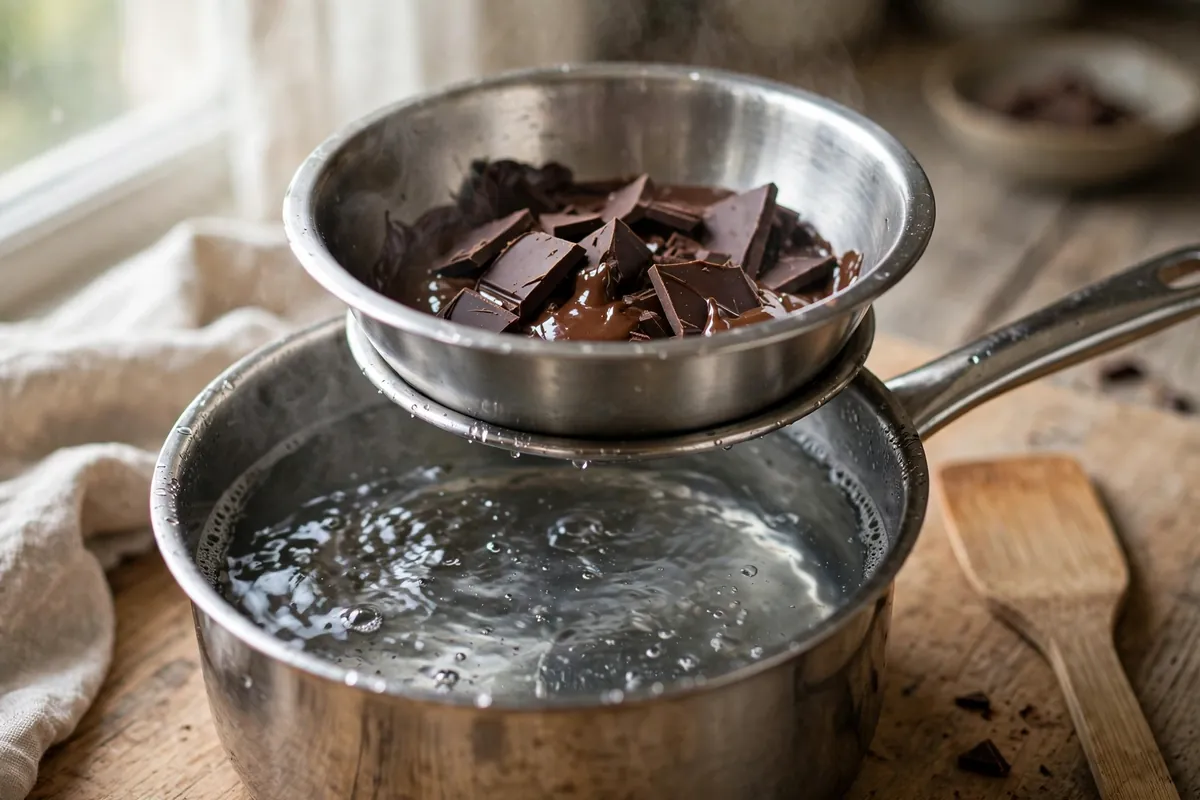
My tested baseline: 200g dark chocolate (60–70% cacao), chopped fine, melted in a completely dry bowl over barely simmering water — the bowl must not touch the water. Keep dark chocolate below 120°F (49°C); milk and white below 110°F (43°C).
1. Why one drop of water destroys melted chocolate
Chocolate is a suspension of dry particles — sugar, cocoa solids — in cocoa butter, with almost no water in it (well under 1%). Melted, those particles flow freely in the fat. Add a tiny amount of water and the sugar dissolves into it, forming a sticky syrup that coats and glues the cocoa particles together into clumps. The smooth suspension becomes wet sand. That’s seizing: not burning, not curdling — gluing.
This is why the usual suspects are all moisture, not heat: steam escaping from under a double boiler, a wet spoon, chocolate stored in a humid kitchen, condensation from chocolate that went fridge-to-counter, or — the classic — covering the melting bowl with a lid, which traps steam that drips back in.
2. The rescue paradox: add more liquid, on purpose
Here’s the part that feels wrong. A teaspoon of water seized your chocolate, but a tablespoon of boiling water per 30g (1 oz) of chocolate will save it. Once there’s enough liquid, the sugar fully dissolves instead of forming partial sticky syrup, the cocoa particles disperse evenly through the liquid, and the whole mass relaxes into a smooth, glossy sauce.
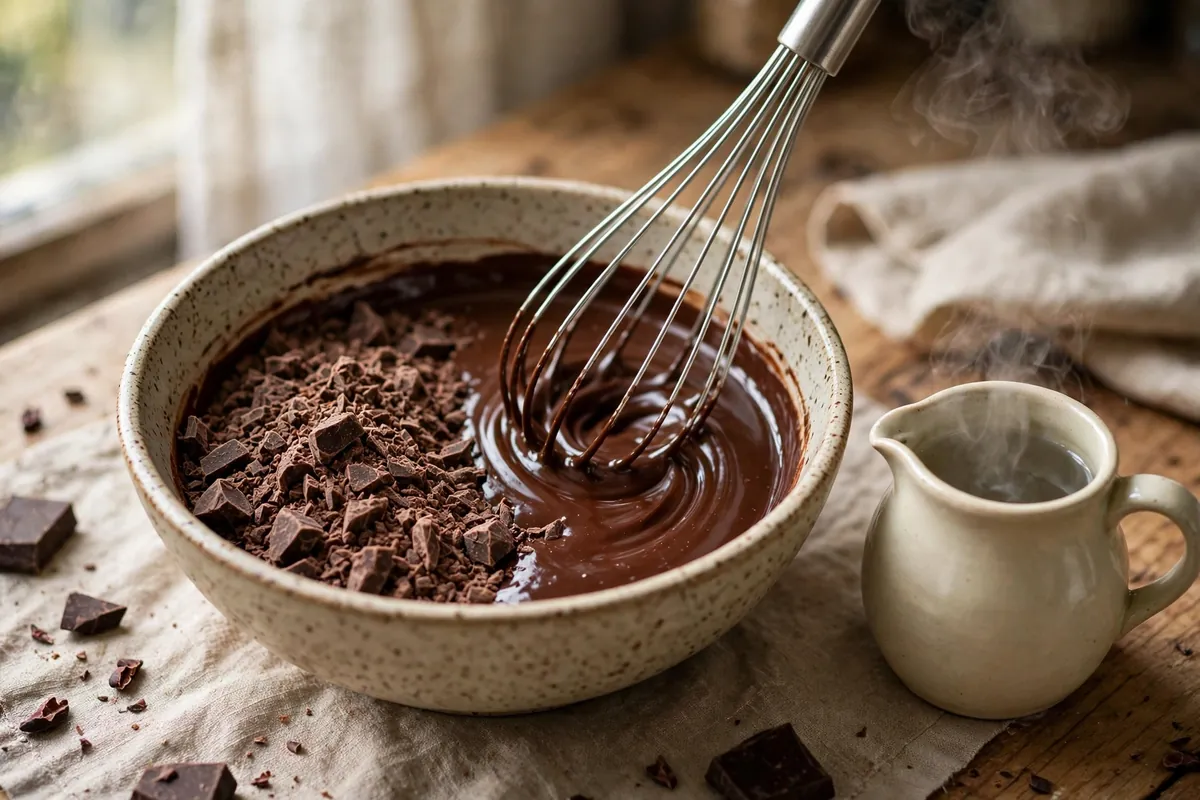
How to do it: Bring water or cream to a boil. Add it one tablespoon at a time to the seized chocolate, stirring vigorously and constantly in the center of the bowl. It will look worse for about 30 seconds — thinner, weirder — then suddenly come together into glossy smoothness. For 200g of chocolate, expect to add 6–7 tablespoons.
What you get: Not your original melted chocolate — you now have a chocolate sauce (water rescue) or thin ganache (cream rescue). Use it over ice cream, as a cake soak, or whisked into frosting. The rescue changes the product; it doesn’t rewind time. The same principle fixes a broken emulsion in Fixing Curdled Ganache.
3. Rule out the other graininess: burnt chocolate can’t be rescued
Not all grainy chocolate is seized chocolate. Overheated chocolate — dark pushed past 130°F (54°C), milk or white past 120°F (49°C) — also turns thick and gritty, but the mechanism is different: the cocoa butter separates and the solids scorch. The liquid rescue won’t fix burnt chocolate, and burnt chocolate tastes acrid and bitter underneath the grain.
How to tell: Seized chocolate happened the instant water touched it and smells like normal chocolate. Burnt chocolate thickened gradually as it got hotter and smells sharp, bitter, almost like burnt coffee.
The fix for burnt: There isn’t one. If it tastes scorched, it stays scorched. Melt in short microwave bursts at 50% power with stirring between — prevention beats rescue every time.
4. Prevention: the dry-kitchen protocol
Every seized-chocolate disaster I’ve caused came from rushing the setup, never from the chocolate itself. The protocol:
- Everything bone dry. Bowl, spatula, thermometer — dry them even if they look dry. One invisible film of water is enough.
- Chop fine and even. Big chunks melt unevenly; the small bits overheat while the big ones are still solid, and you stir longer, inviting steam.
- Barely simmer, never boil. The water under your double boiler should tremble, not bubble. The bowl must not touch the water. No lid — ever.
- Microwave in bursts. 50% power, 20–30 seconds, stir between every burst. Chocolate holds its shape when melted, so stir to check — it can be fully liquid while looking solid.
- Temper your additions. If a recipe adds liquid to melted chocolate (like a ganache), the liquid must be hot. Cold cream into warm chocolate seizes it just as surely as a water drop.
5. White and milk chocolate seize faster — handle them like eggs
White chocolate has more sugar and milk solids and less cocoa butter structure than dark; milk chocolate sits in between. Both seize on smaller amounts of moisture and scorch at lower temperatures (110°F/43°C is the ceiling). If you’re new to melting chocolate, practice the dry-kitchen protocol on dark first — it’s the most forgiving — before moving to white.
How to tell it’s starting: The chocolate goes from flowing to suddenly thick and matte at the edges of the bowl. Stop heating immediately. If you catch it at the first thickening and the cause was heat, not water, sometimes just taking it off the heat and stirring in a tablespoon of neutral oil or cocoa butter will bring it back.
6. What rescued chocolate is good for (and what it isn’t)
Rescued chocolate will never temper again — no snap and shine for dipped strawberries or molded bonbons. Its honest second lives: chocolate sauce, ice cream topping, mousse base (fold in whipped cream once cool), hot chocolate, or brownie batter — where nobody will ever know. If your brownies run cakey anyway, see Fudgy vs. Cakey Brownies.

Frequently asked questions
Is seized chocolate safe to eat?
Yes. Seizing is a texture event, not spoilage. It tastes like chocolate, just with the mouthfeel of wet sand. Rescue it into sauce and it’s genuinely good.
Can I still use seized chocolate for dipping or candy molds?
No — that’s the one thing rescue can’t restore. Dipping needs tempered chocolate with proper cocoa-butter crystals for snap and shine. Use rescued chocolate for anything where it stays soft: sauces, ganaches, frostings, batters.
Why did my chocolate seize when I added cold cream?
Cold liquid shocks melted chocolate: the cocoa butter firms around the cold spots and the sugar grabs the cream’s water before it disperses. Ganache cream must be hot — steaming, just off the boil.
Can seized white chocolate be rescued?
Yes, with the same boiling-water method — but add the liquid a teaspoon at a time and stir gently, or the milk proteins turn gummy. Use water rather than cream; extra dairy fat can push white chocolate into greasiness.
My chocolate looks dusty and streaky but melts fine — is that seizing?
No, that’s fat bloom — cocoa butter surfacing during temperature swings in storage. Cosmetic only; it melts normally. Don’t throw out bloomed chocolate.
Related troubleshooting: Fixing Curdled Ganache · Grainy Fudge? How to Fix It · Fudgy vs. Cakey Brownies