Why Did My Cake Sink in the Middle? 7 Causes, Tested Fixes
Quick diagnosis: A sunken center almost always means the structure wasn’t set when the heat came off — underbaked, door opened too early, or too much leavening. Wet or gummy middle? Cause #1. Rose beautifully then fell while cooling? #2 or #3.
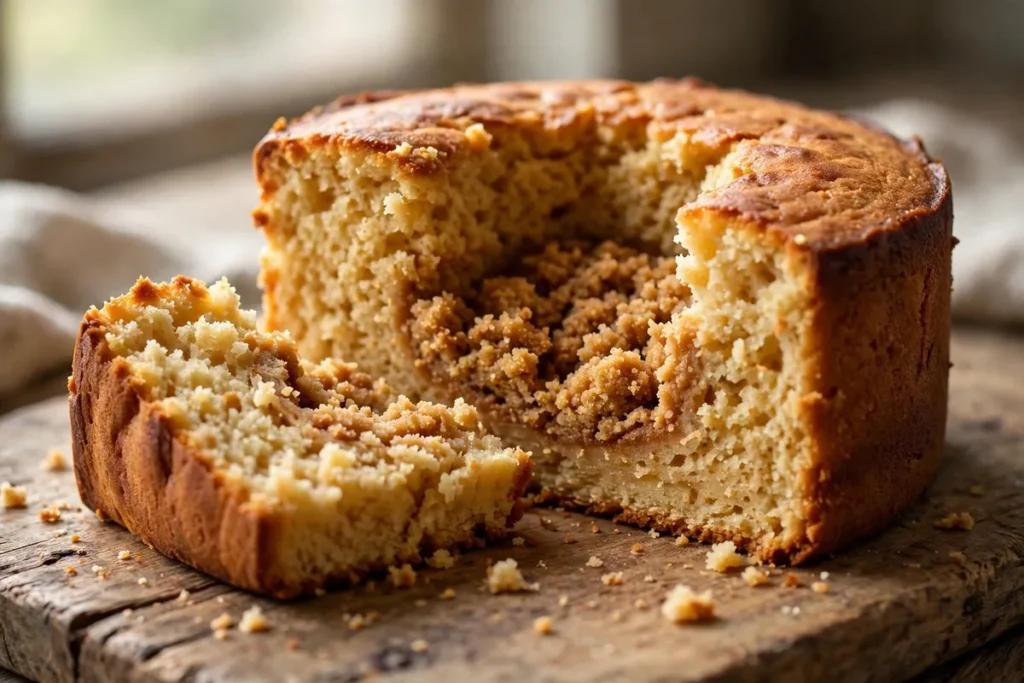
A cake is a foam: gas bubbles trapped in batter that heat sets into a solid scaffold. While that scaffold is still soft, gravity wins. Every cause below is that same story — the structure wasn’t ready to stand on its own.
1. It was underbaked
The most common cause. The edges set first; the center finishes last. Pull it even five minutes early and the middle is still unset foam that collapses as it cools.
How to tell: The sunken area looks wet, gummy, or dense — almost pudding-like — rather than just flat. A toothpick in the center comes out with wet batter (not moist crumbs).
The fix: Bake until the center is genuinely done. Ignore the clock as your only guide: start checking 5 minutes before the recipe’s time. A toothpick should come out with a few moist crumbs clinging, never wet batter. Better yet, use an instant-read thermometer — most butter cakes are done at an internal temperature of 200–210°F (93–99°C) in the very center. If the top is browning too fast while the middle lags, tent loosely with foil and keep baking.
2. The oven door was opened too early
Opening the door floods the oven with cool air — temperature can drop 25–50°F (15–30°C) in seconds. If the scaffold hasn’t set, that thermal shock deflates it on the spot.
How to tell: The cake was rising nicely, you peeked, and it fell — either immediately or by the time it cooled.
The fix: Don’t open the door before the cake is three-quarters done (about 25 minutes into a 35-minute bake). Use the oven light and the glass to check progress. After the structure has set, a quick open-and-close to rotate the pan is harmless.
3. Too much leavening
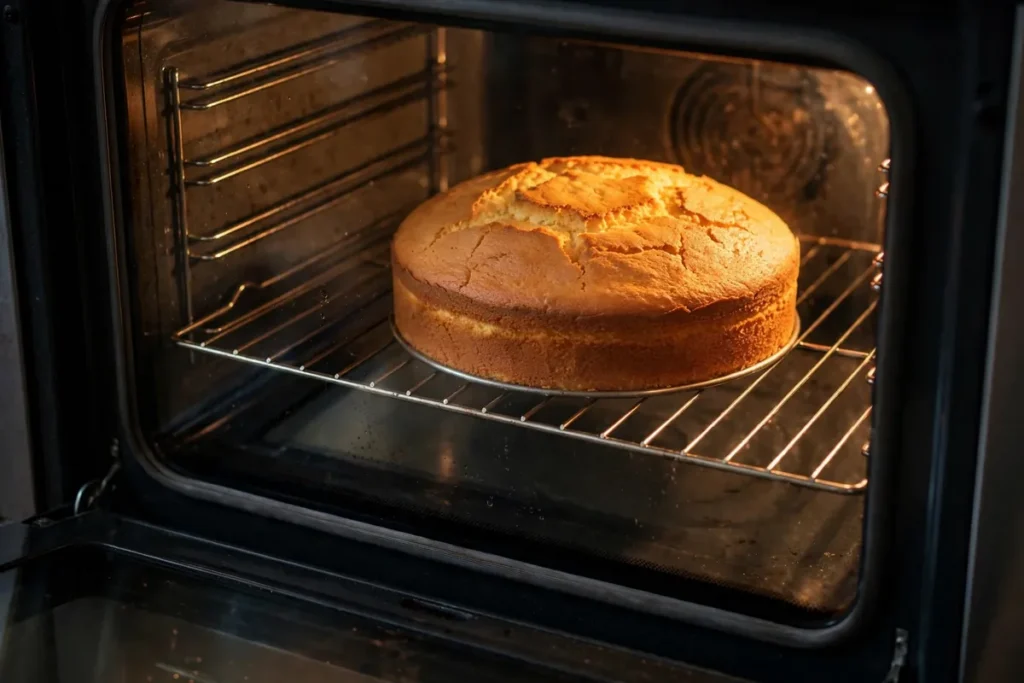
Baking powder and baking soda create gas that lifts the batter — but the structure has to keep pace with the lift. Over-leavened batter inflates like a balloon, outruns its scaffold, and collapses. The cruel part: it looks spectacular in the oven right before it falls.
How to tell: The cake rose dramatically, maybe even domed, then sank in the center as it cooled. The crumb tastes slightly soapy or metallic (excess soda).
The fix: Measure leavening with proper measuring spoons, leveled off — never a dinner spoon. The standard ratio is about 1 teaspoon of baking powder per 1 cup (120g) of flour, or ¼ teaspoon of baking soda per cup of flour when there’s an acid present (buttermilk, cocoa, brown sugar). Replace baking powder older than 6–12 months instead of adding “a bit extra.”
4. The batter was over-mixed after the flour went in
Two problems at once: beating whips in too much air, so the batter starts over-inflated — and overworking develops excess gluten, making the crumb tough and springy. It rises on oven spring, then the tight gluten contracts and drags the center down.
How to tell: The cake has tunnels or large irregular holes near the top, a rubbery layer, and a sunken middle. The batter looked smooth and elastic rather than just combined.
The fix: Once flour goes in, mix on low only until the last streak disappears, then stop — finish by hand with a spatula. The vigorous beating belongs in the butter-and-sugar stage, not after the flour.
5. The oven ran too hot
A hot oven sets the crust early. That firm shell insulates the middle, so the center stays raw while the outside looks done — you pull it “on time” and the middle collapses. Home ovens routinely run 25°F (15°C) off; dial settings are a suggestion, not a measurement.
How to tell: Deep golden or dark crust with a raw, sunken center. The recipe’s timing seemed right but the middle never caught up.
The fix: Put a $10 oven thermometer on the middle rack and trust it over the dial. Bake on the center rack, and if your oven runs hot, drop the set temperature by 25°F (15°C). This is the same thermometer discipline I use for bread — an uncalibrated oven ruins more bakes than any recipe flaw (see Why Didn’t My Bread Rise?).
6. The wrong pan size
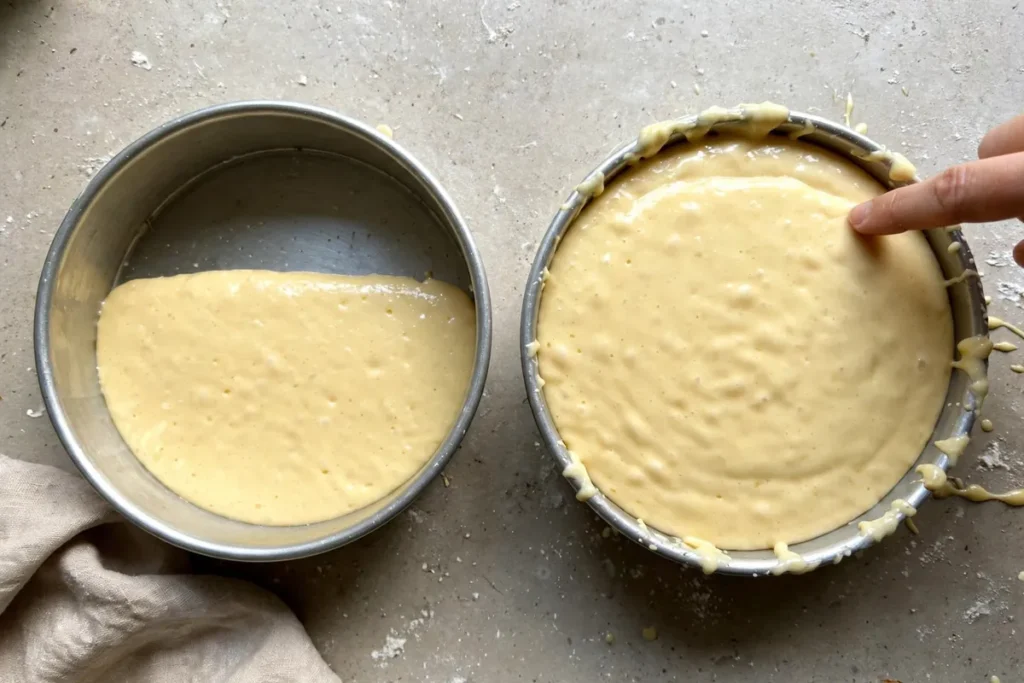
Batter depth decides whether the center bakes through. Pour an 8-inch recipe into a 6-inch pan and the batter sits deeper — the edges set, the middle stays liquid, and down it goes.
How to tell: The batter filled the pan more than two-thirds full before baking, or you substituted a smaller/deeper pan than the recipe called for.
The fix: Fill pans one-half to two-thirds full, no more. If you only own the wrong size, split the batter between two pans or bake in batches. And measure your pans — “8-inch” pans vary by brand, and a true 8×2-inch pan holds about 6 cups of batter.
7. Too much sugar or liquid
Sugar tenderizes crumb by interfering with gluten and egg-protein networks — wonderful in the right amount, structural sabotage in excess. Same with liquid: a batter that’s too wet can’t build a scaffold strong enough to hold its rise. This usually happens when scaling by feel or swapping ingredients (applesauce for oil, extra milk “for moisture”).
How to tell: You altered the recipe’s ratios, or the batter looked noticeably thinner than usual before baking.
The fix: Respect the recipe’s ratios, especially when substituting. If you want a moister cake, add moisture after baking — a simple-syrup soak (see Why Is My Cake Dry?) — rather than loading it into the batter.
Can I fix a sunken cake after the fact?
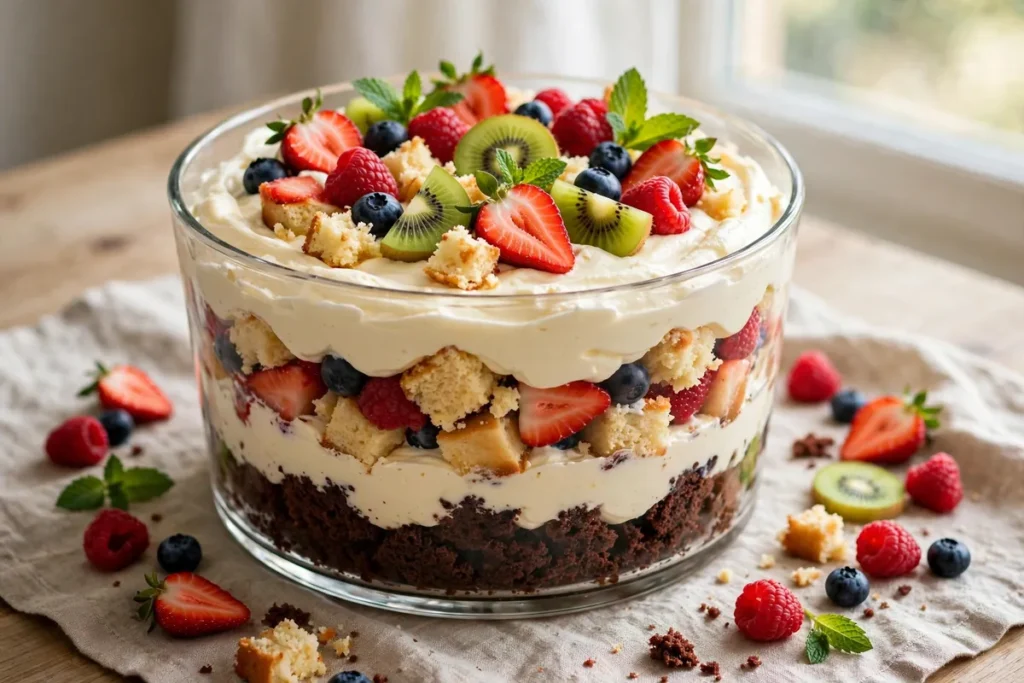
Yes — it’s almost always salvageable, because the flavor is usually fine and only the shape suffered. Level the top with a long serrated knife, then flip the cake upside down so the flat bottom becomes the top. Fill the crater with whipped cream, frosting, or fruit. For a bad case, cube it into a trifle — sunken cake makes an outstanding trifle because the dense center soaks up flavor.
Frequently asked questions
Is a sunken cake safe to eat?
Yes, as long as the center is fully baked through. If the middle is wet, raw batter rather than just dense, it was underbaked — the texture will be gummy, though it’s still safe if it reached a safe temperature. When in doubt, the toothpick test decides.
Can I put a sunken cake back in the oven?
Only if you catch it immediately and the center is still wet — give it 5–10 more minutes. Once cooled, the structure has set in its collapsed shape and re-baking just dries it out. Salvage it as a trifle instead.
Why did my cake sink after I took it out, not in the oven?
Because the collapse happens as steam escapes and the cake cools. An under-set center holds its shape while hot air and steam support it, then gives way on the counter — the classic signature of underbaking or excess leavening.
Does opening the oven door always sink a cake?
No — only while the structure is still setting, roughly the first three-quarters of the bake. Once the crumb is set, a quick open to rotate the pan is fine.
Related troubleshooting: Why Is My Cake Dry? · Cake Domed and Cracked on Top · Why Didn’t My Bread Rise?