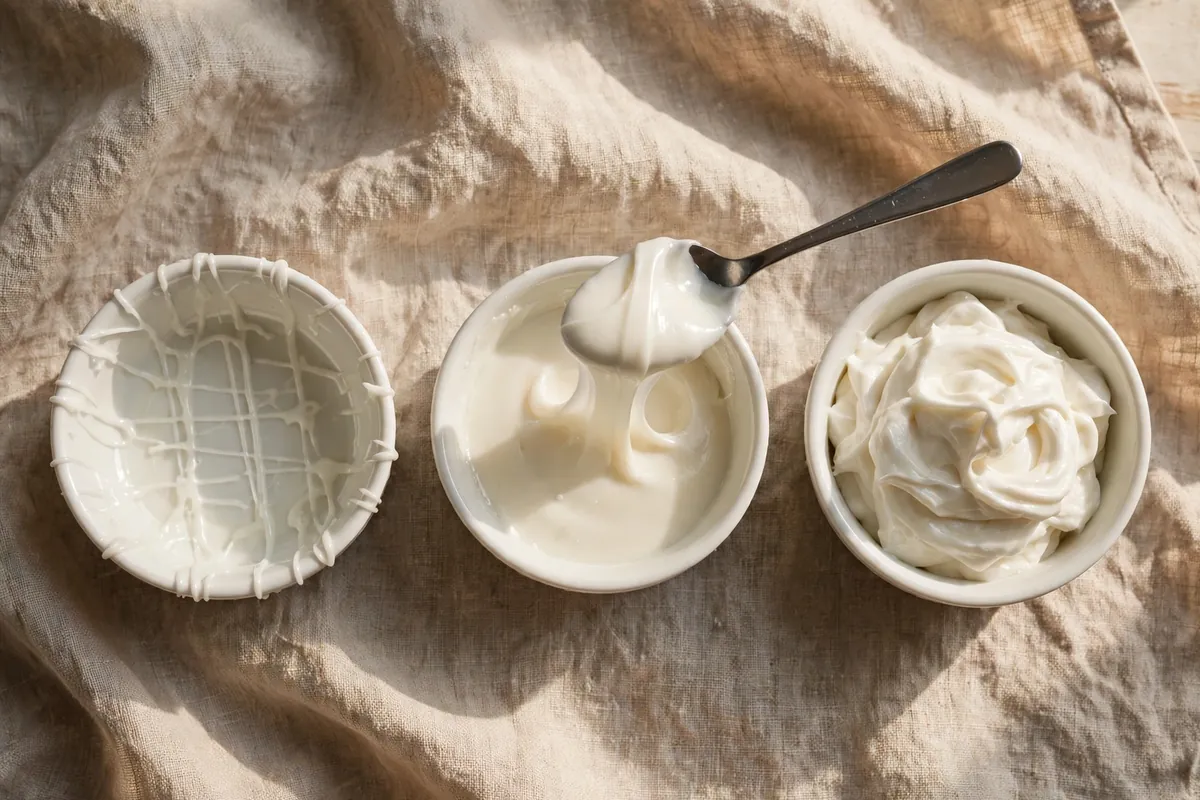
Thin icing is a special frustration: it looked fine in the bowl, then slid straight off the cake into a puddle on the plate. The good news is that runny icing is one of the easiest baking failures to fix — you almost never start over. Whatever the type, it comes down to the sugar-to-liquid ratio and the temperature of everything involved.
Quick diagnosis: Too much liquid for the sugar. For a basic glaze, start with 1 cup (120g) powdered sugar and add liquid one teaspoon at a time — you can always thin it, but thickening takes much more sugar. If it’s buttercream, the butter was too warm: chill the bowl 15–20 minutes and rewhip. Never add liquid by the tablespoon.
My tested baseline for a pourable glaze: 120g (1 cup) sifted powdered sugar, 1 tablespoon milk, then liquid added 1 teaspoon at a time until it ribbons off the spoon. For spreadable frosting: 230g (2 cups) powdered sugar, 115g soft butter, 1–2 tablespoons milk. Humidity and ingredient temperature move these around — the spoon test overrules the numbers.
1. Your sugar-to-liquid ratio was off — measure the liquid, not the sugar
Nearly every thin glaze comes from dumping in the liquid. Powdered sugar forgives in one direction only: too little liquid needs a few more drops, but too much liquid demands a disproportionate amount of sugar to recover. Two extra tablespoons of milk can need half a cup of additional sugar to balance.
How to tell: The glaze runs off a spoon in a fast stream instead of a slow ribbon; it pools flat on a plate within seconds.
The fix: Sugar in the bowl first, then liquid one teaspoon at a time, whisking between additions. Stop when a drizzled spoonful holds its shape 2–3 seconds before melting in. Already too thin? Whisk in powdered sugar one tablespoon at a time — sifted, to avoid lumps. Expect to add more than feels reasonable; that’s normal.
2. You used the wrong sugar — granulated can’t do this job
Powdered (confectioners’) sugar dissolves into a smooth suspension because it’s ground ultra-fine with a little cornstarch. Granulated sugar stays gritty no matter how long you stir, and weeps liquid as it sits — the glaze looks thin because the sugar never joined the liquid.
How to tell: Gritty texture, a watery layer separating on top after minutes, sweetness that tastes “separate” from the liquid.
The fix: Powdered sugar only — and sift it. Unsifted lumps read as thickness in the bowl, then dissolve on the cake and release trapped air, and the icing thins mysteriously after application. Sifting takes 30 seconds and removes a whole category of surprise.
3. Your buttercream was too warm, not too thin — chill it, don’t sugar it
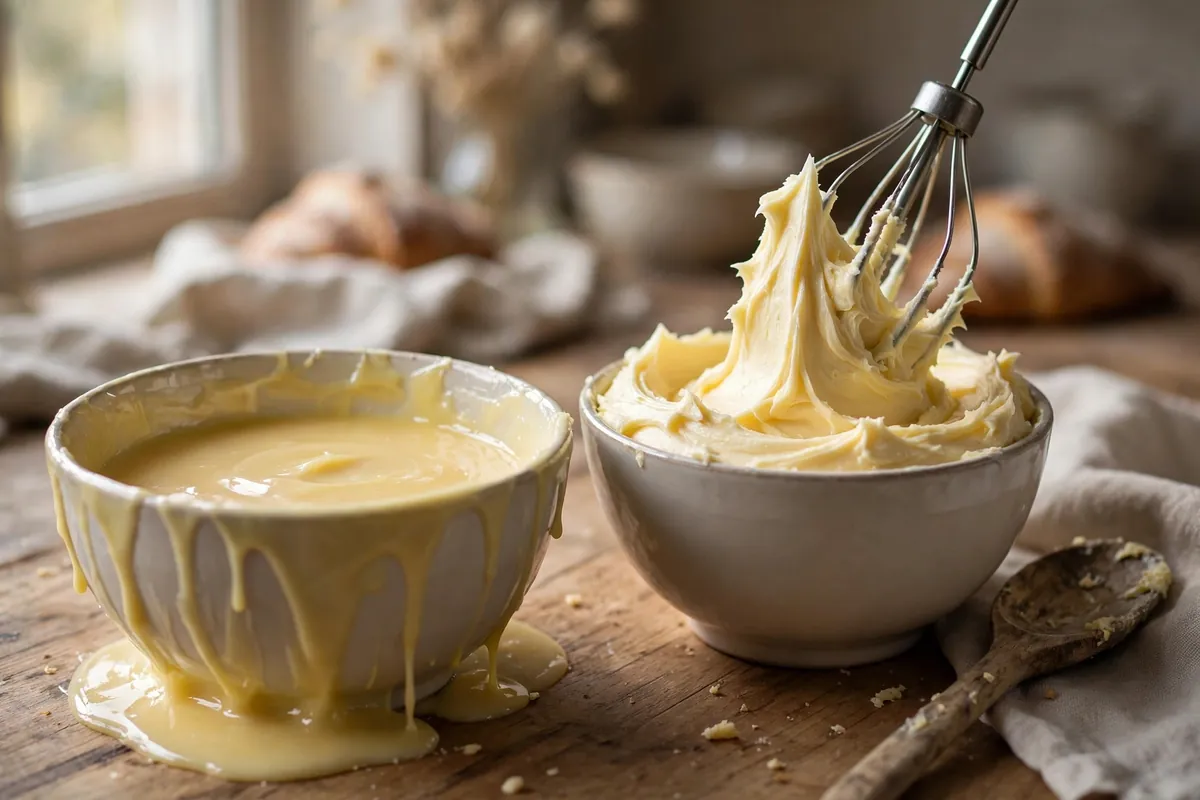
Soft, soupy buttercream tempts you to add more powdered sugar, which makes it sweeter and stiffer without fixing the real problem: butter too warm to hold air. Over-sugared warm buttercream tastes like sweet grease. The fix is temperature.
How to tell: Glossy, slightly separated, sliding rather than spreading; the bowl feels room-temperature or warm rather than cool.
The fix: Refrigerate 15–20 minutes until the edges look matte and firm, then rewhip 1–2 minutes — it comes back thick, smooth, and pale. Truly broken (curdled, split) is a different failure: How to Fix Broken Buttercream (Curdled, Soupy, Too Sweet). If the balance tastes off at the right texture, see Why Does My Frosting Taste Like Butter? Fixing Buttercream Balance.
4. Cream cheese icing turned to soup — cold cheese, minimal beating
The runniest offender in the icing family, always the same two mistakes: low-fat or tub-style cream cheese (too much water), and overbeating, which warms and loosens the cheese until the bowl slumps.
How to tell: It was thick when you started and got thinner the longer you beat it; tastes fine but won’t hold a swirl.
The fix: Full-fat block cream cheese, cold from the fridge — never the spreadable tub. Beat butter and sugar first, add the cold cream cheese last, and beat only until just combined, 30–45 seconds. Already soupy? Chill 30 minutes, then whisk in powdered sugar 2 tablespoons at a time. A teaspoon of cornstarch per cup of powdered sugar stabilizes it without much sweetness change.
5. You glazed a warm cake — heat thins everything
A perfect-bowl glaze turns into a translucent slide on a warm cake. Residual heat melts the sugar’s structure on contact; the icing runs off before it sets, leaving a sticky plate and a nearly naked cake. Buttercream melts on anything above room temperature too.
How to tell: The icing looked right in the bowl but turned watery within a minute of touching the cake; it pooled at the base.
The fix: Cool the cake completely — to the touch all the way through, not “mostly cool.” For layer cakes, 2 hours at room temperature or 30 minutes in the fridge after crumb-coating. Test the glaze on a cool plate first: drizzle a spoonful and watch 30 seconds. If it holds, the cake was the variable, not the glaze.
6. Match the consistency to the job — “too thin” depends on the use
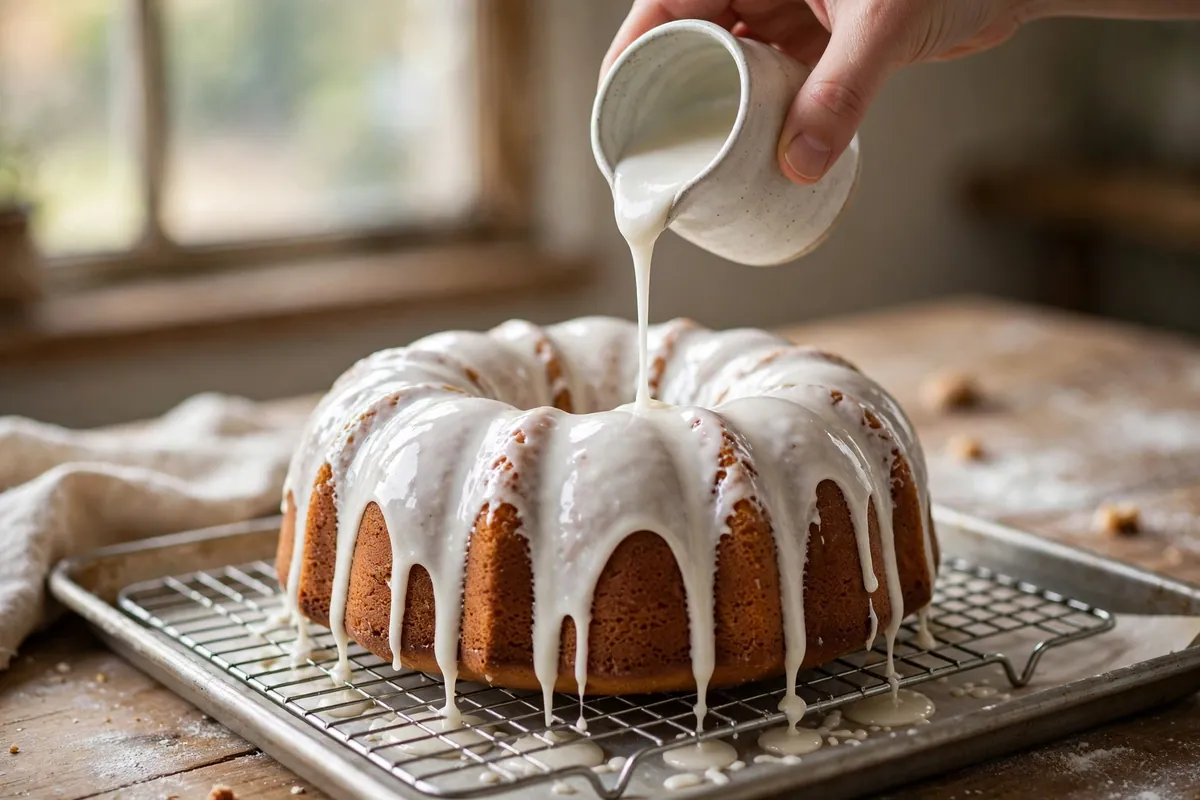
Sometimes the icing isn’t wrong; the expectation is. A drip glaze should flow. A pipeable frosting should hold a stiff peak. Judge against the job: drizzle coats the back of a spoon thinly; spreadable holds soft peaks; pipeable stands in firm peaks.
How to tell: It works for one purpose but fails at another — great for drizzling, useless for piping.
The fix: Decide the job first. Drips: thin is correct — spoon at the rim and let gravity work. Spreading: the ribbon stage. Piping: chill 20 minutes after mixing; cold firms butter-based icings dramatically. Write down the ratio that worked — humidity shifts it batch to batch, and your notes are the real recipe.
Frequently asked questions
Is thin icing safe to eat?
Yes — purely a texture and appearance issue. The only caution is storage: cream cheese or butter-based icings still need refrigeration, thin or not.
Can I fix icing that’s already on the cake?
Yes. Chill the cake 30 minutes to set what’s there, then apply a second, thicker coat — the chilled base gives the new layer grip. For pooled glaze at the bottom, let it set, then drizzle a thicker batch over the top.
Can I thicken icing with cornstarch instead of more sugar?
In small amounts — 1 teaspoon per cup of powdered sugar firms a glaze without adding sweetness. More tastes chalky and sets matte. For buttercream, extra powdered sugar is still the better fix.
How long does glaze take to set?
15–30 minutes at room temperature; humidity can double that. It’s set when the surface is dry to a light touch. Don’t refrigerate to speed it — condensation makes it weep.
Can I save leftover thinned glaze?
Yes — refrigerate up to a week sealed. It thickens cold; rewhisk at room temperature and adjust with drops of liquid. If separated, whisk 30 seconds before judging — it usually comes back.
Related troubleshooting: How to Fix Broken Buttercream (Curdled, Soupy, Too Sweet) · Why Does My Frosting Taste Like Butter? Fixing Buttercream Balance · Dairy-Free Frosting That Holds Its Shape