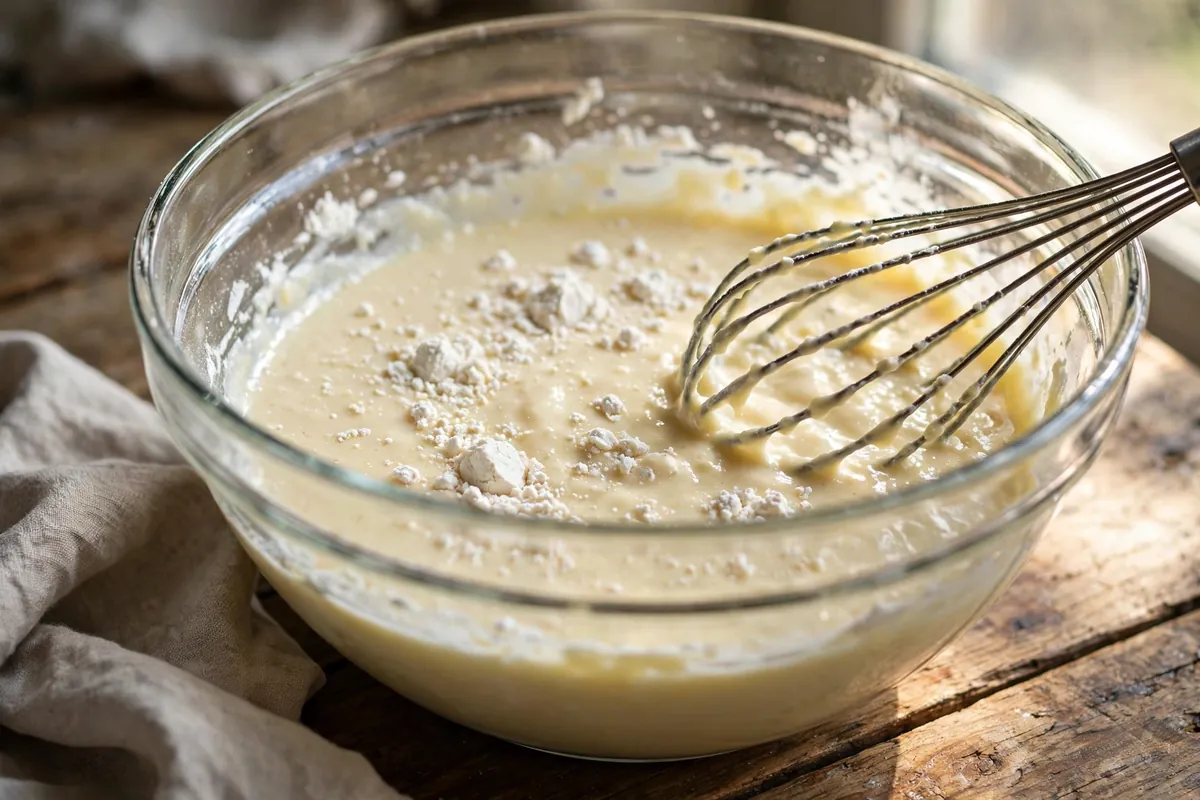
Lumps in batter are tiny flour time-capsules: dry pockets sealed inside a shell of hydrated flour. They form when liquid hits flour too fast, and the fix depends on what you’re making — pancake and muffin lumps are harmless and should be left alone, while cake batter lumps need smoothing out. Knowing which is which saves you from the real enemy: overmixing.
Quick diagnosis: Lumps form when liquid is added to flour too quickly. For pancakes and muffins, leave small lumps alone — overmixing makes them tough. For cake batter, smooth them by pressing lumps against the bowl with a whisk, straining through a sieve, or resting the batter 10 minutes so lumps hydrate on their own.
My tested baseline: a standard vanilla cake batter — 250g flour whisked with 200g sugar, 2 tsp baking powder, ½ tsp salt; 115g melted butter, 2 eggs, 240ml milk at room temperature. Dry ingredients whisked together first, then wet added in three additions, mixed just until smooth — about 45 seconds of whisking total after the last addition.
1. You added the liquid all at once — the number-one cause
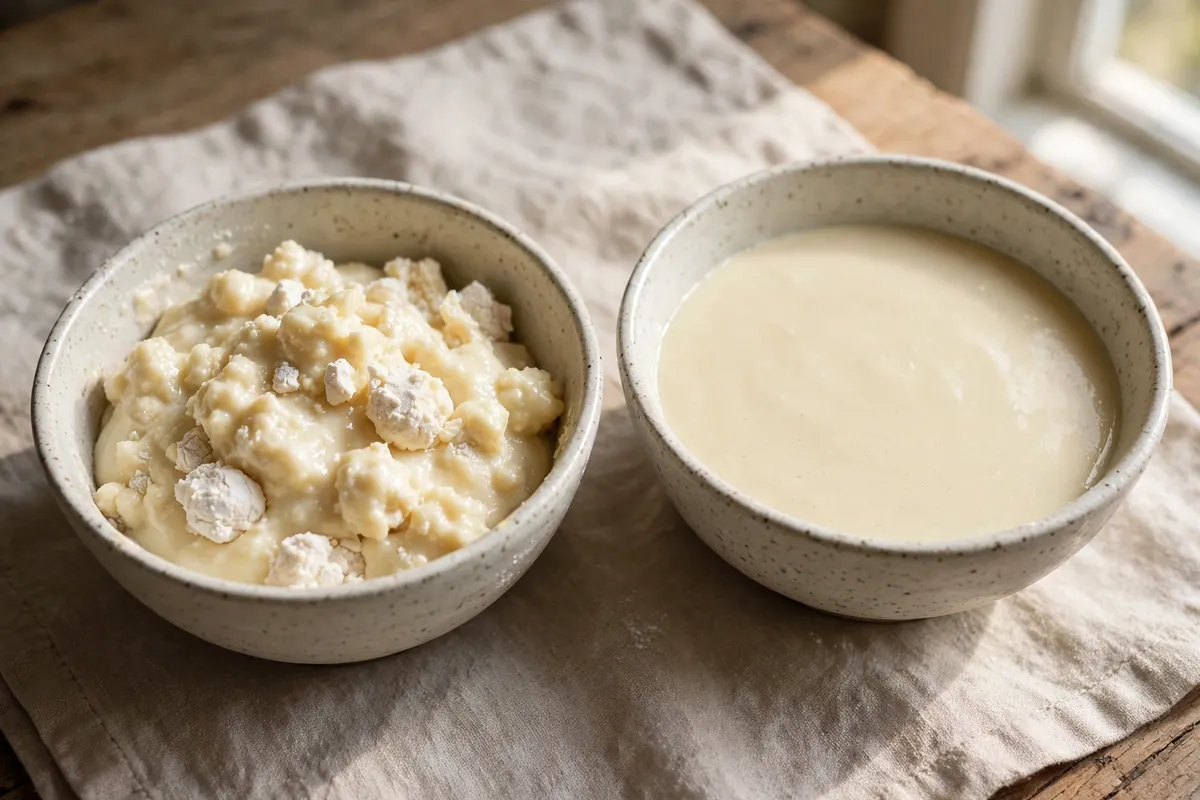
Flour hydrates from the outside in. Dump all the milk in at once and each flour particle’s surface instantly turns to sticky paste, sealing a core of dry flour inside. Those sealed pockets are your lumps, and once formed, they’re stubborn — stirring just pushes them around.
How to tell: The lumps appeared the moment liquid hit flour; they’re dry and powdery inside when you break one open; the batter went from floury to lumpy in seconds.
The fix: Add liquid in three to four additions, whisking each until mostly absorbed before adding the next. Better yet, make a well in the center of the dry ingredients and pour the first addition of liquid into it, gradually pulling flour in from the edges — the classic technique exists precisely to prevent lumps.
2. You didn’t sift or whisk the dry ingredients first
Flour compacts in the bag, and baking powder and salt distribute unevenly. Un-sifted flour goes into the bowl in clumps that are already half-formed lumps, and pockets of baking powder create uneven rise later.
How to tell: Lumps were visible in the dry mixture before any liquid was added; the flour had visible compacted chunks when you measured it.
The fix: Whisk the dry ingredients together in the bowl for 20–30 seconds before adding anything wet — this aerates the flour and distributes leaveners evenly. A fine-mesh sieve is even better for cocoa powder, which lumps worse than flour. This single step prevents most lumps before they start.
3. Rest the batter — lumps hydrate themselves in 10 minutes
This is the lowest-effort fix and it works beautifully for pancakes, waffles, and muffins: walk away. Given 5–10 minutes, liquid migrates into the dry cores and most small lumps dissolve on their own, no extra mixing required. I rest every pancake batter I make — the texture improves and the lumps vanish.
How to tell: The lumps are small (pea-sized or less); the batter is for pancakes, waffles, or muffins rather than a fine-crumbed cake.
The fix: Cover the bowl and rest 10 minutes, then give one gentle stir. For pancakes this is the entire solution. Don’t use this as an excuse to overmix afterward — the resting did the work, so stir minimally. This pairs with the core rule of tough muffins: small lumps are fine, overmixing is not.
4. Press lumps out against the bowl — the whisk technique
For cake batter, where you do want smoothness, the technique matters more than force. Switch to a whisk (not a spoon), tilt the bowl, and press the lumps against the side of the bowl with the wires, crushing them outward. This breaks lumps mechanically without the prolonged beating that develops gluten.
How to tell: The batter is for cake or cupcakes where a fine, even crumb matters; lumps survived the initial mixing.
The fix: Whisk in a figure-eight motion, deliberately dragging the whisk against the bowl’s side to crush lumps. Work quickly — 30–45 seconds after the last liquid addition is enough. Stop the moment the batter looks smooth; every extra minute of beating tightens the crumb, which is exactly how cakes end up sinking or tough (see Why Did My Cake Sink in the Middle?).
5. Strain it — the guaranteed rescue for badly lumpy batter
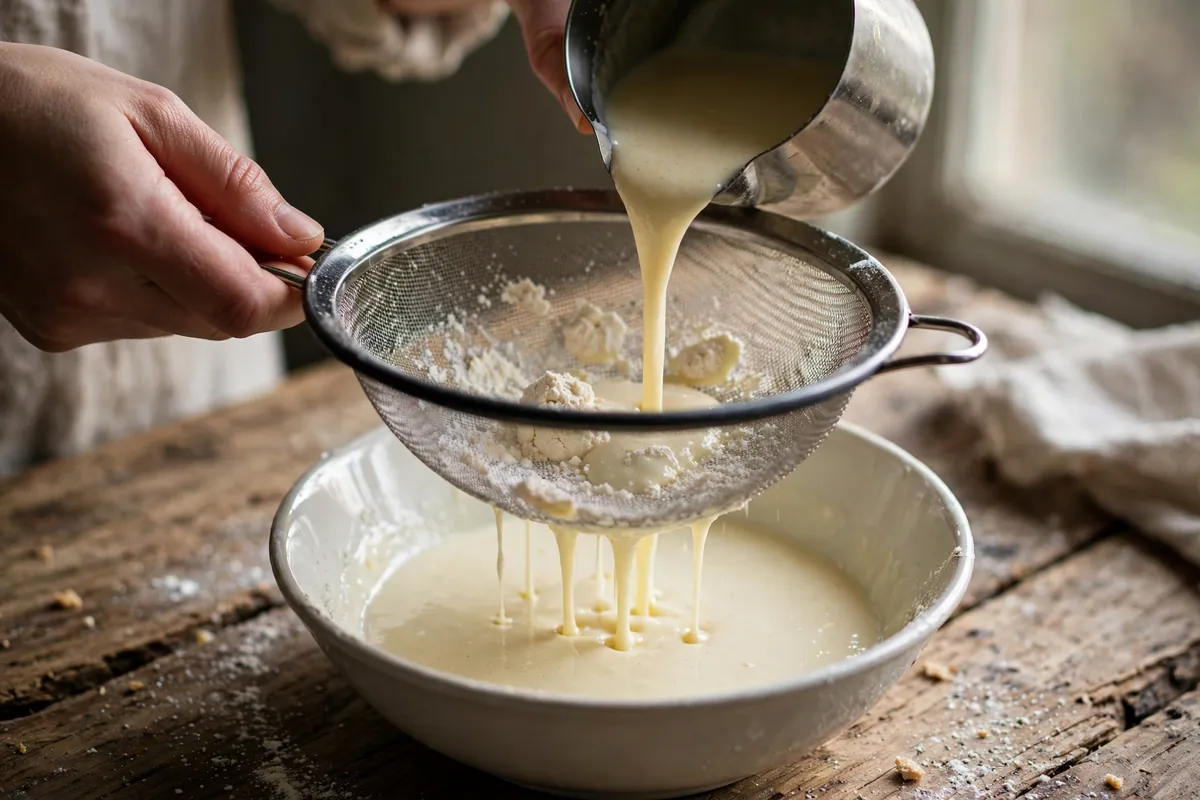
When lumps are large, numerous, or the batter is for something unforgiving like crêpes or a smooth layer cake, don’t fight them: pour the batter through a fine-mesh sieve into a clean bowl, pressing the lumps through with a spatula. What comes out is perfectly smooth, every time.
How to tell: Lumps are large (chickpea-sized or bigger); there are too many to crush individually; the batter is thin enough to pour (works for crêpe, pancake, and most cake batters).
The fix: Set a fine-mesh sieve over a bowl, pour the batter through, and push remaining lumps through with a rubber spatula or the back of a ladle. Discard any truly dry bits that won’t pass. This adds two minutes and rescues any batter — I do it automatically for crêpes, where even one lump ruins the thin spread.
Can you fix lumpy batter after it’s already in the pan?
No — once it’s baking, the lumps are locked in. Small ones in pancakes and muffins will hydrate in the heat and be undetectable; large dry lumps in cake will bake into unpleasant floury pockets. If you catch it before the oven, strain or rest the batter. If it’s already baked, chalk it up to experience: tiny lumps in rustic bakes are invisible in the eating, and the lesson (add liquid gradually) applies to every batter you’ll ever make.
FAQ
Is it safe to eat lumpy batter?
Yes — lumps are just unhydrated flour, completely safe. The only downside is texture: dry, floury pockets in the finished bake. Small lumps in pancakes are undetectable once cooked.
Should pancake batter be lumpy or smooth?
Slightly lumpy is correct. The golden rule of pancakes: mix until just combined, with small lumps remaining. Smoothing them out requires overmixing, which develops gluten and makes pancakes rubbery instead of tender.
Why is my cake batter lumpy but my pancake batter isn’t?
Cake batters have more flour relative to liquid and often include softened butter that must emulsify — more opportunities for lumps. Pancake batter is thinner and more forgiving. The gradual-liquid technique matters most for thick cake batters.
Can I use a blender to fix lumpy batter?
For pancakes, waffles, and crêpes — yes, a few pulses work. For cake or muffin batter — no. A blender develops gluten aggressively and will give you a tough, dense crumb. Strain or whisk those instead.
Does sifting flour really prevent lumps?
Whisking dry ingredients together prevents most lumps; true sifting matters most for cocoa powder and powdered sugar, which clump far worse than flour. For plain flour, 30 seconds with a whisk in the bowl is enough.
Why do my lumps come back after I smooth the batter?
They don’t reform — what you’re seeing is probably small butter pieces (if using the reverse-creaming method) or air bubbles, both harmless. True flour lumps, once hydrated or strained out, stay gone.
Related troubleshooting: Why Are My Muffins Tough? The Muffin Method Explained · Why Did My Cake Sink in the Middle? 7 Causes, Tested Fixes · How to Fix Overwhipped Cream (Before It Becomes Butter)