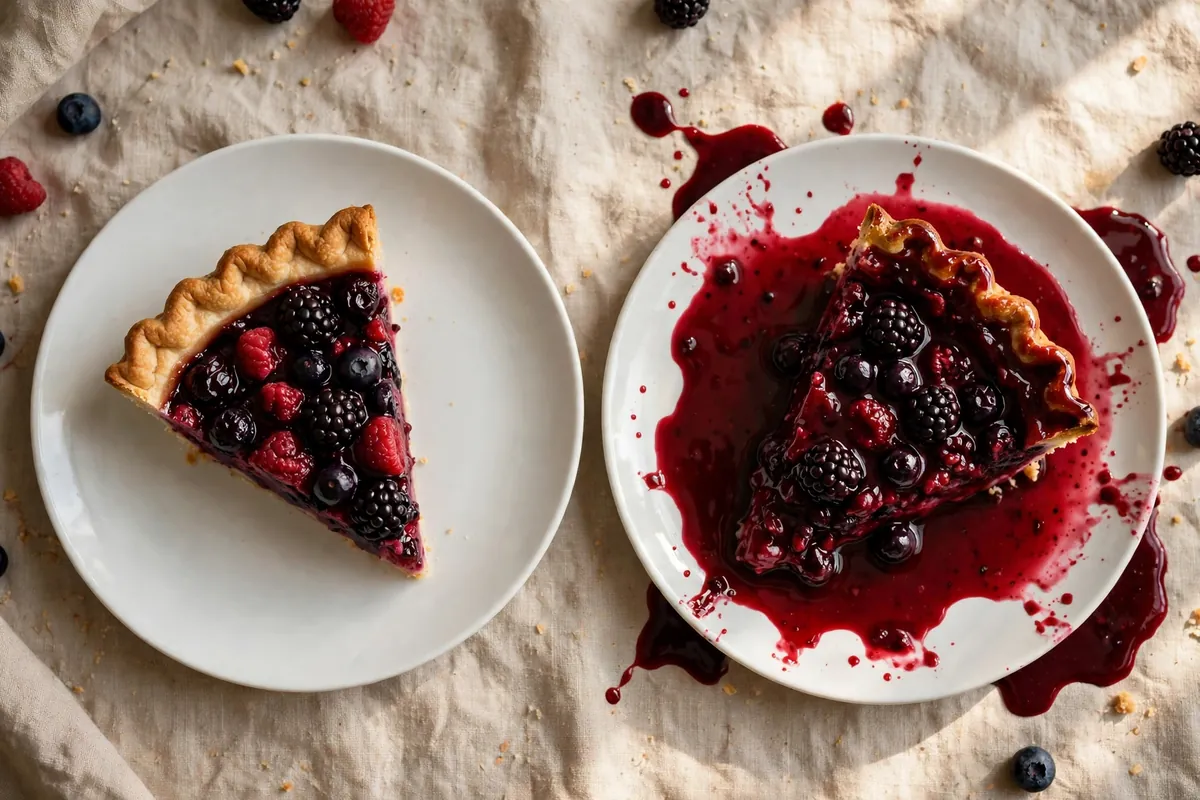
You baked the perfect crust, the kitchen smells incredible, you cut the first slice — and fruit soup floods the plate. I’ve served that pie. Runny filling is a thickener problem, a cooling problem, or both — and once you understand how the three common thickeners actually work, the problem doesn’t come back.
Quick diagnosis: Runny filling comes down to two things in nearly every case: the wrong thickener (or too little of it) for the fruit, and slicing before the pie cooled completely. If you used flour with very juicy berries and cut the pie warm, start with fixes #1 and #5.
Fruit releases juice as it bakes. A thickener’s job is to trap that juice in a gel. No thickener, wrong thickener, or too little — and physics wins.
1. You used the wrong thickener for the fruit
Not all thickeners behave the same, and fruit isn’t interchangeable. Here’s the honest comparison from years of testing:
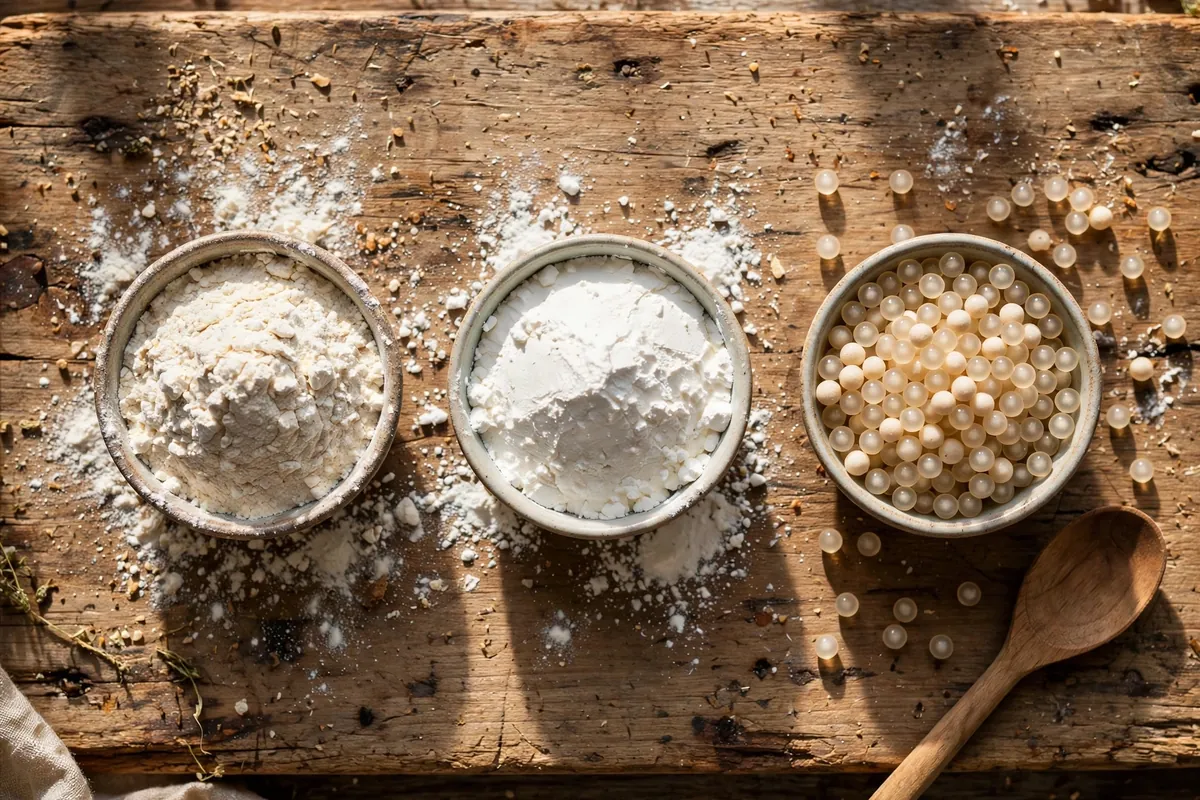
All-purpose flour — 2–3 tablespoons per 9-inch pie. The old-fashioned choice. Pros: always on hand, stable under long bakes. Cons: thickens opaquely — the filling looks cloudy — and needs a full, hot bake to cook out its raw taste. Best for: apple and pear pies, where the filling is naturally less juicy and opacity doesn’t matter.
Cornstarch — 2–4 tablespoons per 9-inch pie (higher end for very juicy fruit). Pros: sets into a clear, glossy gel; twice the thickening power of flour by volume. Cons: can thin out under very long, hot bakes or with highly acidic fruit, and needs a full boil inside the pie to activate. Best for: berry and cherry pies baked hot and fully.
Quick-cooking tapioca — 2–3 tablespoons per 9-inch pie, ground finer if the pearls are large. Pros: the best of both — clear gel like cornstarch, stable like flour, no starchy taste. Cons: the pearls need about 15 minutes of rest with the fruit before baking to hydrate. Best for: the juiciest pies — fresh berry, rhubarb, peach — where you want a clear set that holds for days.
My default: tapioca for juicy fruit, flour for apples. Cornstarch when I want that glossy look and I’m sure of a hot, full bake.
How to tell: Match your fruit to the list. Juicy berries thickened with flour, or any pie thickened with cornstarch that came out pale — that’s your answer.
2. You didn’t use enough thickener
Thickener amounts aren’t suggestions — they’re calibrated to the fruit’s juice. The mistake I see most: using the apple-pie amount of thickener in a berry pie. Berries release dramatically more juice than apples, and stone fruit sits in between. A flat 2 tablespoons across all fruits under-thickens the wet ones every time.
How to tell: The filling tastes right but flows — the flavor is there, the structure isn’t. That’s under-thickening, not a technique failure.
The fix: Scale to the fruit. Per 9-inch pie with ~6 cups fruit: apples 2 tablespoons flour; peaches/plums 3 tablespoons tapioca or flour; berries/cherries 3–4 tablespoons tapioca or cornstarch. When in doubt, go one tablespoon heavier — slightly firm beats soupy. (For the crust side — juicy filling also attacks the base — see Soggy Bottom Pie.)
3. The filling never got hot enough
Thickeners activate at specific temperatures — starch granules swell and burst, trapping liquid, only when they get hot enough. Cornstarch needs a genuine boil: the filling must bubble visibly through the vents. A pie pulled when “the crust looks done” but the filling never bubbled has inactive thickener and a guaranteed flood.
How to tell: The crust is golden but you never saw the filling bubble, or only the edges did. The juices look thin and watery rather than syrupy.
The fix: Bake until the filling bubbles in the center — not just the edges — for several minutes. An instant-read thermometer through a vent reading 200°F (93°C) confirms it. Shield the crust edges with foil if they’re browning faster than the filling is bubbling.
4. You didn’t pre-treat very juicy fruit
Some fruit is simply too wet for thickener alone. Fresh berries, rhubarb, and ripe peaches can release a startling volume of juice — more than any reasonable amount of starch can trap without turning the filling gummy.
How to tell: The fruit was very ripe, very fresh, or a known juice-bomb (raspberries, blackberries, rhubarb).
The fix: Macerate. Toss the sliced fruit with the sugar and a pinch of salt 30–60 minutes before assembling. Drain off the pooled juice, simmer it until reduced by half into a syrup, cool, and pour it back over the fruit with your thickener. You keep all the flavor, lose the flood. This single technique fixed my raspberry pies permanently.
5. You sliced it warm
This is the cruelest cause because the pie was actually fine. Fruit fillings thicken as they cool — pectin and starch gels firm up dramatically between oven-hot and room temperature. A pie sliced 30 minutes out of the oven will always look runnier than the same pie sliced at 3 hours. I know the wait is agony. It’s also non-negotiable.
How to tell: The filling looked thick and bubbly in the oven, flowed when cut warm, and — telltale sign — the leftover pie the next day slices cleanly.
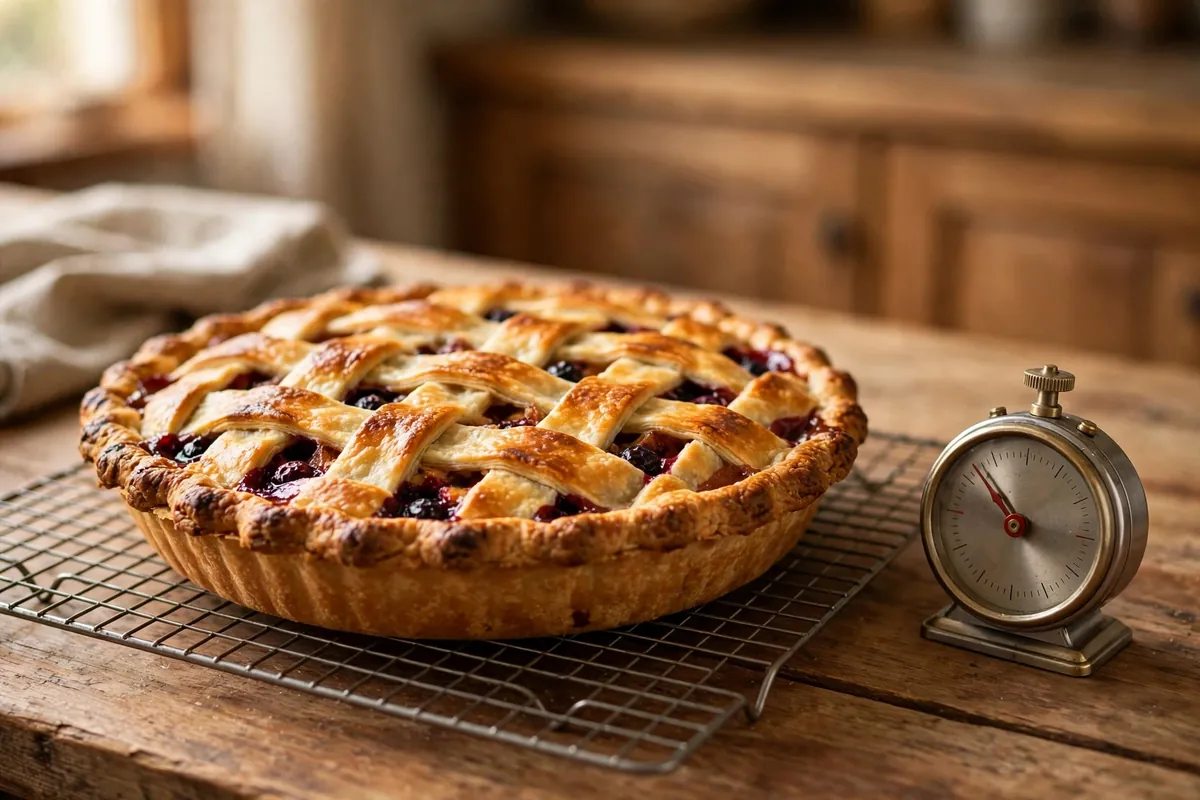
The fix: Cool the pie on a rack a full 3–4 hours before slicing — 4 for berry pies. The filling needs to drop below about 100°F (38°C) for the gel to set. If you must serve warm pie, serve it in bowls as a rustic dessert and own it.
6. Rescue: fixing today’s runny pie
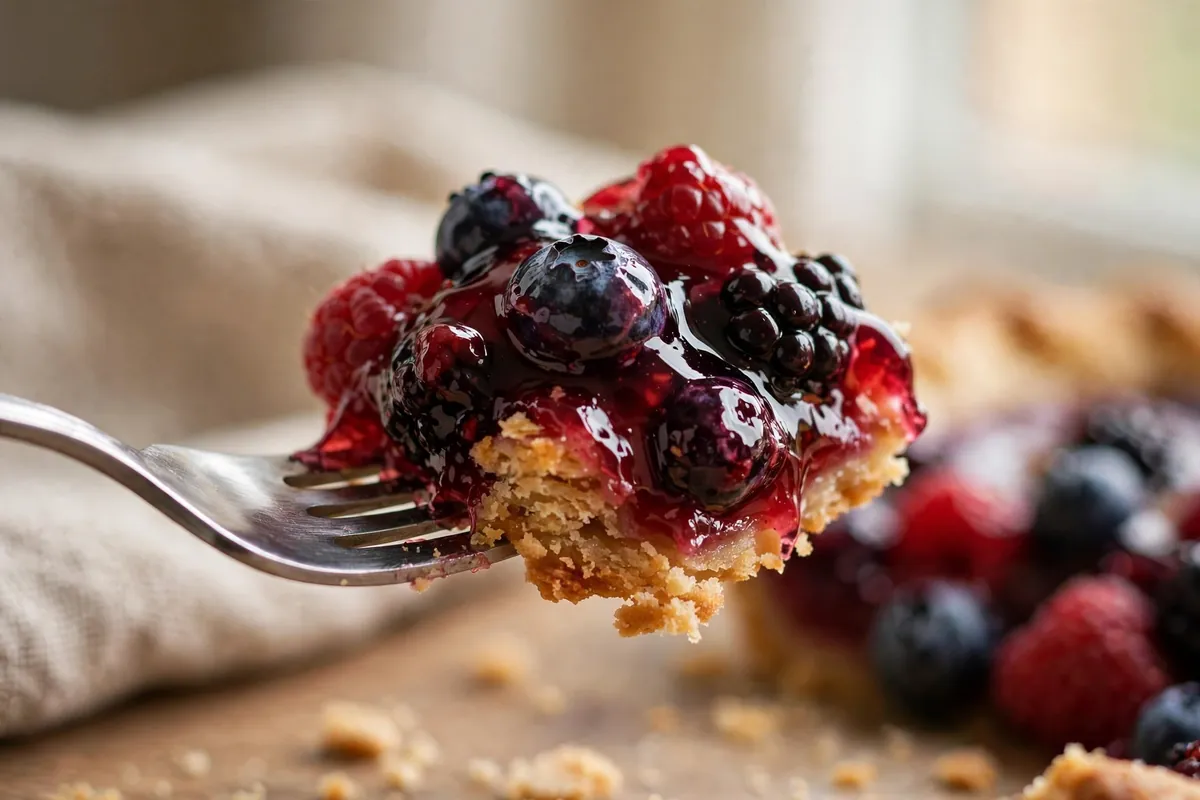
Already baked, already runny? Rebake: return the pie to a 375°F (190°C) oven until the filling bubbles — then cool fully this time. Stovetop: scoop the filling into a saucepan, whisk in a cornstarch slurry (1 tablespoon cornstarch + 2 tablespoons cold water per cup of filling), simmer 2 minutes until glossy, and reassemble — or serve it over ice cream as a compote.
Frequently Asked Questions
Which thickener is best for apple pie?
Flour — 2–3 tablespoons. Apple filling is low-juice and opaque anyway, so flour’s cloudiness doesn’t matter, and its heat stability suits the long bake.
Why did my berry pie turn out runny when I used cornstarch?
Two culprits: the filling never reached a full boil (cornstarch needs active bubbling), or you used the apple-pie amount for berry-level juice. Next time: 3–4 tablespoons, bake until the center bubbles, cool 4 full hours.
Can I use tapioca pearls straight from the jar?
Roughly — but grind them first. Whole pearls can survive as gelatinous beads; a few pulses in a spice grinder gives you a powder that disappears while keeping tapioca’s holding power.
Is runny pie filling safe to eat?
Completely — it’s a texture problem, not a safety one. Undercooked flour thickener can taste pasty, but nothing in a baked fruit pie is unsafe.
Can I fix a runny pie after it’s baked?
Yes — rebake until the filling bubbles (activating the thickener properly), then cool the full 3–4 hours. Or scoop out the filling, thicken it on the stovetop with a cornstarch slurry, and reassemble. Both work; the stovetop method is faster.
Does sugar make filling runnier?
Sugar draws juice out of fruit, which is why juicy fruit needs the maceration pre-treatment. But don’t cut the sugar — it helps the gel set. Manage the juice; keep the sugar.
Related troubleshooting: Soggy Bottom Pie · Pie Crust Shrinking in the Oven · Why Did My Cheesecake Crack?