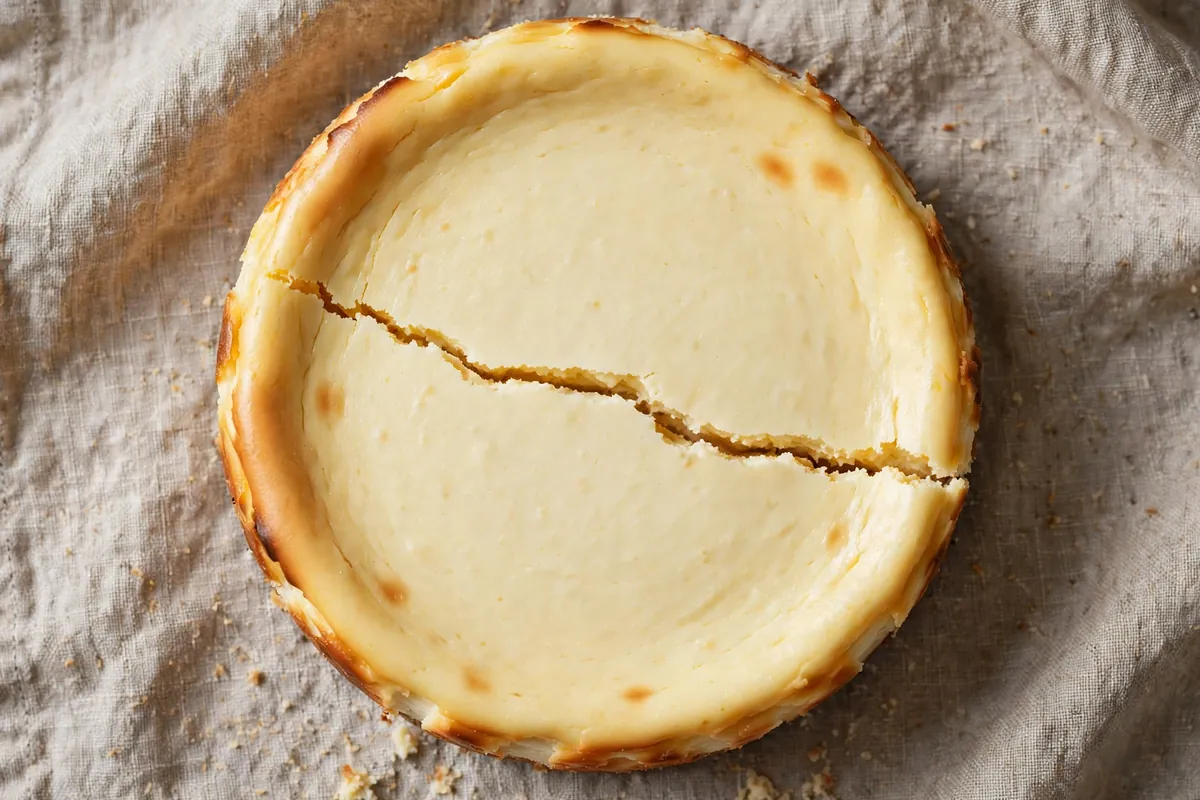
There’s a special heartbreak reserved for pulling a beautiful cheesecake from the oven, only to watch a crack split across the top as it cools. The good news: cracks are almost always preventable, and even a cracked one is fully salvageable. Here’s the why and the fix.
Quick diagnosis: Cracked cheesecakes come down to two things in nearly every case: the cheesecake was overbaked, and it cooled too fast. If the center was fully set with no jiggle when you pulled it, and it went straight from oven to counter to fridge, start with causes #1 and #2.
A crack is a structural failure: the surface set while the interior was still expanding or contracting at a different rate. Cheesecake is a custard, not a cake — it needs gentle heat and gentle cooling. Work through the five causes in order.
1. It was overbaked
The number one cause. Cheesecake keeps cooking from residual heat after it leaves the oven — carryover cooking. A cheesecake that’s fully set when you pull it was overbaked ten minutes ago, and overbaked custard contracts as it cools, splitting the surface.
How to tell: The center didn’t jiggle at all when you gently shook the pan. The top puffed slightly or turned golden-brown. The edges pulled away from the pan sides while still in the oven.
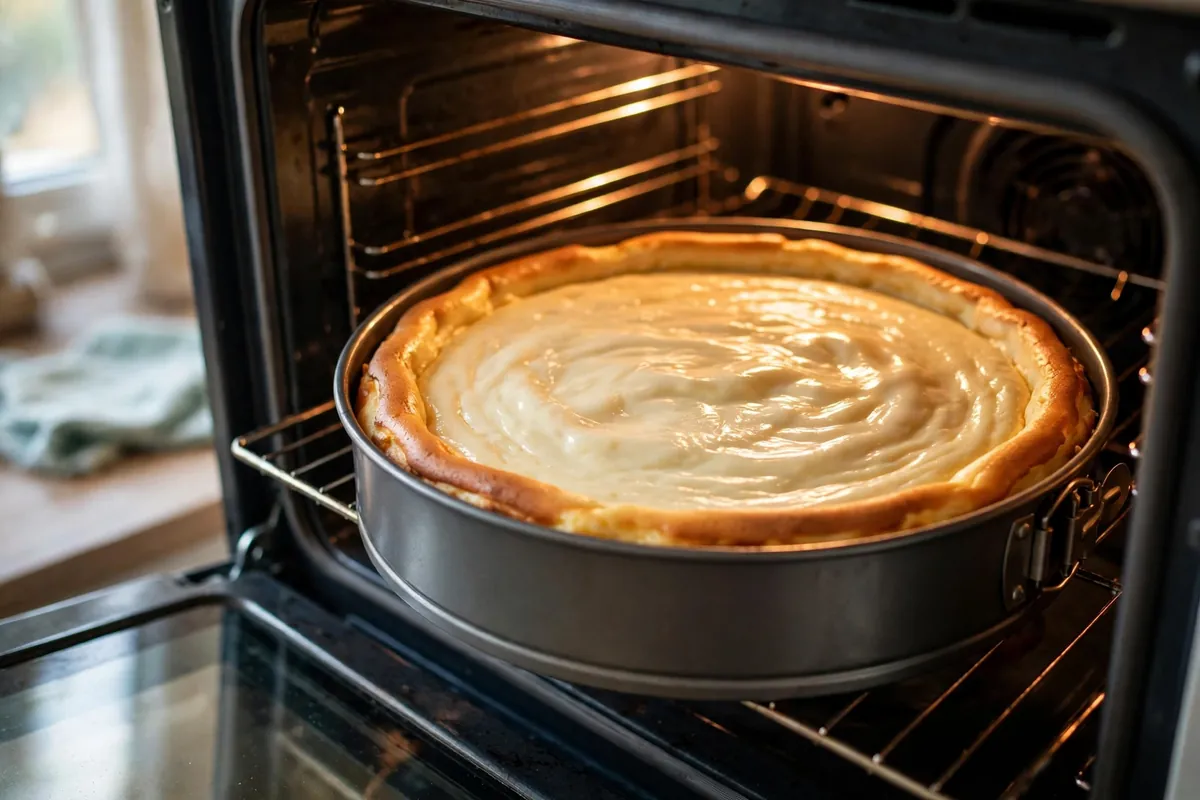
The fix: Pull the cheesecake when the outer 2–3 inches are set but the center still jiggles like Jell-O — a loose wobble about 2–3 inches across. It looks underdone. It isn’t. Residual heat finishes the job as it cools. If you own an instant-read thermometer, the center should read about 150°F (66°C); carryover takes it the rest of the way. The jiggle test never fails; the thermometer is just confirmation.
2. It cooled too fast
A hot cheesecake moved to a cool counter — or worse, straight into the fridge — experiences thermal shock. The surface contracts rapidly while the center is still hot and expanded. The surface loses, and it loses with a crack.
How to tell: The crack appeared during cooling, not in the oven. You moved it from oven to counter quickly, or refrigerated it within the hour.
The fix: Cool in stages. Turn the oven off, crack the door open with a wooden spoon, and leave the cheesecake inside for 1 hour. Then move it to the counter for another hour. Then refrigerate — minimum 4 hours, overnight is better. Slow, boring cooling is the whole secret. Keep it away from drafts and open windows during the counter stage.
3. The batter was overmixed
Every minute of beating folds air into the batter. Air expands in the oven heat, puffing the cheesecake up — then collapses as it cools, and the deflating surface cracks. This is the same physics as a fallen soufflé, just slower.
How to tell: The cheesecake rose noticeably in the oven and then sank. The texture is slightly foamy or mousse-like rather than dense and creamy. You beat the filling on high speed or for a long time.
The fix: Use room-temperature cream cheese (it blends without aggressive beating — cold cream cheese forces you to overmix). Beat on low speed, only until smooth, scraping the bowl twice. Add eggs last, one at a time, mixing just until each disappears. After pouring, tap the pan firmly on the counter a few times to pop surface air bubbles.
4. The oven ran too hot
Most cheesecakes bake at 325°F (163°C). A hot oven sets and browns the edges long before the center catches up — the rigid outer ring then cracks as the still-expanding center pushes against it. Most home ovens run 15–25°F off, usually hot.
How to tell: The edges browned or puffed while the center was still liquid. Everything you bake seems to finish “early.”
The fix: Verify with an oven thermometer and bake on the middle rack. If your oven runs hot, 300°F (149°C) with a slightly longer bake is safer than 325°F in a lying oven. This is the same oven-calibration issue behind domed cake tops (see Cake Domed and Cracked on Top).
5. No water bath
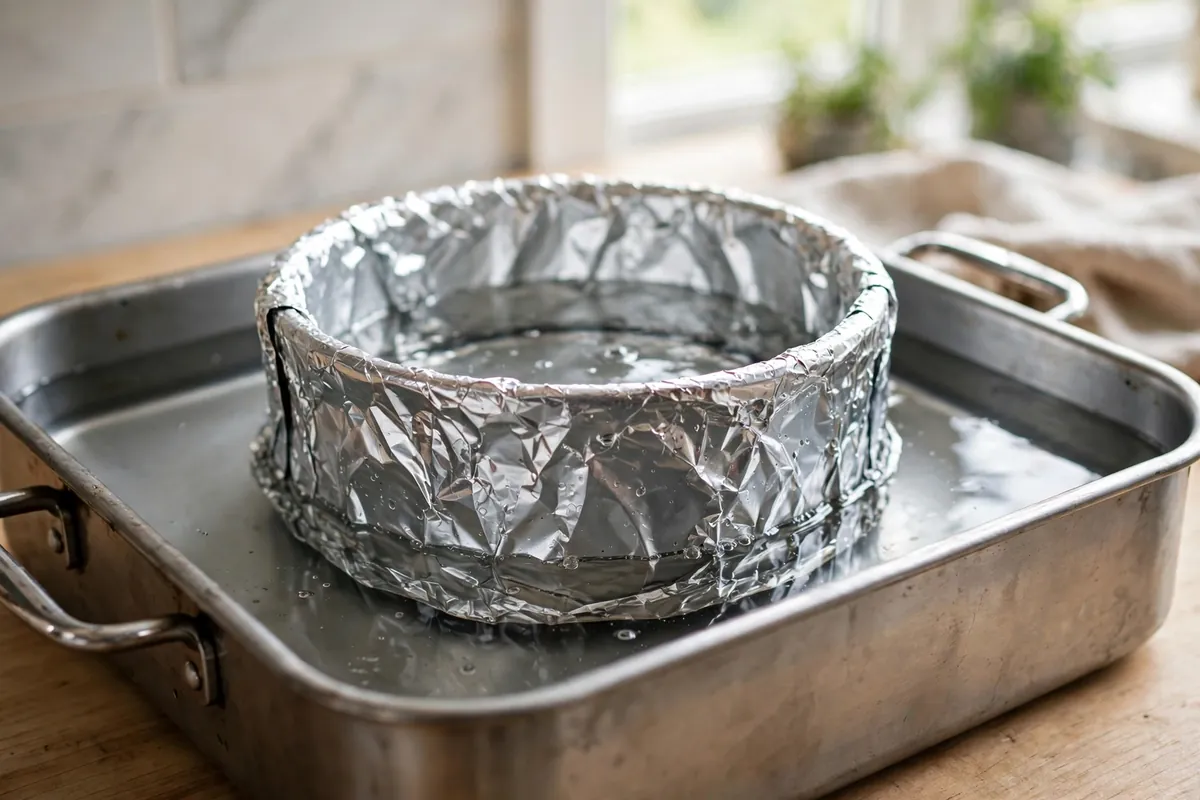
A water bath (bain-marie) is insulation: the water never exceeds 212°F (100°C), so the cheesecake bakes in gentle, even, humid heat instead of harsh dry oven air. It dramatically reduces cracking — the single highest-leverage technique on this list.
How to tell: You baked it dry — just the springform on the rack. The top browned, the edges set fast, the texture is slightly drier.
The fix — the water bath, step by step:
1. Wrap the outside of your springform pan in 2–3 layers of heavy-duty foil (or a silicone cake-pan wrap). Water must not touch the crust.
2. Place the wrapped pan in a large roasting pan.
3. Pour in boiling water until it comes halfway up the sides of the springform.
4. Bake at 325°F (163°C) until the edges are set and the center jiggles (see cause #1).
5. Cool in stages per cause #2 — the water bath doesn’t excuse fast cooling.
No roasting pan? Place a pan of hot water on the rack below the cheesecake. It’s not a true water bath but adds humidity and softens the heat — a meaningful halfway measure.
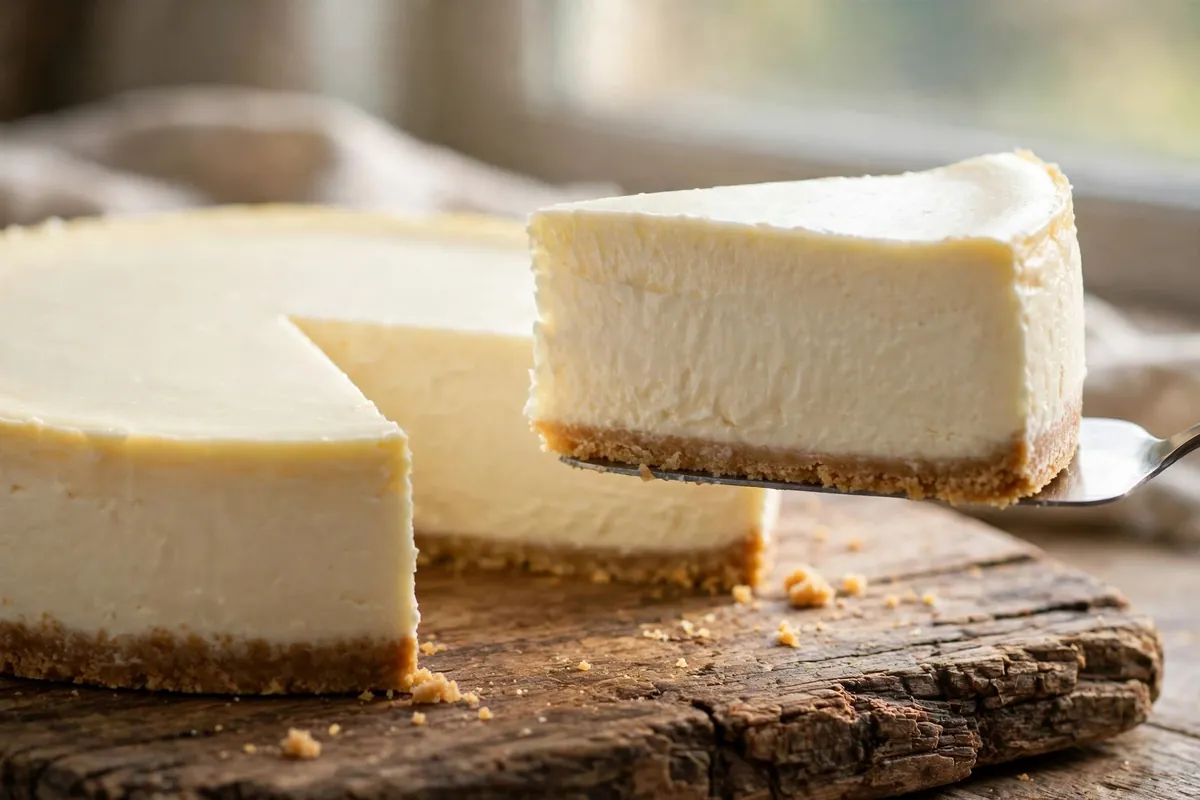
Can I fix a crack that’s already there?
Yes — cracks are cosmetic, and the cheesecake underneath is perfectly good. The classic cover: whisk 1 cup sour cream with 2–3 tablespoons sugar and 1 teaspoon vanilla, spread it over the cooled cheesecake, and bake 5 minutes at 450°F (232°C). It sets into a smooth, tangy glaze that hides everything. No sour cream? A fruit compote, chocolate ganache, or a pile of macerated berries does the same job deliciously. Nobody will know.
Frequently asked questions
Is a cracked cheesecake safe to eat?
Completely. A crack is a cosmetic structural issue, not a food-safety one. If it baked through and was refrigerated properly, it eats exactly as good as a flawless one — it just photographs worse.
Can I put it back in the oven to fix the crack?
No — reheating won’t fuse a crack closed, and it risks overbaking the whole cheesecake. Cover it instead: the sour-cream glaze above, ganache, or fruit topping. The fix is camouflage, and it’s delicious camouflage.
Do I really need a water bath?
It’s the most reliable crack prevention, but not the only path. A low, slow bake at 300°F (149°C) with a pan of hot water on the lower rack, plus staged cooling, gets you most of the way there. If you bake cheesecake more than twice a year, though, learn the water bath — it’s fifteen minutes of setup for insurance.
Why did my cheesecake crack even with a water bath?
The water bath controls heat, not time or cooling. The usual culprits: it was still overbaked (no jiggle when pulled), or it cooled too fast afterward. Run through causes #1 and #2 — the bath only does its half of the job.
Springform pan or regular pan?
Springform, always — you can’t slice a cheesecake out of a regular pan cleanly. Wrap it well for the water bath, and if your springform leaks, set it inside a slightly larger cake pan before wrapping.
Related troubleshooting: Why Did My Cake Sink in the Middle? · Make-Ahead Thanksgiving Desserts: A Baker’s Timeline