Why Did My Cake Stick to the Pan? Release Methods That Work
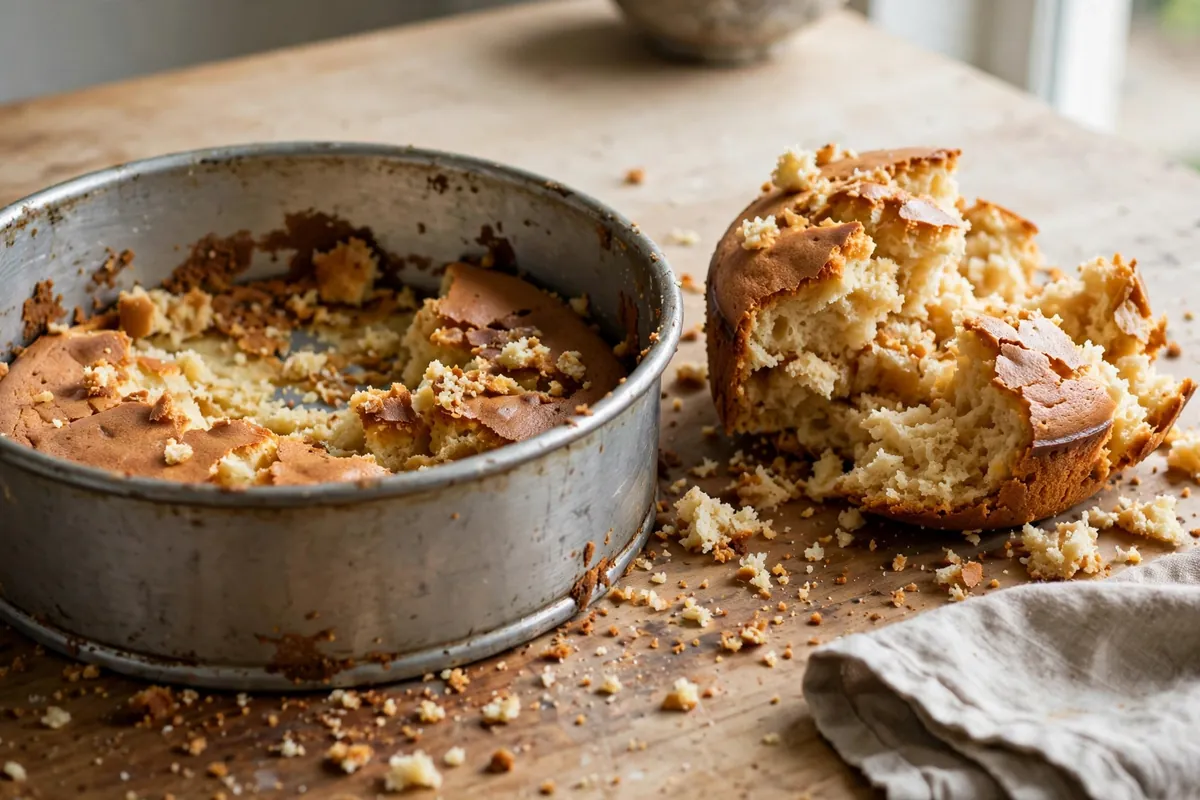
Quick diagnosis: Cake sticks for one of three reasons: the pan wasn’t prepped (no grease/flour or parchment), it was unmolded at the wrong moment (too hot = falls apart, too cool = steams itself stuck), or the pan’s nonstick coating is worn out. Parchment paper rounds eliminate the problem entirely — they’re the single most reliable fix.
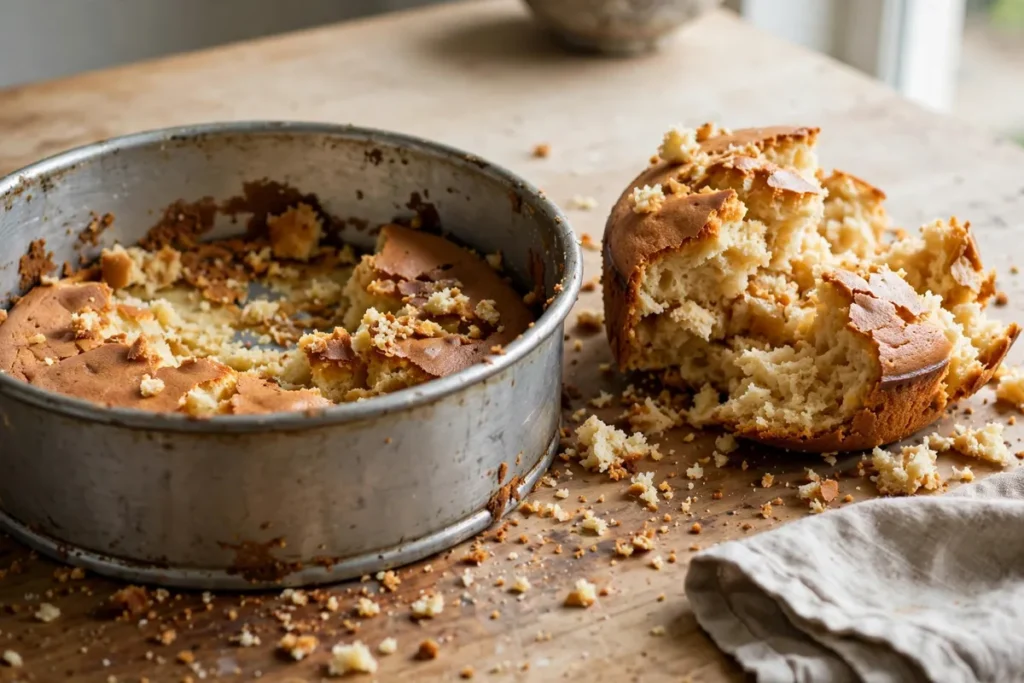
A baked cake releases when there’s a barrier between batter and metal. Without one, the cake’s proteins and sugars bond directly to the pan as they set — and sugar, when hot, is essentially glue. Every method below is a version of building that barrier, plus the timing that makes it work.
1. The pan wasn’t prepped properly
The classic failure: a quick spritz of oil or nothing at all. A thin oil film isn’t a barrier — it fries into the crumb and bonds. The method that actually works has two layers: fat, then a dry coating.
How to tell: The cake bonded across the whole bottom and sides, and you greased lightly or not at all.
The fix: The full prep, every time: coat the pan with softened butter or shortening (get into the corners), then dust with flour and tap out the excess — you want a thin, even film, not clumps. For chocolate cakes, dust with cocoa powder instead of flour so there’s no white residue. This two-layer barrier is what bakeries use, and it has never failed me.
2. No parchment paper
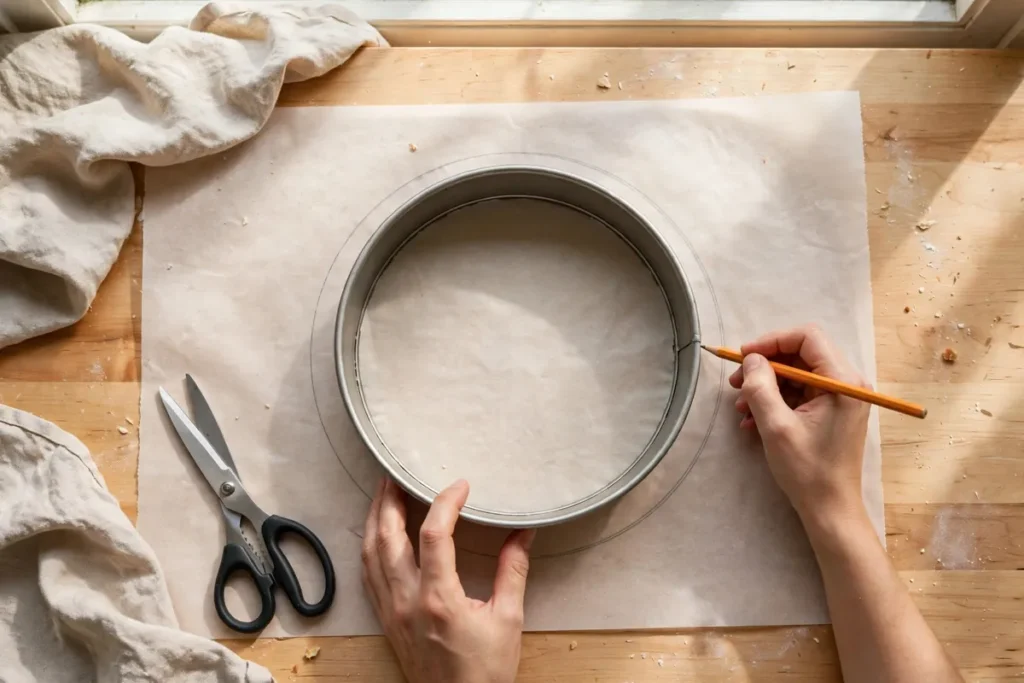
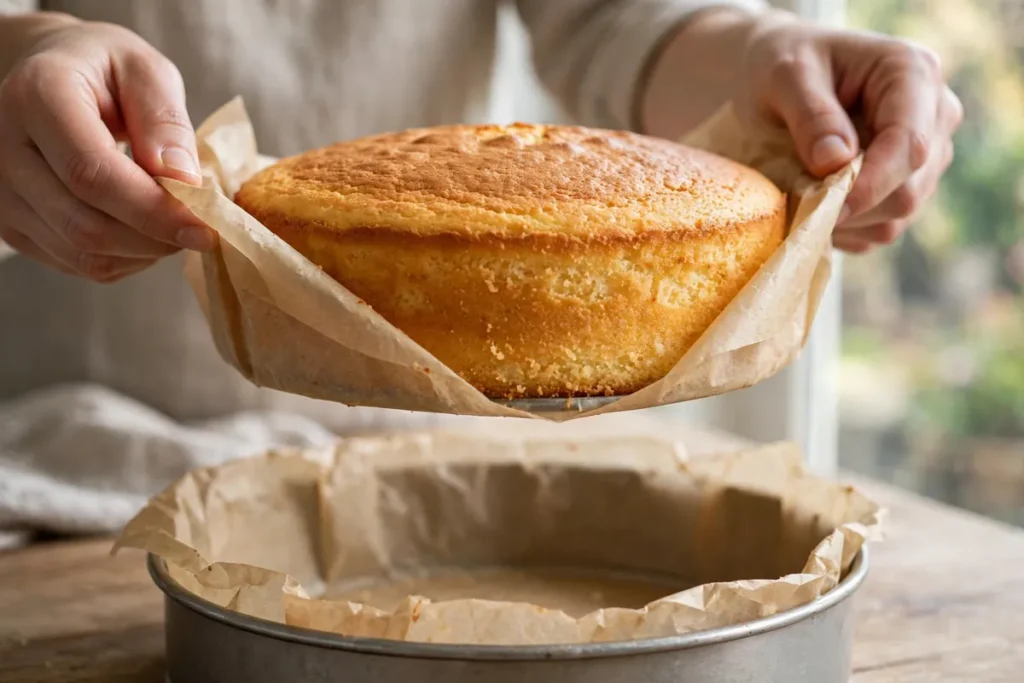
Grease-and-flour handles the sides; parchment handles the bottom — the surface with the most contact and the most tearing. A parchment round is cut to fit the pan base exactly, so the cake’s largest surface never touches metal at all.
How to tell: The sides released fine but the bottom tore off and stayed in the pan.
The fix: Trace the pan on parchment, cut just inside the line, and lay the round in the greased pan (a dab of butter underneath holds it in place). Grease and flour over the parchment too — belt and suspenders. Pre-cut rounds are cheap; keep a stack in every pan size.
3. It was unmolded too hot — or too cold
Timing is the second half of release. Invert a cake straight from the oven and the crumb is still fragile steam-held foam — it breaks apart under its own weight. Wait too long and the opposite happens: as the cake cools in the pan, escaping steam condenses between cake and metal, and sugars re-bond to the surface. The window is 10–15 minutes on a wire rack.
How to tell: It shattered coming out (too hot), or it released from the sides but the bottom vacuum-sealed itself to the pan (too cold — it sat 30+ minutes).
The fix: Cool in the pan on a rack for 10–15 minutes — no more. Run a thin knife or offset spatula around the edge, place the rack over the pan, and flip confidently in one motion. If it resists, don’t force it: set the pan on a warm damp towel for a minute to loosen, then try again.
4. The nonstick coating is worn out
Nonstick isn’t forever. Scratched, overheated, or decade-old coatings lose their release — and the failure is sneaky because the pan looks fine. Metal utensils, abrasive scrubbers, and dishwasher heat all shorten the life. A worn pan sticks worse than bare aluminum because the damaged coating grabs unevenly.
How to tell: The pan is old, visibly scratched, or food has started sticking in it generally — not just cake.
The fix: Retire it for baking, or commit to full parchment lining every time (parchment doesn’t care about the coating). When replacing, light-colored aluminum with a parchment round outlasts and outperforms cheap nonstick for cakes.
5. High-sugar batters need more than grease
Caramel-like batters — sticky toffee, heavy fruit cakes, anything with melted sugar or honey — laugh at grease-and-flour. Hot sugar bonds to metal at a molecular level; flour just becomes part of the glue.
How to tell: The recipe is very high in sugar, honey, or syrup, and the stuck layer is glossy and caramelized where it bonded.
The fix: Full parchment lining — bottom AND sides (cut a strip for the wall, or use a parchment collar). Grease under and over the parchment. For extreme cases (sticky toffee pudding in particular), this is the only method I trust.
6. Bundt and shaped pans need crevice-by-crevice prep
Intricate pans have dozens of tiny ridges where batter locks in mechanically. A spray-and-pray approach misses crevices, and the cake tears at exactly those points.
How to tell: A Bundt or shaped cake released mostly but tore at the detailed sections.
The fix: Brush every crevice with melted butter using a pastry brush — don’t spray and hope — then dust thoroughly with flour (or a 50/50 flour-sugar mix, which releases even better on sweet cakes). Tap the pan firmly upside down to remove all excess. Use baking spray WITH flour (not plain oil spray, which polymerizes into a sticky varnish over time). Cool the full 15 minutes before inverting; Bundts are heavy and need the structure.
Rescue: the cake is stuck right now
Don’t panic and don’t pry. Run a thin, flexible knife around the entire edge, pressing against the pan. Set the pan on a warm, damp towel for 2–3 minutes — gentle heat softens the sugar bonds. Invert onto the rack and give the pan a firm tap; if it holds, tap the bottom sharply once more. Torn anyway? Frosting is structural spackle: patch tears with a crumb coat, chill 20 minutes, then frost normally. A patched cake under frosting is indistinguishable from a perfect one.

Frequently asked questions
Can I still use a cake that stuck and tore?
Yes — this is purely cosmetic. Patch tears with frosting (crumb coat, chill, final coat) and nobody will know. Badly torn layers become trifle, cake pops, or an icebox cake. The flavor is completely unaffected.
Is butter or baking spray better for greasing pans?
Baking spray that contains flour is the most foolproof for everyday cakes — one step, even coverage. For shaped pans, brushed melted butter plus flour gets into crevices better. Plain oil spray without flour is the worst option; it can bake into a sticky layer.
Do I need to grease parchment paper?
Greasing the pan under the parchment holds it in place; a light grease over the parchment guarantees release. It’s thirty seconds of insurance — I always do both.
Why did my cake stick even though I greased the pan?
Usually one of three things: the grease layer was too thin or missed spots, there was no flour/parchment second layer, or the cake cooled too long in the pan and steamed itself stuck. The full method — grease, flour, parchment round, 10–15 minute cool — fails so rarely it’s effectively foolproof.
Can I fix a stuck cake without tearing it?
Try the warm damp towel trick: 2–3 minutes of gentle heat under the pan softens sugar bonds. Then the confident single flip. Hesitation and partial lifts cause more tearing than one decisive inversion.
Related troubleshooting: Why Did My Cake Sink in the Middle? · Cake Domed and Cracked on Top · Why Is My Bread Dense?