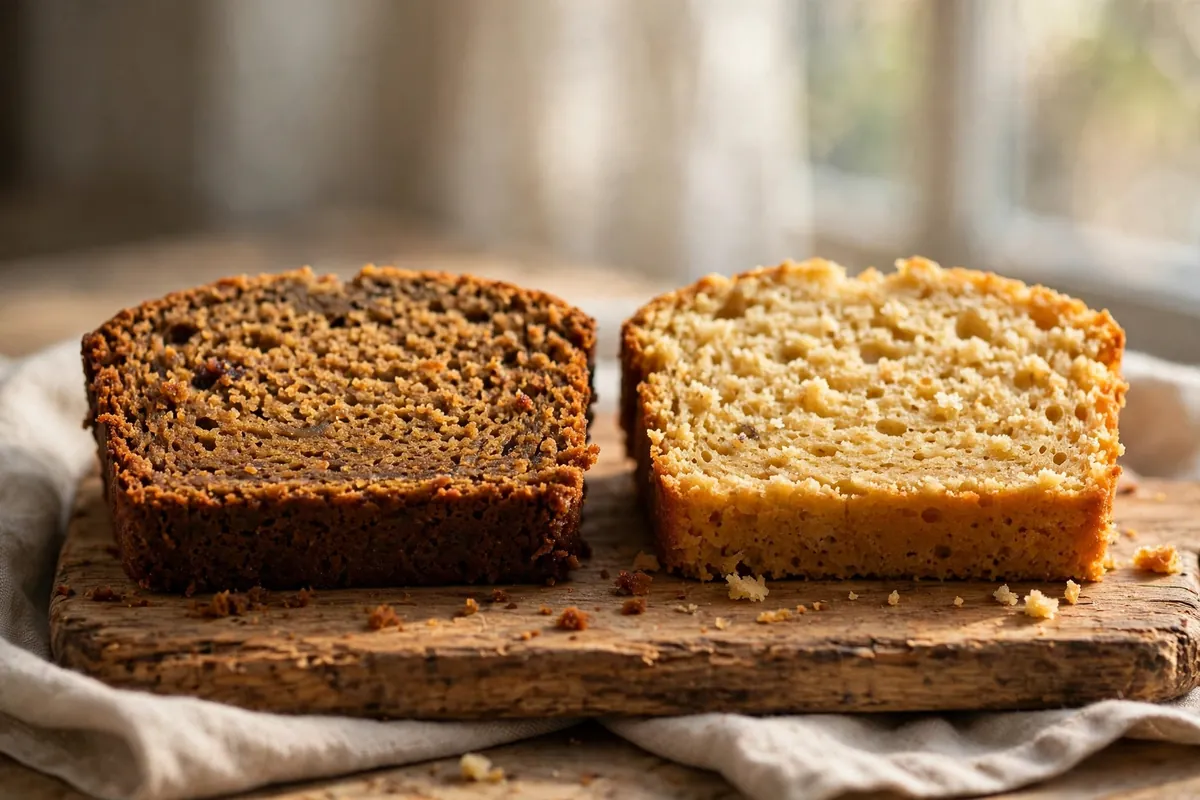
You sliced into the loaf expecting a tender crumb and got something closer to a brick — heavy, tight, maybe gummy in the middle. Banana bread is a quick bread, so the rules differ from yeasted bread: no gluten network to blame, just batter chemistry. Six causes explain nearly every dense loaf, in this order.
Quick diagnosis: Dense banana bread is overmixed batter first, too much banana second, and dead leavening third. If you stirred the batter until it was smooth, used four or five bananas, or your baking soda has been open since last year — you’ve found it. Fix those three and the next loaf comes out tender.
1. The batter was overmixed
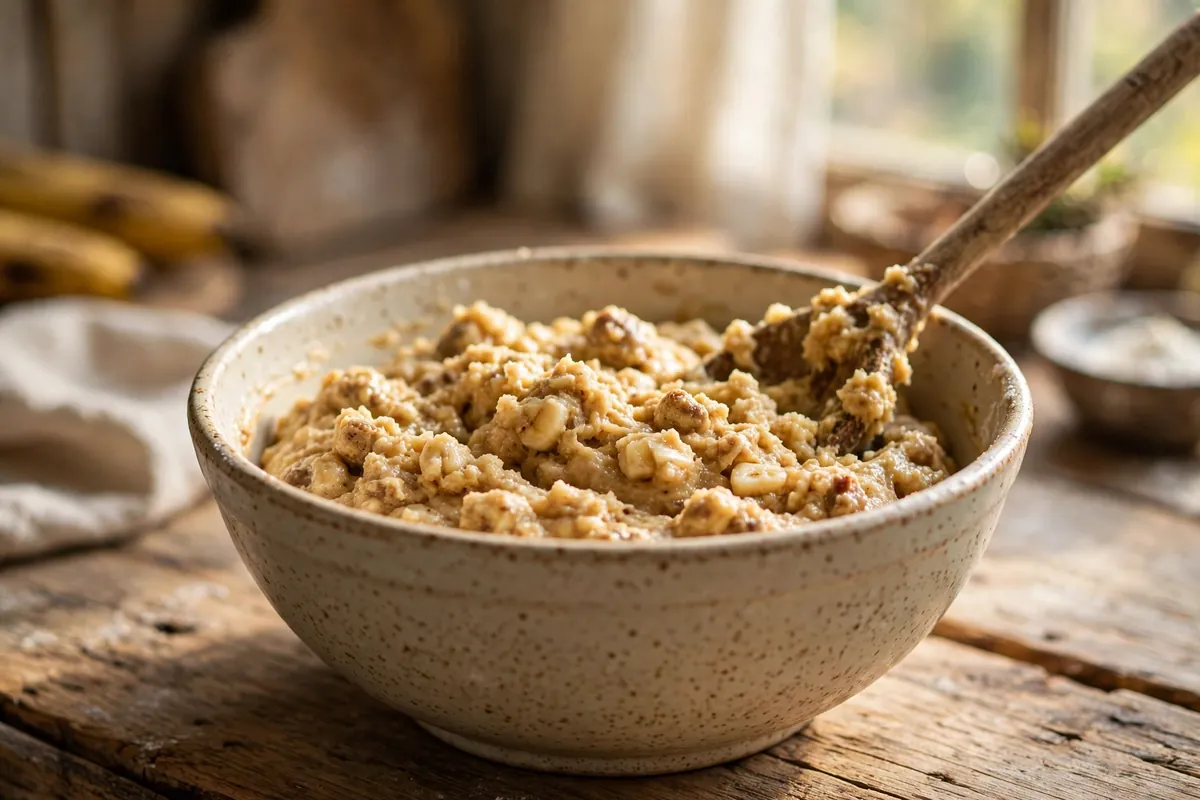
The number one cause, by a wide margin. Banana bread batter contains flour and liquid, and the moment they meet, gluten starts forming. Stir too long and you build a strong gluten network — exactly what you want in bread, exactly what ruins a quick bread. The crumb turns tough, dense, and rubbery.
How to tell: The batter looked smooth and stretchy rather than lumpy, and the baked loaf has a tough, chewy texture with tunnels running through it.
The fix: Stir until the flour just disappears — 10 to 12 strokes with a spatula, no more. Lumps are not the enemy here; they’re proof you stopped in time. Mix the wet and dry ingredients in separate bowls first, then combine with a light hand. This single habit fixes more dense banana bread than everything else on this list combined. (The same principle wrecks muffins — see Why Are My Muffins Tough?.)
2. Too much banana
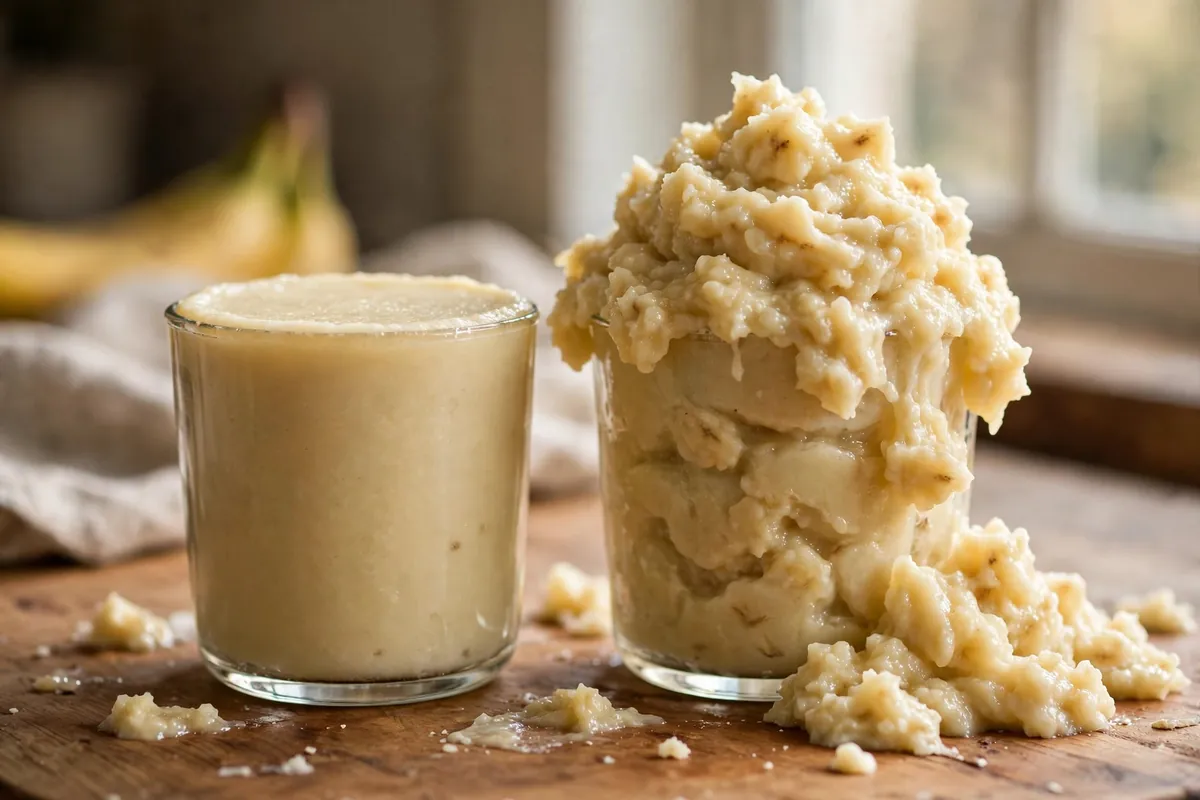
Banana bread needs banana — but there’s a ceiling. Three medium bananas (about 1 to 1¼ cups mashed) is the sweet spot for a standard 9×5 loaf. Push past that and the extra moisture and weight overwhelm the batter’s structure: the crumb can’t set around all that wet fruit, so it bakes up dense and gummy, especially in the center.
How to tell: You used four, five, or “however many were going brown.” The center of the loaf stayed wet-looking even after a full bake, and the texture is heavy rather than just moist.
The fix: Measure the mash — 1 to 1¼ cups. If you have extra bananas, freeze them for smoothies instead of cramming them into the batter. And use them very ripe: black-spotted, soft, fragrant. Under-ripe bananas add starch without the sugars that make banana bread taste like banana bread.
3. The leavening was dead or wrong
Banana bread rises on baking soda (sometimes plus baking powder), and both lose strength with age. Baking soda that’s been open six months in a humid kitchen is a coin flip. Without working leavening, the batter never gets its lift — dense loaf, guaranteed.
How to tell: The loaf barely rose — flat top, no dome, same height going in and coming out. If your baking soda has no “opened” date you can remember, suspect it.
The fix: Drop half a teaspoon into vinegar — vigorous fizzing means alive, a lazy bubble means replace it. Use about 1 teaspoon per 2 cups of flour, and check the acid balance: baking soda needs an acid (brown sugar, buttermilk, the bananas) to activate. White sugar plus soda with no acid under-rises.
4. Too much flour (the scooped cup strikes again)
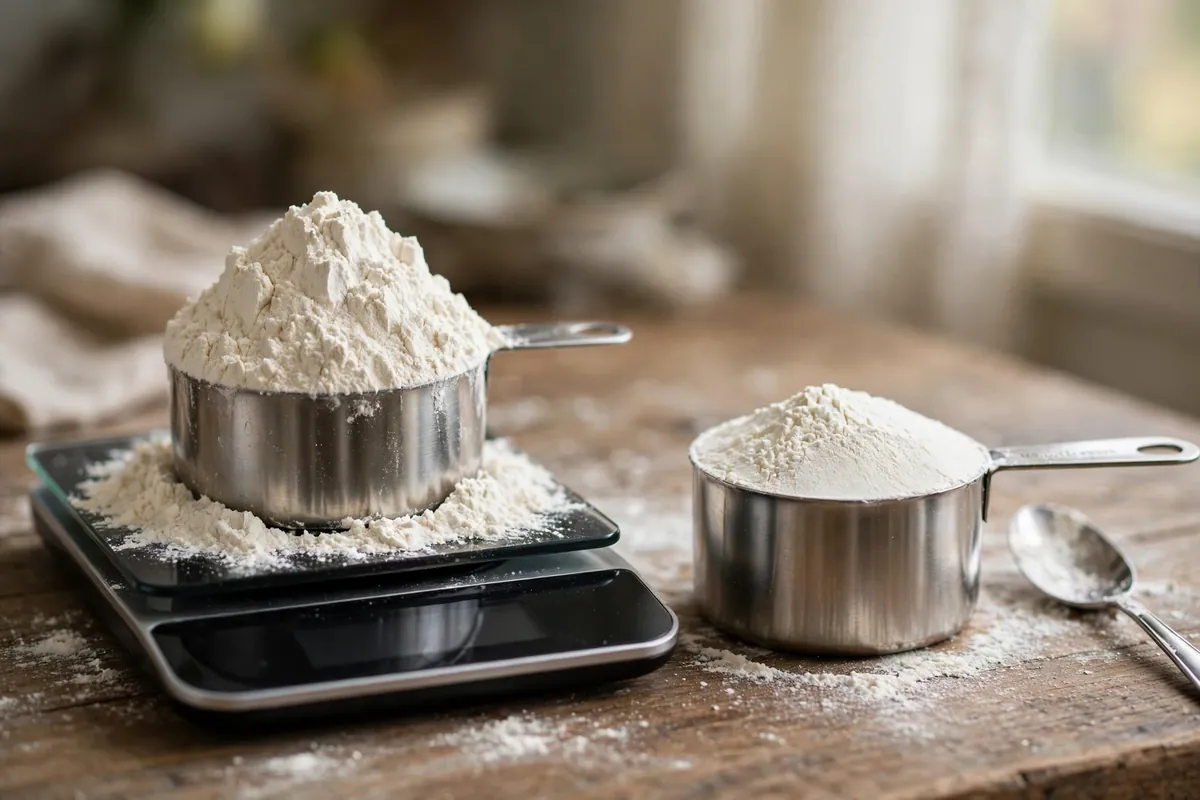
A scooped cup of flour can weigh 150g against the 120g the recipe assumed — 25% extra flour, silently absorbing moisture meant for the crumb. In banana bread, where the wet-to-dry balance is already delicate, that extra flour turns tender into dense.
How to tell: The batter looked thick and stiff rather than pourable, and you scooped the cup straight from the bag.
The fix: Weigh flour at 120g per cup, every time. No scale? Spoon it into the cup and level off. (For the full case against scooping, see Why Is My Cake Dry? — same culprit, different victim.)
5. It was underbaked in the middle
Banana bread is thick, wet, and baked in a deep pan — the center is the last thing to set. Pull it too early and the middle stays gummy and dense while the outside looks done. This one fools people because the top browns beautifully while the interior is still raw.
How to tell: The center slice is wet, gummy, or sunken — the toothpick showed wet batter and you called it done anyway.
The fix: Bake 55–65 minutes at 350°F (175°C) in a 9×5 pan. A toothpick should show a few moist crumbs — not wet batter, not bone dry — or better, 200–205°F (93–96°C) on a thermometer. Tent with foil if the top browns early, and cool 10 minutes in the pan before turning out; slicing hot compresses the crumb.
6. The oven ran cool
A cool oven stretches the bake without setting the structure — the leavening exhausts itself before the crumb firms up, leaving a pale, dense loaf. If everything you bake takes longer than the recipe says, check with an oven thermometer (most run 15–25°F off): banana bread wants a true 350°F (175°C), full preheat, center rack.
The dense-banana-bread checklist (next loaf)
- Weigh flour: 120g per cup.
- Mash and measure: 1 to 1¼ cups, very ripe bananas.
- Fresh baking soda: 1 teaspoon, fizz-tested.
- Stir 10–12 strokes — lumps are fine.
- Bake 55–65 minutes at a true 350°F (175°C); toothpick shows moist crumbs.
- Cool 10 minutes in the pan, then on a rack. Don’t slice hot.
Frequently asked questions
Can I fix dense banana bread after baking?
Not really — density is structural, set during the bake. But you can rescue the eating experience: toast thick slices (heat firms the crumb and adds texture), serve warm with butter, or cube it for banana bread pudding or trifle, where custard does the moistening work. Next loaf, follow the checklist above.
Is dense banana bread safe to eat?
Yes, as long as it’s fully baked through. Density alone isn’t a safety issue. The exception is a raw, wet center — if the middle is genuinely underbaked batter rather than just dense, that’s undercooked flour and egg, and it should go back in the oven, not onto a plate.
Why is my banana bread gummy in the middle but done on the edges?
Classic underbake in a deep pan. The edges set while the wet center lags. Give it the full 55–65 minutes, verify 200–205°F (93–96°C) in the center, and tent with foil if the top browns early. Also check your banana quantity — excess mash makes the center nearly impossible to set.
Should banana bread batter be lumpy?
Yes. Lumpy batter means you stopped stirring before gluten developed. Smooth batter means you kept going — and that’s the dense loaf. Ten to twelve strokes, flour just disappeared, walk away.
Can I use frozen bananas?
Absolutely — thaw them fully first and drain off the excess liquid they release (or measure the mash after draining). Frozen-then-thawed bananas are actually ideal: freezing ruptures the cell walls, making them sweeter and easier to mash.
Does the pan matter?
Yes. A 9×5 loaf pan is the standard; a smaller or deeper pan needs more time, and a dark pan browns faster (reduce heat 25°F / 15°C). Glass pans bake slower — add 5–10 minutes. For the full breakdown, see Glass vs Metal vs Dark Pans.
Related troubleshooting: Why Is My Bread Dense? · Why Are My Muffins Tough? · Why Is My Cake Dry?