
Hollow macarons are the cruelest macaron failure because everything else can look right: smooth tops, pretty feet, lovely colors — and then you bite in and there’s an air pocket where chewy shell should be. The causes live in three places: how you mixed, how you rested, and how you baked.
Quick diagnosis: You under-mixed the batter (most common) — thick batter traps big air pockets that bake into hollows. Macaronage until the batter flows like lava and a ribbon dissolves in 10 seconds, bang the tray hard to release air, rest until the shells are dry to the touch, and bake at a true 300–315°F (150–160°C) until fully set.
My tested baseline: 100g aged egg whites (about 3 large), 125g fine almond flour, 200g powdered sugar, 25g granulated sugar, pinch of salt. Sift almond flour + powdered sugar twice. Whip whites to firm glossy peaks with the granulated sugar. Pipe 1½-inch rounds, bang the tray firmly 3–4 times, pop surface bubbles with a toothpick, rest 30–60 minutes until matte and dry to the touch. Bake at 310°F (155°C) for 14–16 minutes, until shells lift cleanly off the parchment. Cool fully before filling.
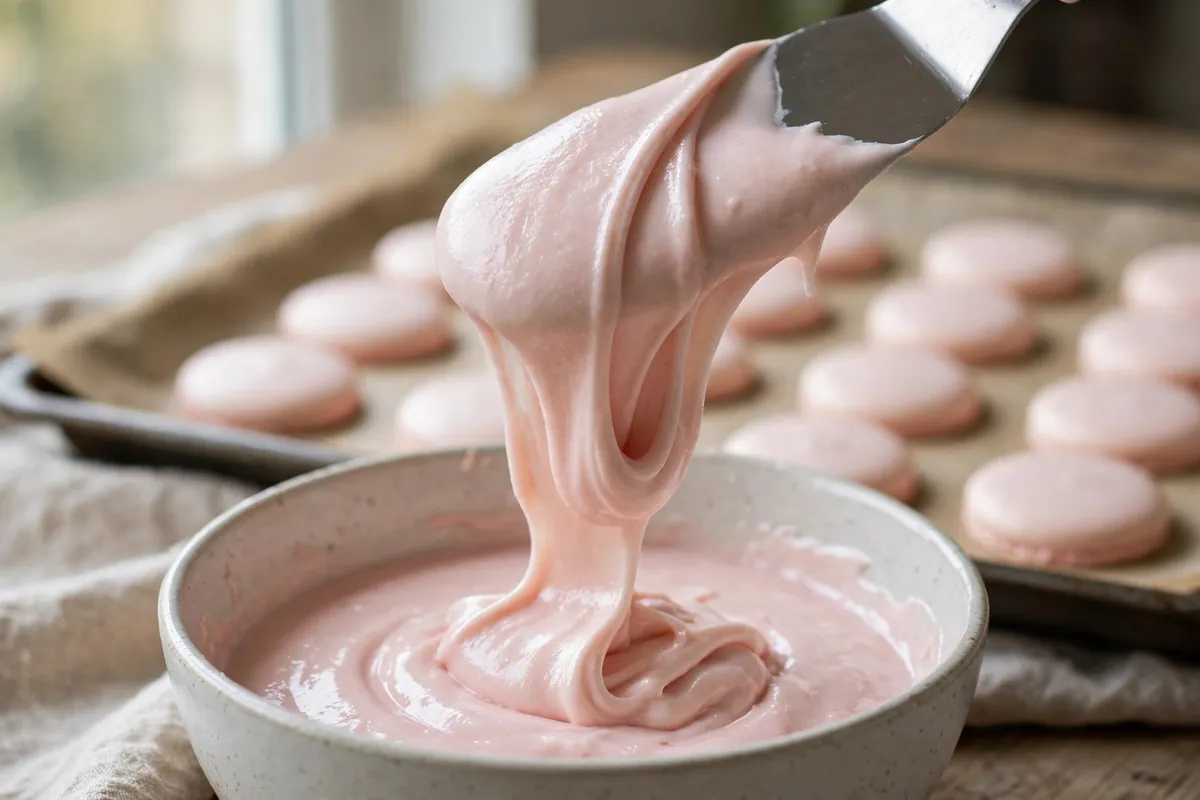
1. You under-mixed — thick batter traps the air that becomes hollows
The number one cause, and the hardest to judge. Under-macaronaged batter is thick, holds stiff peaks of its own, and is full of trapped air from the meringue that never got folded out. In the oven, those air pockets expand, the top sets around them, and you’re left with shells that are all dome and no interior.
How to tell: Batter was thick and held its shape instead of flowing; piped rounds kept tall peaks (“kisses” that never settled); shells came out lumpy, tall, and hollow; feet were minimal or absent.
The fix: Learn the ribbon test and trust it over counting folds. Lift the spatula: the batter should fall in a thick ribbon that melts back into the surface within about 10 seconds. (Macaronage is the same deflation judgment as Meringue Weeping: Why Your Peaks Leak — know your foam’s limits.)
2. You didn’t bang out the air — the pockets stayed in
Even perfectly macaronaged batter holds air bubbles from piping. Left in the shell, they expand into hollows in the oven’s heat.
How to tell: Hollows concentrated near the top of the shell; visible bubbles on the surface before baking; shells with a rough or pockmarked top after baking.
The fix: Bang the tray flat on the counter 3–4 times, hard — from 3–4 inches up, not a gentle tap. Then go over the surface with a toothpick or scribe and pop every remaining visible bubble, smoothing the surface. This also settles the batter into even rounds and helps feet form uniformly.
3. You skipped or rushed the rest — no skin, no structure
Resting forms the dry skin that does two jobs: it lets the shell rise upward into feet instead of spreading outward, and it gives the top structural integrity so it doesn’t dome up over expanding interior air.
How to tell: Shells spread wider than piped, tops cracked, feet spread outward instead of rising, hollow gap directly under the top shell.
The fix: Rest piped shells until they’re matte and completely dry to a light fingertip touch — 30–60 minutes at normal humidity, longer on humid days (up to 2 hours; a fan helps). They should look dull, not shiny, and your finger should come away clean. In very dry climates 20–30 minutes can be enough — judge by touch, not the clock.
4. Your oven ran too hot — the top set before the inside finished
An oven running at 340°F when it claims 315°F will set the shell’s exterior in minutes while the interior is still expanding batter. The rigid top can’t settle back down as the interior finishes, so a gap opens and stays.
How to tell: Shells browned, tops domed high, feet looked good but the interior gaped; one side of the tray hollowed while the other didn’t.
The fix: An oven thermometer is non-negotiable for macarons — most home ovens run 15–25°F off. Target a true 300–315°F (150–160°C). If your oven has hot spots, rotate the tray once at the halfway mark.
5. You underbaked them — the interior never set
Hollows also come from pulling shells too early. An underbaked shell’s interior is still soft batter when it leaves the oven; as it cools, the unset center contracts and pulls away from the top, opening a gap. The shell looks done — feet, color, smooth top — but the structure inside never finished.
How to tell: Shells stuck slightly to the parchment, bottoms looked wet or shiny, shells felt fragile and cracked when lifted, hollows appeared as they cooled rather than in the oven.
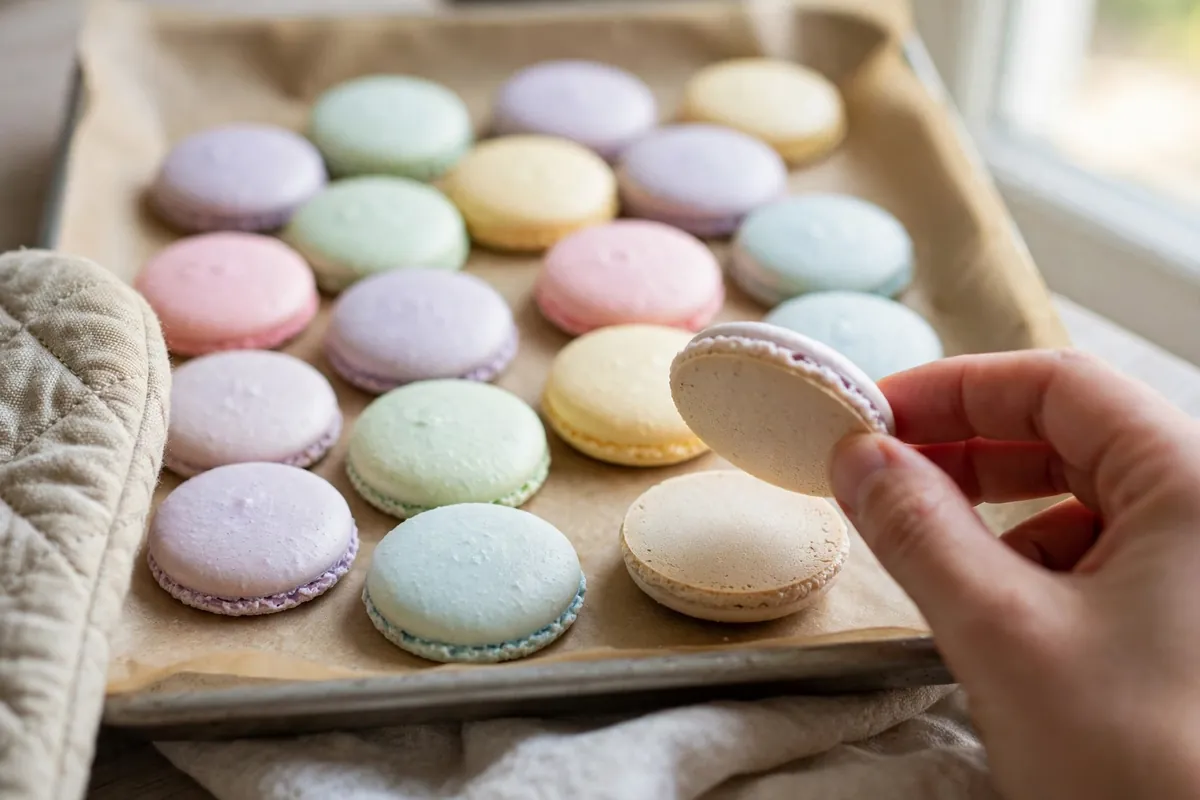
The fix: Bake until the shells lift cleanly off the parchment with no sticking — that’s the doneness test that overrules the clock. If the first test shell sticks, give the tray 2 more minutes. A fully baked macaron shell is sturdy; if yours feel delicate, they needed more time.
6. Your meringue and dry ingredients weren’t right — the foundation
Hollows start before macaronage if the components are off.
How to tell: Batter never looked smooth no matter how much you folded; shells were speckled with dark almond bits; meringue looked soft or weepy before you even started folding.
The fix: Age egg whites 24–48 hours in the fridge (covered), then bring to room temperature before whipping — aged whites whip to a stabler, more elastic meringue. Sift the almond flour and powdered sugar together twice. Whip to firm, glossy peaks — not dry and clumpy (over-whipped meringue folds out unevenly and leaves pockets).
Frequently asked questions
Are hollow macarons safe to eat?
Yes — hollows are a texture defect, not a safety issue, as long as the shells are fully baked. Fill them generously; a good ganache or buttercream filling hides a multitude of hollows and the sandwich still tastes like a macaron.
Can I fix hollow macarons after baking?
Not the shells themselves — the structure is set. But the classic fix is the “maturing” step: fill them and refrigerate 24 hours. The filling’s moisture migrates into the shells, softening them slightly and making small hollows far less noticeable. Matured macarons taste better anyway.
Why do my macarons have no feet AND are hollow?
Under-mixed batter plus no rest — the double fault. The thick batter couldn’t rise properly (no feet) and trapped air became hollows. Fix the macaronage first (ribbon test), then the rest (dry to touch), and both problems usually resolve together.
Can humidity cause hollow macarons?
Indirectly, yes. High humidity extends the resting time needed to form a skin — shells that feel dry in 30 minutes on a dry day can take 2 hours when it’s humid. If you bake on skinless shells in humid weather, you get spreading, cracking, and hollows. Run a fan and be patient.
Related troubleshooting: Meringue Weeping: Why Your Peaks Leak · Why Did My Pavlovas Crack? · Choux Pastry Collapse: Why Your Éclairs Fell