
Why Is My Sourdough Gummy Inside? (Under-Fermentation Explained)
Quick diagnosis: A gummy sourdough interior has three usual causes, in order of likelihood: you cut the loaf too soon (the #1 cause — the crumb is still setting), it was under-fermented (bulk ferment cut short), or it was under-baked (internal temp below 200°F). Check them in that order — most gummy loaves are a cooling problem, not a recipe problem.

You’ve done everything right — the starter was lively, the shaping felt good, the crust is gorgeous — and then you slice in and the inside is damp, dense, and gluey. Before you blame your starter or your recipe, know this: the majority of gummy sourdough is caused by what happens after the bake, not during it.
Cause 1: You cut it too soon (the most common reason)
This deserves the top spot because it fixes the most loaves with zero recipe changes. When bread comes out of the oven, the interior is still around 200°F+ and full of steam. The starches that form the crumb structure are still gelatinized and soft — they firm up and “set” as the loaf cools, a process that takes a full 1–2 hours for sourdough. Slice at 30 minutes and you interrupt it: steam escapes, the unset crumb compresses under the knife, and every slice tastes gummy.
The fix: Wait a minimum of 2 hours before slicing sourdough — longer for large loaves. Cool it on a wire rack, never in the pan or on a flat surface (trapped steam = soggy bottom). I know the crackling crust is calling. The wait is the recipe.
Cause 2: Under-fermentation
If the crumb is gummy and tight with almost no holes, the bulk ferment was likely cut short. Under-fermented dough hasn’t developed enough gas or acidity; the crumb bakes up dense and damp because there’s insufficient structure for steam to escape through.
How to tell: The loaf also shows other under-fermentation signs — minimal oven spring, a pale thick crust, large irregular holes surrounded by dense areas (“fool’s crumb”), or a generally tight texture throughout.
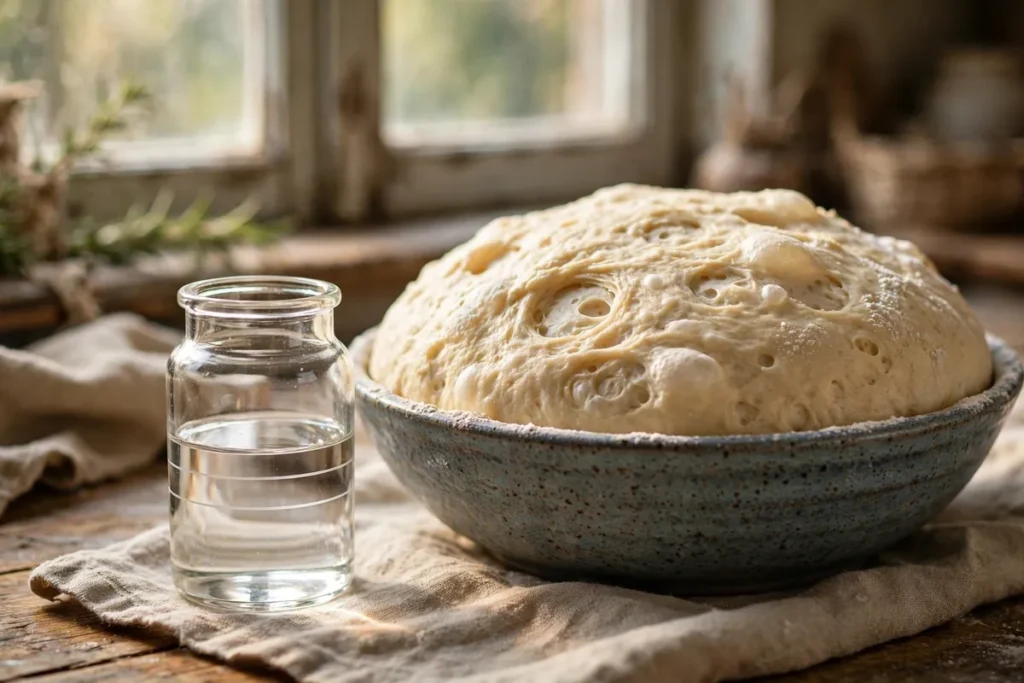
The fix: Judge bulk fermentation by percentage rise, not the clock. For most sourdough, aim for a 50–75% rise (not a full doubling — sourdough continues fermenting during shaping and the cold retard). The aliquot jar method makes this foolproof: after mixing, pinch off a small piece of dough into a straight-sided jar, mark the level, and watch it hit your target percentage. Warmer dough (78–80°F) ferments in 4–6 hours; cooler dough (70°F) can take 8–12. Same dough, different kitchen, different timeline — the jar doesn’t lie.
Cause 3: Under-baking
A loaf pulled too early never drives enough heat into the center. The exterior looks done — sourdough crusts brown fast — while the interior is still under 200°F and the starches never fully set. The result: a gummy band through the middle, sometimes with a visibly damp line.
How to tell: The bottom crust is pale and soft rather than deep brown and firm; the loaf feels heavy for its size.
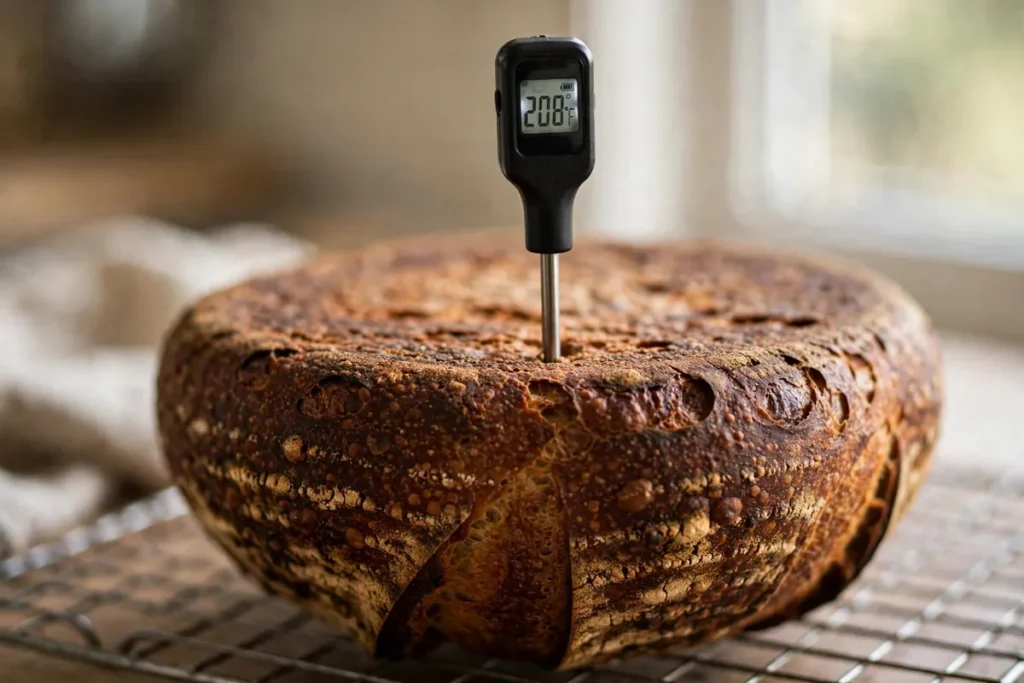
The fix: Bake to an internal temperature of 200–210°F (93–99°C), measured with an instant-read thermometer pushed through the bottom into the center. For a typical 900g sourdough baked in a Dutch oven: 20 minutes covered at 450°F (230°C), then 20–25 minutes uncovered until deeply browned — and verify with the thermometer, because ovens vary enormously. Temp every loaf and gummy centers stop happening.
Cause 4: Hydration too high for your flour
High-hydration dough (80%+) gives that coveted open crumb — but only if the flour’s protein can handle it. Push a 10.5%-protein all-purpose flour to 82% hydration and the gluten network can’t contain the water; the crumb bakes up wet and gummy no matter how perfect your fermentation is.
The fix: Match hydration to flour strength. With standard bread flour (12–13% protein), 70–75% hydration is the sweet spot for most home bakers. Master that before pushing higher. If a recipe’s hydration routinely gives you gumminess, drop it 3–5 percentage points and compare — the crumb will tell you the truth.
Cause 5: Trapped steam and a cold baking vessel
Two related issues: baking in a Dutch oven that wasn’t fully preheated means the base starts cold and the bottom under-bakes (gummy stripe along the base). And cooling the loaf in the Dutch oven or on a flat counter traps steam underneath, re-wetting the bottom crust and lower crumb.
The fix: Preheat the Dutch oven a full 30–45 minutes. And always — always — cool on a wire rack with air circulating underneath.
Frequently asked questions
How long should I wait before cutting sourdough?
Minimum 2 hours; 3 is even better for large loaves. The crumb is still cooking from residual heat and the starches are setting. Cutting early is the single most common cause of gumminess, and the easiest to fix.
Is gummy sourdough safe to eat?
Yes, as long as it reached a safe internal temperature (200°F+). Gumminess is a texture defect, not a safety issue. If the very center tastes raw and doughy rather than just damp, it was under-baked — toast the slices.
Can I fix a gummy loaf after baking?
Partially. You can’t reset the crumb, but slicing and toasting drives off moisture and dramatically improves the eating experience. Gummy sourdough also makes excellent toast, croutons, and panzanella — don’t waste it.
Why is only the bottom of my loaf gummy?
Classic under-baked base: the Dutch oven wasn’t fully preheated, or the loaf cooled on a flat surface trapping steam. Preheat 30–45 minutes and cool on a wire rack.
My crumb has big holes AND gummy dense patches — what happened?
That’s “fool’s crumb” — the signature of under-fermentation. The big holes are trapped gas from shaping; the dense gummy areas never fermented properly. Extend your bulk ferment and use the aliquot jar method.
Does over-fermentation cause gumminess too?
Rarely directly — over-fermented dough more often bakes flat and pale with a sour taste. But a severely over-proofed loaf can collapse into a dense, damp layer at the bottom. If your dough doubled-plus and smells strongly of alcohol, shorten the ferment next time.
Related troubleshooting: Starter Smells Like Acetone? · Why Is My Bread Dense? · Bread Crust Too Hard or Too Soft