

You pulled a gorgeous lemon meringue pie from the oven — tall golden peaks — and an hour later it’s crying amber tears onto the filling. I’ve watched it happen in real time and it’s maddening. The good news: weeping has exactly three root causes, and all three are controllable. Here’s the full breakdown.
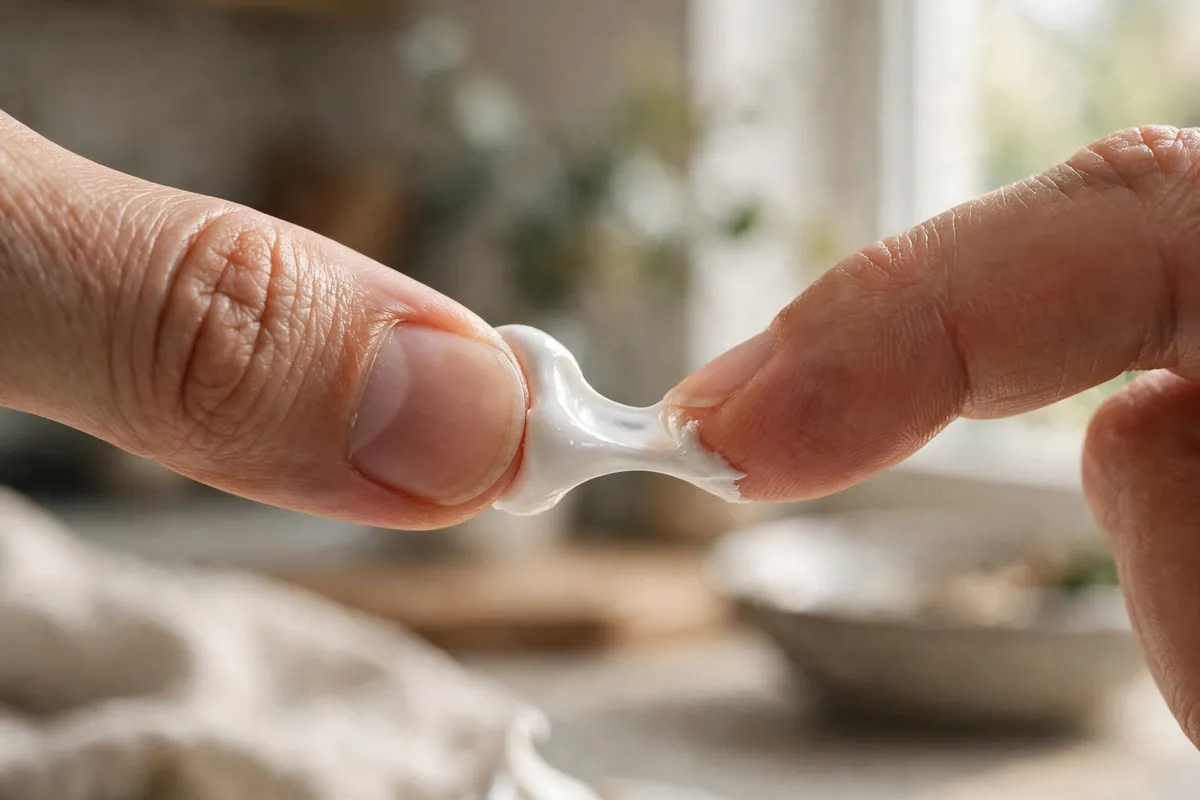
Quick diagnosis: Weeping is almost always undissolved sugar, humidity, or both. If you added the sugar all at once and baked on a humid day, those two explain it. Rub a bit of the raw meringue between your fingers next time — any grit means the sugar wasn’t dissolved, and grit always weeps.
Weeping (technically syneresis) is sugar syrup escaping the foam. Meringue is a sugar-stabilized protein foam; anything that destabilizes the sugar or the foam lets liquid go. The five causes below cover every case.
1. The sugar never fully dissolved
The number one cause. Undissolved sugar crystals sit in the foam like tiny time bombs — in the oven’s heat they melt and leak out as syrup beads. This is why dumping all the sugar in at once is the classic mistake.
How to tell: The weeping started as the pie cooled. You added sugar quickly, or used coarse granulated sugar straight from the bag.
The fix: Add sugar one tablespoon at a time, beating 20–30 seconds between additions. Use superfine (caster) sugar — it dissolves dramatically faster. The test: rub a dab of meringue between thumb and forefinger. Perfectly smooth with zero grit? Ready. Any graininess? Keep beating. This single habit eliminates most weeping.
2. Humidity got to it
Sugar is hygroscopic — it pulls moisture straight out of the air. On a humid or rainy day, the meringue absorbs ambient moisture faster than the oven can drive it off, and the surface weeps. This is also why refrigerating a meringue pie uncovered is a mistake: fridge air is humid.
How to tell: It was a rainy or muggy day. Or the pie went into the fridge uncovered and came out beaded.
The fix: Don’t bake meringue on high-humidity days if you can avoid it — check the forecast the way you’d check it for candy-making. Cool the pie away from steam and drafts. If you must refrigerate, do it only after the pie is fully cool, and even then, serve within hours. Meringue pies are same-day desserts; the fridge is a holding cell, not storage.
3. It was underbaked
An underbaked meringue never fully sets its structure — the interior stays soft and unstable, and liquid migrates out as it sits. Pale, soft peaks that look barely kissed by heat are the giveaway.
How to tell: The meringue was white or barely golden, soft to the touch, and weeping started within the hour.
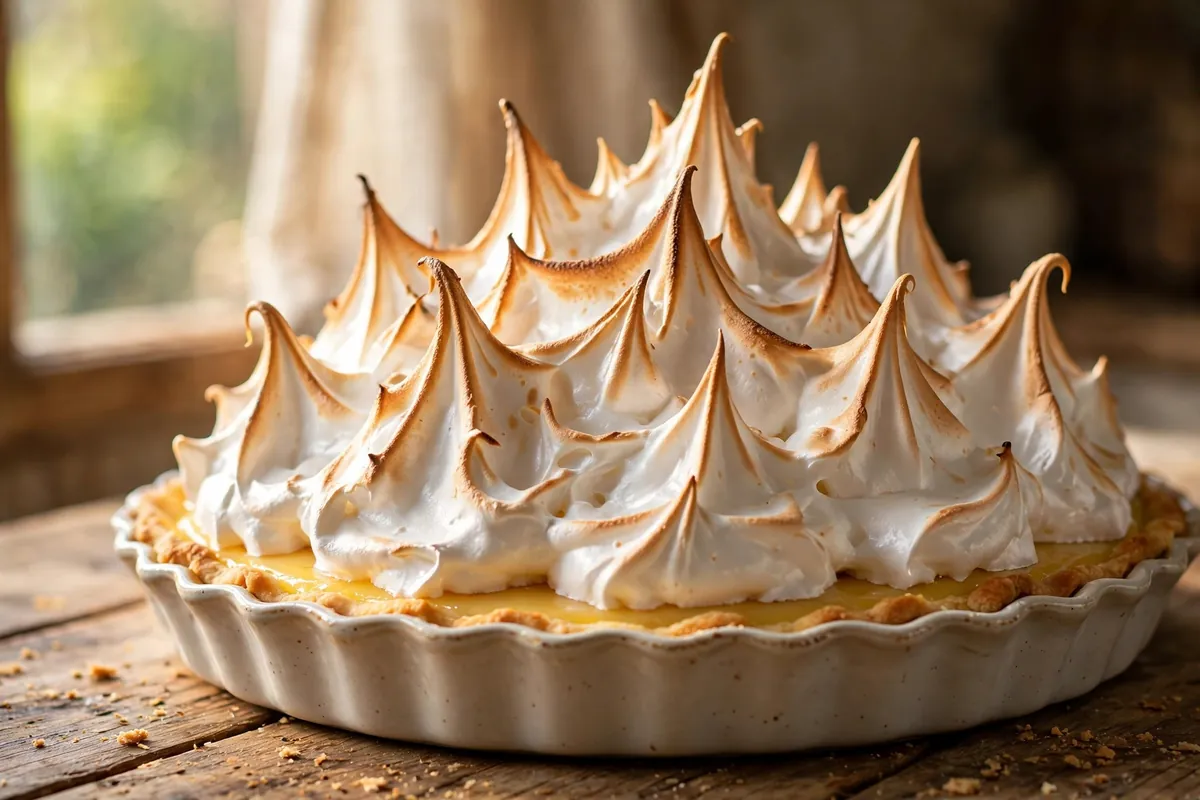
The fix: Bake at 350°F (175°C) for 12–15 minutes, until the peaks are genuinely golden-brown — color is structure. The tips should feel dry and crisp, not soft. Don’t fear browning; fear paleness.
4. The meringue went onto cold filling (and wasn’t sealed)
Two related errors. Spreading meringue onto a cold filling traps condensation underneath — liquid forms between the layers as the pie bakes. And meringue that doesn’t touch the crust edge shrinks back as it cools, leaving a gap that fills with syrup.
How to tell: The liquid pooled under the meringue rather than beading on top, or there’s a visible gap between meringue and crust.
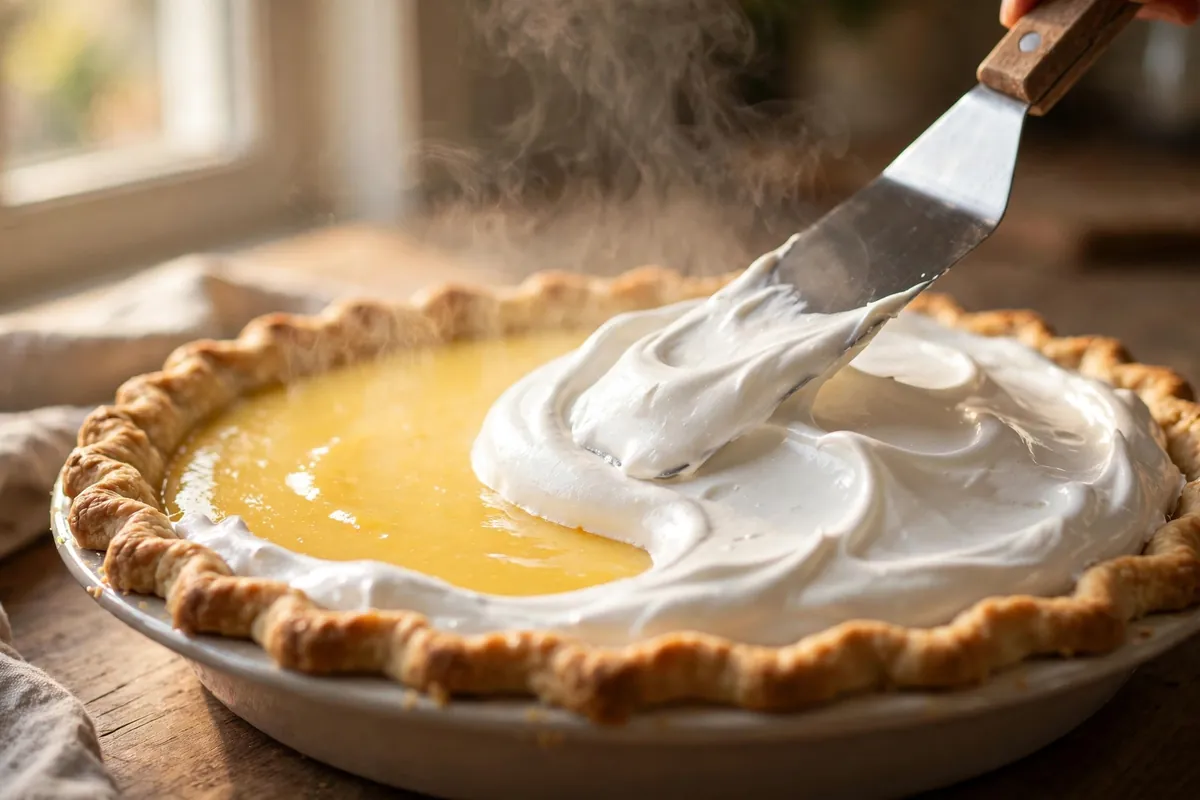
The fix: Spread the meringue over hot filling — straight from the stove, still steaming. And seal it: push the meringue all the way to the crust edge so it touches pastry all around, with no gaps. The seal anchors the meringue against shrinkage. Make small decorative peaks with the back of a spoon while you’re at it — they brown beautifully.
5. It sat too long
Even a perfect meringue is a short-lived structure. After several hours — and certainly overnight — the foam gradually relaxes and releases moisture. An overnight meringue pie is a weeping meringue pie; that’s physics, not failure.
How to tell: It looked perfect for hours, then wept by the next day.
The fix: Time your bake so the pie is served within 4–6 hours. For next-level stability, use Swiss meringue (whites + sugar heated to 160°F / 71°C over simmering water, then whipped) — the pre-dissolved sugar and cooked proteins hold significantly longer. A teaspoon of cream of tartar per 3 whites (or a tablespoon of cornstarch) added during whipping also strengthens the foam against weeping.
Frequently asked questions
Is weeping meringue safe to eat?
Yes — the beads are just sugar syrup, completely harmless. It’s a cosmetic and textural issue, not a safety one. Blot the beads gently with a paper towel if they bother you, but the pie underneath is fine.
Can I fix weeping after it happens?
Mostly no — once the syrup has escaped, you can’t push it back in. You can blot the surface and return the pie to a 350°F (175°C) oven for a few minutes to dry it slightly, but prevention (dissolved sugar, low humidity, proper bake) is the real fix. Next time, start dry.
Does cream of tartar actually prevent weeping?
It helps meaningfully. Cream of tartar (about 1/4 teaspoon per egg white) acidifies the foam, which strengthens the protein network and makes it more resistant to collapsing and releasing liquid. It’s cheap insurance — I use it in every meringue destined for a pie.
Why did my meringue shrink away from the crust?
It wasn’t sealed to the edge, and possibly cooled in a draft. Meringue contracts as it cools; if it’s anchored to the crust all the way around, it has nowhere to go. Seal it fully and cool away from open windows and AC vents.
Can I make meringue pie a day ahead?
I don’t recommend it. Even a well-made meringue degrades overnight — slight weeping, softening peaks. If you must, Swiss meringue holds best. But the honest answer: meringue pies are bake-and-serve-day desserts, which is why they’re in the “day of” column of my Thanksgiving timeline.
Aquafaba meringue — does it weep too?
Yes, and often worse — chickpea liquid foams beautifully but the foam is less stable than egg-white foam. Same rules apply, more strictly: superfine sugar, full dissolution, serve fast. See Eggless Cake That Actually Works for the aquafaba technique.
Related troubleshooting: Make-Ahead Thanksgiving Desserts: A Baker’s Timeline · Eggless Cake That Actually Works: Tested Replacements