
Tough gingerbread is the December heartbreak: the kitchen smells incredible, and the cookies could double as roofing tiles. Gingerbread should have texture — a snap for cut-outs, a soft chew for cake-style — but “tough” means the crumb fights back. The causes are almost always in the dough handling, not the recipe.
Quick diagnosis: You overworked the dough and/or used too much flour (most common pair). Mix just until combined, measure flour by weight (120g per cup — packed cups add 20–30%), rest the dough at least 1 hour (overnight is better), roll to an even ¼ inch, and pull the cookies when the edges are set but centers still look slightly soft — they firm up dramatically as they cool.
My tested baseline: 340g all-purpose flour, 170g butter at cool room temperature, 150g dark brown sugar, 160ml unsulphured molasses, 1 egg, 1 tsp baking soda, spices (2 tsp ginger, 1½ tsp cinnamon, ¼ tsp cloves), ½ tsp salt. Cream butter and sugar, beat in molasses and egg, fold in dries just until no streaks remain. Chill overnight. Roll ¼ inch thick; bake at 350°F (175°C) for 8–10 minutes.
1. You overworked the dough — gluten is the enemy of tenderness
Gingerbread dough is a cookie dough, but it gets kneaded like bread surprisingly often — especially when rolling gets sticky and the baker keeps working flour in. Every minute of handling develops gluten, and gluten in a cookie means tough and bready instead of tender.
How to tell: The dough felt elastic and springy rather than soft and pliable; it shrank back when you rolled it; the baked cookies are hard all the way through with a bready chew.
The fix: Mix the dries into the wets just until no flour streaks remain — then stop. When rolling, if the dough resists, let it rest 10 minutes instead of fighting it. Gluten relaxes with rest; it never relaxes with more rolling.
2. Too much flour — the packed-cup problem
This is the quietest cause and the most common. A “cup” of flour scooped straight from the bag with the measuring cup can weigh 150–160g; the recipe assumed 120g. That’s up to 30% extra flour — enough to turn any gingerbread recipe tough and dry, because the fat and sugar ratios that guarantee tenderness are suddenly wrong.
How to tell: The dough was stiff and crumbly rather than soft; you needed extra force to roll it; the cookies taste floury and dry, not rich and molasses-y.
The fix: Weigh your flour — 120g per cup, every time. If you must use cups, spoon the flour in and level it; never scoop. And when the recipe says “flour your surface,” use a whisper, not a snowstorm. This is the same measurement discipline that fixes Overbaked Cookies more often than any oven adjustment.
3. You skipped the rest — the dough needed its overnight nap
An overnight chill (minimum 1–2 hours) hydrates the flour so the crumb bakes tender, relaxes whatever gluten you developed, and deepens the molasses-spice flavor. Unrested dough bakes up tougher and blander in side-by-side comparisons.
How to tell: The dough was soft and sticky when you rolled it; the spices taste flat; the texture is simultaneously tough and slightly raw in the center.
The fix: Wrap the dough tightly and refrigerate overnight. If you’re short on time, 2 hours is the honest minimum. The dough will feel firmer and drier when you unwrap it — that’s the flour hydrating, and it’s exactly what you want. Roll it cold; cold dough holds its shape and bakes up with cleaner edges.
4. You overbaked — gingerbread lies about being done
This is the trap: gingerbread firms up enormously as it cools. A cookie that feels perfectly soft at 9 minutes will be a brick at room temperature if you gave it 12. The visual cues mislead because molasses dough is already dark — you can’t judge by browning the way you can with sugar cookies.
How to tell: The cookies felt firm when you pulled them; the bottoms are very dark; they were bendable-tender yesterday and jawbreakers today (they kept “baking” from residual heat and then set hard).
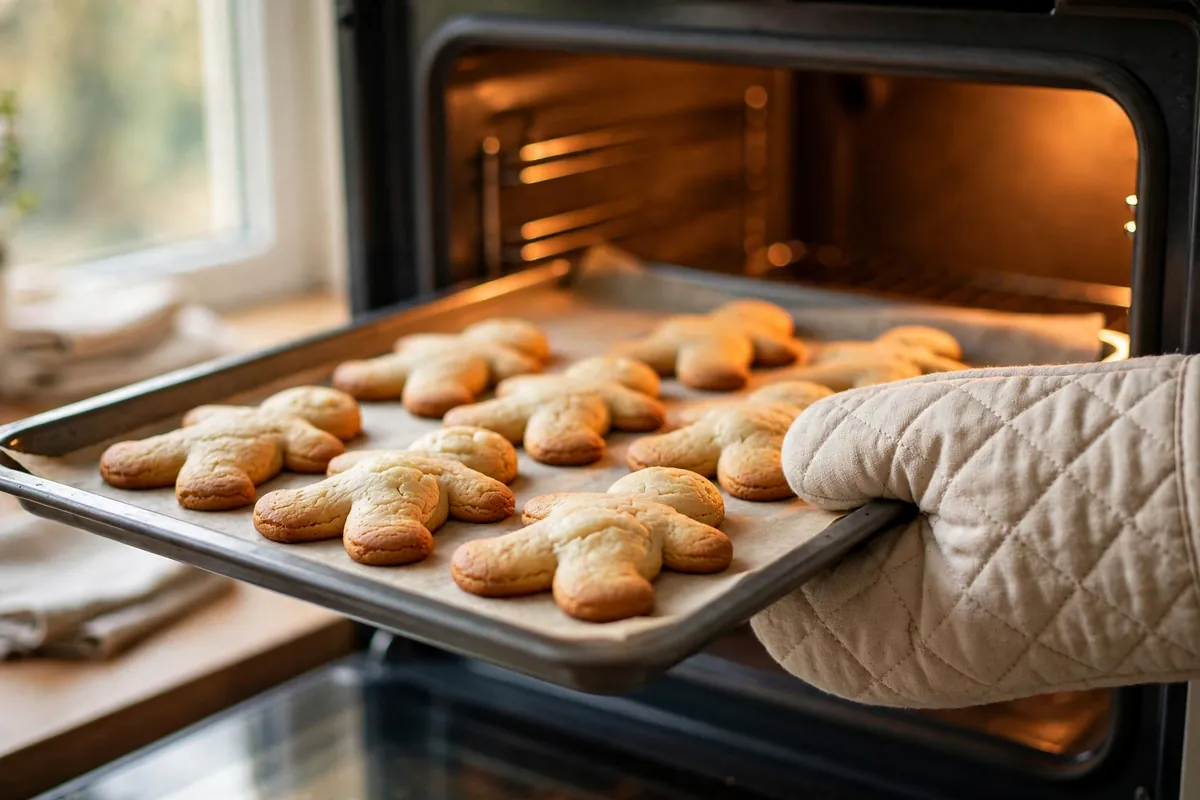
The fix: Pull cut-outs when the edges are set and the centers still look slightly soft — 8–10 minutes at 350°F (175°C) for ¼-inch cookies. They’ll look underdone; carryover heat finishes them on the tray. When in doubt, underbake by a minute — you can always add time.
5. Your fat and sugar were short — tenderness is a ratio
Tenderness in cookies comes from fat coating flour particles (shortening gluten strands — hence “shortbread”) and sugar tenderizing the crumb. If you cut the butter “to be a bit lighter,” swapped in all white sugar, or used blackstrap molasses (which is bitter and low in sugar compared to unsulphured), you’ve removed the very ingredients that keep gingerbread tender.
How to tell: The recipe was modified from the original; the cookies taste more bitter than sweet-spicy; the dough felt lean and dry.
The fix: Don’t reduce the fat, and use dark brown sugar, not white — its molasses content adds moisture and acidity that tenderize. Use regular unsulphured molasses, never blackstrap, for cookies: blackstrap’s bitterness and lower sugar make everything harder and harsher.
6. You re-rolled the scraps too many times — the second batch is always tougher
Every re-roll works more flour into the dough and develops more gluten. The first cutting bakes up tender; the gathered scraps, re-rolled twice, bake up like hockey pucks. This is physics, not failure.
How to tell: The first tray was fine and each subsequent tray got progressively harder; the last cookies are noticeably paler (flour worked in) and tougher.
The fix: Roll once and cut tightly to minimize scraps. Press scraps gently together (don’t knead), chill 20 minutes before re-rolling. For Christmas Cookies That Stay Fresh, bake the best cuttings for gifting and keep the re-rolls for the family tin.

Frequently asked questions
Is tough gingerbread safe to eat?
Yes — toughness is a texture defect, not a safety issue.
Can I soften gingerbread that’s already baked rock-hard?
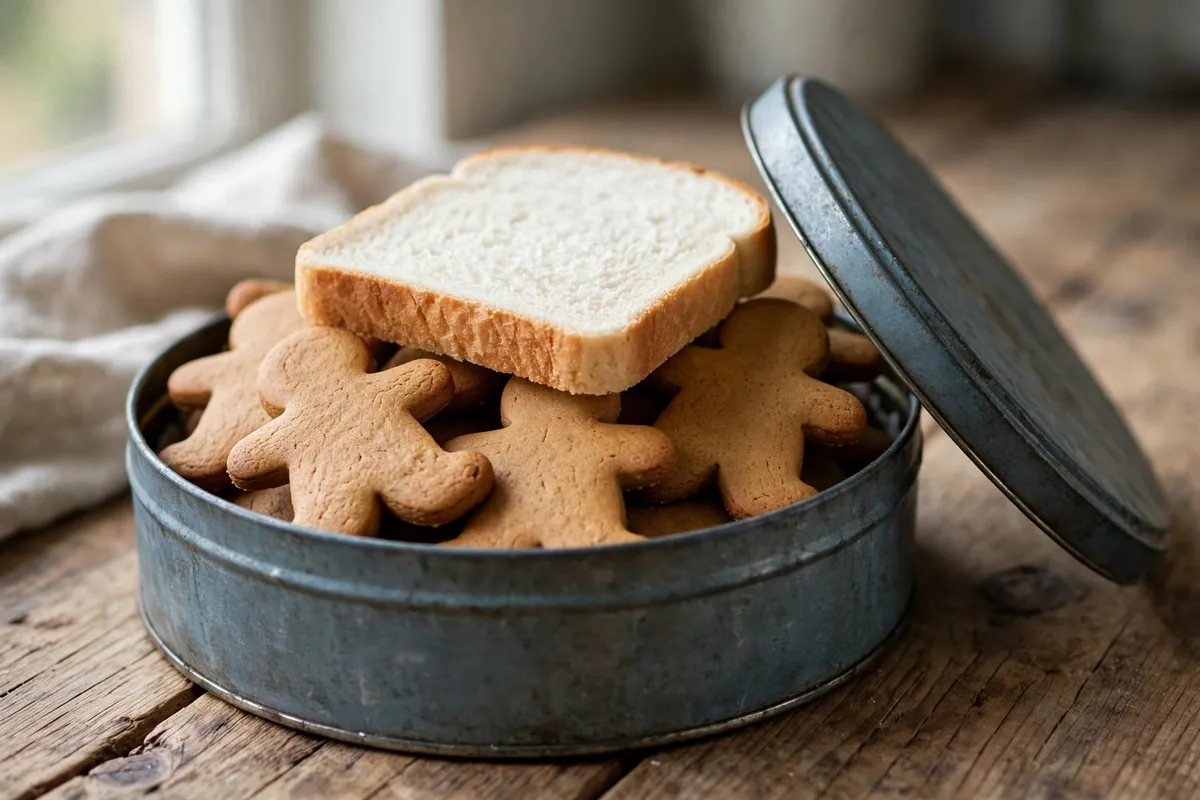
Partly: seal the cookies in an airtight tin with a slice of fresh bread overnight. They absorb moisture and soften noticeably. It won’t fix true bricks — but for next time, underbake by a minute.
Why did my gingerbread spread into blobs?
Opposite problem: butter too warm or too little chilling. Chill cut shapes 15 minutes before baking; keep butter at cool room temperature, not melty. Spreaders are rarely tough — it’s the over-floured, over-worked dough that goes hard.
Can I make gingerbread dough ahead?
Yes — one of the best make-ahead doughs. Wrapped tight: 3 days refrigerated, 3 months frozen. Thaw frozen dough overnight in the fridge; rest 10–15 minutes at room temp before rolling so it doesn’t crack.
What’s the difference between snappy and soft gingerbread?
Formula: snappy cut-outs use more sugar, less leavening, and bake longer; soft cake-style uses more fat, an egg, and sometimes hot water or coffee. Both should still yield to the bite — “snappy” means crisp, not jawbreaker.
Related troubleshooting: How to Fix Overbaked Cookies · Christmas Cookies That Stay Fresh · Why Are My Cookies Cakey Instead of Chewy?