Too-sweet frosting isn’t failed — it’s unbalanced. Sweetness is perception, and perception shifts: salt suppresses sweet receptors, acid brightens, fat rounds the edges, cold mutes sweetness outright. You don’t need to start over; you need to rebalance.
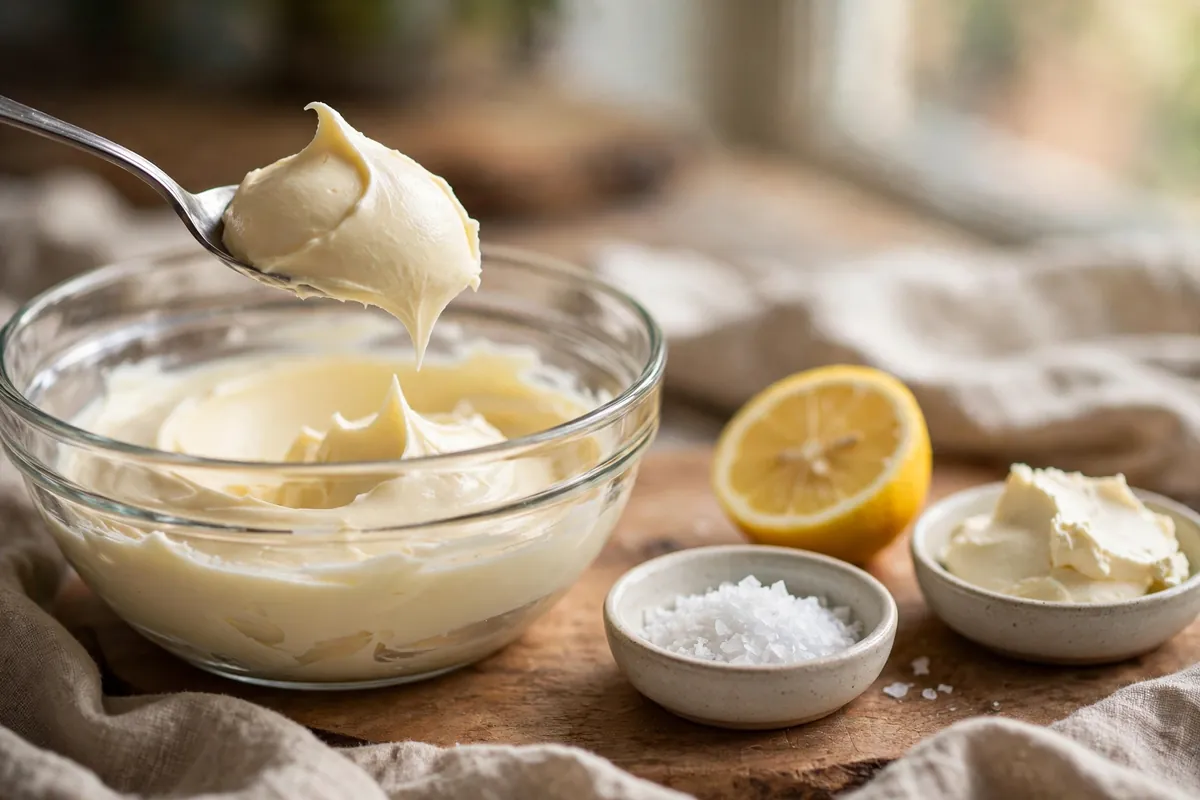
Quick diagnosis: Your butter-to-sugar ratio is off, or you’re tasting it warm. First, chill the frosting 20 minutes and taste again. Then add ¼ teaspoon fine salt per 3 cups of frosting, a teaspoon of lemon juice, or 2–3 tablespoons of cream cheese — taste after each addition and stop when it balances.
My tested baseline: 225g (2 sticks) unsalted butter beaten 3–4 minutes until pale; 360g (3 cups) powdered sugar in three additions; 2 tablespoons cream; 1 teaspoon vanilla; ¼ teaspoon fine salt. Roughly 1:1.6 butter-to-sugar — noticeably less sweet than the classic 1:2.
1. Add salt — the single fastest fix
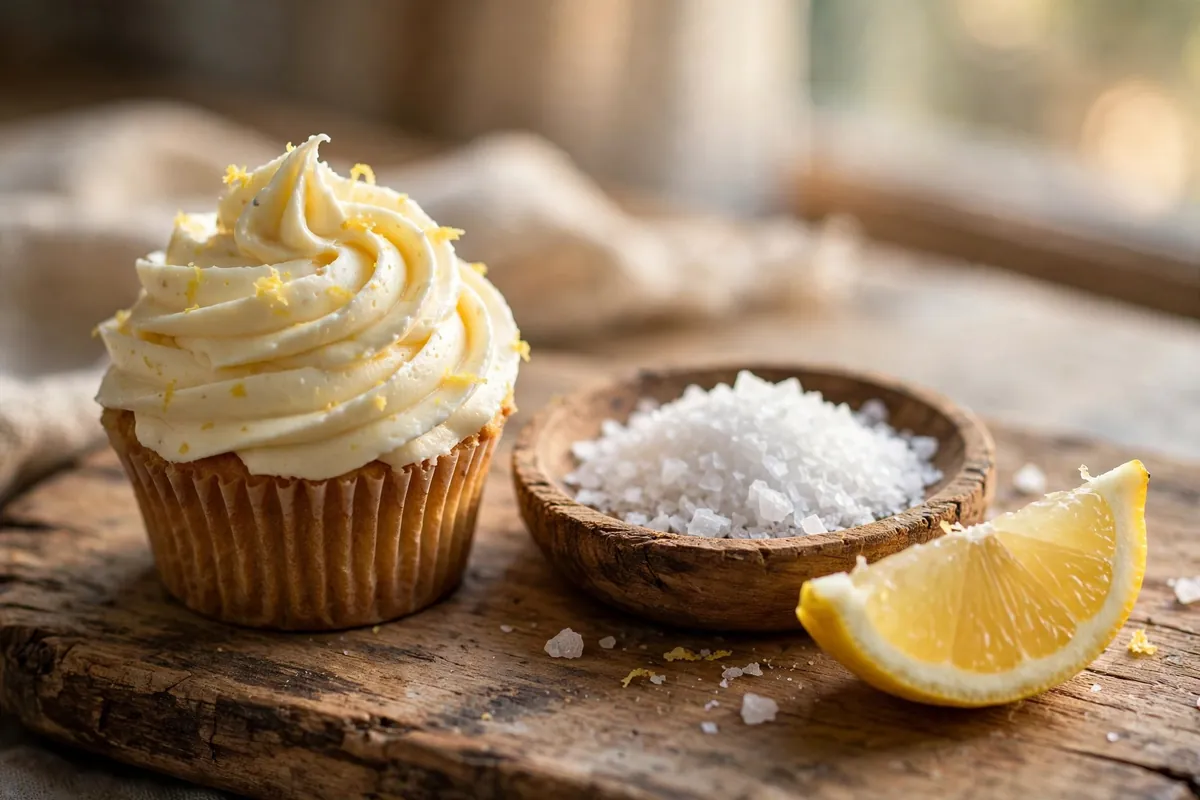
Salt doesn’t make frosting salty at these levels; it suppresses your sweetness receptors. Most too-sweet frostings were simply under-salted. I add ¼ teaspoon of fine sea salt per 3 cups of finished frosting as standard, and for an already-sweet batch, that’s the first thing I reach for.
How to tell: The frosting tastes flat and one-dimensionally sweet, with no other flavor note; the recipe called for “a pinch” of salt or none at all.
The fix: Beat in ¼ teaspoon fine salt, taste, and repeat once if needed — but stop at ½ teaspoon total per batch, past which salt becomes its own flavor. Use fine salt, not flaky: it dissolves instantly into the fat. If you used salted butter, you still likely need more — salted butter only carries about ¼ teaspoon per stick.
2. Add acid — lemon juice or a splash of vinegar
Acid is the other great sweetness counterweight. A teaspoon of fresh lemon juice per 3 cups of frosting brightens the whole batch; the sourness gives your palate something to do besides register sugar. In chocolate frosting, a teaspoon of white vinegar or instant espresso works the same way without a lemony note.
How to tell: The frosting tastes sweet and slightly heavy or cloying; it coats the mouth without any lift.
The fix: Beat in 1 teaspoon lemon juice (vanilla) or white vinegar / instant espresso dissolved in the cream (chocolate). Taste and repeat once. Acid thins frosting slightly — if yours is already soft, add a tablespoon of powdered sugar to compensate; the acid’s work is done.
3. Beat in cream cheese or mascarpone — tang plus fat
Two to three tablespoons of full-fat cream cheese does double duty: lactic tang cuts sweetness, extra fat rounds texture. It’s my favorite rescue — the frosting tastes more expensive. Mascarpone works the same, milder.
How to tell: You want the frosting less sweet but don’t want to change its character much; the batch is large enough to absorb extra volume.
The fix: Beat 2–3 tablespoons of room-temperature cream cheese into the finished frosting until completely smooth. Don’t add more than 4 tablespoons per 3 cups — beyond that you’re making cream cheese frosting, which is softer and needs refrigeration. Note the finished frosting now needs to stay refrigerated, like any cream cheese frosting.
4. Add more butter — dilute the sugar
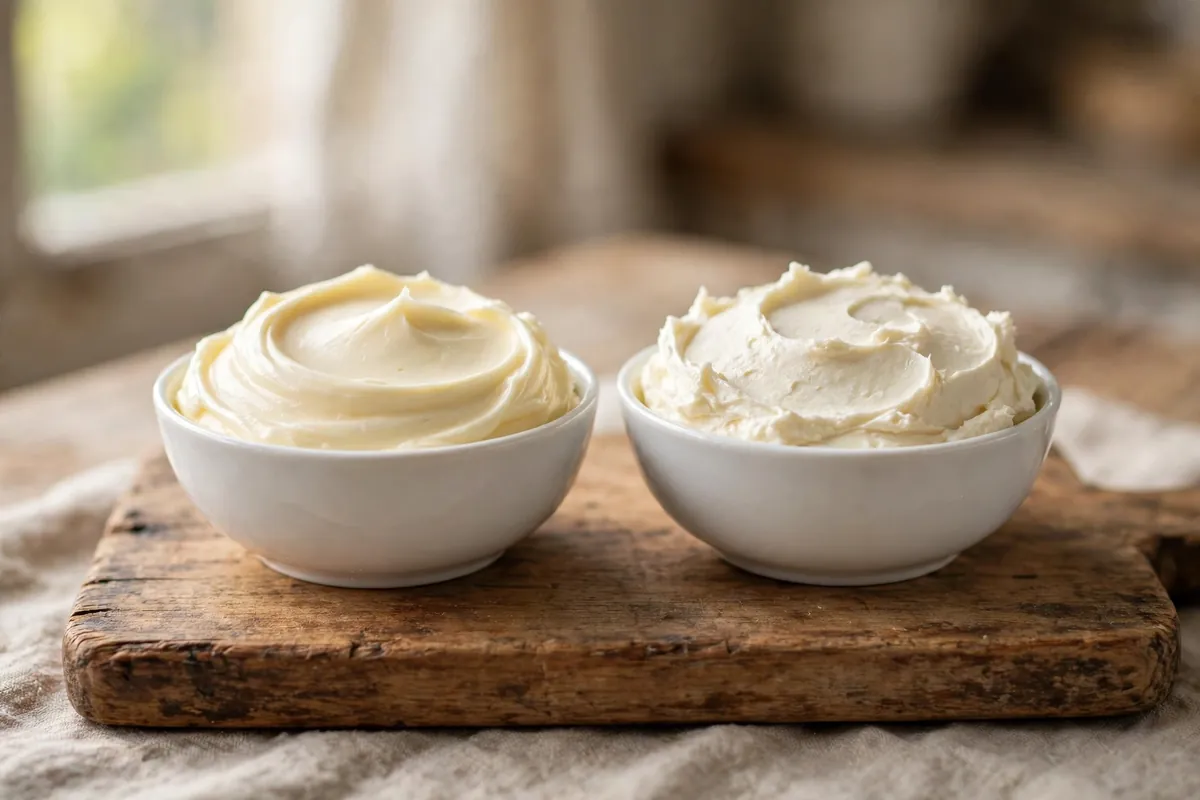
The bluntest fix: at 1 part butter to 2+ parts sugar, the frosting is candy with butter in it. Adding 2–4 tablespoons of soft butter dilutes the sugar and adds fat your palate reads as richness, not raw sweetness. This is distinct from the frosting that tastes like butter problem — there, the butter flavor dominates; here, sugar dominates and butter is the diluent.
How to tell: The frosting is gritty-sweet, almost like eating powdered sugar with a spoon; the recipe used 4+ cups of sugar to 1 cup of butter.
The fix: Beat in 2–4 tablespoons of soft (not melted) unsalted butter, one tablespoon at a time, tasting as you go. The frosting will get softer — if it’s for piping, chill 20 minutes afterward to firm it back up. This also works beautifully combined with the salt fix: salt plus extra butter together rebalance most American buttercreams.
5. You’re tasting it warm — chill it first
Sweetness perception drops with temperature. Buttercream at 72°F (22°C) from the mixing bowl always reads sweeter than the same frosting on a chilled cake. Before “fixing” anything, refrigerate 20 minutes and taste cold.
How to tell: The frosting seemed fine in your head but overwhelming on the spoon; the kitchen is warm; the batch was just mixed.
The fix: Chill the bowl 20 minutes, then taste. If it still needs help, apply fixes 1–4. And remember this at serving time: frosted cakes taste less sweet served cool (60–65°F / 16–18°C) than at full room temperature. For very sweet frostings, I deliberately serve the cake slightly cool.
6. Change the frosting type next time — the ratio is the recipe
If every batch fights you, the recipe is the problem. American buttercream is the sweetest style by construction. Swiss meringue — whites and sugar heated to 160°F (71°C), whipped, then butter beaten in — uses roughly half the sugar. German (pastry cream + butter) and ermine (flour-milk roux + butter) are even less sweet.
How to tell: Every batch of this recipe tastes too sweet no matter what you adjust; you’ve added salt and acid and it’s still candy.
The fix: For the current batch, use fixes 1–5. For the next cake, switch styles: Swiss meringue buttercream needs about 200g sugar for 225g butter versus 400g+ in American — the single biggest sweetness lever available. My broken buttercream rescue covers the technique if the meringue base intimidates you.
FAQ
Can I fix too-sweet frosting without changing the flavor?
Salt — ¼ teaspoon per 3 cups suppresses sweetness with no identifiable flavor. Extra butter dilutes sweetness while keeping the flavor profile.
How much salt can I add to frosting before it tastes salty?
Up to ½ teaspoon of fine salt per 3 cups of frosting stays in the “balanced” zone for most palates. Past that, salt becomes a distinct flavor. Add in ¼-teaspoon increments and taste each time.
Does powdered sugar vs granulated sugar change sweetness?
Same sweetness, but powdered sugar’s cornstarch adds a raw, chalky note. Sift it and beat a full 3–4 minutes to reduce that edge.
Is it safe to eat frosting with raw egg whites?
American buttercream has no eggs, so there’s no concern. If you switch to Swiss or Italian meringue buttercream, the whites are heated to 160°F (71°C), which makes them food-safe.
Can I reduce the sugar in American buttercream directly?
Cut up to 25% before structure suffers — below that it won’t hold piping. For more, switch to Swiss meringue or ermine.
Why does store-bought frosting taste less sweet than mine?
Commercial frostings use shortening plus calibrated salt, acids, and flavorings. The salt and acid fixes above get homemade close — no shortening needed.
Related troubleshooting: Why Does My Frosting Taste Like Butter? · How to Fix Broken Buttercream · Fixing Thin Icing