Runny pastry cream is a starch problem, not luck. Starch granules swell and gelatinize in boiling milk — undercook by a minute, short the starch, or fill warm shells, and you get soup in a pastry. (If your shells themselves deflated, that’s a different failure — see Why Did My Éclairs Collapse?. This guide is about the filling.)
Quick diagnosis: You didn’t boil the cream long enough for the starch to fully gelatinize (most common). Fix: once it thickens, keep it at a full boil, whisking constantly, for a full 1–2 minutes — then chill it completely with plastic wrap on the surface before it goes anywhere near a shell.
My tested baseline: 500ml whole milk, 4 large egg yolks, 100g sugar, 30g cornstarch, 1 teaspoon vanilla, 50g cold butter. Whisk yolks, sugar, and cornstarch to a smooth paste; temper with hot milk; return to the heat and boil 2 minutes whisking constantly; off heat, whisk in butter; press plastic wrap directly onto the surface; chill 4+ hours.
1. You didn’t boil it long enough — the starch never finished its job
The cream thickens approaching a boil, tricking bakers into pulling it early. But cornstarch needs a sustained boil — 1–2 minutes at 212°F (100°C) — to fully gelatinize. Pulled early, the starch is half-swollen: thick in the pot, soup as it cools. I use a timer now; “it looks thick” has lied to me before.
How to tell: The cream was thick when hot but thinned as it cooled; it never quite holds a piped shape; it weeps liquid after a few hours in the fridge.
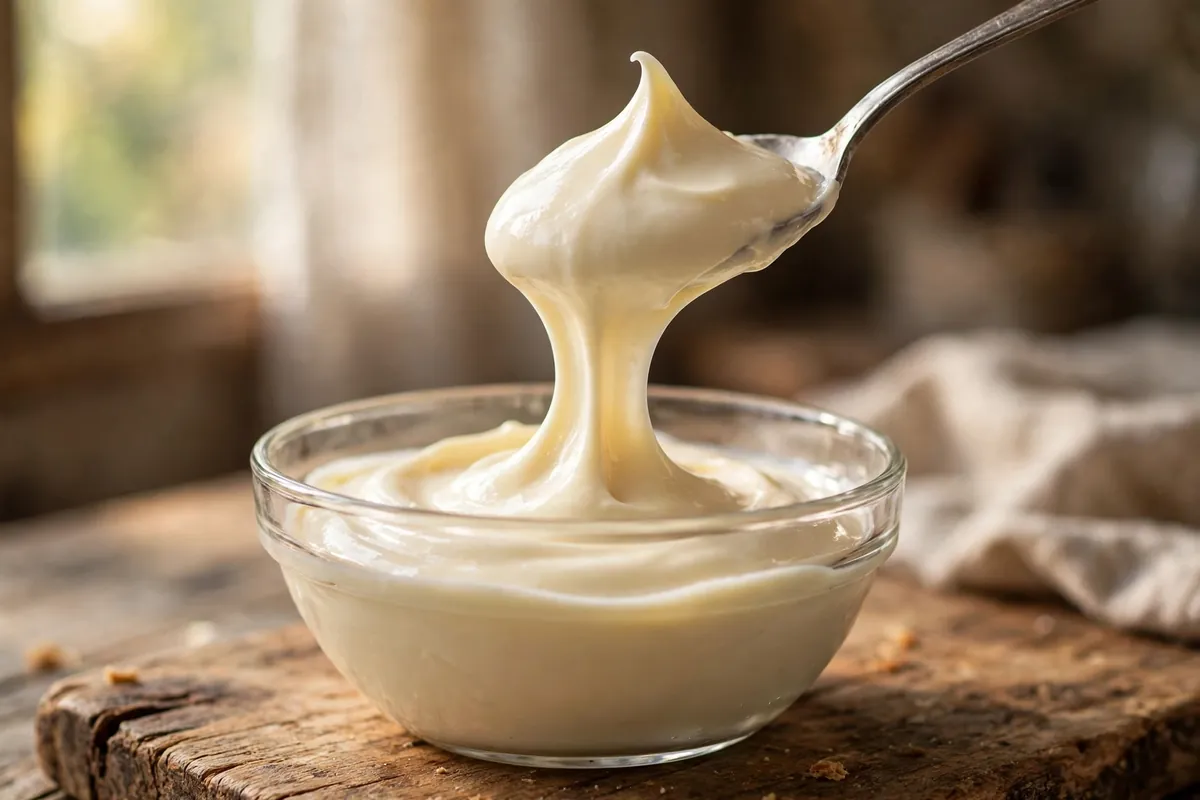
The fix: Once the cream visibly thickens and starts bubbling, keep whisking at a full boil for 1–2 minutes — big lazy bubbles, constant whisking so it doesn’t scorch. It will look almost too thick, like wallpaper paste. That’s correct; it loosens slightly as it cools and firms fully when chilled.
2. Not enough starch — the ratio was too lean
The standard is 30g cornstarch per 500ml milk (about 3 tablespoons). A tablespoon per 2 cups makes pouring custard — fine for trifle, useless for éclairs. Flour versions need ~40g per 500ml, since flour thickens less than pure starch.
How to tell: You followed the recipe exactly and it still never got thicker than heavy cream; the recipe’s starch quantity looks small compared to the milk.
The fix: Use the 30g-per-500ml standard. If your recipe is leaner and you don’t want to remake it, whisk 1 tablespoon of cornstarch into 2 tablespoons of cold milk, whisk that slurry into the hot cream, and boil 2 minutes — a rescue that works on an already-made thin batch. Re-chill completely afterward.
3. You filled the éclairs while the cream was warm
Even perfect cream flows above ~100°F (38°C) — the starch network only locks as it cools. Pipe warm cream into shells and it soaks the choux walls, turning them soggy while the filling never sets. This is the filling-side twin of the soggy-bottom pie problem: moisture migrating where it shouldn’t.
How to tell: The éclairs were fine at first but soggy within hours; the shells feel damp inside; the cream never firmed even after a night in the fridge.
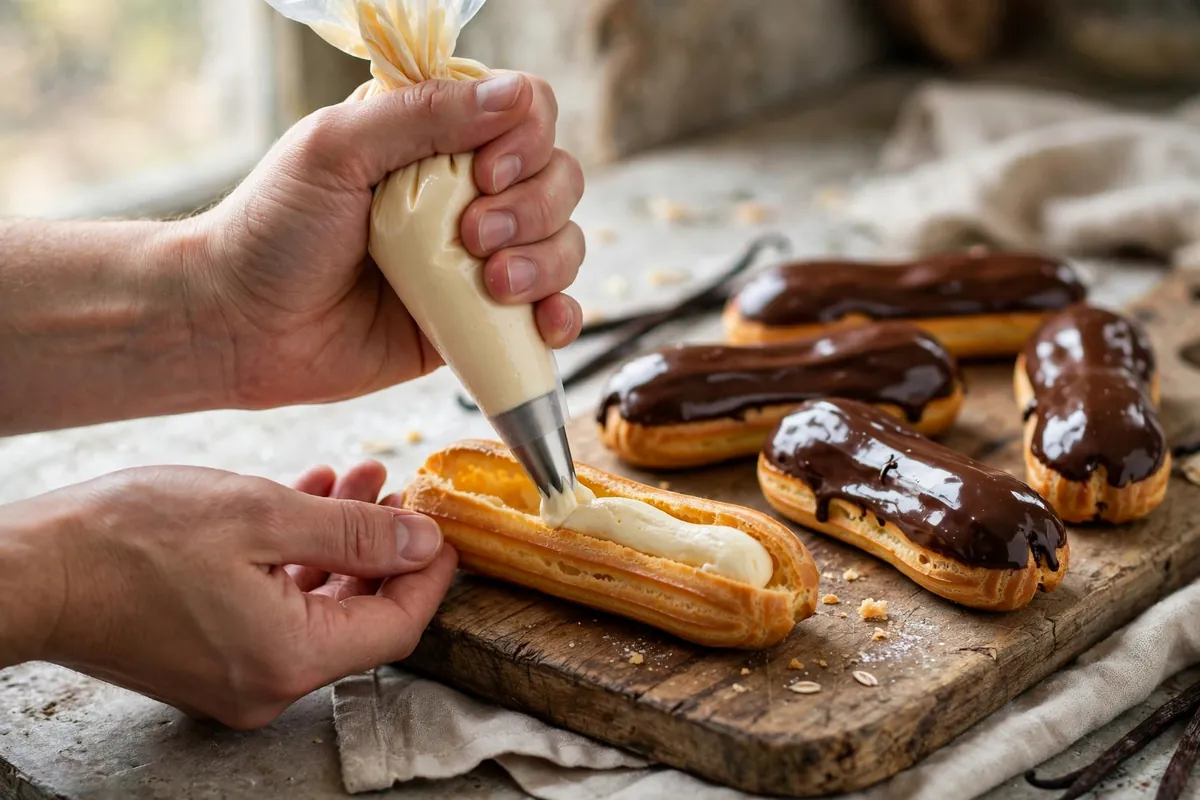
The fix: Chill the pastry cream completely — minimum 4 hours, surface covered with plastic wrap pressed directly on to prevent a skin — then whisk it smooth before piping. Fill éclairs no more than 2–4 hours before serving; filled éclairs are at their peak the day they’re filled and decline after 24 hours as moisture migrates.
4. The butter went in too early — or the cream got thinned after cooking
Butter must go into cream that’s off the heat and below 140°F (60°C). Whisked into boiling-hot cream, the butterfat melts into free oil instead of emulsifying — slick and loose. And never “loosen” thick cream with milk; whisking alone restores pipeability.
How to tell: The cream looked glossy and thick, then turned shiny-loose after the butter went in; or you added liquid to make it “easier to pipe.”
The fix: Take the cream off the heat, wait 2–3 minutes, then whisk in 50g of cold butter cut in cubes until fully incorporated. To restore chilled cream to piping consistency, whisk it vigorously by hand for 30 seconds — never add liquid. Properly made cream always looks lumpy straight from the fridge and always smooths out with whisking.
5. The shells were damp inside — the filling never stood a chance
Perfect cream still weeps in a wet shell. Under-baked éclairs have eggy interiors that steam after baking; pipe into that damp cavity and moisture thins the cream from outside in. The filling takes the blame for the shell’s crime.
How to tell: The cream is fine in the bowl but runny only inside the éclairs; shell interiors look moist or eggy rather than dry and hollow.
The fix: Bake shells until deeply golden and firm — then dock each one with a skewer and return them to the turned-off oven with the door cracked for 10 minutes to dry the interiors completely. A properly baked éclair sounds hollow when tapped and feels light. If you’re unsure, the shells are done when they stop “singing” (that faint hissing of escaping steam).
6. You used low-fat milk — fat is structure
Whole milk’s fat stabilizes the starch gel and gives body. Skim or 1% sets softer and weeps sooner — not fatal alone, but combined with a short boil or lean starch, it’s the nudge into runny.
How to tell: The recipe was followed and the boil was long, but the cream still sets softer than expected; low-fat milk was used.
The fix: Use whole milk. If you’re committed to lower-fat milk, increase the cornstarch to 35g per 500ml and extend the boil to the full 2 minutes to compensate.

FAQ
Is runny pastry cream safe to eat?
Yes, if boiled and refrigerated promptly. It’s perishable — refrigerate and use within 2–3 days; discard after 2 hours at room temperature.
Can I fix runny pastry cream after it’s made?
Yes — whisk in a slurry (1 tablespoon cornstarch + 2 tablespoons cold milk per 500ml), boil 2 minutes whisking constantly, re-chill with plastic wrap on the surface. Rescues nine of ten thin batches.
Why does my pastry cream get lumpy?
The eggs scrambled — milk added too hot, or unstirred on the heat. Temper gradually, whisk constantly, and sieve the finished cream while hot.
Can I make pastry cream ahead?
Absolutely — it’s better made ahead. It keeps 2–3 days refrigerated with plastic wrap pressed on the surface. Whisk vigorously before using; it always looks broken straight from the fridge and always comes back.
How far ahead can I fill éclairs?
Fill 2–4 hours before serving for peak crispness. Filled éclairs keep 24 hours refrigerated but soften steadily — the shells absorb moisture from the cream no matter how well you bake them.
Can I freeze pastry cream?
Technically yes, but the starch gel breaks on thawing — the exact problem you’re avoiding. Freeze filled éclairs instead (a month max); thaw uncovered so condensation doesn’t sog the shells.
Related troubleshooting: Why Did My Éclairs Collapse? · How to Fix Split Custard · Fixing Curdled Ganache