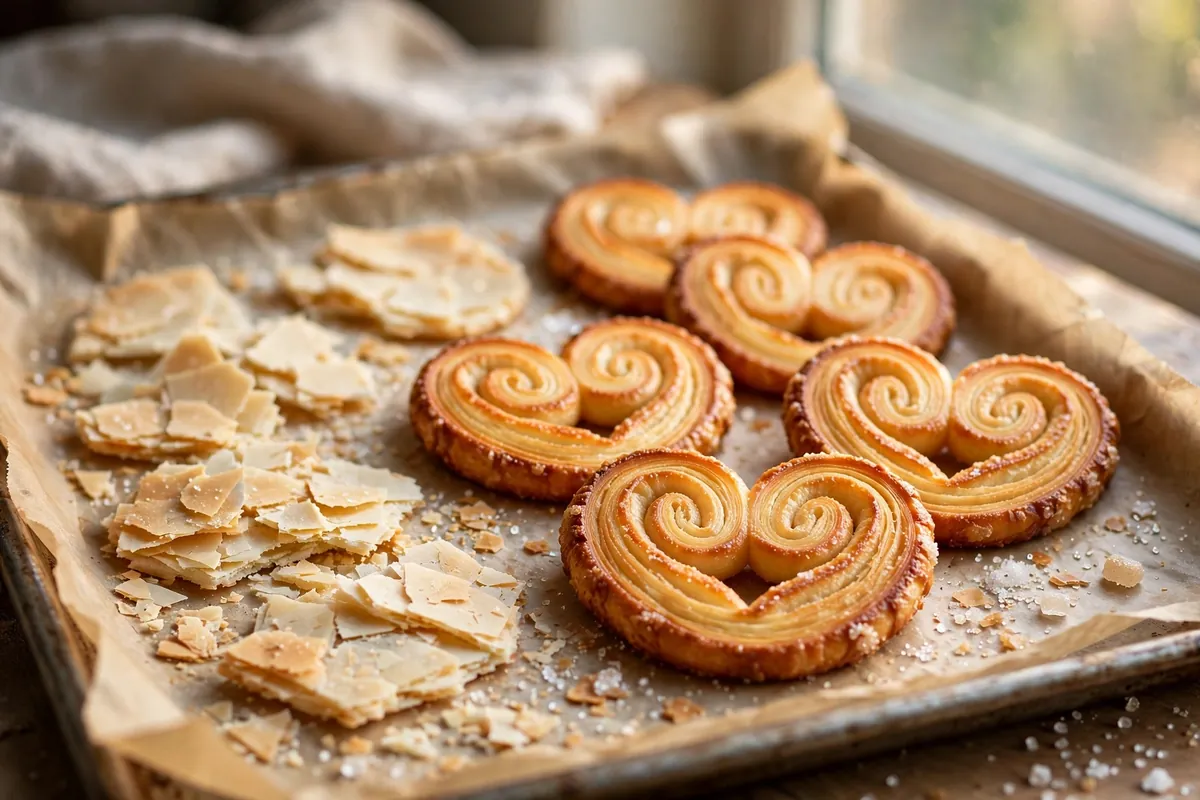
Palmiers look like the simplest pastry on earth — puff pastry, sugar, a double roll, a slice — and they punish casual shaping like nothing else in the pastry case. When the scrolls open in the oven, you get flat sugary shards instead of crisp caramelized hearts. Unfurling always comes down to the same physics: the butter melted before the steam could set the shape. Every fix below is about winning that race.
Quick diagnosis: They went into the oven too warm — soft butter melts and releases the folds before steam puffs them into shape. Chill the shaped log 30 minutes (or sliced palmiers 20 minutes), roll both sides tightly to the center, press the seam, and bake hot at 400–425°F (200–220°C).
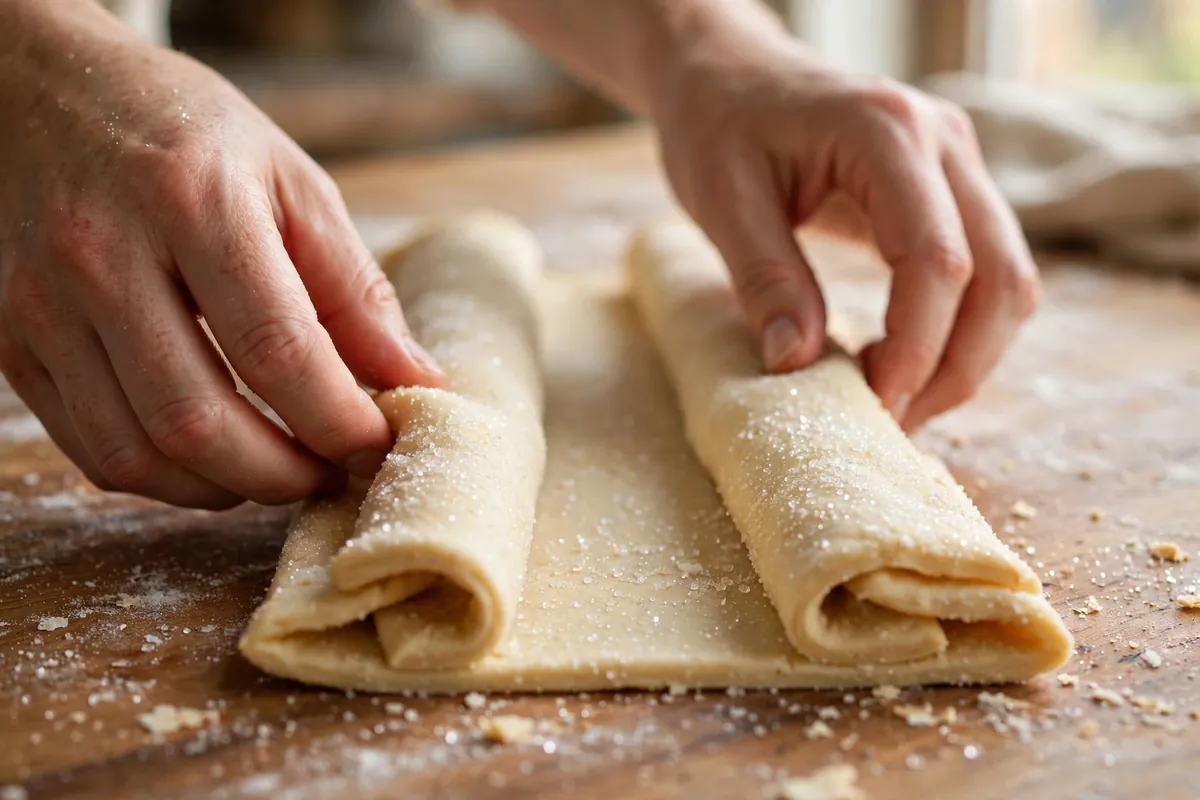
My tested baseline: 1 sheet all-butter puff pastry (about 250g), thawed just until pliable but still cold. 100g granulated sugar on the work surface and over the pastry. Fold each long edge to the center, then fold the folded edges together like closing a book — the classic double scroll. Wrap and chill 30 minutes, slice ½-inch thick, press cut faces in sugar, bake at 400°F (200°C) for 12–15 minutes, flipping halfway.
1. You skipped the chill — warm butter melts before steam sets the shape
The master cause. Palmiers only survive if the butter layers are cold and firm hitting the oven: cold butter + hot oven = violent steam that puffs the layers rigid in seconds. Warm butter simply melts, the layers slide apart, and the scroll relaxes open before anything sets. Room-temperature shaping in a warm kitchen is enough to cause it.
How to tell: Palmiers spread wide and flat within minutes; butter pooled on the tray; no puffing, just melting.
The fix: Chill twice. After rolling, wrap the log tightly and refrigerate 30 minutes until firm. After slicing, chill the cut palmiers on the tray another 15–20 minutes (or freeze 10). They should go in cold to the touch. In a warm kitchen, work fast and return the log to the fridge between steps. (Same temperature race as Puff Pastry Not Puffing: Lamination Mistakes to Avoid.)
2. Your folds were loose — a slack scroll has nothing to hold
Palmiers need tension: each side rolls to the center and the two rolls press against each other, and that compression holds the shape while the butter is soft. Loosely rolled palmiers have no internal pressure — the moment the butter softens, the scroll springs open like a released coil.
How to tell: The log felt soft and springy, not firm and compact; cross-sections show gaps between layers; slices looked like loose spirals, not tight scrolls.
The fix: Roll firmly, pressing down slightly, and pack each side hard against the center — the two rolls should touch with no gap. After the final book-fold, press the log flat with your palms and roll once with the pin to seal. Slice with a sharp knife in one decisive cut; sawing drags the layers apart. Tight in, tight out.
3. The sugar had nothing to grip — wrong sugar, or none pressed in
Sugar is flavor and glue. Pressed into the dough, granulated crystals anchor the outer layers and caramelize into a crisp shell that locks the shape. Coarse or pearl sugar rolls off instead of embedding, and a bare surface gives the outer layer nothing to hold as it bakes.
How to tell: Sugar scattered loose on the tray rather than fused to the pastry; pale soft exteriors instead of crisp caramelized ones.
The fix: Plain granulated sugar — the right crystal size to embed. Scatter generously on the work surface before rolling, and press each cut face firmly into a plate of sugar before traying. That sugared face caramelizes first, like edible scaffolding. (Sugar’s structural role in laminated pastry: Kouign-Amann Troubleshooting: Leaked Butter and Burnt Sugar, Fixed.)
4. The oven wasn’t hot enough — slow heat melts, fast heat sets
Puff pastry needs a blast: at 400–425°F (200–220°C), water in the dough and butter flashes to steam instantly, puffing layers rigid before the butter fully melts. At 350°F (175°C), the butter melts first, layers never separate, and scrolls relax into greasy puddles. An underheated oven is the quiet accomplice to every other mistake.
How to tell: Palmiers spread and stayed flat with no layering; pale after the full bake time; greasy rather than crisp.
The fix: Verify a true 400°F (200°C) — 425°F (220°C) if your oven runs cool. Preheat fully, at least 15 minutes past the “ready” beep. Middle rack, light-colored tray; dark trays over-brown sugared bottoms before tops crisp. Don’t open the door for the first 8 minutes — the initial steam blast does the structural work.
5. You sliced them wrong — thickness controls the outcome
Too thin (¼ inch): not enough structure, they over-brown and shatter. Too thick (¾ inch+): the center stays raw while sugar burns, the uncooked middle can’t support the shape, and the palmier slumps open cooling. Half an inch is the sweet spot for a reason.
How to tell: Thin slices burned at the edges while flat; thick slices with doughy pale centers that collapsed after baking.
The fix: Chill the log firm, then slice exactly ½-inch thick — mark the log lightly first if your eye isn’t calibrated. Even slices bake evenly, and even baking keeps every palmier holding the same shape. Ragged, uneven slices reliably predict a mixed batch: some perfect, some flat.
6. You didn’t flip them — one-sided caramelization unbalances the bake
Palmiers bake in a pool of caramelizing sugar; the bottom browns far faster than the top. Without a flip, the bottom over-caramelizes and can stick while the top stays pale and soft — a lopsided palmier that flexes and opens as it cools.
How to tell: Deep brown, almost bitter bottoms with pale soft tops; palmiers stuck to the tray.
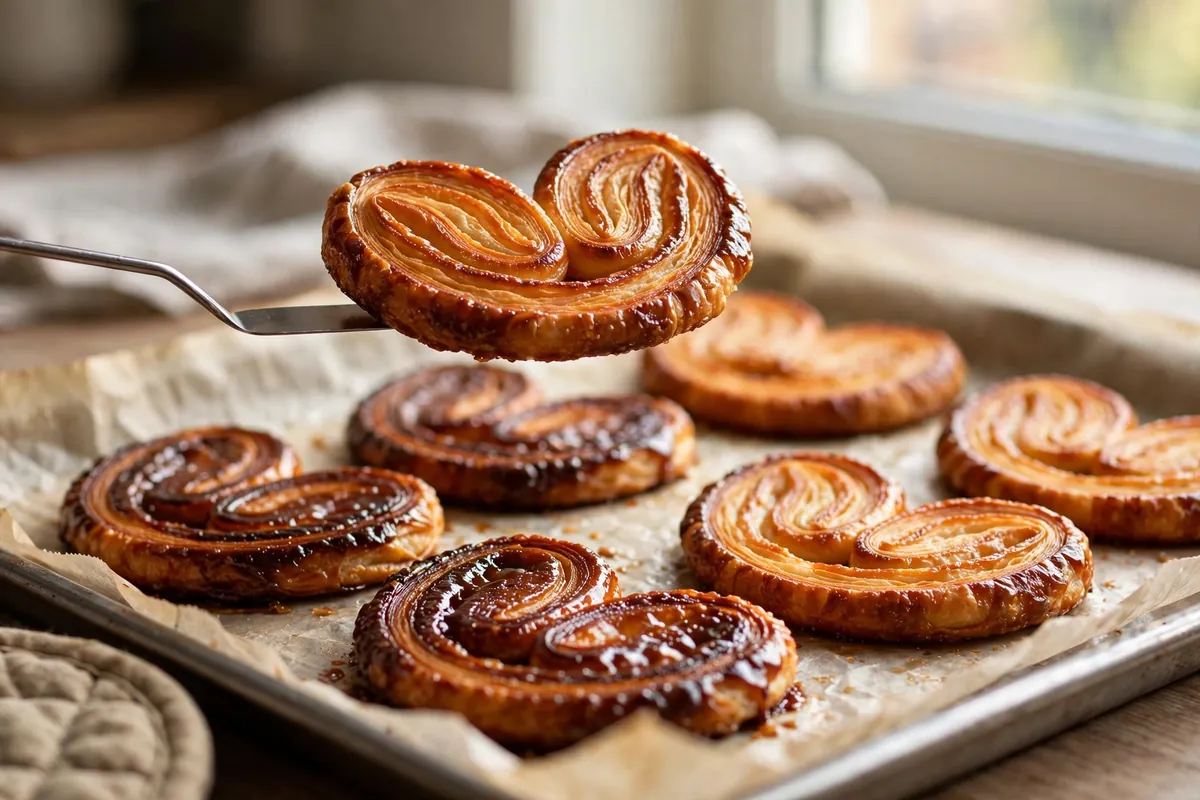
The fix: At the halfway mark (6–7 minutes), flip each with a thin spatula. The second side caramelizes in the remaining time for the signature even amber crunch on both faces. Work quickly and close the door — you’re borrowing heat, not donating it. Parchment under everything; caramelized sugar welds to bare metal.
Frequently asked questions
Are unfurled palmiers safe to eat?
Yes — they’re just flat. The flavor is identical: buttery, caramelized, crisp. Serve the shards as-is; nobody will know they were supposed to be hearts unless you tell them.
Can I fix palmiers that already unfurled?
Not the shape — once baked, the structure is set. But the shards are excellent crushed over ice cream, folded into whipped cream, or layered into a trifle. Waste nothing.
Can I use store-bought puff pastry?
Yes — most palmiers are made with it. All-butter pastry gives the best flavor and most reliable puff; oil-based pastry melts faster and unfurls more easily, so chill it extra well. Keep it cold until you unroll it.
Why are my palmiers burnt on the bottom?
Sugar + direct heat + dark tray. Light-colored sheet, always parchment, flip halfway. If your oven runs hot underneath, use the upper-middle rack. Pale gold is the target, not dark brown — burnt sugar tastes bitter.
Can I freeze shaped palmiers?
Yes — freeze sliced and sugared on a tray, then bag. Bake from frozen at 400°F (200°C), adding 2–3 minutes. They hold shape beautifully from frozen, going in at maximum cold.
Related troubleshooting: Puff Pastry Not Puffing: Lamination Mistakes to Avoid · Why Did My Rugelach Unravel? Cream Cheese Dough Fixes · Kouign-Amann Troubleshooting: Leaked Butter and Burnt Sugar, Fixed