Why Did My Cupcakes Overflow? Batter Fill Levels Explained
Quick diagnosis: Overflowed cupcakes are almost always overfilled cups — more than two-thirds full gives the batter nowhere to go but over the rim. Fill standard cups two-thirds max (half for flat tops), check your leavening, and keep the oven at a true 350°F (175°C).

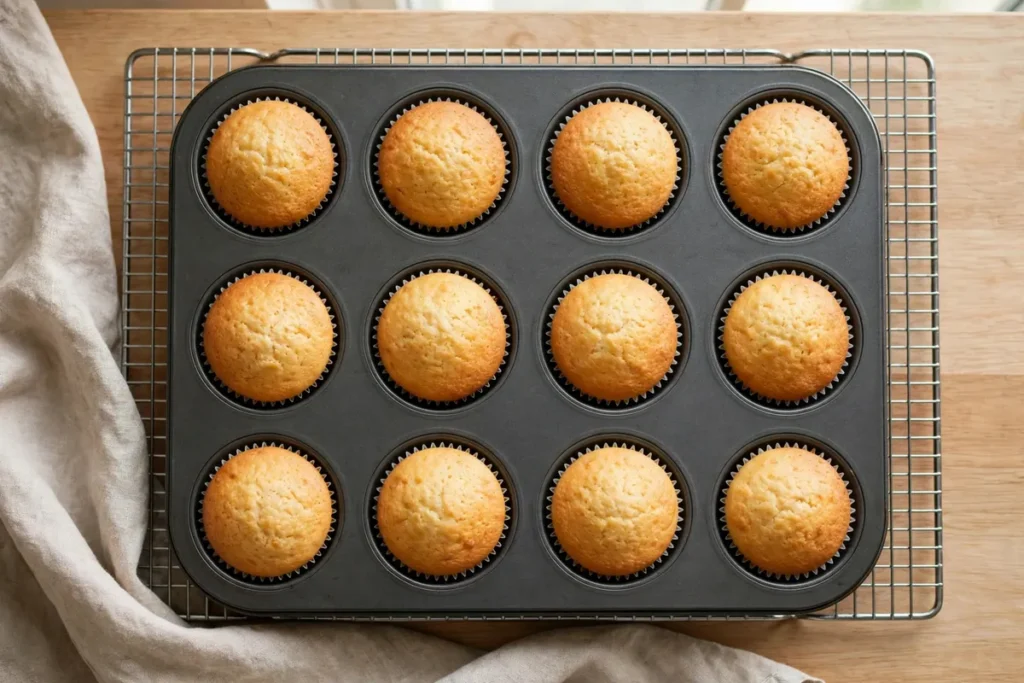
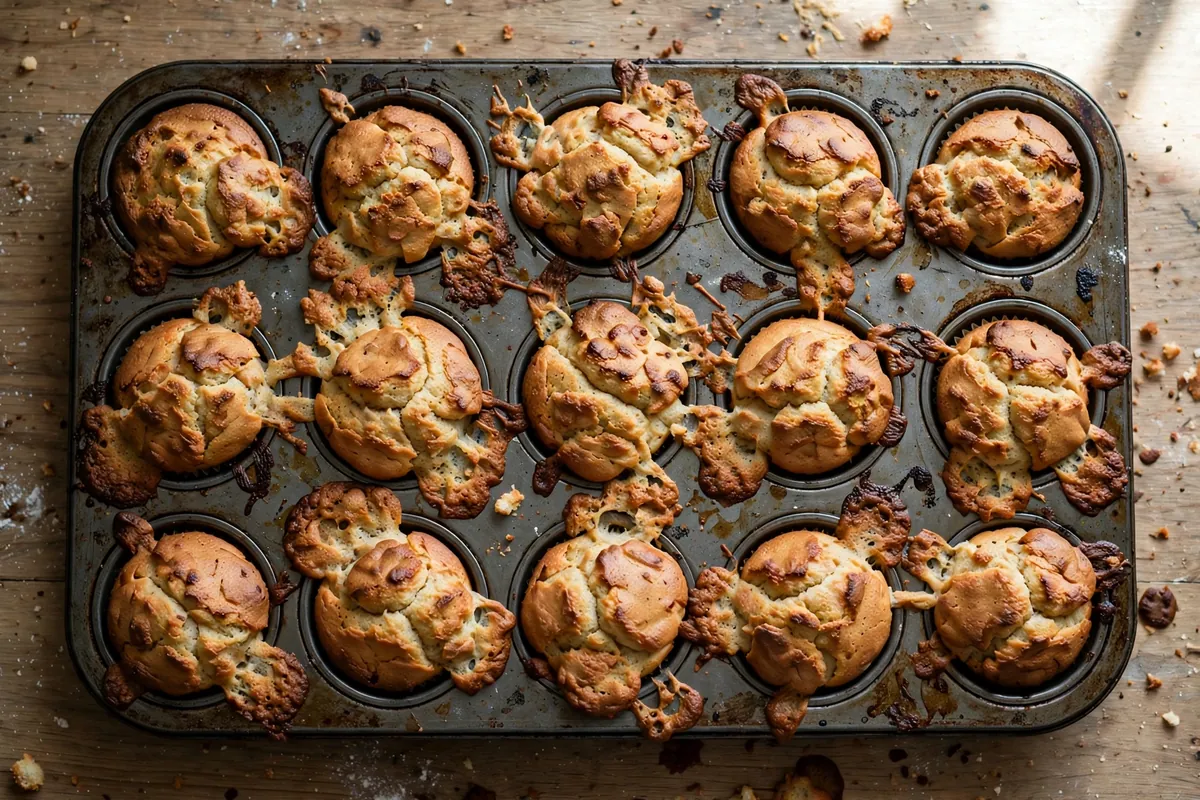
A cupcake is a tiny cake in a paper cup — and that paper cup is doing structural work. As batter heats, leavening gases expand it upward; the liner contains the rise and shapes the signature dome. Overfill the cup and the rising batter crests the rim, spills onto the hot tin, and fuses neighboring cupcakes into one inseparable slab. The fixes are all about giving the rise somewhere legal to go.
1. The cups were overfilled
The cause in the great majority of cases. Standard guidance exists for a reason: fill cups two-thirds full. That leaves exactly the headroom a properly leavened batter needs to rise into a dome without breaching the rim. Eyeballing “almost full” routinely lands at 85–90% — and 90% full plus oven spring equals overflow, every time.
How to tell: The batter was near the top of the liners before baking, and the overflow looks like the cupcakes simply outgrew their cups.
The fix: Two-thirds full for classic domed tops; one-half full for flat tops (better for piping tall frosting swirls). Use a scoop for consistency — a #20 disher holds about 3 tablespoons, the perfect amount for a standard cupcake. No scoop? Fill, then remove a spoonful from each cup. When I switched from eyeballing to a scoop, my batches went from chaotic to uniform overnight.
2. Too much leavening
Excess baking powder or soda supercharges the rise. The batter doesn’t just dome — it erupts. This is the same over-leavening behind sunken cake centers (see Why Did My Cake Sink in the Middle?) — in a full-size cake it collapses, in a tiny cup it escapes over the rim first.
How to tell: The rise was violent — batter fountained rather than domed — and the crumb has a coarse, open texture with a faintly soapy taste.
The fix: About 1 teaspoon baking powder per cup (120g) of flour, leveled with real measuring spoons. Check the tin’s age — dead leavening tempts over-measuring, and old-plus-extra is the worst combination.
3. The oven was too hot
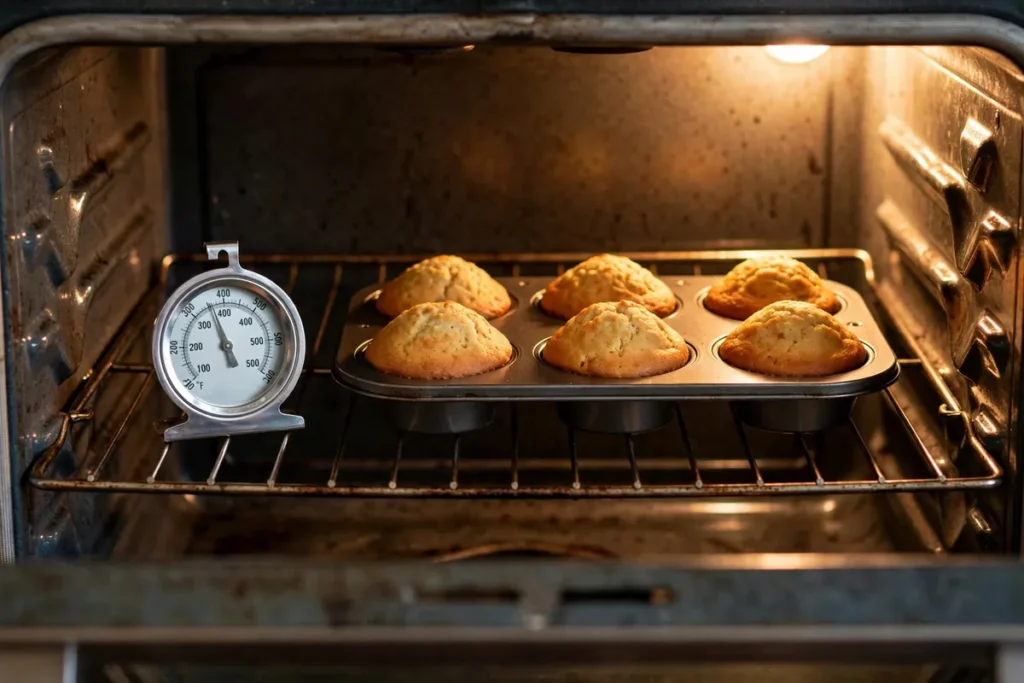
High heat makes leavening react fast and hard before the crumb structure sets — a rapid, uncontrolled rise that breaches the liner before the batter firms up enough to hold its shape. The same hot-oven mechanism that domes and cracks full cakes (see Cake Domed and Cracked on Top) turns cupcakes into volcanoes.
How to tell: The cupcakes rose dramatically in the first 10 minutes, browned fast on top, and spilled — while the centers may still be soft.
The fix: A true 350°F (175°C) on the center rack, verified with an oven thermometer. For fan/convection ovens, drop to 325°F (163°C). Cupcakes are small and bake fast — most are done in 18–22 minutes, and a hot oven compresses that window past the point of control.
4. The batter was too thin
Thin, wet batter has further to rise and less structure to contain it — it behaves more like a liquid boiling over than a dough rising. Over-measured milk, extra eggs, or melted-butter batters thinned beyond the recipe’s intent all push toward overflow.
How to tell: The batter poured like heavy cream rather than plopping like thick pancake batter, and the baked crumb is dense at the base where overflowed batter pooled.
The fix: Respect liquid ratios — measure milk and eggs rather than eyeballing. Standard cupcake batter should fall from the spoon in thick ribbons, not run. If you’ve already thinned it, whisk in flour a tablespoon at a time until it ribbons.
5. Inconsistent scooping
Twelve cups filled by eye means twelve different fill levels — the fullest three overflow while the emptiest barely dome. Inconsistent batter depth also means inconsistent bake times: the full cups are still raw inside when the shallow ones are done.
How to tell: Some cupcakes overflowed, some are perfect, some are flat — all from the same tin.
The fix: The #20 scoop (3 tablespoons) for standard cupcakes; a #40 (about 1½ tablespoons) for minis. For jumbo tins, fill two-thirds by depth and weigh the first cup, then match the rest. Uniformity is free quality.
6. The tin was jostled or the door slammed
A sharp jolt mid-bake sloshes semi-set batter over rims that were borderline full. Slamming the oven door sends a pressure wave through the oven — enough to collapse a delicate rise or slosh a full cup over the edge.
How to tell: The overflow is on one side of the tin, or it happened right after you checked and closed the door hard.
The fix: Slide the tin in gently, close the door softly, and don’t move it until the three-quarter mark. If you must rotate, do it once, quickly and smoothly.
Fill-level guide by cupcake size
| Tin size | Fill level | Approx. batter | Bake time at 350°F (175°C) |
|---|---|---|---|
| Mini | ⅔ full | ~1½ Tbsp | 10–12 min |
| Standard | ⅔ full (domed) / ½ full (flat) | ~3 Tbsp | 18–22 min |
| Jumbo | ⅔ full | ~⅓ cup | 25–30 min |
Flat tops (half fill) are the decorator’s choice — more room for frosting architecture. Domed tops (two-thirds) are the classic bakery look. Both are correct; over the rim is the only wrong answer.
Salvaging overflowed cupcakes
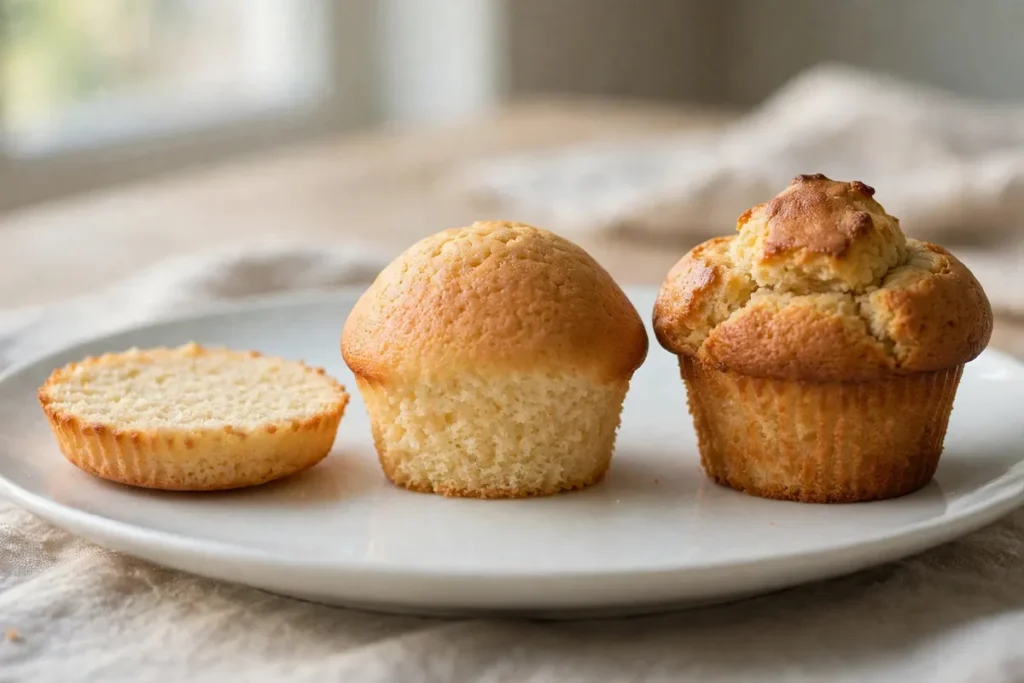
They’re still perfectly edible — trim the mushroomed tops flat with a serrated knife (the trimmings are cook’s treats), and frost generously. For fused-together neighbors, run a knife between them while warm. Next batch, drop to two-thirds and the problem disappears.
Frequently asked questions
Are overflowed cupcakes safe to eat?
Yes — overflow is cosmetic. The spilled batter baked on the hot tin is fully cooked. Trim, frost, and serve; the flavor is identical to a perfect cupcake.
Should cupcake liners be filled half or two-thirds?
Two-thirds for classic domed tops, one-half for flat tops meant for tall frosting. Both work. The only wrong answer is fuller than two-thirds.
Why do my cupcakes overflow but the recipe says the same fill?
Ovens and leavening vary — your oven may run hot (fast, violent rise) or your baking powder may be extra fresh and strong. Drop the fill to one-half as a test batch; if those come out perfect, your setup runs hot and half-fill is your standard.
Can I stop cupcakes from mushrooming?
The mushroom shape is overflow plus continued rising — the spilled batter sets into a brim. Prevent it with correct fill levels and true 350°F (175°C) heat. Once mushroomed, trim the brim off; it won’t un-mushroom.
Do silicone cups prevent overflow?
No — silicone changes release, not rise physics. An overfilled silicone cup overflows exactly like paper. Use the same two-thirds rule regardless of liner material.
Related troubleshooting: Why Did My Cake Sink in the Middle? · Cake Domed and Cracked on Top · Why Didn’t My Bread Rise?