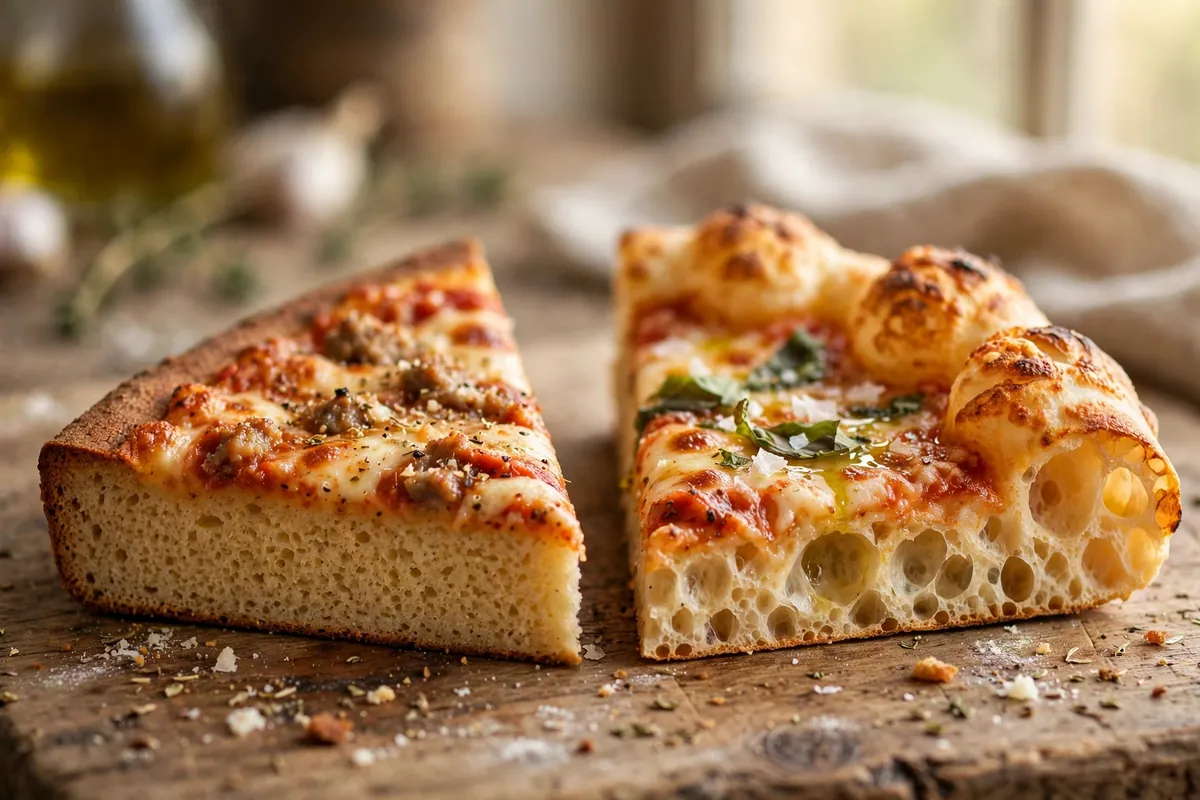
Tough pizza is a particular heartbreak: you did everything that makes bread good — kneaded it well, gave it time — and got a crust you have to fight with your jaw. Here’s the truth: pizza dough is not bread dough. Bread wants maximum gluten and a long bake. Pizza wants restrained gluten, high hydration, and a violent blast of heat. Treat pizza dough like a baguette and you get tough, chewy, dense.
Quick diagnosis: Tough crust is usually under-rested dough baked too cool for too long: tense dough fights stretching and bakes up tight (cause #2), and an oven below 500°F (260°C) dries the crust before it can puff (cause #4). Fix the rest and the heat first.
Toughness is gluten misbehaving — overdeveloped and rubbery, or never relaxed and springy — plus low heat drying the crust before the interior steams itself open.
1. You over-kneaded it — pizza is not bread
Bread dough gets 10–15 minutes of kneading for maximum gluten. Pizza needs only 5–8 — enough to come together smooth, not the full development of a loaf. Over-kneaded pizza dough bakes up with a tight, bagel-like chew instead of a tender pull. The gluten network is simply too strong.
How to tell: The dough felt tight even after resting, sprang back aggressively when stretched, and the baked crust is uniformly chewy with a fine even crumb — no big air holes.
The fix: Knead just until smooth and elastic — stretchable without immediately tearing, but no perfect windowpane required. Five minutes on low-medium is plenty — then let a long cold ferment build flavor and extensibility without more kneading. (Flour-strength background: Bread Flour vs All-Purpose: When It Actually Matters.)
2. It didn’t rest long enough — the gluten never relaxed
The cause I see most in home kitchens. Fresh gluten is elastic — a just-kneaded ball springs back when stretched. Given time it becomes extensible: it stretches thin without fighting, and in the oven expands into big bubbles instead of contracting into toughness. Dough stretched while tense bakes up tight no matter how hot the oven.
How to tell: The dough sprang back every time you stretched it and the rim baked thick and bready instead of puffy.
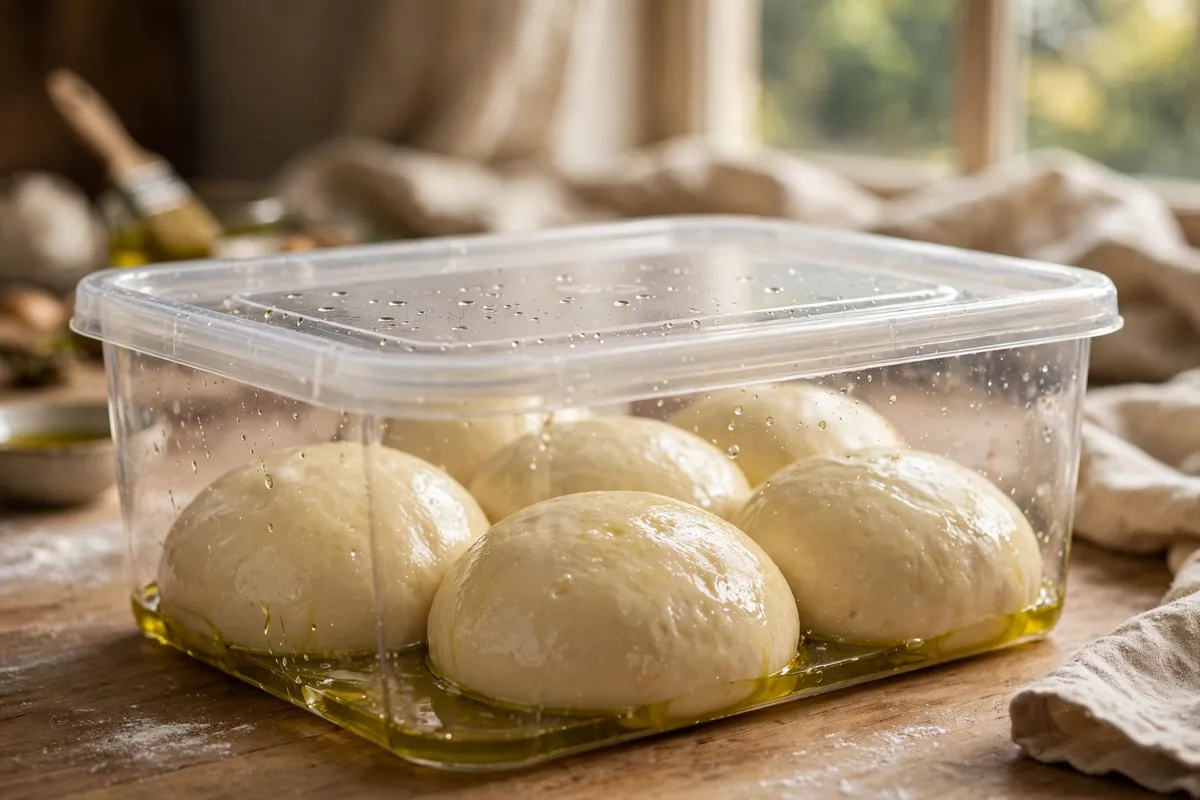
The fix: Minimum 1–2 hours at room temperature after balling — but the real magic is a cold ferment of 24 to 72 hours in the refrigerator. It relaxes gluten completely and builds the complex flavor separating great pizza from flat pizza. Pull balls out 1–2 hours before baking; fridge-cold dough still fights you. If dough springs back mid-shape, stop, cover, walk away 20 minutes — rest is a legitimate technique. (Timelines: Make-Ahead Bread Dough: Fridge Fermentation Timelines.)
3. The hydration was too low — dry dough can’t puff
Pizza wants 60–65% hydration — wetter than most beginners expect. At 55% or below, the dough is stiff, gluten can’t move freely, and there’s too little internal steam to blow the crumb open. Low hydration makes crackers, not airy pizza.
How to tell: The dough felt firm and dry rather than soft and slightly tacky, was suspiciously easy to handle, and the crust is dense and cracker-like.
The fix: Weigh ingredients and target 62% — 310g water per 500g flour. The dough should feel soft and lightly tacky, sticking to hands but releasing from the bowl. Don’t flour your way out of stickiness when shaping; use a light bench dusting of flour or semolina only. Wetter dough is harder to handle but bakes dramatically better.
4. Your oven wasn’t hot enough — low heat makes leather
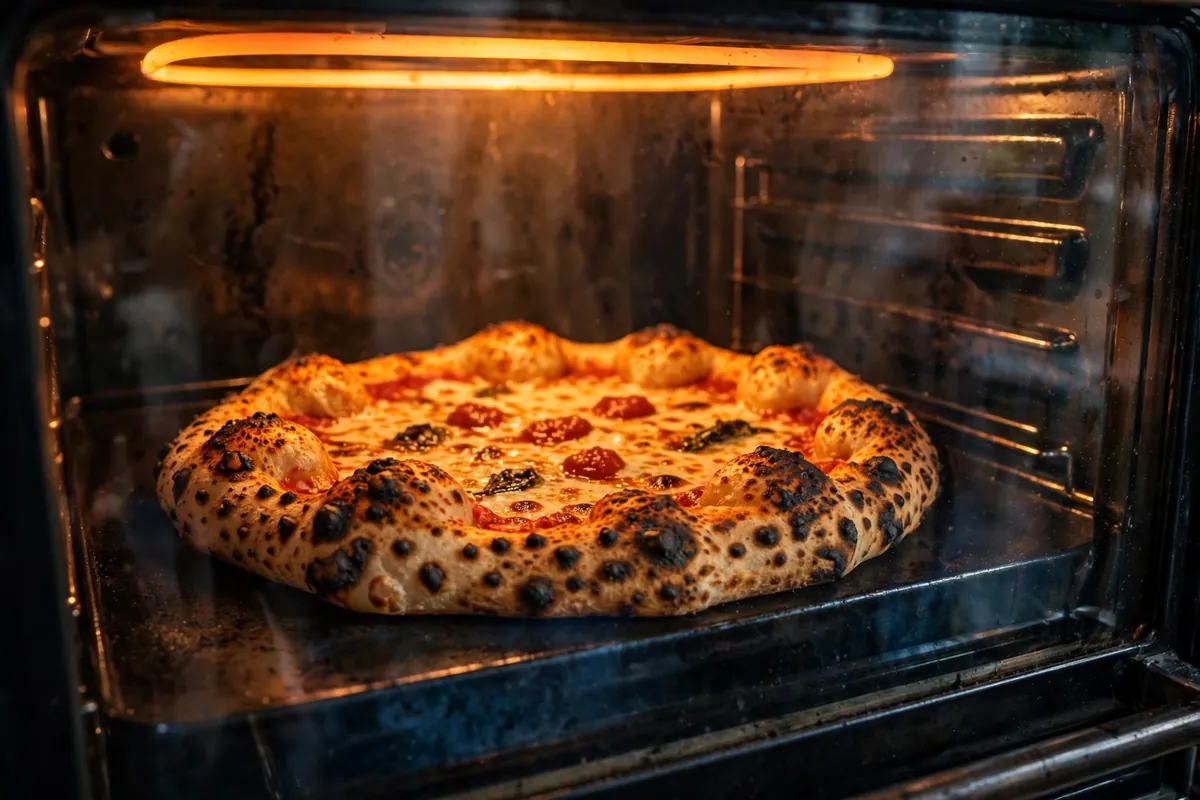
Pizza needs a violent blast: 500–550°F (260–290°C), your oven’s maximum, for 7–10 minutes. Intense heat sets the exterior fast while the interior steams, and trapped steam inflates the crumb into open bubbles. At 400–425°F the crust dries gradually before it can puff — baked-cracker texture.
How to tell: The pizza took 15+ minutes to brown, the cheese browned before the crust puffed, and the crust is uniformly hard, not crisp-outside-airy-inside.
The fix: Preheat at maximum for 45–60 minutes with a steel, stone, or inverted heavy sheet inside — thermal mass matters as much as air temperature. A pizza steel is the single best upgrade: stored heat blasts the bottom and slashes bake time. Launch onto the screaming-hot surface and bake until the cornicione is puffed and leopard-spotted. Top finishing first? Lower rack next time. Bottom burning first? Go up.
5. You pressed all the air out shaping it
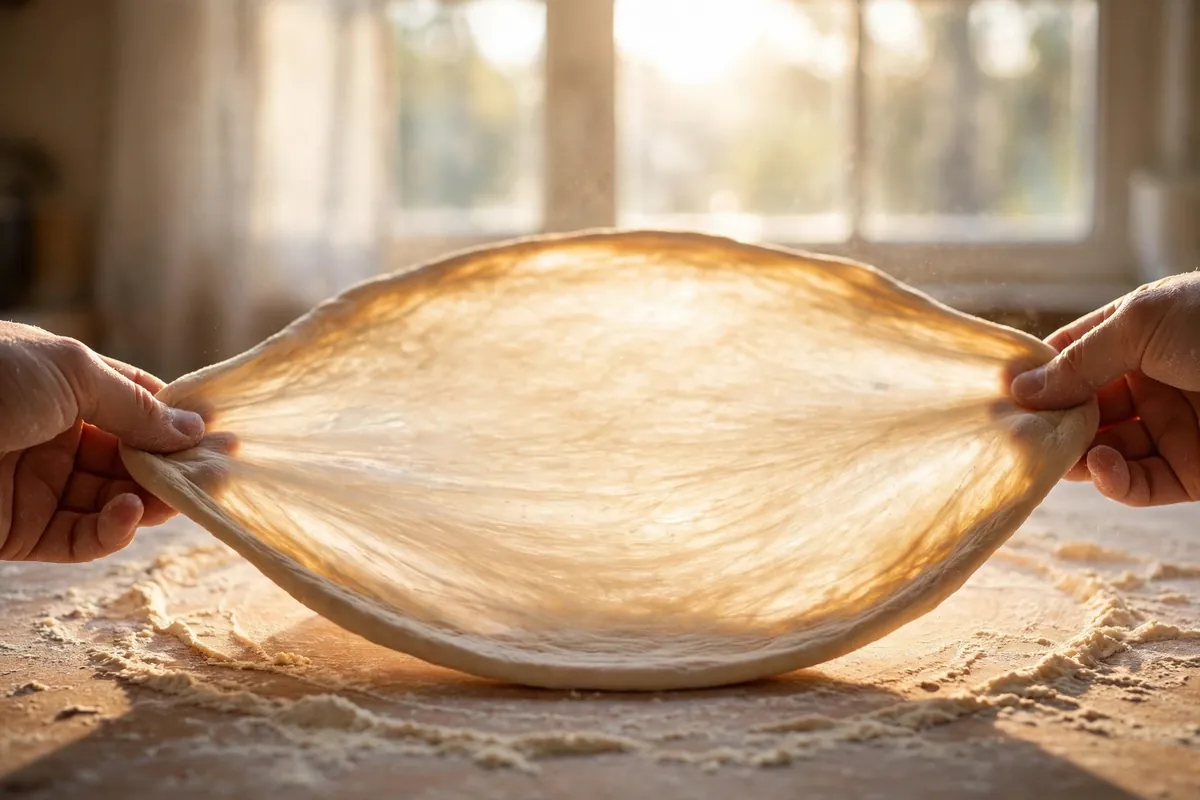
Even perfect dough turns tough if manhandled. Rolling pins, aggressive palm-pressing, or re-rolling scraps compress the gas bubbles fermentation built — those bubbles are your future air pockets. Degassed dough bakes dense regardless of hydration or heat.
How to tell: You used a rolling pin or pressed flat with your palms, and the rim is flat and dense instead of puffy.
The fix: Hands only: press from center outward with fingertips, leaving a 1-inch untouched rim — that’s your cornicione, and it needs its gas. Drape over knuckles, let gravity stretch, rotate. Never a rolling pin on pizza dough. The rim should look alive and pillowy before it sees the oven.
Can you fix an already-baked tough pizza?
Barely — toughness sets in the bake. Reheat slices on a preheated steel or lidded hot skillet for 2 minutes to re-crisp. Leftover tough crust makes excellent garlic bread or panzanella. The real fix is the next dough: longer rest, wetter dough, hotter oven.
The tender-crust formula
62% hydration. Five minutes of kneading. Forty-eight hours in the fridge. Two hours at room temperature before shaping. Hand-stretched with an untouched rim, launched onto a steel at your oven’s absolute maximum. The cold ferment alone transforms more tough-crust complaints than any other single change — time relaxes gluten in a way no technique can shortcut.
FAQ
Is tough pizza dough safe to eat?
Yes — toughness is purely texture. As long as the crust baked through, it’s completely safe. Reheat on a hot steel or skillet to improve it, or repurpose leftovers as garlic bread.
Can I fix pizza dough that’s already tough after baking?
Not really — the texture is set. Reheating on a preheated steel or covered hot skillet for 2 minutes helps by re-crisping the base. The genuine fix is preventive: rest longer, raise hydration, bake hotter next time.
How long should pizza dough rest?
Minimum 1–2 hours at room temperature after balling; ideally 24–72 hours refrigerated. The cold ferment fully relaxes gluten and builds flavor. Always give refrigerated dough 1–2 hours at room temperature before stretching — cold dough fights back.
What hydration should pizza dough be?
60–65%, with 62% the sweet spot — 310g water per 500g flour. Soft and slightly tacky is right; below 60% bakes dense and cracker-like.
What temperature should I bake pizza at?
Your oven’s maximum — typically 500–550°F (260–290°C) — preheated 45–60 minutes with a steel or stone inside. Under 475°F the crust dries into leather before it can puff.
Does bread flour make pizza tough?
Not by itself — bread flour (12–14% protein) is the standard pizza flour and gives the best chew. Toughness comes from over-kneading it, under-resting it, or baking too cool. All-purpose works too but yields a slightly softer, less chewy crust.
Related troubleshooting: Why Is My Focaccia Flat? High-Hydration Dough Fixes · Bread Flour vs All-Purpose: When It Actually Matters · Make-Ahead Bread Dough: Fridge Fermentation Timelines