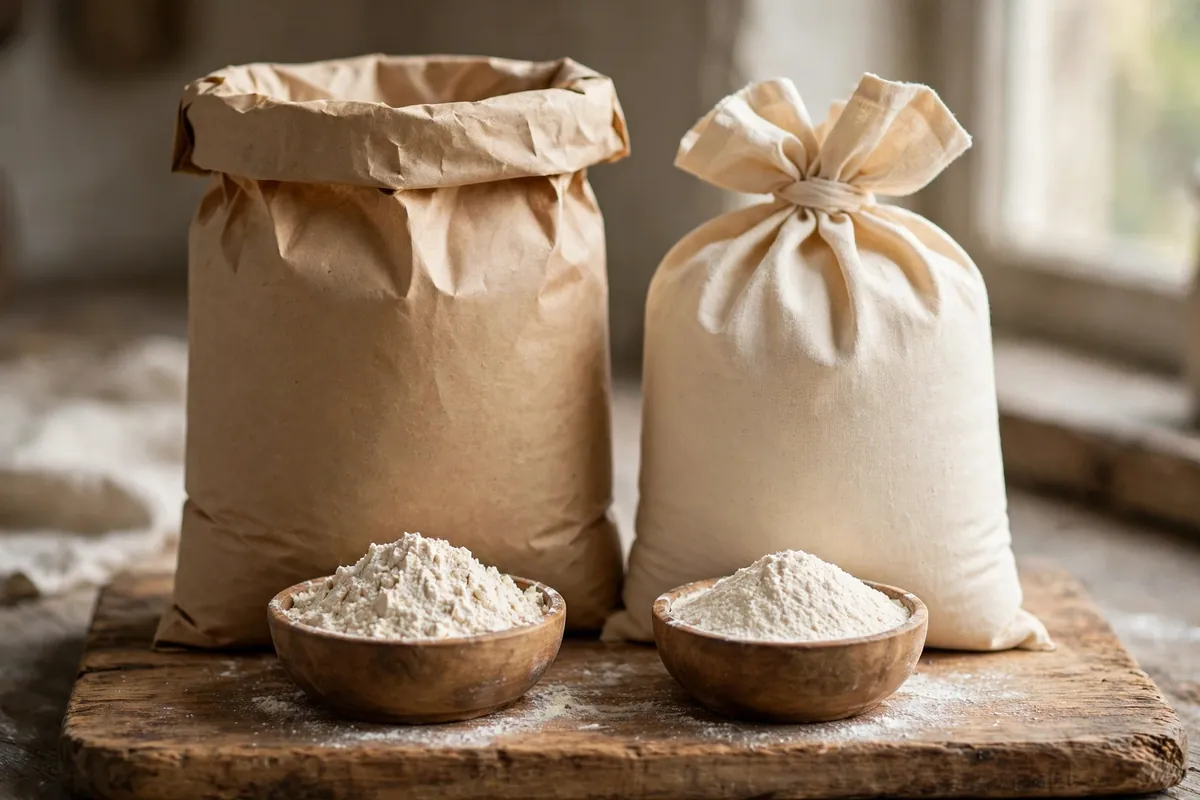
Walk into any baking aisle and the flour choice looks simple: bread flour for bread, all-purpose for everything else. But every experienced baker has a story of the “wrong” flour working fine — chewy cookies from bread flour, perfectly good loaves from all-purpose. So when does it actually matter? The same recipes with both flours, side by side, give the honest answer: it matters enormously in some bakes, barely at all in others, and knowing which is which saves you both money and disappointment.
Quick diagnosis: The difference is protein: bread flour runs 12–14%, all-purpose 10–12%. More protein = more gluten = chewier, stronger structure. It matters most in lean yeast breads and pizza (use bread flour), matters least in cookies and quick breads (all-purpose is fine), and reverses for cakes (all-purpose beats bread flour — never use bread flour for cake).
What the numbers actually mean
Protein percentage is the whole story. When flour meets water, two proteins (glutenin and gliadin) link into gluten — the elastic network that traps gas in bread and gives chew to pizza. More protein means more gluten potential:
| Flour | Protein | Best for |
|---|---|---|
| Bread flour | 12–14% | Lean breads, pizza, bagels — maximum chew and structure |
| All-purpose flour | 10–12% | The middle ground — works for most things, ideal for few |
| Cake flour | 7–9% | Tender cakes — minimal gluten by design |
| Whole wheat | ~13–14% | Hearty flavor, but bran cuts gluten strands (behaves weaker than its number) |
Note the overlap: a strong all-purpose at 11.5% (like King Arthur’s) is closer to bread flour than to a soft Southern all-purpose at 9%. Brand matters as much as label — check the nutrition panel: protein grams per 30g serving × 3.33 ≈ protein percentage.
When bread flour wins (use it here)
Lean yeast breads and sourdough. This is bread flour’s home turf. At 70%+ hydration, the dough needs maximum gluten strength to hold its shape and trap gas — all-purpose at high hydration goes slack and spreads (the focaccia problem: Why Is My Focaccia Flat?). For bagels, which need extreme chew, bread flour isn’t optional, it’s the recipe (see Why Do My Bagels Deflate?).
Pizza dough. Chew is the entire point of good pizza crust — that pull, that char-spotted cornicione. Bread flour’s extra gluten gives you the extensibility for thin stretching without tearing and the chew after a hot bake. All-purpose pizza is fine; bread-flour pizza is better in a way you can taste.
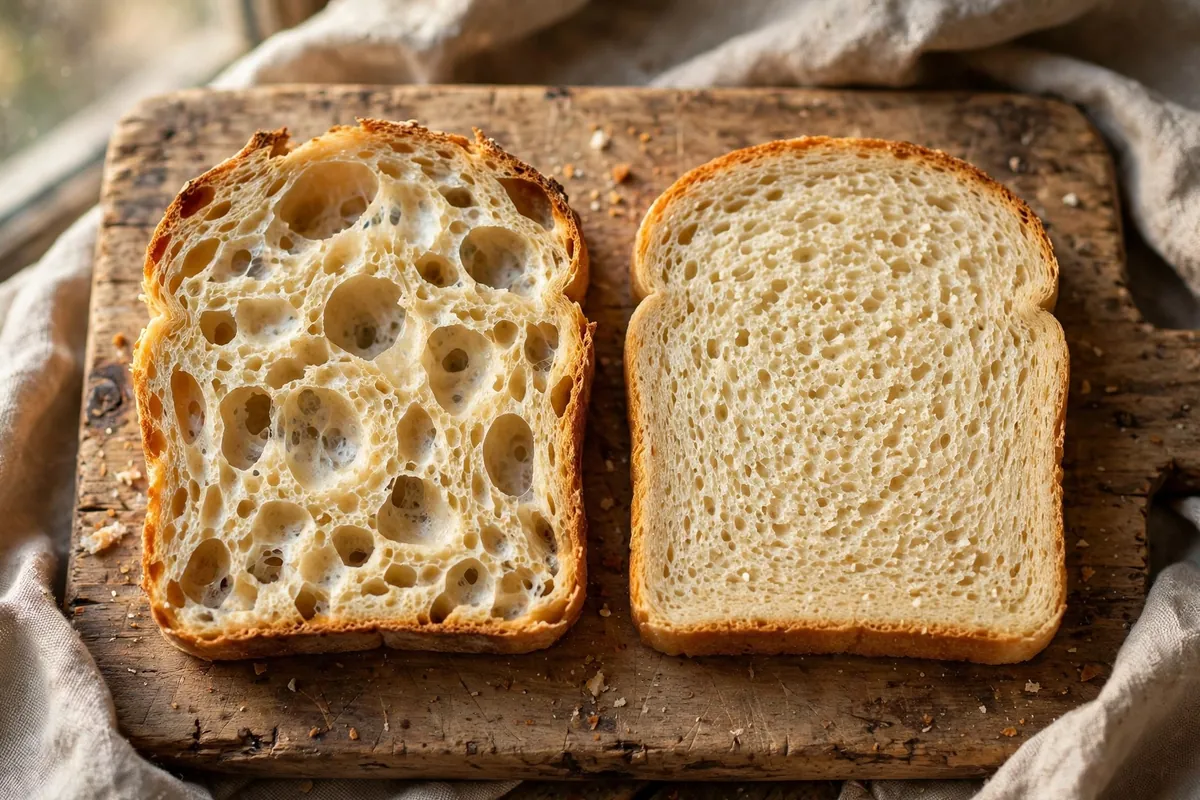
Why it works: more gluten = stronger gas-trapping net = taller rise, chewier crumb, better structure. In my side-by-side sourdough tests, the bread-flour loaf consistently rose 15–20% higher with a more open crumb than the identical all-purpose loaf.
When all-purpose wins (bread flour hurts here)
Cakes. This is the big reversal. Cake wants tenderness — minimal gluten. Bread flour in cake builds a strong, elastic network that reads as tough, rubbery, dry crumb. It’s the fastest way to ruin a cake’s texture. Use all-purpose (or cake flour for the most delicate cakes). Never use bread flour for cake — there is no recipe where it’s the right call. (Tough crumb has many causes beyond flour: Why Is My Cake Dry?.)
Pie crust and biscuits. Flaky pastry wants gluten development kept to a minimum — that’s the whole game of cutting in cold fat and handling gently. Bread flour fights you: tougher dough, less flake, more shrinkage. All-purpose is correct here, full stop.
How to tell you’ve used the wrong one: the crumb is tough and bready in something meant to be tender, or the dough fought back excessively during gentle handling.
When it barely matters (save your money)
Cookies. Most cookie recipes are low-moisture, high-fat, short-mix affairs — there’s barely enough gluten development for the flour choice to register. In blind tests, bread-flour vs all-purpose chocolate chip cookies are distinguishable (the bread-flour version is slightly chewier) but both are delicious. If chew is your goal, bread flour is actually a legitimate cookie hack — many “chewy cookie” recipes specify it deliberately.
Quick breads and muffins. Banana bread, zucchini bread, muffins — the batter is mixed briefly, the fat is high, and the texture goal is tender-moist, not chewy. All-purpose is the default and bread flour gains you nothing (arguably risks toughness if overmixed — but the mixing, not the flour, is the real variable: Why Are My Muffins Tough?).
Pancakes and waffles. Same logic: minimal gluten development, high fat/liquid. All-purpose always.
The substitution rules
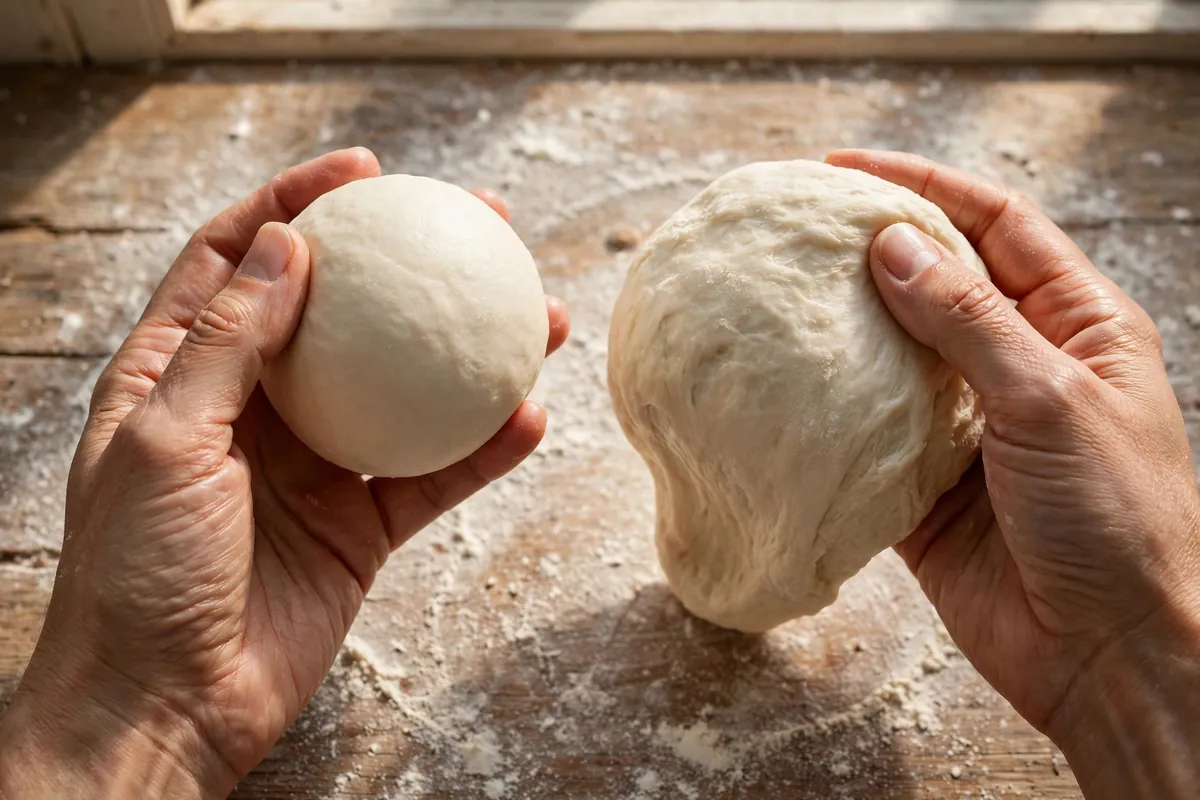
All-purpose → bread flour (need chew, have AP): works in most bread recipes with slightly less rise and chew. For pizza and lean breads, expect ~10–15% less volume. Bump hydration down 1–2% if the dough feels slack.
Bread flour → all-purpose (recipe calls for bread flour): the most common real-world swap. Works fine for enriched breads (brioche, sandwich loaves), rolls, and no-knead bread (the long ferment compensates). For bagels and high-hydration sourdough, expect a real quality drop — this is where buying the right bag matters.
The vital wheat gluten trick: 1 tablespoon of vital wheat gluten per cup of all-purpose flour ≈ converts it to bread flour (adds ~2–3% protein). If you bake bread occasionally and don’t want a second bag, this is the economical answer. Mix it thoroughly into the dry flour before adding liquid. Worked example: 3 cups all-purpose flour (360g) + 3 tablespoons vital wheat gluten gives you roughly the protein of bread flour — close enough for sandwich loaves, pizza, and no-knead bread. For bagels, still buy the real thing.
What about “00” flour? Italian “00” refers to grind fineness, not protein — 00 pizza flour (like Caputo) is typically 12–13% protein and excellent for pizza; 00 pastry flour is low-protein. Read the protein, not the 00.
Frequently asked questions
Can I use bread flour for cookies?
Yes — and for chewy-style cookies it’s arguably better. Expect slightly thicker, chewier results. For crisp thin cookies, stick with all-purpose. Either way, measure by weight (120g per cup).
Why did my bread-flour cake turn out tough?
The extra protein built too much gluten — exactly what bread flour is designed to do, and exactly wrong for cake. There’s no fix after baking; for next time, use all-purpose or cake flour. (More cake texture rescue: Overbaked Cake? 5 Rescue Methods.)
Is King Arthur all-purpose basically bread flour?
Close — at 11.7% protein it’s the strongest widely available AP and performs near bread-flour level in most breads. Many bakers use it as their only flour. But true bread flour (12.7%+) still wins for bagels and high-hydration sourdough.
Does flour go bad? Which should I store?
White flour keeps 6–8 months at cool room temperature, a year+ in the freezer. Whole wheat goes rancid faster (3 months room temp — the oils in the bran oxidize). If you bake bread weekly, keep bread flour; if occasionally, keep all-purpose + a bag of vital wheat gluten.
Can I mix bread flour and all-purpose?
Absolutely — a 50/50 blend gives you ~11.5–12% protein, a fine middle ground for everyday bread. Many bakeries blend for specific products. There’s no rule against it.
Is it safe to eat raw flour?
No — raw flour can carry bacteria (it’s the reason cookie-dough warnings exist as much as the eggs). Heat-treat flour for edible cookie dough: microwave to 165°F (74°C) or bake 5 minutes at 350°F (175°C).
Related troubleshooting: Why Is My Bread Dense? · Why Do My Cookies Spread Flat? · Why Is My Focaccia Flat?