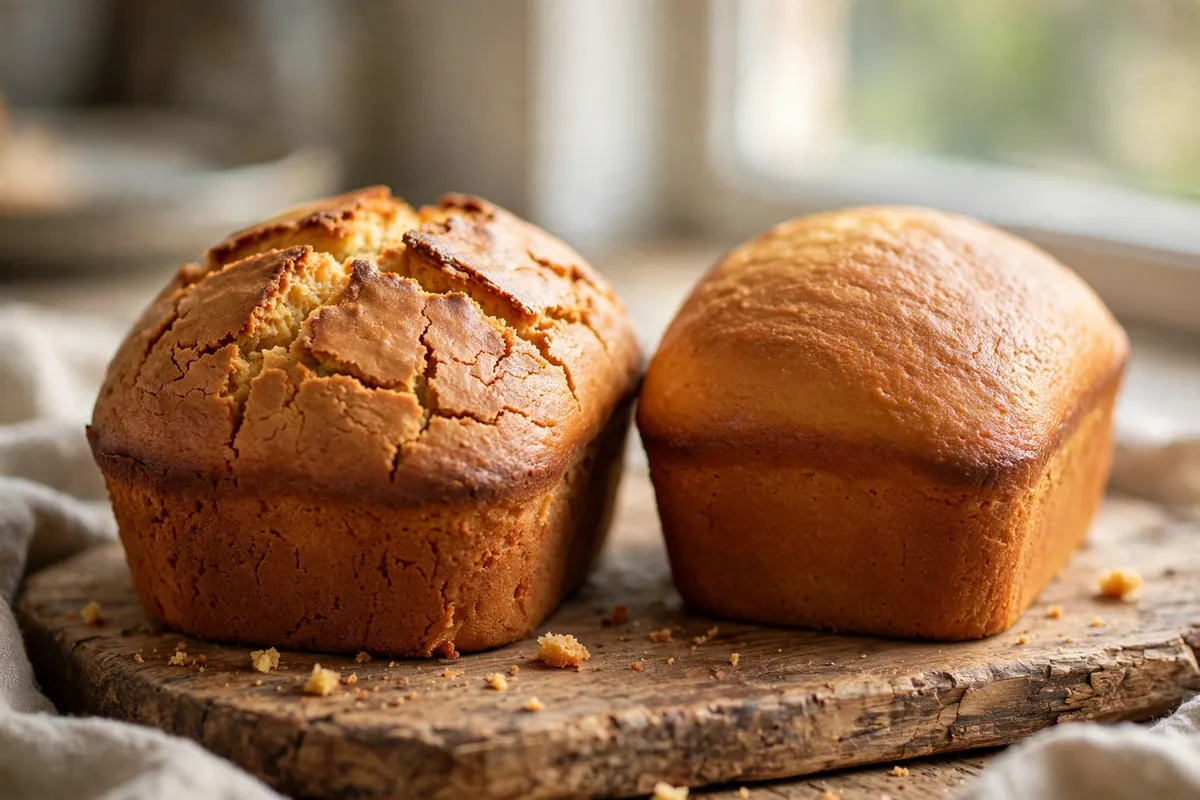
Your pound cake came out with a proud crack down the middle of the dome. First thing to know: in many traditions that crack isn’t a flaw — it’s the signature. Classic pound cakes are supposed to split. But if yours is a canyon, or you’d simply prefer a smooth top, the causes are well understood and fixable.
Quick diagnosis: A cracked pound cake top almost always means the oven was too hot — the crust set before the center finished rising, so the rising batter split the crust open. Too much leavening and an overfilled pan are the runners-up. A thin, even crack is normal and fine; a deep jagged split means adjusting heat, leavening, or pan size.
Why pound cakes crack (the mechanism)
Pound cake batter is heavy — a pound each of butter, sugar, eggs, and flour, traditionally. In the oven, the batter rises from the center outward while the top surface begins to set into a crust. If the crust sets before the center finishes expanding, the still-rising middle has nowhere to go but through the crust: crack. Everything below is a lever on that timing — slow the crust-setting, calm the rise, and the top stays smooth.
1. The oven was too hot
The most common cause. At too high a heat, the outer batter — including the top surface — sets into a firm crust in the first 15 minutes while the insulated center is still cool and rising. The center keeps expanding for another 30 minutes against a crust that can’t stretch: it splits.
How to tell: The crack is deep and wide, the crust dark and thick. Everything you bake seems to brown fast.
The fix: Pound cake wants 325°F (163°C), not 350°F — verify with a thermometer, since most ovens run hot and “a little hot” is enough with rich batter. Full preheat, center rack, and keep the door shut for the first 30 minutes.
2. Too much leavening
Extra baking powder means extra lift, and extra lift means more pressure against the crust. Many modern pound cake recipes add leavening the traditional formula never had — and then add a little more “to be safe.” That safety margin is your crack.
How to tell: The recipe called for more than about ½ teaspoon baking powder per 2 cups of flour, or you added “a bit extra” for insurance.
The fix: Keep leavening modest — the eggs do most of the lifting already. If the recipe is otherwise reliable, cut the baking powder by a quarter and compare. (For the leavening science in detail, see Why Did My Cake Sink in the Middle? — same forces, opposite outcome.)
3. The batter was overbeaten after the flour went in
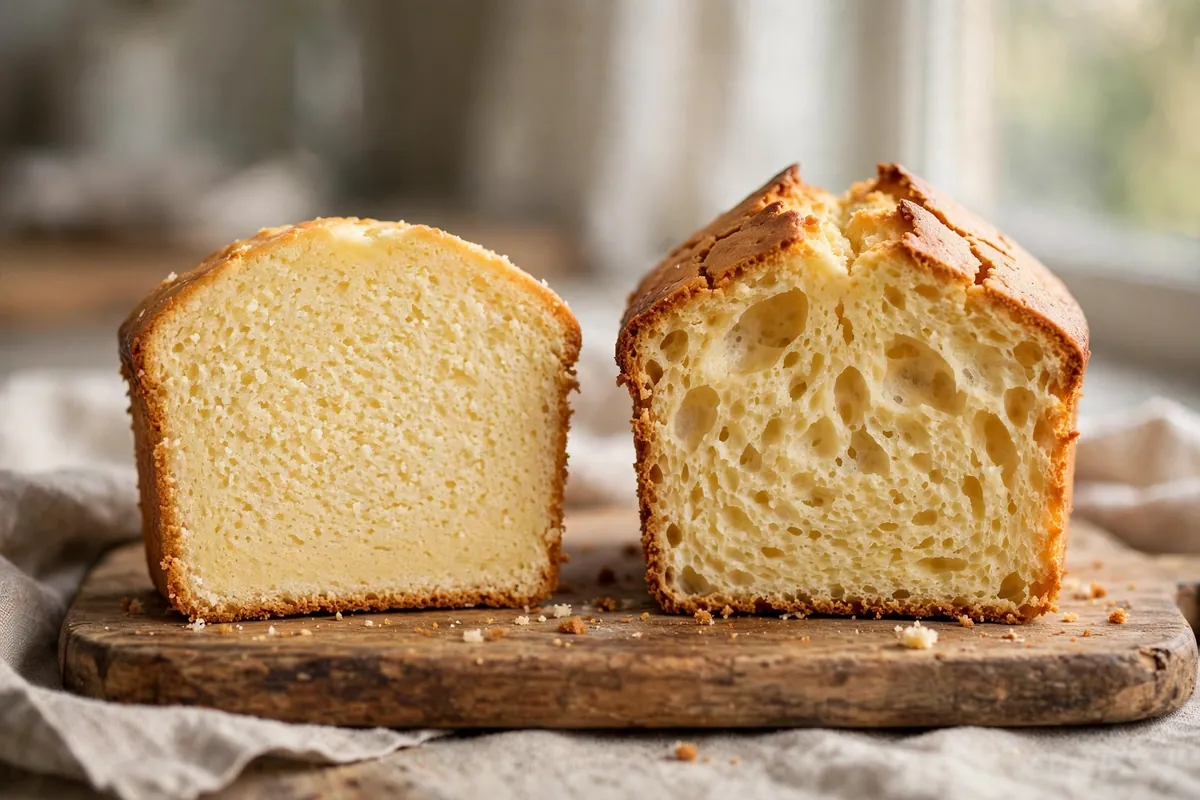
Creaming butter and sugar vigorously is correct — that’s where pound cake gets its fine texture. But once flour enters the bowl, the rules change: beating develops gluten and whips in air, both of which add lift the crust then has to contain. An over-aerated batter rises aggressively and splits.
How to tell: You beat the finished batter until it was fluffy and voluminous rather than just combined, or the crumb has tunnels.
The fix: Cream butter and sugar 3–4 minutes until light — that’s the aeration stage, and it belongs before the flour. After flour goes in, mix on low just until it disappears, then finish by hand. Two different stages, two different intensities.
4. The pan was too small or overfilled
Batter needs headroom. Fill a loaf pan more than about two-thirds full and the batter has to rise up rather than out — a tall, fast rise against a setting crust, which is exactly the crack recipe. A pan that’s too small also insulates the center, stretching the timing gap between crust and middle.
How to tell: The batter came close to the rim, the loaf domed dramatically above the pan, and the crack runs the full length.
The fix: Fill pans no more than two-thirds full; if there’s extra batter, make a few cupcakes on the side. Use the pan size the recipe specifies — a 9×5 loaf pan is standard for most pound cake recipes, and “close enough” pans change the geometry more than you’d think.
5. Cold ingredients, hot oven (thermal shock)
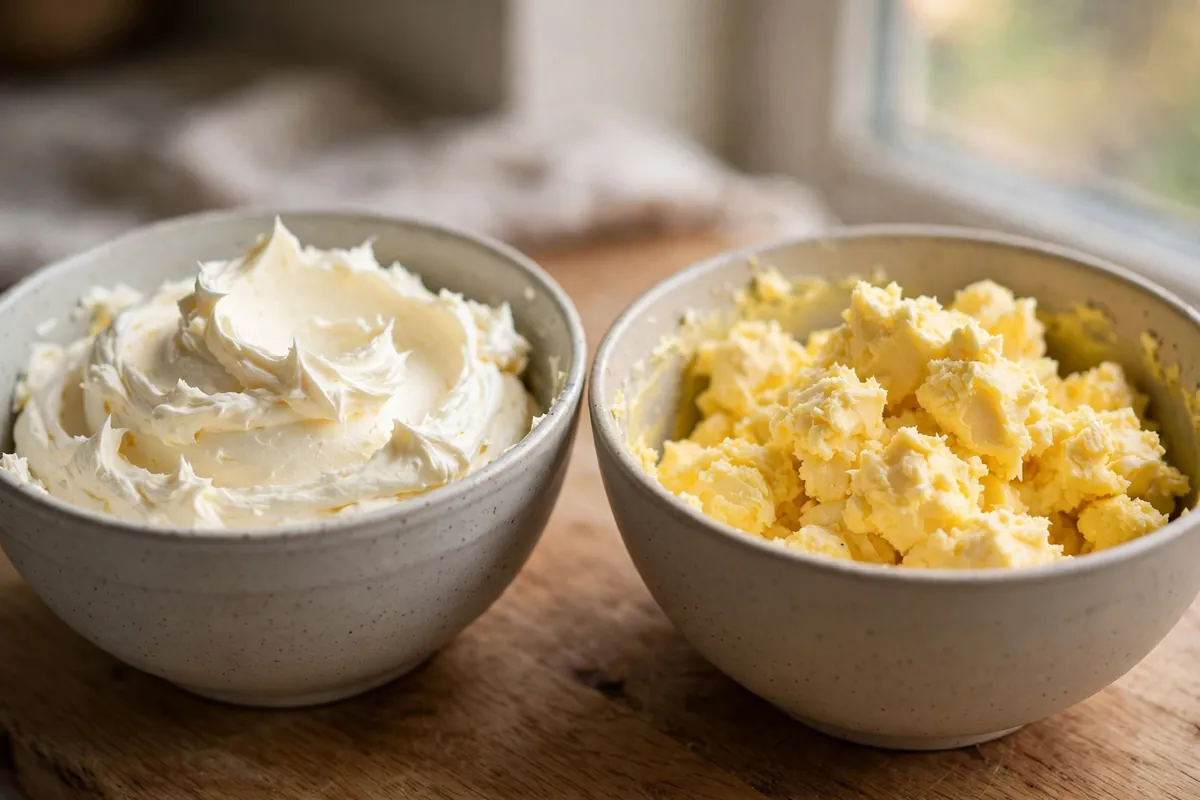
Butter straight from the fridge and eggs straight from the carton make a batter that goes into the oven cold and uneven. The outside heats and sets fast while the cold center lags — widening the crust-vs-center timing gap that causes the split.
How to tell: You creamed cold butter (it never got truly fluffy) or added fridge-cold eggs that curdled the batter.
The fix: Room-temperature everything: butter at 65–68°F (18–20°C) — cool to the touch, holding its shape, giving slightly when pressed. Eggs on the counter 30 minutes before baking. The batter should be smooth and emulsified going into the pan, not curdled or lumpy.
When the crack is fine (embrace it)
A thin, even crack down the center is traditional — many bakeries consider it the mark of a real pound cake, proof of a proper rise and the dense, rich crumb the style promises. If flavor and texture are right, the crack is character, not failure. Dust with powdered sugar and serve it proudly.
The smooth-top checklist
- True 325°F (163°C) — verify with a thermometer.
- Modest leavening — eggs do the heavy lifting.
- Cream hard before flour; barely mix after.
- Fill the pan two-thirds max; right pan size.
- Room-temperature butter (65–68°F / 18–20°C) and eggs.
Frequently asked questions
Is a cracked pound cake ruined?
No — not even close. A crack is cosmetic. If the crumb is moist and the flavor is right, slice it and serve it; nobody at the table will care, and many will consider it authentic. Only a crack accompanied by a raw, sunken center is a real problem (that’s underbaking, not cracking).
Can I fix a crack after baking?
You can hide it, which is usually enough: dust generously with powdered sugar, glaze it, or frost it. A simple lemon glaze poured over the warm cake settles into the crack and turns it into a feature. You can’t un-crack it, but you can absolutely make it beautiful.
Why does my pound cake crack every single time?
A systematic crack points to a systematic cause — and the most likely one is an oven running hot. Verify with a thermometer before changing anything else. If the oven is true and it still cracks, cut the leavening by a quarter next bake.
Should I use a tube pan instead of a loaf pan?
A tube or Bundt pan actually reduces cracking: the center tube conducts heat into the middle of the batter, so crust and center set more evenly. If you love pound cake but hate the crack, a tube pan is the structural fix. Just grease and flour every crevice.
Does altitude make pound cakes crack more?
Yes — at altitude, lower air pressure means faster rising and drier air means faster crust-setting: both sides of the crack equation get worse. See High-Altitude Baking Adjustments for the full correction (less leavening, slightly higher temp, more liquid).
My crack has raw batter in it — what happened?
That’s not just cracking; the center didn’t finish baking. The crust set and split while the middle was still liquid — usually a too-hot oven plus underbaking. Next time, lower the heat to a true 325°F (163°C) and give it the full time; a skewer should come out with moist crumbs, not wet batter.
Related troubleshooting: Cake Domed and Cracked on Top · Why Did My Cake Sink in the Middle? · Why Is My Cake Dry?