Bread Crust Too Hard (or Too Soft)? How to Control It
Quick diagnosis: Crust texture is controlled by four variables: dough formula (lean vs enriched), steam, oven heat, and cooling. Too hard? You likely baked a lean dough hot with steam and cooled it uncovered — the artisan formula. Too soft? Your dough probably contains fat, sugar, or dairy, or the loaf cooled covered/trapped in steam. Identify which side you’re on below, then adjust the matching variables.
Crust isn’t luck — it’s physics and formula. Once you understand the four levers, you can produce a shattering baguette crust or a pillowy sandwich crust on demand, from the same basic dough with small adjustments. Once these variables are mapped, “crust roulette” ends permanently.
The four levers of crust texture
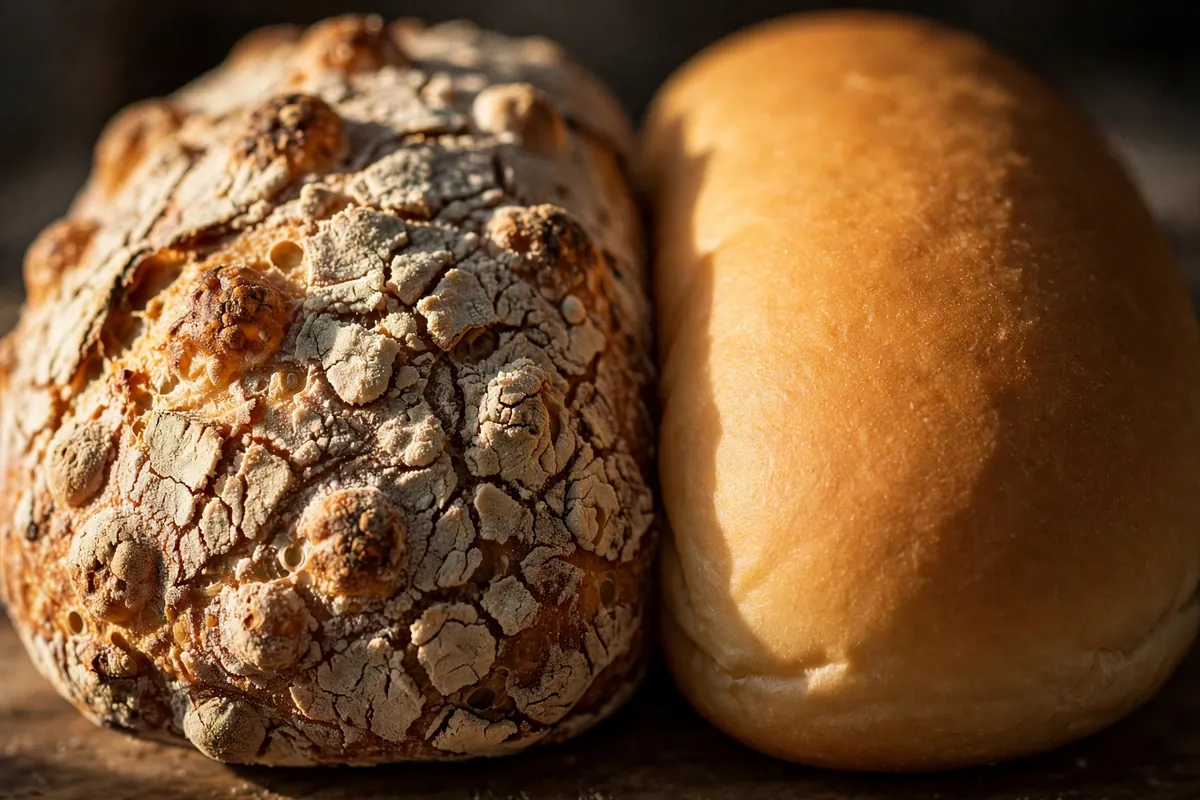
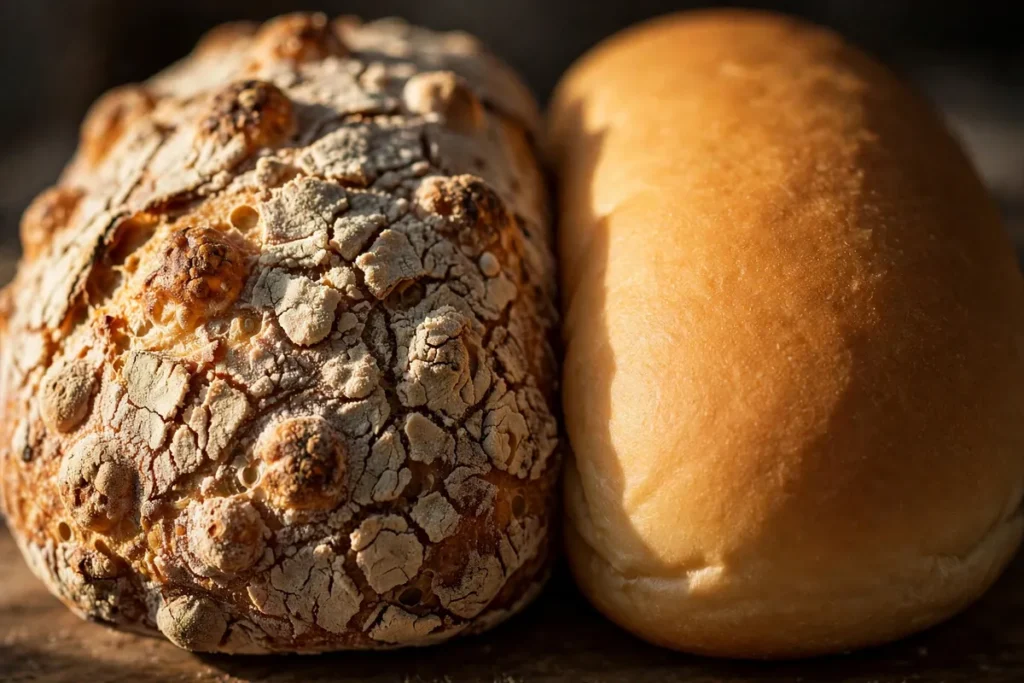
1. Formula: lean vs enriched. Lean doughs (flour, water, salt, yeast — baguettes, sourdough, ciabatta) bake into crisp, crackly crusts. Enriched doughs (with fat, sugar, eggs, or dairy — brioche, sandwich bread, dinner rolls) bake into soft, tender crusts, because fat and sugar interfere with crust formation and keep it pliable.
2. Steam. Steam in the first 10–15 minutes of baking keeps the crust surface moist and elastic while the loaf expands, then it needs to vent off so the crust can dry and crisp. Steam = thinner, crisper crust. No steam = thicker, chewier, often harder crust.
3. Oven heat and bake length. Hotter ovens and longer bakes drive more moisture out of the crust — crisper and harder. Cooler, shorter bakes leave more moisture — softer.
4. Cooling and storage. A loaf cooled uncovered on a rack keeps its crisp crust. A loaf covered while warm, or stored in plastic, traps steam and softens the crust within hours.
If your crust is too hard
A crust that’s jaw-breakingly hard (rather than pleasantly crisp) usually means one of these:
The bake was too hot or too long for the formula. Dark, thick, hard crust on what should be a soft loaf? Drop the temperature 15–25°F and pull the loaf when the internal temp hits 190–200°F (88–93°C) rather than baking by color alone. Enriched loaves are done at lower internal temps than lean ones.
No enrichment in a soft-crust recipe. If your sandwich bread crust could break teeth, add tenderness: brush the dough with milk before baking, or enrich the formula slightly — even 2–3% butter or oil (by flour weight) noticeably softens crust.
It cooled uncovered for too long. For soft-crust breads, cover the loaf with a clean kitchen towel as soon as it comes out of the oven. The trapped residual steam softens the crust as it cools — this single step transforms sandwich bread.
The fix that always works for soft crust: brush the hot loaf with melted butter the moment it leaves the oven, then cover with a towel until cool. Buttery, soft, golden — every time.

If your crust is too soft (and you wanted crisp)
A flabby, soft crust on what should be crackly artisan bread means moisture never left the party:
Not enough initial heat. Crust crispness starts with a fully preheated oven — a full 30–45 minutes for artisan loaves, longer with a baking stone or steel. An under-preheated oven gives a pale, soft, thick crust. Use an oven thermometer; most home ovens run 25–50°F cool.
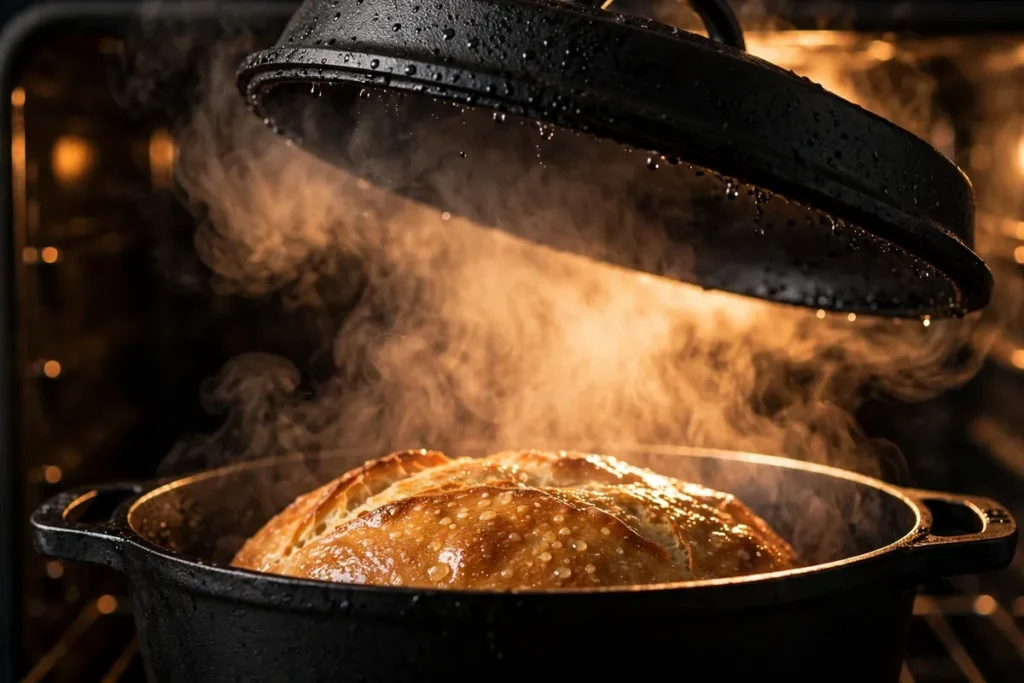
No steam. For lean artisan loaves, steam is non-negotiable: bake in a covered Dutch oven for the first 20 minutes, or add a tray of boiling water to the oven floor (and spritz the loaf). Then uncover/vent for the final 15–25 minutes so the crust dries and sets crisp.
Under-baking. A crust that’s merely golden is often still moisture-laden. Artisan loaves should bake to a deep mahogany — darker than feels safe. That deep color is caramelized, dehydrated crust: the crispness itself. Verify 200–210°F (93–99°C) internal temp so you can bake boldly without fear.
Cooled or stored wrong. Cool artisan bread uncovered on a wire rack — never wrapped, never in plastic. Store cut-side down on a board or in a paper bag for day one. Plastic bags are crust killers: within hours, migrating moisture turns crackle to chew.
The cooling rules (memorize these)
- Want crisp? Rack, uncovered, room air. Slice only after 1–2 hours.
- Want soft? Towel over the loaf (or butter-brush + towel) until fully cool.
- Day-two crisp revival: 5–10 minutes in a 350°F (175°C) oven re-crisp any softened artisan loaf. Spritz lightly with water first for extra crackle.
- Never refrigerate bread (unless it’s a rich dough) — cold accelerates staling and ruins crust texture faster than anything except plastic wrap.
Frequently asked questions
Why did my crust go soft overnight?
Moisture migration. Water moves from the moist crumb into the dry crust until they equalize — physics, not failure. Store artisan loaves cut-side down or in paper (never plastic) and re-crisp in a hot oven before serving.
How do I get a shiny crust?
Egg wash (one egg beaten with a tablespoon of water or milk), brushed on before baking, gives a deep glossy brown. For shine without richness, a cornstarch glaze — 1 teaspoon cornstarch boiled in ½ cup water, brushed on hot out of the oven — gives a bakery-window gleam.
Why is my baguette crust chewy instead of crisp?
Almost always insufficient steam or heat. Baguettes need a ripping-hot oven (475°F / 245°C), real steam for the first 10 minutes, and a bake dark enough to fully dehydrate the crust. A pale baguette is a chewy baguette.
Can I soften an already-baked hard crust?
Somewhat. Wrap the loaf in a barely damp towel for 20–30 minutes, or warm it in a 300°F (150°C) oven wrapped in foil. It won’t become pillowy, but it takes the weapon-edge off. Next time, use the butter-and-towel method from the start.
Does scoring affect the crust?
Indirectly, yes. Proper scoring lets the loaf expand fully in the oven’s first minutes, which gives an even, thin crust. An unscored or poorly scored loaf bursts unpredictably, creating thick, hard ridges where it tore. Score ¼-inch deep at a shallow angle just before baking.
Related troubleshooting: Why Is My Bread Dense? · Why Didn’t My Bread Rise? · Why Is My Sourdough Gummy Inside?