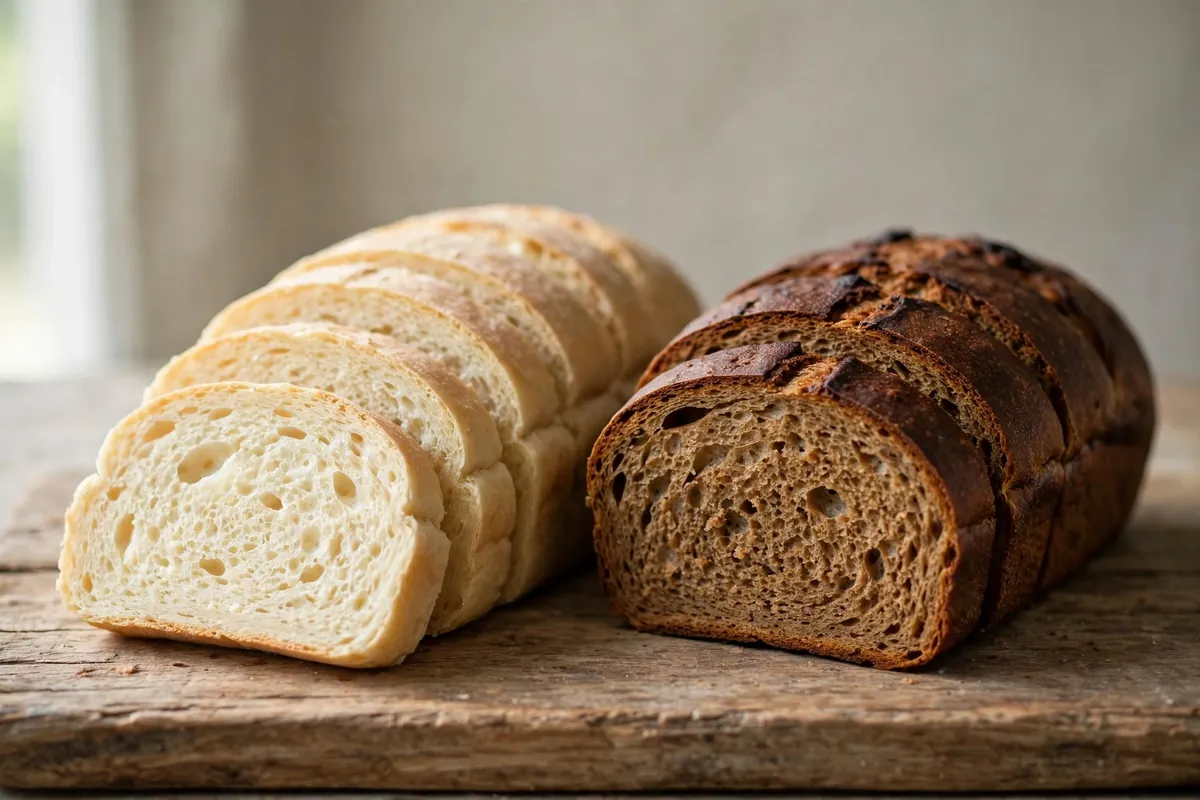
Your bread tastes fine — good crumb, good rise — but the loaf came out looking anemic: pale, blonde, soft. A pale crust isn’t just cosmetic: browning is flavor. The same reactions that paint the crust golden-brown create hundreds of flavor compounds, so a pale loaf genuinely tastes blander than a well-browned one. The fix is understanding what browning actually needs, because it’s a short list: heat, sugar, protein, and a dry surface.
Quick diagnosis: Pale crusts come down to oven temperature more than anything. If your oven runs cool — and most do — the crust never gets hot enough for browning reactions to fire. Check cause #1 first. If your oven is accurate but the loaf is a lean dough (flour, water, salt, yeast only), it simply has less browning fuel — see cause #3.
What browning actually is (the 60-second science)
Two reactions brown crust. Maillard — amino acids reacting with sugars — starts around 285°F (140°C) at the surface, creating deep brown color and savory flavor. Caramelization — sugars breaking down — needs roughly 330°F (165°C) and up, adding sweetness and dark color. Both need the crust surface genuinely hot and dry. Anything keeping it cool or wet — a cool oven, too much steam, a wet surface — delays browning. That’s the diagnostic framework: find what’s keeping your crust cool, wet, or fuel-starved.
1. The oven wasn’t hot enough (or wasn’t actually preheated)
This is the cause behind most pale loaves. Browning needs the crust surface to exceed 285°F (140°C), and that only happens if the oven air is genuinely at the set temperature — with the baking stone or steel fully saturated with heat. An oven that’s “preheated” for 5 minutes after the beep is lying: the air might be near temp, but the walls and stone are still cool, and they suck heat off your loaf in the first critical minutes.
How to tell: The loaf took longer than the recipe said and the crust is uniformly pale, bottom included — a generally cool bake.
The fix: Preheat a full 30–45 minutes with your stone or steel inside from the start, and verify with an oven thermometer — most home ovens run 15–25°F cool. Preheat 45 minutes and trust the thermometer instead of the dial — crusts go from blonde to bakery-brown in one bake. Bake lean loaves at a true 450–475°F (230–245°C); sugary enriched doughs do well at 375–400°F (190–200°C).
2. Too much steam, for too long
Steam is essential for oven spring — it keeps the crust soft and expandable for the first minutes of the bake. But steam is the enemy of browning: a wet surface can’t exceed 212°F (100°C) until the water evaporates. If your steam source keeps pumping moisture for the whole bake — a covered Dutch oven you never uncover, a pan of water you never remove — the crust stays pale because it never gets hot and dry enough to brown.
How to tell: Great oven spring but a pale, leathery crust — baked covered the whole time, or the steam pan stayed in.
The fix: Steam is a first-act tool only: bake covered for the first 20 minutes, then uncover for the rest — the second half is when browning happens. Remove water pans after 15–20 minutes. The loaf should spend at least half its bake in dry heat. (Steam timing is also behind crust texture problems — see Is My Bread Crust Too Hard or Too Soft?.)
3. Lean doughs have less browning fuel
A lean dough — flour, water, salt, yeast — has very little sugar and modest protein. There’s simply less raw material for Maillard and caramelization. That’s why a baguette needs a screaming-hot oven to brown at all, while a brioche turns golden at moderate heat: the brioche brings sugar, milk protein, and egg to the browning party.
How to tell: Your oven is accurate and enriched breads brown fine, but lean loaves (baguette, sourdough, pizza dough) stay pale.
The fix: Give lean doughs browning help. A teaspoon of sugar or malt powder per 500g flour adds fuel without noticeable sweetness — diastatic malt is the professional’s secret. Longer fermentation helps too: enzymes break starches into sugars over time, so a cold-retarded dough browns better than a rushed same-day one.
4. You skipped the wash — the easiest color there is
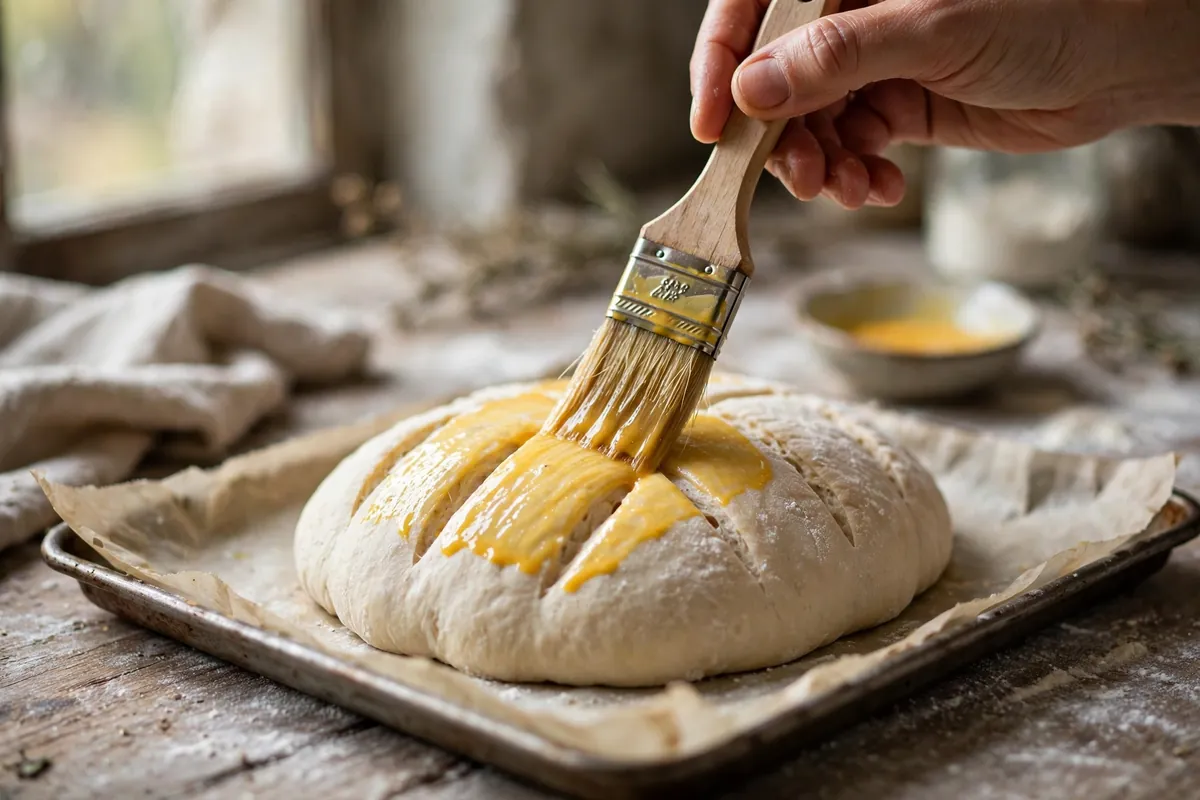
A wash on the crust surface is the single fastest way to add color, and different washes give different results. This is the fix when everything else is right but you want deeper, richer, shinier color.
The wash lineup, tested: Whole egg plus a splash of water: deep golden-brown with shine — the all-rounder. Yolk only: the darkest mahogany — my pick for brioche. Milk or cream: soft matte gold for sandwich loaves. Melted butter: gentle browning, soft crust. Sugar-water glaze (1 tablespoon sugar in 2 tablespoons hot water): boosts caramelization on lean doughs.
How to tell: The loaf is evenly baked and tastes right, but the color is flat and matte — it looks “unfinished.”
The fix: Brush thinly and evenly just before baking — puddles of egg bake rubbery. For lean artisan loaves, the sugar-water trick or malt in the dough (cause #3) looks more natural.
5. Underbaked — pulled before the color developed
Color develops late in the bake. A loaf pulled 10 minutes early can look dramatically paler than its fully-baked twin, because the last stretch of baking is when surface temperature peaks and browning accelerates. If you’re judging doneness by time alone, you’re probably pulling early.
How to tell: The crust is pale and soft rather than crisp, and the loaf feels light for its size. The bottom doesn’t sound hollow when thumped.
The fix: Bake to internal temperature, not the clock: 200–210°F (93–99°C) for lean artisan loaves, 190–200°F (88–93°C) for enriched breads. A done loaf is deeply colored, sounds hollow when thumped, and feels firm. When in doubt, give it 5 more minutes — darker is almost always better eating than pale. (Full doneness guide: How to Tell When Bread Is Done.)
Putting it together: my browning checklist
Before every bake: oven preheated 45 minutes with the stone in? Thermometer reading true? Steam only for the first 20 minutes? Wash applied (or malt in the dough)? Baking to internal temp, not the timer? When all five check out, pale crusts simply don’t happen. The one I forget most is the preheat — boring, passive, and more important than any wash or sugar trick.

Frequently asked questions
Does a pale crust mean my bread is underbaked?
Not necessarily — a loaf can be fully baked inside and pale outside. But paleness plus a soft crust and light weight means underbaked: check 200–210°F (93–99°C) internally for lean loaves.
Egg wash vs. milk wash — which browns better?
Egg wash, clearly — its protein and fat drive strong Maillard browning plus shine. Milk gives a softer matte gold; yolk-only gives maximum color.
Can I still eat pale bread?
Absolutely — safe and fine-tasting, just milder. Toasting slices browns them after the fact.
Why did only the top stay pale but the bottom browned?
Weak top element or the loaf sat too low — move to the upper-middle rack. A baking stone shields the bottom while top heat works.
Will sugar in dough make my bread sweet?
No — a teaspoon or two per loaf feeds browning and yeast without perceptible sweetness, and diastatic malt adds browning with zero sweetness.
Does whole wheat bread brown differently?
Yes — higher protein and minerals make it brown faster and darker. What looks “not done yet” on white bread is often already perfect on whole wheat.
Related troubleshooting: Is My Bread Crust Too Hard or Too Soft? · How to Tell When Bread Is Done · Why Is My Bread Dense?