How to Tell When Bread Is Done: Internal Temps and the Thump Test
Quick diagnosis: The only sure test is internal temperature — 190–210°F (88–99°C) in the center, measured with an instant-read thermometer. Lean artisan loaves: 200–210°F. Soft sandwich loaves: 190–200°F. No thermometer? Thump the bottom — a deep hollow sound means done; a dull thud means give it more time.
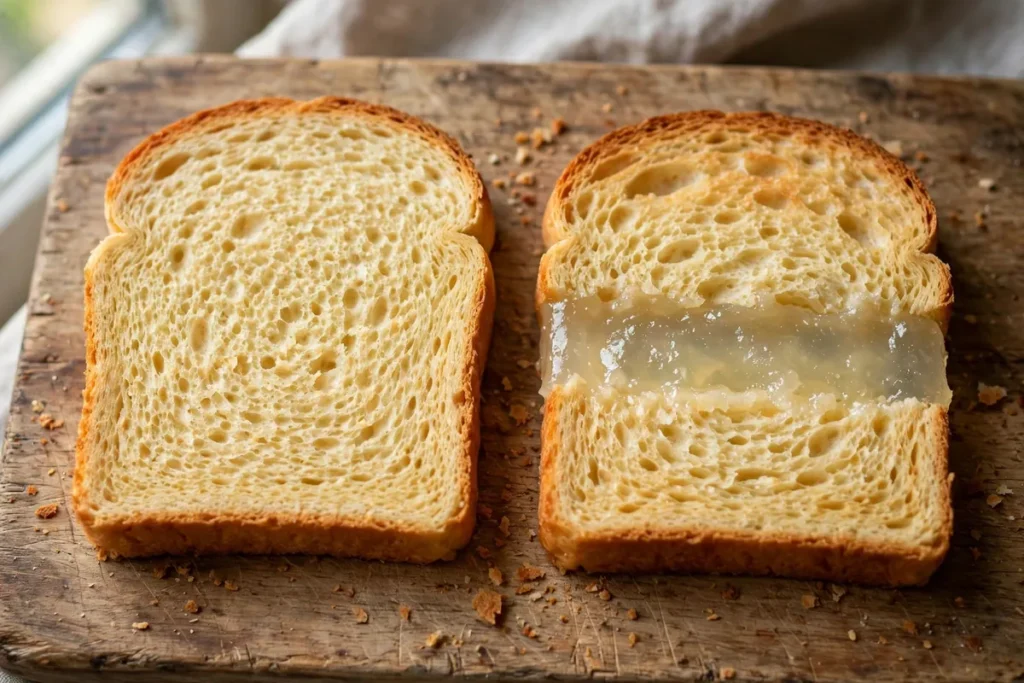
Every baker has pulled a gorgeous, deeply browned loaf from the oven, sliced it open, and found a gummy, underbaked stripe through the middle. Crust color lies. The outside can look perfect while the inside is still raw — because browning is about surface heat, and doneness is about the center reaching temperature. Here are the tests that don’t lie, in order of reliability.
1. Internal temperature (the gold standard)
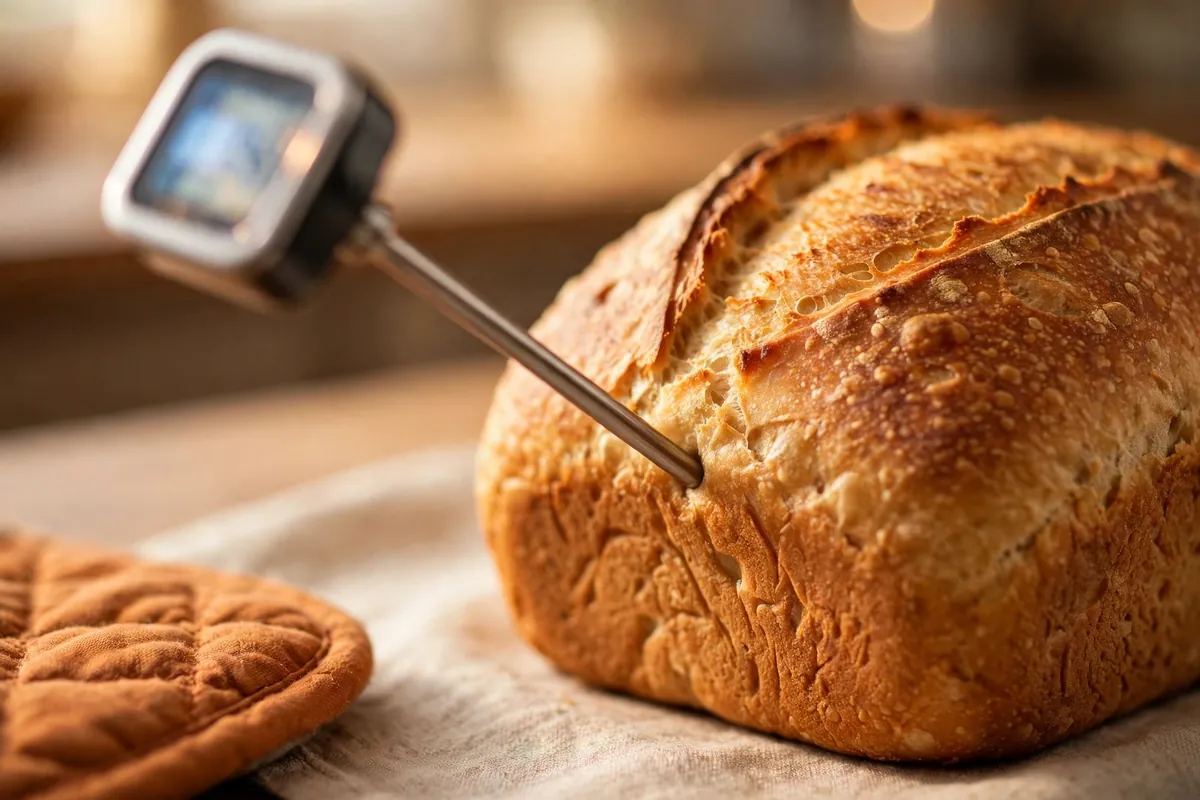
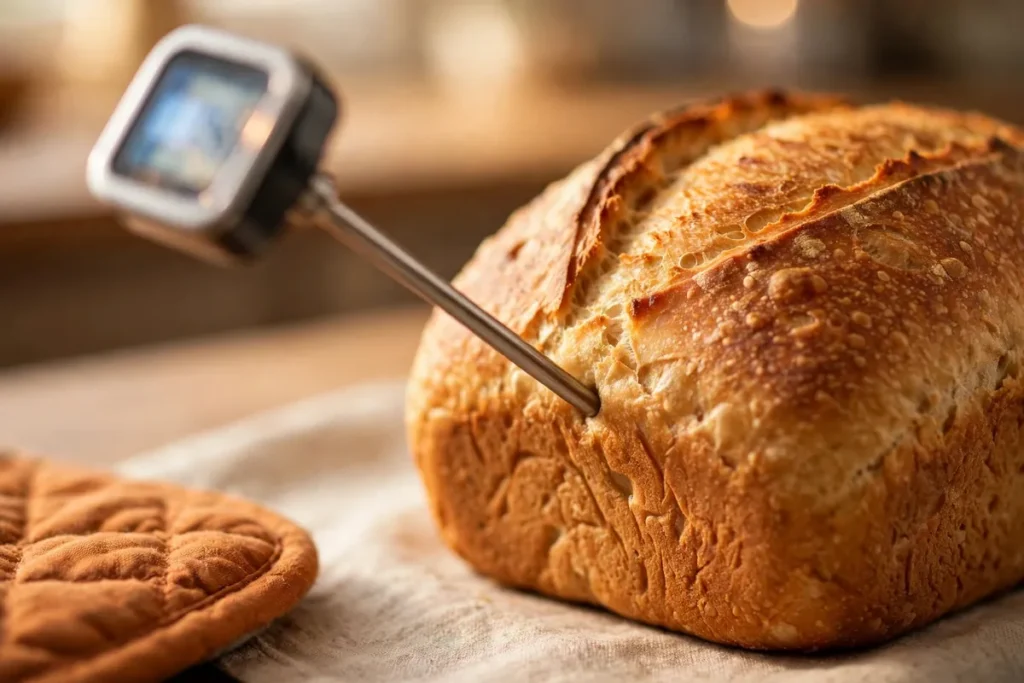
Nothing beats a thermometer. It’s the one tool that removes all guesswork, and a basic instant-read costs less than two bags of flour.
The targets:
– Lean artisan loaves, sourdough, baguettes: 200–210°F (93–99°C)
– Soft sandwich loaves, brioche, enriched breads: 190–200°F (88–93°C)
– Rolls and small buns: 190°F (88°C)
How to measure: Insert the probe into the center of the loaf through the side or bottom (not the top — the top crust gives a falsely high reading from direct oven heat). Push to the middle of the thickest part. In a pan loaf, go in from the end. Read the number, don’t guess by feel.
Why the range differs: enriched doughs with eggs, milk, and sugar set at lower temperatures and dry out if pushed to 210°F. Lean doughs need the full 200°F+ for the crumb to set properly — pull a sourdough at 190°F and you’ll find that gummy line.
2. The thump test (the classic backup)
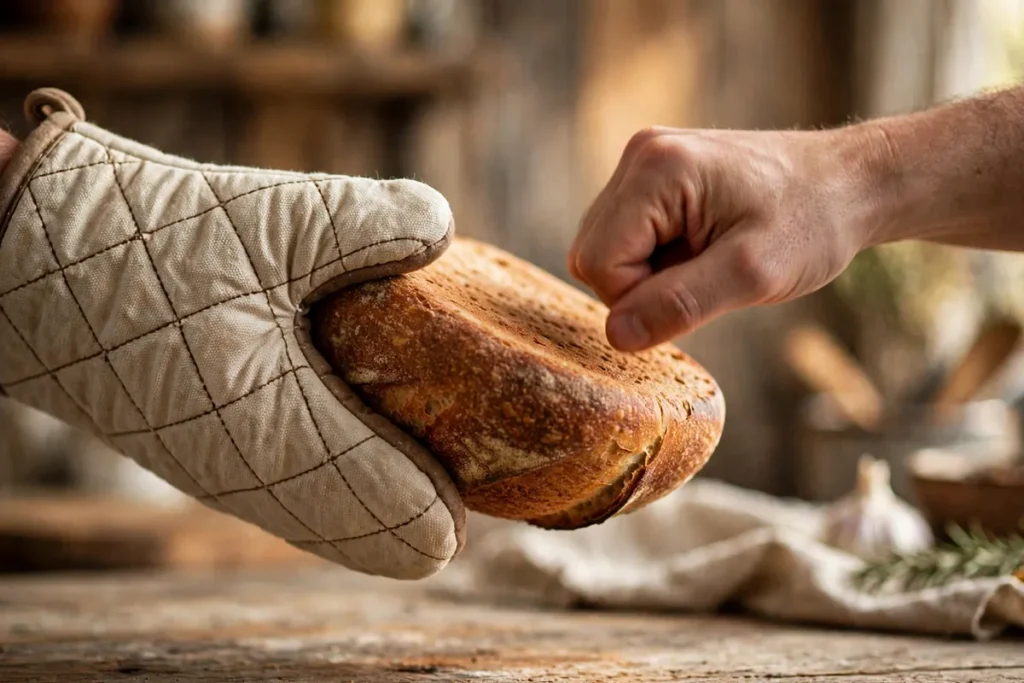
Flip the loaf out of its pan (use oven mitts — it’s 400°F of bread) and thump the bottom firmly with your thumb or knuckles.
- Deep, hollow drum sound: done. The interior is set and full of air pockets that resonate.
- Dull, dense thud: not done. The center is still wet and heavy, absorbing the sound instead of echoing it.
This test is centuries old because it works — but it takes practice to calibrate your ear. Pair it with the thermometer for your first dozen loaves; after that, you’ll trust the thump. One caveat: it works best on crusty, lean loaves. Soft sandwich bread in a pan gives a less distinct sound, so lean on temperature there.
3. Color and crust cues (supporting evidence, not proof)
Crust color tells you about the outside. A deeply browned, firm crust on a lean loaf usually correlates with doneness — but “usually” has burned many bakers, because ovens brown at different rates. Dark pans, hot spots, and high sugar all brown crusts early.
Use color as a gate, not a verdict: if the crust is still pale, it’s definitely not done. If it’s deeply browned, it might be done — confirm with temperature or thump. For enriched breads, tent with foil if the top is browning faster than the center is baking (a common issue — see Cake Domed and Cracked on Top for the same principle in cakes).
4. Weight and feel
A finished loaf feels lighter than you’d expect — a surprising amount of water (often 10–15% of the dough’s weight) bakes off as steam. Pick up the loaf: if it feels unexpectedly light for its size, that’s a good sign. If it feels dense and heavy, the interior is still wet.
The sides matter too: on a pan loaf, the sides should be firm and pull slightly away from the pan. If the sides look pale and feel soft when you peek, the loaf needs more time regardless of what the top looks like.
5. The skewer test (for when there’s no thermometer)
In a pinch, a wooden skewer or thin knife works like a cake tester: push it into the center and pull it out. It should come out clean or with dry crumbs — no wet dough clinging. It’s less precise than a thermometer (a skewer can’t tell 195°F from 205°F), but it catches the obvious underbaked loaf.
Don’t use the toothpick logic from cakes here — bread is denser, and a few moist crumbs on a bread skewer are fine. You’re checking for wet, gummy residue, not perfect cleanliness.
What underbaked bread looks like inside
Know the enemy. Slice into a cooled loaf and look for:
- The gummy line: a dense, translucent stripe through the center or just under the top crust. This is underbaked crumb — starches that never fully set. It’s the #1 sign of a loaf pulled too early (and it’s closely related to the gumminess in sourdough cut too soon).
- A wet, shiny interior that looks almost raw. Needs 10–15 more minutes.
- Collapse after cooling: the loaf looked fine out of the oven but sank as it cooled. The structure wasn’t set — the steam escaped and the crumb couldn’t hold itself up.
If you catch it within 10 minutes of pulling the loaf, you can often save it: put it back in the oven directly on the rack (out of the pan) for 10–15 minutes. Past that window, the structure has set wrong and re-baking won’t fix it.
The step everyone skips: cooling
Bread isn’t done when it leaves the oven. It’s done when it’s cool. The interior continues cooking from residual heat (carryover), and — critically — the starches need time to set. Slice a loaf hot and the crumb compresses into gumminess under the knife; the same loaf sliced after 2 hours has a perfect open crumb.
The rule: cool lean artisan loaves at least 2 hours on a wire rack before slicing. Sandwich loaves: 1 hour minimum. The rack matters — a loaf cooling on a solid counter traps steam underneath and sogs the bottom crust (the same enemy as soggy-bottom pie).
Yes, the smell is torture. No, you may not cut it early. (Fine — cut one heel slice. Everyone does.)
Frequently asked questions
What temperature should bread be when done?
200–210°F (93–99°C) internal for lean artisan loaves and sourdough; 190–200°F (88–93°C) for soft sandwich loaves and enriched breads. Measure in the center through the side or bottom with an instant-read thermometer.
How can you tell bread is done without a thermometer?
Thump the bottom of the loaf — a deep hollow sound means done, a dull thud means it needs more time. Combine with visual cues: deeply browned crust, firm sides pulling from the pan, and a loaf that feels light for its size.
Can you put underbaked bread back in the oven?
Yes, if you catch it within about 10 minutes. Return it directly on the oven rack (out of the pan) for 10–15 minutes. Much later than that, the crumb structure has set incorrectly and re-baking won’t fix the gummy texture.
Why is my bread gummy inside even though the crust is brown?
The crust browns from surface heat while the center lags behind — especially in hot ovens, dark pans, or high-sugar doughs. The fix is temperature, not color: verify 200–210°F internal for lean loaves, and tent with foil if the crust is racing ahead.
How long should bread cool before slicing?
At least 2 hours for lean artisan loaves, 1 hour for sandwich loaves, always on a wire rack. Slicing hot compresses the unset crumb into gumminess. The bread is still cooking from residual heat during the first part of cooling.
Does bread continue cooking after leaving the oven?
Yes — carryover cooking continues for 15–30 minutes as internal heat evens out, and starches firm up as the loaf cools to room temperature. This is why a loaf that reads 205°F at pull-out is perfect, not underdone.
Related troubleshooting: Why Is My Sourdough Gummy Inside? · Bread Crust Too Hard or Too Soft · Why Didn’t My Bread Rise?