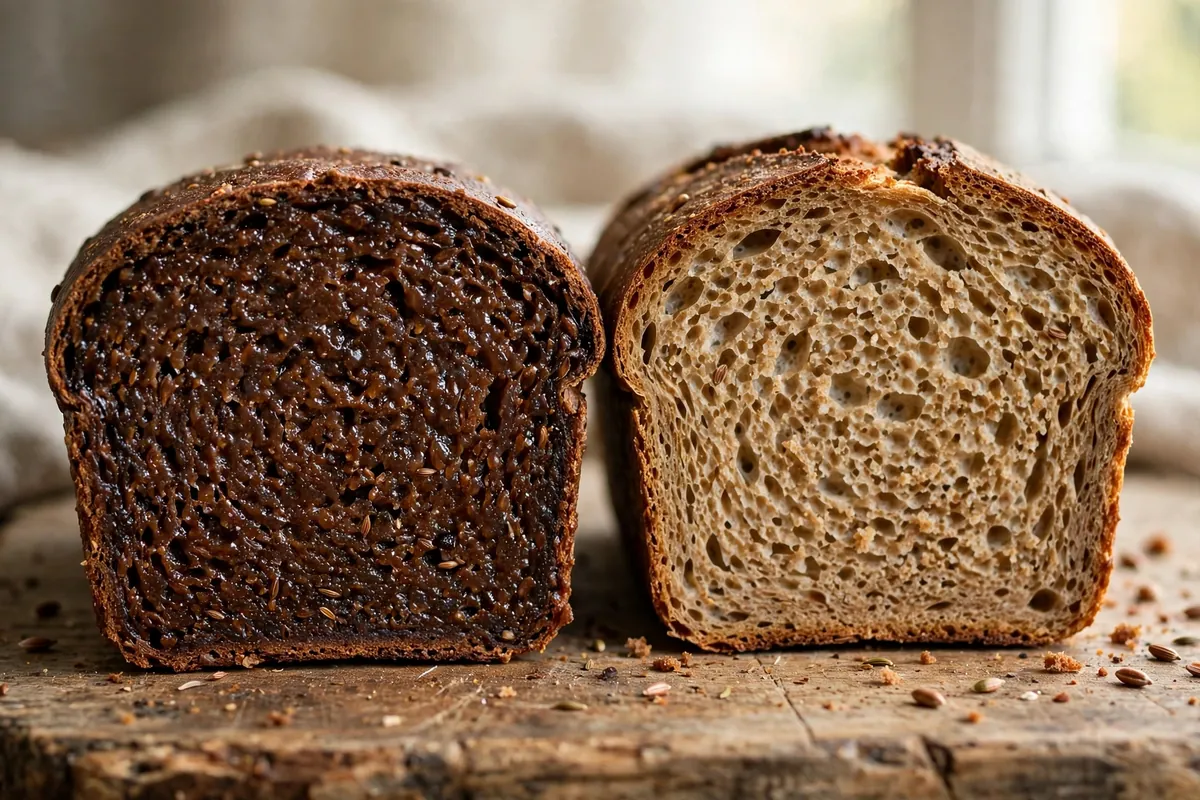
Rye plays by different rules — that’s why it fails in ways wheat bread never does. If white-bread instincts gave you a dense brick, gummy interior, or bitter aftertaste, nothing is wrong with your instincts; they’re just the wrong ones for this grain. Rye has almost no gluten. Instead, its structure comes from pentosans (gummy carbohydrates that absorb enormous amounts of water), and its starches are attacked by unusually aggressive amylase enzymes.
Quick diagnosis: Gummy rye is almost always sliced too soon or underbaked (rye needs far longer to set than wheat — causes #1 and #2). Dense rye usually means too high a rye percentage (cause #3). Bitterness: overbaked dark rye or stale flour (cause #5).
Why rye is weird (the chemistry you need)
Wheat bread’s structure is gluten; rye flour has very little gluten-forming protein. Instead, rye relies on pentosans, which absorb up to 8 times their weight in water and form a viscous gel. That gel holds the loaf together — and it’s why rye dough feels sticky and the crumb can turn gummy: you’re managing a gel, not gluten.
Second quirk: rye is loaded with amylase enzymes that chop starches into sugars. Unchecked, they liquefy the crumb’s starch structure during baking — the infamous gummy, pasty interior. The traditional defense is acidity — sourdough fermentation or added acids inhibit amylase. Real rye bread is sour because the sourness is structural engineering, not just flavor.
1. Gummy crumb — you sliced it too soon
The number one rye complaint and the easiest fix: rye’s pentosan gel needs many hours to set after baking — far longer than wheat. Slice warm and the crumb turns wet, gummy, and pasty even in a perfectly baked loaf. It isn’t underbaked; it’s unfinished.
How to tell: Crust and shape look right and the full bake time elapsed, but the interior is damp and gummy when sliced within hours of baking.
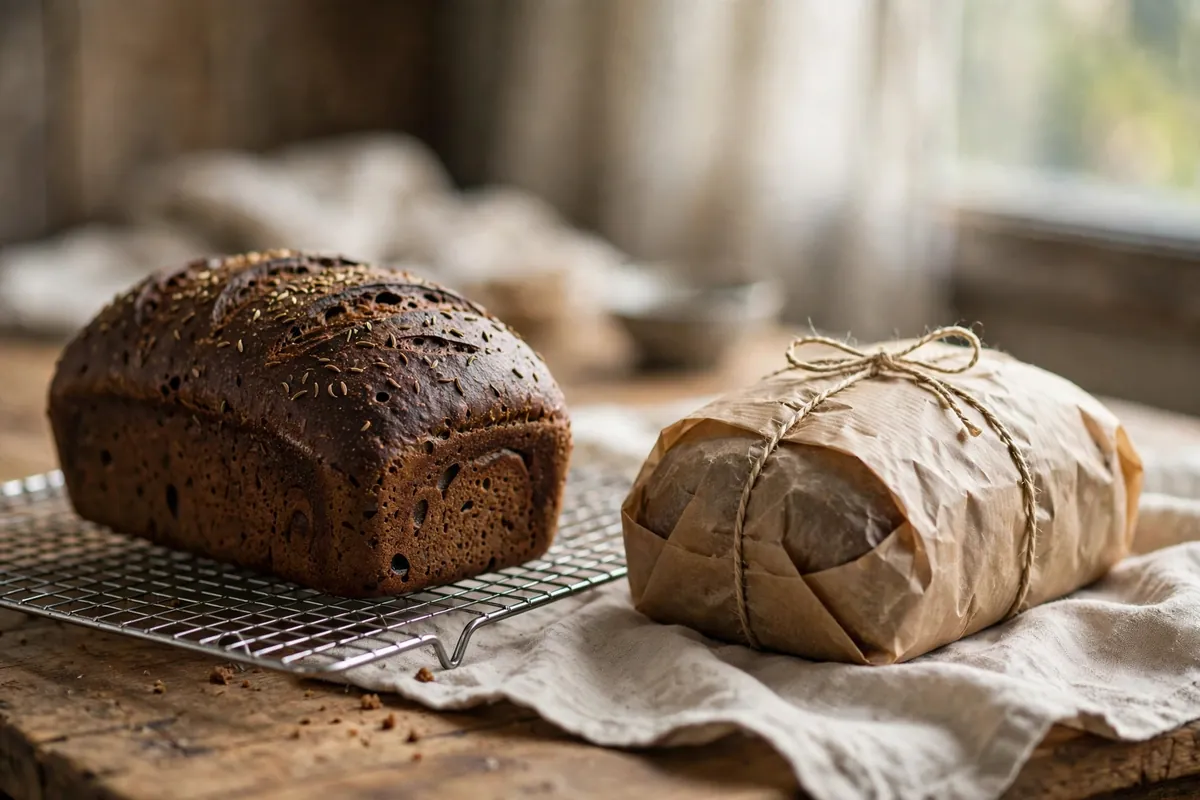
The fix: Wait. A full 12–24 hours before slicing — I know, it’s agonizing. Wrap the cooled loaf in a clean towel or paper bag (not plastic, which softens the crust) and leave it overnight — the crumb firms up and the gumminess resolves into the moist, even texture rye should have. Wait a full day and the “gummy rye problem” vanishes.
2. Gummy crumb — underbaked, because rye lies about doneness
Rye underbakes easily: the dark color makes visual cues useless — it looks “done” long before it is — and the dense crumb conducts heat slowly. It needs 205–210°F (96–99°C) internally, hotter than most wheat breads.
How to tell: Heavy and damp even after a full day’s rest, with a wet (not just moist) center that never firms up.
The fix: Bake longer and hotter than your instincts say. For a 1.5-pound (700g) rye loaf, expect 50–65 minutes at 400–425°F (200–220°C) to reach 205–210°F (96–99°C) in the center. Combine with the full rest from cause #1 — both are required. (General doneness principles: How to Tell When Bread Is Done.)
3. Dense brick — too much rye for the structure
100% rye is a legitimate traditional style (think German vollkornbrot), but dense by design — no gluten means no open crumb, ever. If you expected a light sandwich loaf, the recipe didn’t fail; the expectation did. For beginners, anything above 60–70% rye gets progressively denser and harder to handle.
How to tell: Uniformly dense with a tight crumb — not gummy, just heavy. You used mostly or entirely rye flour.
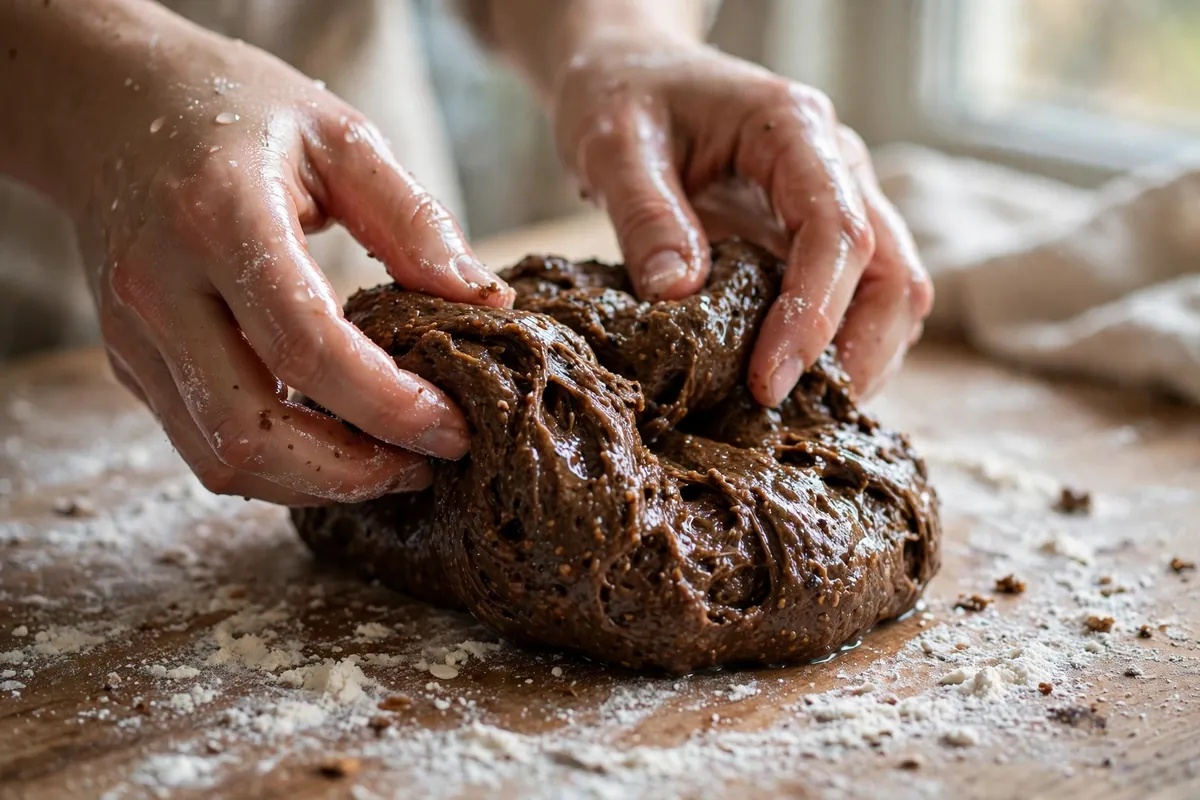
The fix: A 40–50% rye / 50–60% bread-flour blend gives real rye flavor with a genuinely light crumb — my recommended starting point. Wheat supplies the gluten network; rye supplies flavor and moisture. Raise the rye percentage gradually as you learn the sticky dough. Handle gently: no windowpane test, no kneading — mix until combined, shape with wet hands, proof only until slightly risen (rye over-proofs fast).
4. Dense and pasty — the amylase ran wild (not enough acidity)
Without enough acidity, rye’s amylases stay active deep into the bake, liquefying starches into gummy paste instead of set crumb. Traditional rye breads are sourdoughs for exactly this reason — fermentation acids shut the amylases down.
How to tell: The crumb is dense AND wet-pasty with a sticky mouthfeel even after full cooling — and you used commercial yeast with no added acid.
The fix: The authentic route: a rye sourdough starter — even a hybrid (starter for acidity, commercial yeast for lift) transforms the crumb. The quick route: 1 tablespoon vinegar or a quarter teaspoon citric acid per 500g flour — it inhibits amylase exactly like fermentation acids do. My straight-yeast rye went from pasty to properly set with that one tablespoon.
5. Bitter aftertaste — overbaked dark rye or stale flour
A pleasant tang is one thing; outright bitterness has two usual sources. First, dark rye baked too hot or too long — the bran over-caramelizes (dark rye browns faster than you expect). Second, old rye flour: its natural oils go rancid faster than wheat’s, tasting bitter and cardboard-like no matter how well you bake.
How to tell: Bitterness in the crust only means overbaking; throughout the loaf means the flour. Rancid rye smells sharp and stale rather than sweet and grainy — check age and smell.
The fix: For overbaking: drop 25°F and tent with foil if the crust darkens early — rye’s color lies about doneness (cause #2). Buy rye flour you’ll use within 2–3 months, store airtight and cool (fridge for whole rye), and smell before baking — fresh rye smells faintly sweet and earthy. Check caraway too: over 1 tablespoon per loaf turns bitter-medicinal, and old ground caraway goes harsh.
6. The loaf spread into a pancake — shaping and proofing
Without gluten, rye dough can’t hold a tall shape — high-percentage rye loaves naturally bake flatter and wider. A true pancake means over-proofing or too much water. Rye ferments fast (those amylase-liberated sugars feed yeast quickly) and over-proofed rye collapses rather than springing.
How to tell: The dough rose then flattened in the oven or spread sideways proofing, with a dense crumb and sour-alcoholic smell (over-fermented).
The fix: Proof rye by time discipline, not by doubling — 60–75% rise is plenty for high-rye doughs. Use a loaf pan above 60% rye — the pan supplies the structure missing gluten can’t. Keep hydration moderate: rye feels wetter than same-hydration wheat dough because pentosans hold water differently — trust the recipe’s numbers over your wheat-trained hands.
Frequently asked questions
Can I fix gummy rye bread after baking?
If just sliced too soon, yes — wrap it and wait the full 12–24 hours. Underbaked rye can go back in (whole loaf, 350°F / 175°C, 10–15 minutes). Amylase-damaged crumb can’t be fixed, but it toasts well.
Why does rye bread need sourdough?
Not strictly — but acidity inhibits rye’s aggressive amylases, preventing gummy crumb. Sourdough is traditional; vinegar or citric acid works the same chemically.
Is dense rye bread safe to eat?
Yes — as long as the loaf hit 205–210°F (96–99°C) internally. Density is texture, not safety; gummy-but-baked rye is safe, just unpleasant.
Can I use bread flour techniques like stretch-and-fold on rye?
No — there’s almost no gluten to develop, so kneading and folding accomplish nothing. Mix until combined and leave it alone. Over-handling just makes rye dough stickier.
Why is my rye bread sour even without sourdough starter?
Mild tang is normal — rye produces some acidity in any ferment. Strong sourness means a long or warm ferment; shorten or cool it for milder flavor.
How long does rye bread keep?
5–7 days at room temperature — better than wheat bread, thanks to acidity and moisture retention. Freezes excellently for 3 months. (Storage basics: How to Store Homemade Bread.)
Related troubleshooting: Why Is My Bread Dense? · Why Didn’t My Bread Rise? · How to Tell When Bread Is Done