Why Didn’t My Bread Rise? A Step-by-Step Diagnosis
Quick diagnosis: A dough that won’t rise is almost always a yeast problem or a temperature problem. Start here: proof your yeast (2¼ tsp yeast + 1 tsp sugar + ¼ cup water at 100–110°F — foamy in 10 minutes means alive). If the yeast is alive, your kitchen is probably too cold or you haven’t waited long enough. Walk the steps below in order.
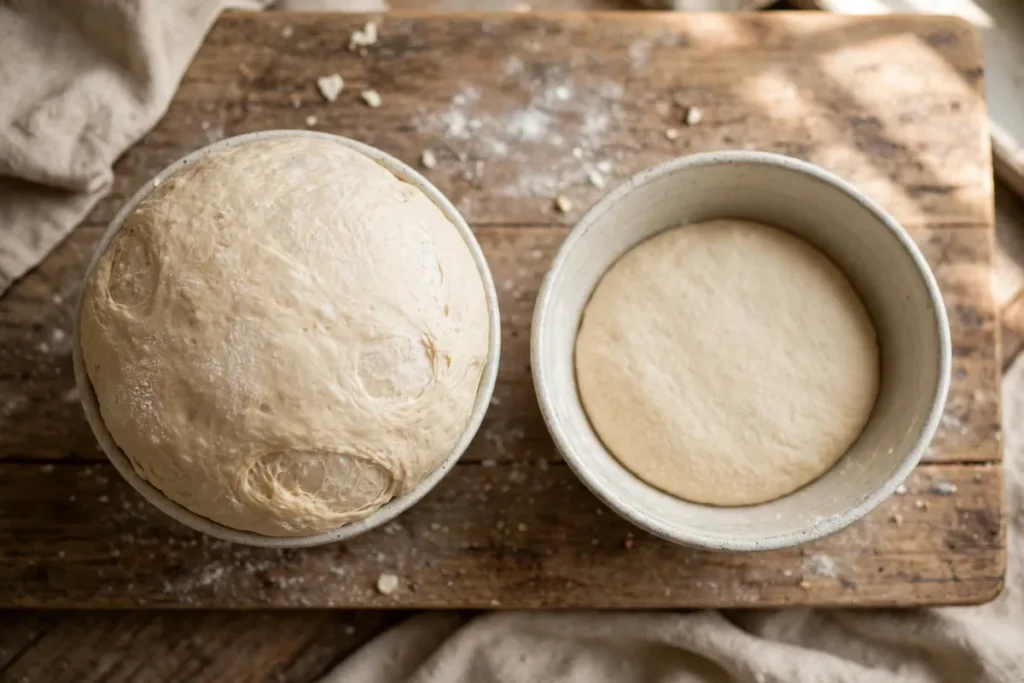
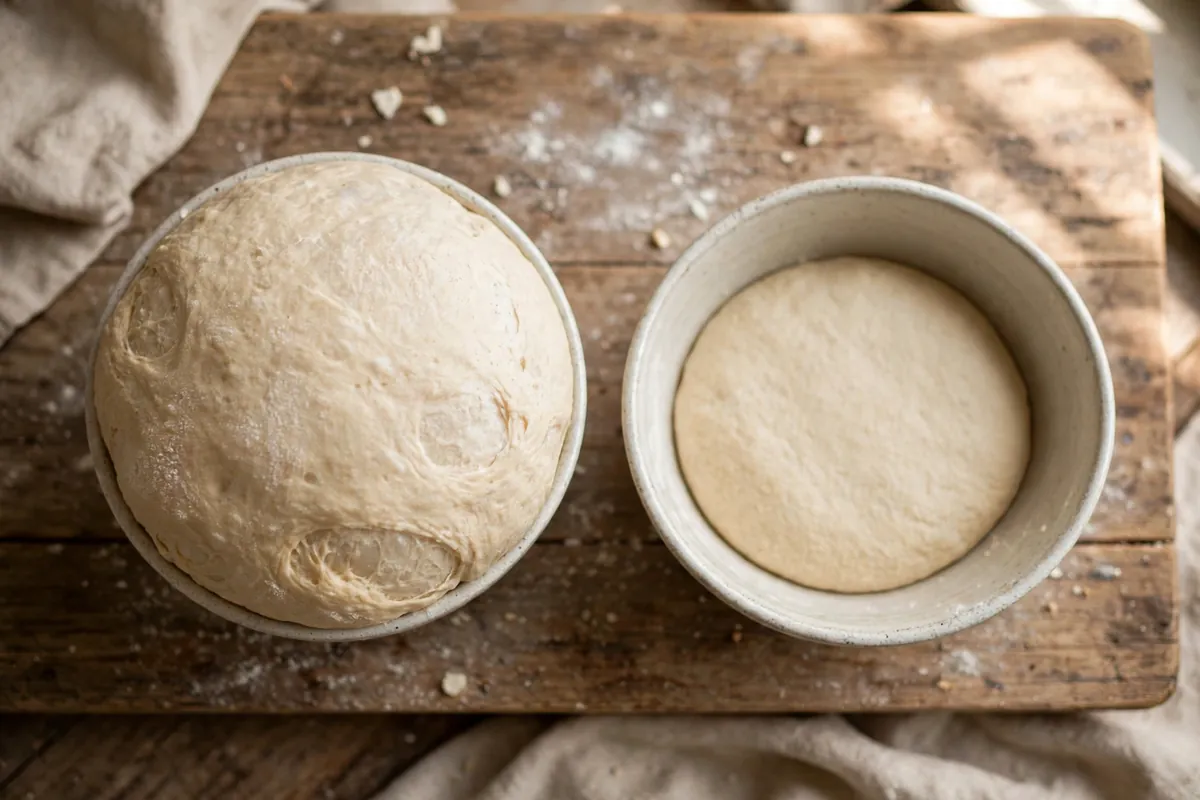
A dough that hasn’t moved after two hours is disheartening — but a failed rise is one of baking’s most diagnosable problems, because only a handful of variables control fermentation. Work through these seven steps in order; they build on each other.
Step 1: Check whether your yeast is alive
Everything else is irrelevant if the yeast is dead. Yeast is a living organism; it dies from heat, old age, and poor storage. An opened packet that’s been sitting in a warm cupboard for six months is the most common culprit I see.
The test: Dissolve 2¼ teaspoons of yeast and 1 teaspoon of sugar in ¼ cup (60ml) of warm water at 100–110°F (37–43°C). Wait 10 minutes. Vigorous foam and a yeasty, beery smell means it’s alive and ready. Flat water with a few sad granules at the bottom means it’s dead — discard it and start over with fresh yeast. No rescue exists for dead yeast; the dough can’t be saved as bread.
Prevention: Store opened yeast airtight in the fridge (3–4 months) or freezer (6+ months). Check expiry dates — unopened packets last about a year past packaging in cool storage, far less in warmth.
Step 2: Check your water temperature
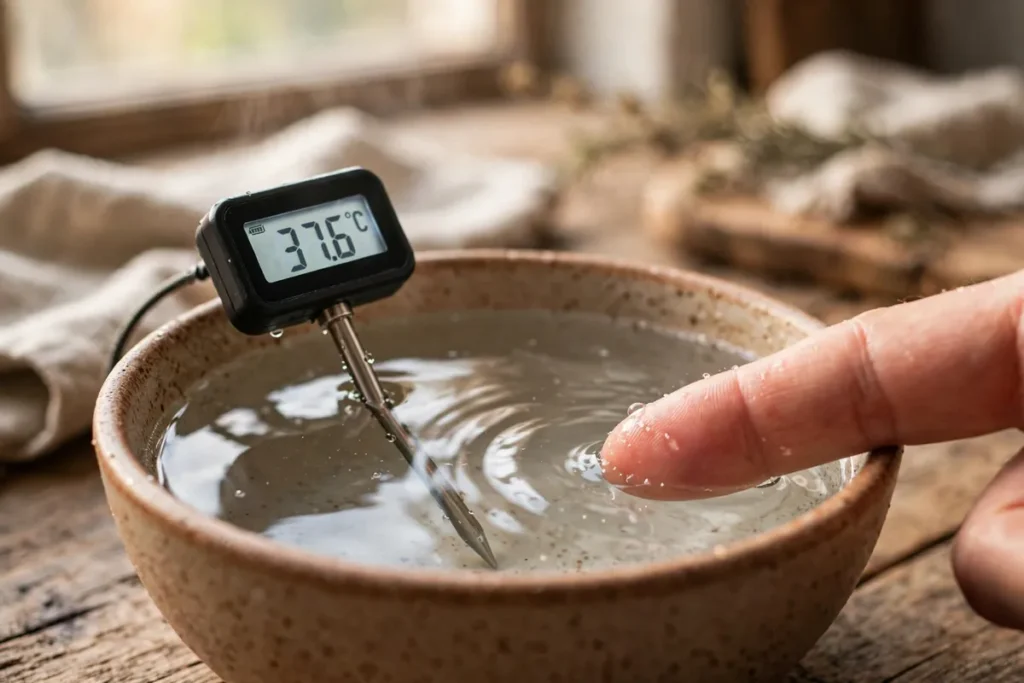
Water above 140°F (60°C) kills yeast on contact; 120–130°F badly stresses it. Below 70°F (21°C) won’t kill yeast, but fermentation will crawl.
The test: You should be able to hold your finger in the water comfortably — it should feel like warm bath water, not hot. If you don’t own a thermometer, err on the cooler side: 100–110°F (37–43°C) is the sweet spot for active dry yeast. Instant yeast is more temperature-tolerant and can be mixed directly into dry ingredients, which removes this variable entirely.
If you suspect you killed it: There’s no revival. But before you throw the dough out, give it the full proof test from Step 1 using yeast from the same batch — if that yeast is dead too, the diagnosis is confirmed.
Step 3: Check the salt
Salt in normal bread quantities (about 2% of flour weight — 10g per 500g flour) slows yeast slightly but won’t stop a rise. Problems start when salt is heavily over-measured or dumped directly onto undissolved yeast, where the concentrated salt draws water out of the yeast cells and damages them before mixing even begins.
The test: Did you measure the salt, or shake it in freely? Did it go directly onto the yeast?
The fix: Always mix salt evenly through the flour first, then add yeast — or add salt after the initial mix comes together. At 2%, salt actually strengthens the gluten network and improves the final crumb.
Step 4: Check the room temperature and the clock
This is the step most people skip, and it’s the answer more often than anyone expects. Yeast activity is intensely temperature-dependent: at 65°F (18°C), a rise can take twice as long as at 78°F (26°C). If your recipe says “rise 1 hour” and your kitchen is cool, your dough may simply need 2–3 hours.
The test: Is the dough showing any signs of life — slight puffiness, a few bubbles when you peek underneath, a yeasty smell? Any activity at all means the yeast is working and you just need patience and warmth.
The fix: Move the dough to 75–80°F (24–27°C) — oven with just the light on, top of the fridge, or microwave beside a mug of boiled water (door closed). Judge by the dough, not the clock: roughly doubled, and the poke test shows a slow spring-back leaving a slight indent.
Step 5: Check the flour quantity
Too much flour makes a stiff dough that expanding gas can’t push apart — the yeast may be working fine, but the dough is too heavy to show it. This is the classic result of scooping flour with a measuring cup instead of weighing it.
The test: Is the dough firm, dry, and resistant when you poke it, rather than soft and pillowy?
The fix for next time: Weigh flour at 120g per cup. For the current dough, you can try working in a tablespoon or two of warm water and giving it more time in warmth — it sometimes recovers, though the crumb won’t be perfect. For details on flour’s role in texture, see Why Is My Bread Dense?.
Step 6: Check for rise-killers in the recipe
Very high sugar (above ~15–20% of flour weight — brioche and panettone rise slowly by design), heavy fats, and large amounts of cinnamon all stretch fermentation to 3–4+ hours, which reads as “not rising” to an impatient baker.
The fix: Enriched doughs need longer, warmer rises — plan for it. If you’re adapting a recipe, add sweet or fatty ingredients after the first rise where possible.
Step 7: Decide — rescue or restart?
If the yeast is dead (Step 1 failed), the dough cannot become risen bread. But don’t bin it:
- Flatbread and pizza: Roll the unrisen dough thin, top it, and bake hot — dead-yeast dough makes excellent pizza bases and flatbreads.
- Crackers: Roll very thin, dock with a fork, salt, and bake until crisp.
- Restart: If the yeast was the only problem and you have fresh yeast, it’s honestly faster to start a new dough than to nurse a compromised one.
If the yeast is alive and the dough is simply slow (Step 4), patience plus warmth is the entire rescue plan. I’ve had doughs take 4 hours in a cold kitchen and still bake into beautiful loaves — yeast works on its own schedule, not yours.

Frequently asked questions
How long should bread dough take to rise?
At 75–80°F (24–27°C): 1–2 hours for the first rise, 30–60 minutes for the shaped proof. Below 70°F (21°C), double that. Fridge-retarded dough takes 8–24 hours. Judge by doubling and the poke test, never the clock.
Can I bake bread that never rose?
You can bake it, but it won’t be bread as you imagined — it’ll be dense and heavy. Repurpose it as flatbread, pizza, or crackers (Step 7) instead of baking a disappointing loaf.
Does salt really kill yeast?
At bread’s normal 2%, no — it just moderates activity and improves flavor and structure. Direct contact between dry salt and dry yeast, or heavy over-salting, can damage or severely slow yeast. Mixed properly, salt is yeast’s friend, not its enemy.
How can I tell if my yeast is still good?
The 10-minute proof test in Step 1: yeast + sugar + warm water = foam. Do this with any yeast you’re unsure about before it goes near your flour. It takes 10 minutes and has saved me from countless failed bakes.
Can dough rise in the fridge?
Yes — slowly, over 8–24 hours, and the long cold ferment actually develops deeper, more complex flavor. This is a technique, not a problem. Just make sure the dough shows some activity at room temperature for 30–60 minutes before refrigerating.
My dough rose the first time but not after shaping — why?
The shaped proof is shorter and subtler than the first rise — look for about 50% growth, not doubling, and use the poke test. If there’s zero movement after an hour in warmth, the yeast likely exhausted itself in an over-long first rise; next time, shorten the first rise.
Related troubleshooting: Why Is My Bread Dense? · Why Is My Sourdough Gummy Inside? · Bread Crust Too Hard or Too Soft