
You pulled a gorgeous meringue shell from the oven, walked away for ten minutes, and came back to the Grand Canyon. Cracks are almost never random — a pavlova shell is a dried egg-white foam, and every crack traces back to one of five failures: thermal shock, excess heat, undissolved sugar, humidity, or an unstable foam.
Quick diagnosis: Pavlovas crack because they cooled too fast (thermal shock is cause #1), the oven ran too hot, or the sugar never fully dissolved. Cool the shell in the turned-off oven, bake at a true 225°F (110°C), and rub the meringue between your fingers — if it’s gritty, keep beating.
My tested baseline: 6 large room-temperature egg whites (about 180g), 300g (1½ cups) superfine sugar, 1 tablespoon cornstarch, 1 teaspoon white vinegar, pinch of salt. Beat whites to soft peaks, add the sugar a tablespoon at a time, beat to glossy stiff peaks, fold in the cornstarch and vinegar. Bake at 225°F (110°C) for 90–120 minutes until dry and lifting cleanly off the parchment, then cool completely in the turned-off oven — 2 hours minimum, overnight is best.
1. You cooled it too fast — thermal shock is the #1 cracker
The shell bakes into a rigid, dry foam. Pull it into a cool kitchen and the outer crust contracts fast while the interior is still expanded — the structure can’t flex, so it splits. Oven-cooled shells come out pristine; rack-cooled ones crack within twenty minutes, every time.
How to tell: Cracks appeared 10–30 minutes after removing the shell — often one long fissure across the top — though it looked perfect coming out of the oven.
The fix: Turn the oven off and leave the pavlova inside until completely cool — at least 2 hours, overnight if you can. Never move a hot shell to a cold countertop. (Same slow-cool principle as Why Did My Cheesecake Crack?.)
2. Your oven was too hot — even 25°F matters
Pavlova is dried, not baked. Above about 250°F (120°C), the outside sets while the inside is still expanding — a rigid crust over an expanding interior cracks. Many home ovens run 15–25°F hotter than the dial says, so 225°F on the dial can mean 250°F inside.
How to tell: Deep golden or tan color instead of pale ivory, wide dramatic cracks, possibly a hollow interior and toffee flavor from browning sugar.
The fix: Verify a true 225°F (110°C) with an oven thermometer; if your oven runs hot, set 200°F (95°C) and add 15–20 minutes. Doneness test: pale cream, dry to the touch, lifting cleanly off the parchment, hollow knock when tapped. (Same heat damage as Why Did My Cake Dome and Crack on Top?.)
3. The sugar never fully dissolved — grit is a fault line
Undissolved sugar crystals are weak points in the foam wall; during baking they melt and release moisture, creating pockets that expand into cracks. This is why recipes insist on superfine sugar — regular granulated often never dissolves completely.
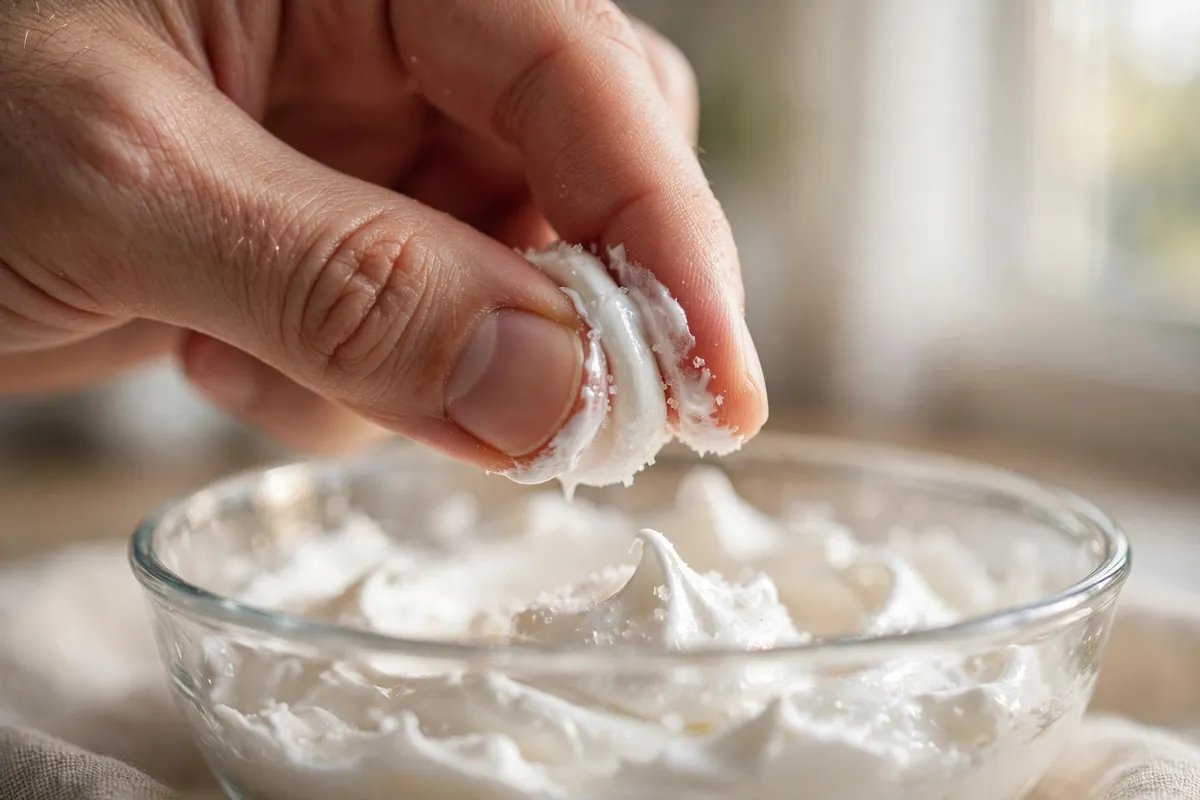
How to tell: Rub meringue between thumb and forefinger before piping — any grit means undissolved sugar. These cracks are usually small spiderwebs rather than one big fissure.
The fix: Add the sugar very gradually — one tablespoon at a time — to already-foamy whites, and keep beating 1–2 minutes after the last addition. Do the finger-rub test before you stop the mixer. If it’s gritty, beat another minute and test again. Room-temperature whites (about 70°F / 21°C) dissolve sugar faster than cold ones straight from the fridge.
4. Humidity got into the shell — meringue’s oldest enemy
Sugar is hygroscopic. On a humid day (above ~60% relative humidity), the shell absorbs water as it cools, softening the crust and creating stress that shows up as cracks — plus weeping, those amber syrup beads, which is the same moisture problem in a different costume.
How to tell: Shell feels tacky instead of crisp, cracks appeared hours after cooling, or syrup beads weep on the surface — and you baked on a rainy day.
The fix: Avoid baking pavlova on humid days. If you must, extend the bake 15–20 minutes at the same low temperature, cool with the oven door fully closed, and store airtight at room temperature — never the fridge, which softens the shell within hours. (Full diagnosis: Why Is My Meringue Weeping?.)
5. The foam itself was unstable — over-beaten whites or a drafty oven
Beat whites past stiff peaks into the dry, clumpy stage and the protein network breaks down — the foam looks dull and bakes into a fragile shell that cracks under its own contraction. Opening the oven door mid-bake does the same damage from the other direction: cool air collapses the expanding foam unevenly.
How to tell: Meringue looked dry and lumpy before piping (over-beaten), or cracks radiate from one spot on an uneven shell (door opened mid-bake).
The fix: Stop at glossy, firm stiff peaks — sharp peaks that don’t flop, still smooth and shiny, not dry. Once it’s in the oven, don’t open the door for any reason; every opening is a cold draft hitting a fragile foam. Use the oven light.
The cracks-happen-anyway rescue
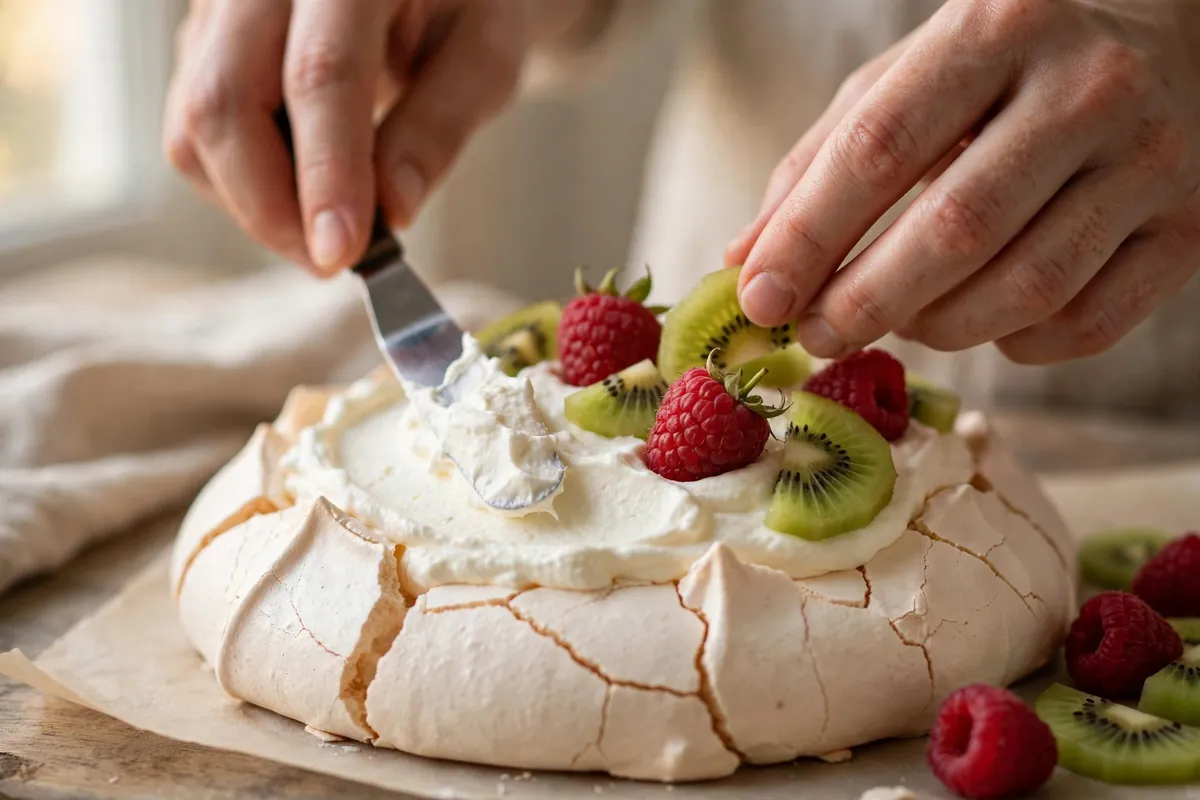
Even with perfect technique, the occasional shell fissures — and it doesn’t matter, because pavlova is always served buried under whipped cream and fruit. Fill the cracks with extra cream, pile on the berries, and serve it proudly.
Frequently asked questions
Is it safe to eat a cracked pavlova?
Yes, completely. Cracks are a structural and cosmetic issue, not a food-safety one. As long as the shell baked through — dry, crisp, lifting off the parchment — a cracked pavlova is just as safe and delicious as a perfect one.
Can I fix a cracked pavlova after baking?
You can’t un-crack it, but you don’t need to. Fill the cracks with whipped cream before adding fruit — cream is the standard pavlova camouflage and it’s how pavlovas are served everywhere. Nobody will ever know.
Why is my pavlova chewy instead of crisp?
Underbaking or humidity. The shell needs a full 90–120 minutes at 225°F (110°C) until it’s dry all the way through, and it must cool in the oven. A chewy center is actually traditional in Australian-style pavlova — crisp shell, marshmallowy middle — but a chewy exterior means moisture got in.
Why did my pavlova collapse or go flat?
Under-beaten whites, fat contamination (even a trace of yolk or grease on the bowl prevents proper whipping), or opening the oven door. Make sure your bowl and beaters are scrupulously clean — wipe with vinegar first — and separate eggs carefully.
Can I make pavlova ahead of time?
Yes — the shell actually benefits from it. Bake the shell a day ahead, cool completely in the oven, and store airtight at room temperature. Fill with cream and fruit no more than 2–4 hours before serving, because the moisture from the toppings softens the crisp shell.
Why did my pavlova weep sticky beads?
That’s undissolved sugar syrup being squeezed out — usually undissolved sugar plus humidity. Beat longer (the finger-rub test), bake on a dry day, and don’t refrigerate the finished shell. Full diagnosis: Why Is My Meringue Weeping?.
Related troubleshooting: Why Is My Meringue Weeping? · Why Did My Cheesecake Crack? · How to Keep Christmas Cookies Fresh