No-Yeast Bread: How It Works and When to Use It
The yeast is dead, expired, or simply missing from your cupboard. Or you’ve got 40 minutes, not four hours. Either way, you want bread — and here’s what most bakers learn late: you don’t need yeast to make real bread. You need gas, and yeast is only one way to get it.
No-yeast breads rise on chemistry instead of biology: baking soda or baking powder reacting with acids to release carbon dioxide, right there in the bowl. Irish soda bread, baking-powder biscuits, beer bread, and every banana bread ever baked all work this way. The result is genuinely bread — just a different kind of bread, with its own rules. All of them work — here’s the chemistry and when to reach for each. Here’s how the chemistry works and when to reach for it.
Quick diagnosis: No-yeast bread rises via chemical leaveners (baking soda + an acid like buttermilk, or double-acting baking powder) instead of fermentation. It works brilliantly when you’re out of yeast, short on time (ready in under an hour), or your yeast keeps failing you. It will NOT give you chewy artisan texture or fermented flavor — for baguettes and sourdough-style loaves, yeast is irreplaceable. Match the method to the craving.
How Yeast Bread Works vs. How No-Yeast Bread Works
To understand the substitute, understand the original. In yeast bread, living yeast consumes sugars in the dough and exhales carbon dioxide slowly, over hours. That long, slow gas production does two things at once: it inflates the dough and it develops flavor — alcohols, organic acids, the complex taste we call “bready.” Time is an ingredient.
No-yeast bread skips the biology. The moment baking soda meets an acid (buttermilk, yogurt, lemon juice, molasses), they react and release CO2 immediately. Double-acting baking powder does it in two waves: once when wet, again when heated. All the gas arrives in minutes instead of hours — the advantage and the limitation in one.
The Main Types of No-Yeast Bread (and What Each Is Good For)
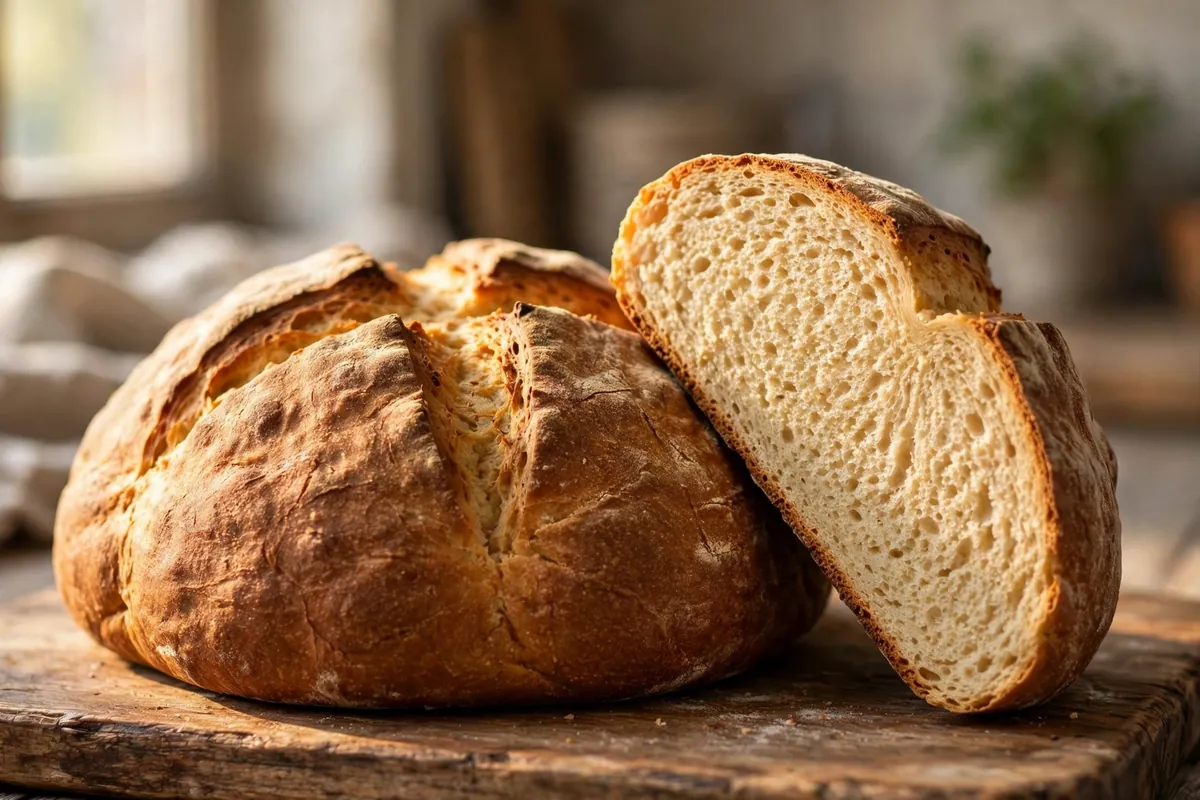
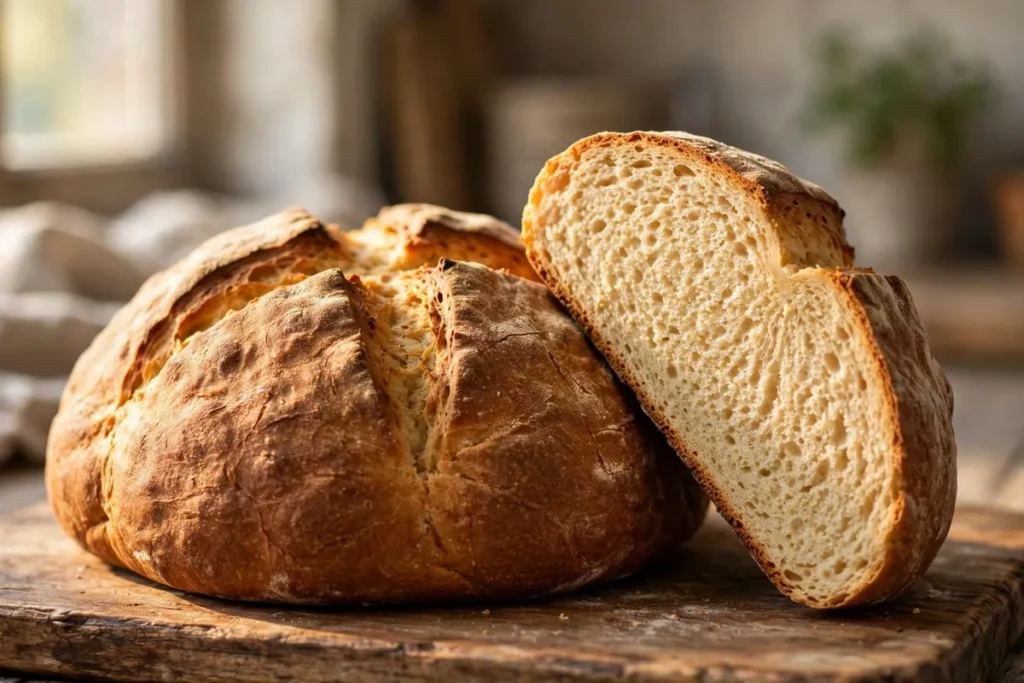
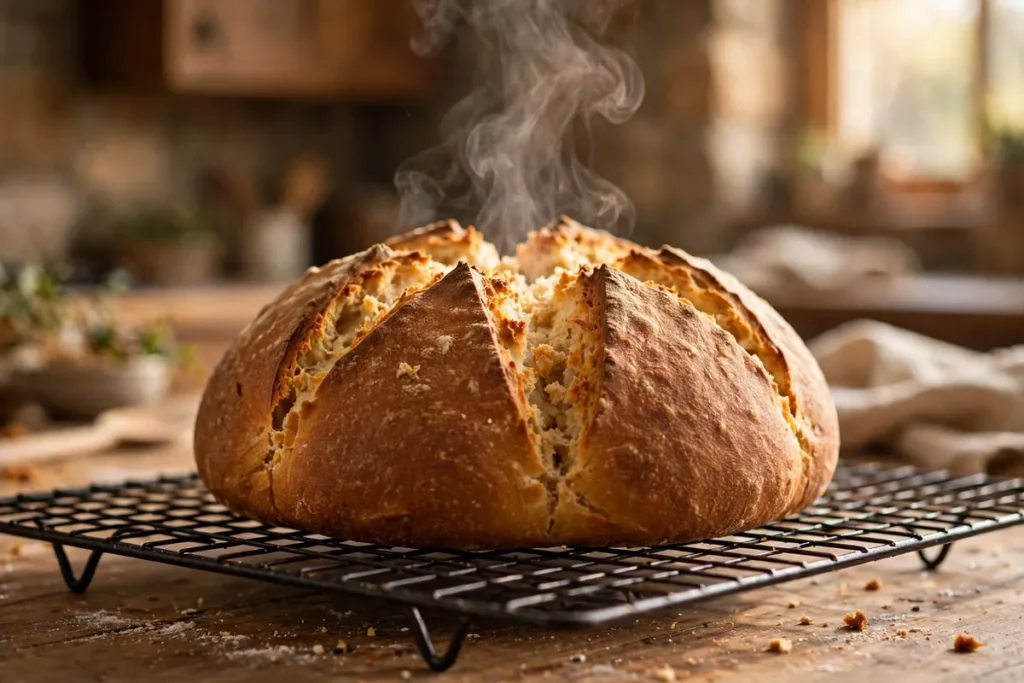
Soda bread. Buttermilk + baking soda + flour + salt. A dense, hearty loaf with a tight crumb, ready in about 40 minutes — the weeknight hero. Score a cross on top (not decorative; it lets heat reach the center).
Baking-powder biscuits and scones. Flour, cold fat, baking powder, milk. Flaky, tender, tall — the fat does as much work as the leavening here. The non-negotiable rule: keep everything cold and handle the dough as little as possible.
Beer bread. Flour + beer + a little sugar and baking powder. The beer’s carbonation and its own yeast contribute lift, and the malt flavor is genuinely delicious. Three ingredients, one bowl, no kneading. This is the recipe I give to people who’ve never baked bread.
Quick loaves. Banana bread, zucchini bread, pumpkin bread. Baking soda/powder leavened, moist, cake-like crumb. Technically bread by method, dessert by spirit.
Flatbreads. Tortillas, chapati, pita (pita uses a hot oven for steam puff, no leavening at all). Unleavened by design — the oldest breads on earth never needed yeast.
The Rules That Make or Break No-Yeast Bread
Chemical leavening is less forgiving than yeast in specific ways. These rules are the difference between a proud loaf and a doorstop:
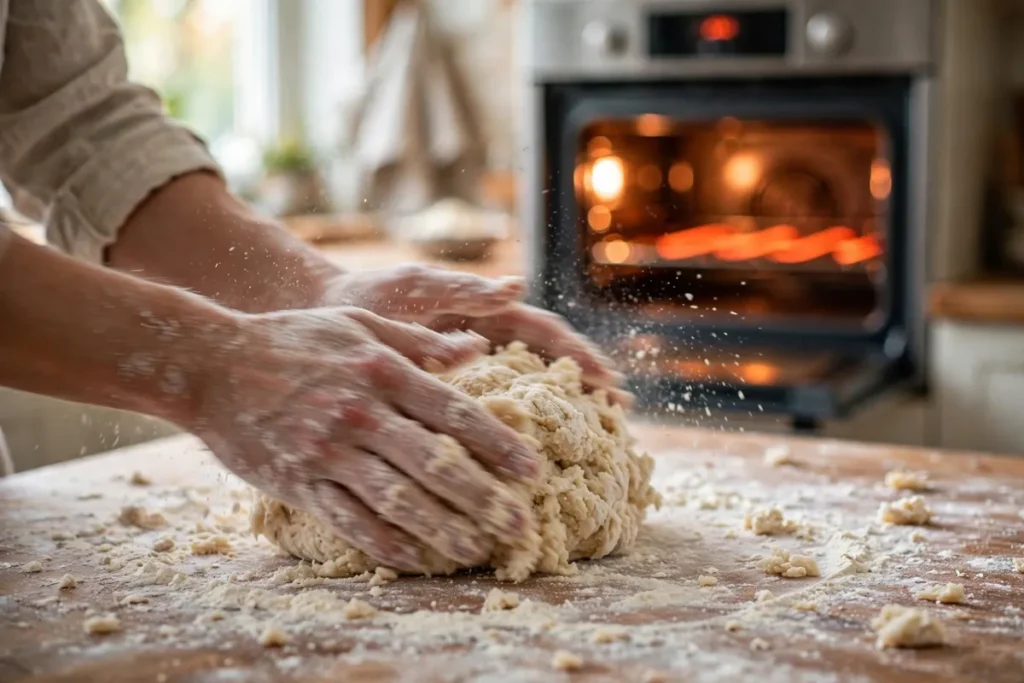
1. Get it in the oven fast. The gas reaction starts the second liquid hits the dry ingredients. With single-acting soda, you have minutes, not hours. Have the oven fully preheated before you mix. I shape soda bread while the oven finishes heating — never the reverse.
2. Don’t overmix. Without a long fermentation to relax the gluten, every extra stir makes the crumb tougher. Mix until the flour just disappears — lumps are fine, even desirable, in biscuits and quick breads. This is the #1 reason homemade soda bread turns out dense in the bad way (see Why Is My Bread Dense? for the full diagnosis).
3. Measure leavening precisely. Too little soda and the loaf won’t rise; too much leaves a soapy, yellow-tinged crumb with a metallic bite. Level your teaspoons. The standard ratio: about 1 teaspoon baking soda per 250g flour when paired with enough acid (a cup of buttermilk comfortably covers it).
4. Respect the acid. Baking soda needs acid to work — buttermilk, yogurt, lemon juice, brown sugar, molasses, cocoa. If a recipe has none of these and calls for soda alone, something is wrong. Baking powder brings its own acid, which is why it works in neutral batters.
5. Eat it fresh. No-yeast breads stale faster — no fermentation-produced acidity and alcohol to preserve them. Day one is prime time; day two wants toasting.
When No-Yeast Bread Is the Right Call
- The yeast failed you. If your last two loaves didn’t rise, stop fighting and bake soda bread tonight — then troubleshoot the yeast problem separately with Why Didn’t My Bread Rise?.
- You’re out of time. Soda bread: 10 minutes mixing, 35 minutes baking. Done.
- It’s hot. Summer kitchens over-proof yeast doughs in a flash. Chemical leaveners don’t care about room temperature.
- You’re a beginner. Fewer variables, faster feedback loop. Every failed quick bread teaches you something in under an hour.
- You want the flavor. Buttermilk soda bread and beer bread taste like themselves — hearty, malty, wheaty. That’s a feature, not a compromise.
When Yeast Is Irreplaceable (Be Honest With Yourself)
No-yeast methods cannot produce: open artisan crumb, genuine sourdough tang, chewy bagel or pizza crust, or deep overnight-ferment flavor. If that’s what you’re craving, the answer isn’t a substitute method — it’s fixing your yeast technique.
My Go-To Emergency Loaf (Soda Bread, 45 Minutes)
500g all-purpose flour, 1 tsp fine salt, 1 tsp baking soda (level), 400ml buttermilk. Whisk dry, stir in buttermilk until shaggy, shape roughly, score a deep cross, bake at 425°F (220°C) for 30–35 minutes until deep golden and hollow underneath. Cool 20 minutes before slicing — the interior finishes setting as it cools (same reason sourdough needs its rest: Why Is My Sourdough Gummy Inside?).
Frequently Asked Questions
Can I make no-yeast bread taste like sourdough?
Not really. You can fake some tang with extra buttermilk or a spoonful of vinegar, and it reads as pleasant sourness — but true sourdough flavor comes from days of bacterial fermentation. Different beast.
Why did my soda bread come out with yellow spots and a soapy taste?
Too much baking soda, or it wasn’t mixed evenly through the flour. Always whisk the soda thoroughly into the dry ingredients before adding liquid, and level that teaspoon.
Can I use baking powder instead of baking soda in soda bread?
You can, but use roughly three times the amount (1 tsp soda ≈ 1 tbsp powder) and expect a milder flavor and slightly less browning. The classic buttermilk-and-soda pairing exists for a reason.
Is no-yeast bread healthier than yeast bread?
It’s bread — flour, water, salt, leavening. Neither is a health food or a health hazard. Don’t let anyone sell you “yeast-free” as a wellness claim; yeast is a single-celled fungus, not a toxin.
Can I still eat it if the center is a bit doughy?
A slightly underbaked quick bread is safe to eat (no raw egg concerns in most recipes), but the texture is unpleasant. If the center is wet, slice and toast it — toasting rescues almost every underbaked quick bread.
Does no-yeast bread work for sandwiches?
Soda bread and beer bread make excellent toast and open sandwiches. For soft sandwich slices, a baking-powder loaf pan bread works — just slice it thick, since the crumb is more fragile than yeast bread.
Related troubleshooting: Why Didn’t My Bread Rise? · Why Is My Bread Dense? · Eggless Cake That Actually Works: Tested Replacements