How to Store Homemade Bread So It Stays Fresh for Days
Quick diagnosis: Keep crusty bread cut-side down on a board or in a paper bag at room temperature — 2–3 days. Soft sandwich loaves: airtight bag or bread box, 3–4 days. Never refrigerate bread (the fridge accelerates staling). For anything beyond 3 days, slice and freeze airtight for up to 3 months.
Homemade bread has no preservatives, no dough conditioners, no calcium propionate — which is exactly why it tastes better, and exactly why it goes stale faster than store-bought. But “faster” doesn’t mean “by tomorrow.” Stored right, a homemade loaf stays genuinely good for days. Stored wrong — and the most common wrong is the refrigerator — it turns to cardboard overnight. Here’s the science and the method.
Why bread goes stale (it’s not drying out)
The surprise: staling is mostly not moisture loss. It’s starch retrogradation — the starch molecules in the crumb, gelatinized and soft when fresh from the oven, slowly recrystallize as the bread cools and sits, squeezing water out of their structure and turning firm and crumbly. A stale loaf can contain nearly as much water as a fresh one; the water has just been locked away where your tongue can’t find it.
This matters because it flips the obvious advice. If staling were drying, you’d wrap bread airtight immediately. But since it’s recrystallization, the strategy is different: slow the recrystallization, which happens fastest at refrigerator temperatures (34–40°F / 1–4°C) — roughly three times faster than at room temperature. The fridge, humanity’s default freshness tool, is bread’s worst enemy.
The golden rules
- Room temperature wins. 68–77°F (20–25°C) is the sweet spot — recrystallization runs slowest here.
- Never refrigerate. The single most impactful rule. Fridge-cold bread stales in hours what room-temp bread takes days to do.
- Match the wrap to the crust. Crusty bread needs to breathe (paper, linen, cut-side down); soft bread needs sealing (plastic, airtight box). One method does not fit all.
- Freeze for the long haul. Beyond 3–4 days, the freezer beats every countertop method. Slice first, wrap airtight, 3 months.
Crusty bread: sourdough, baguettes, artisan loaves
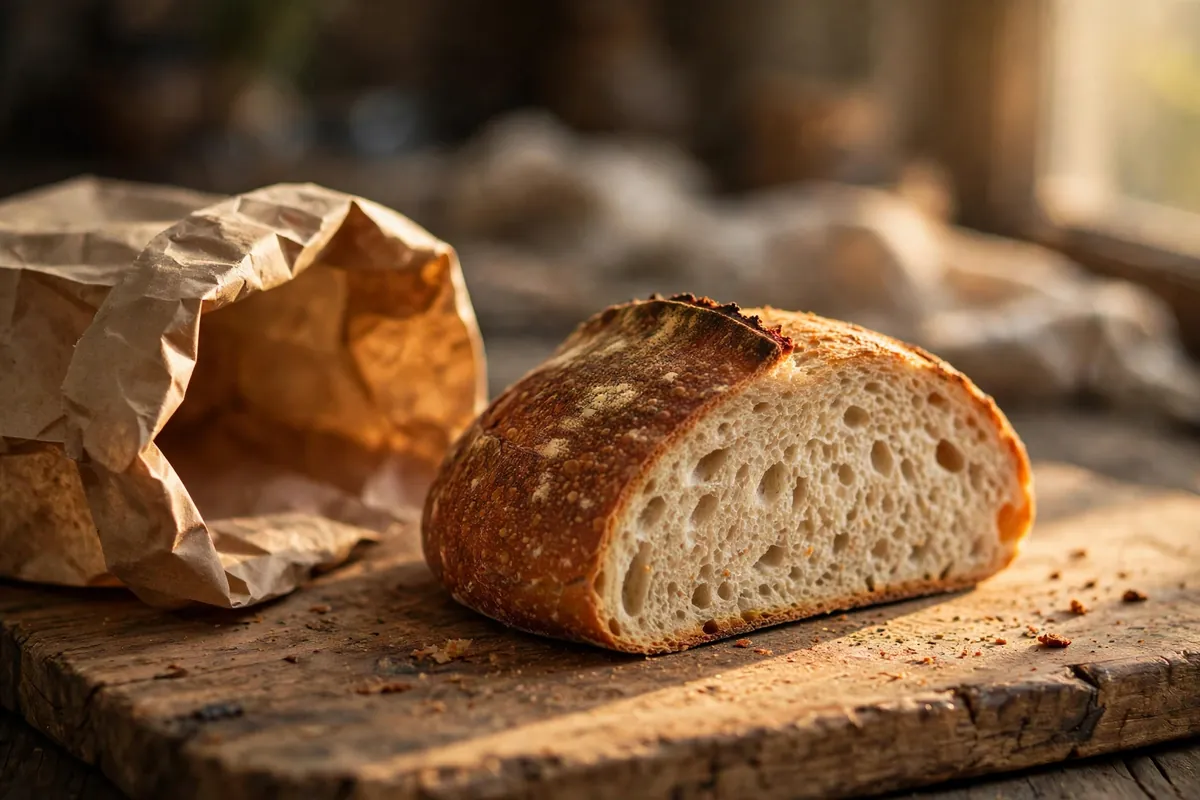
A crackling crust is the whole point of these breads — and airtight plastic is its assassin. Sealed plastic traps the moisture migrating out of the crumb, and within hours your shattering crust turns leathery and soft.
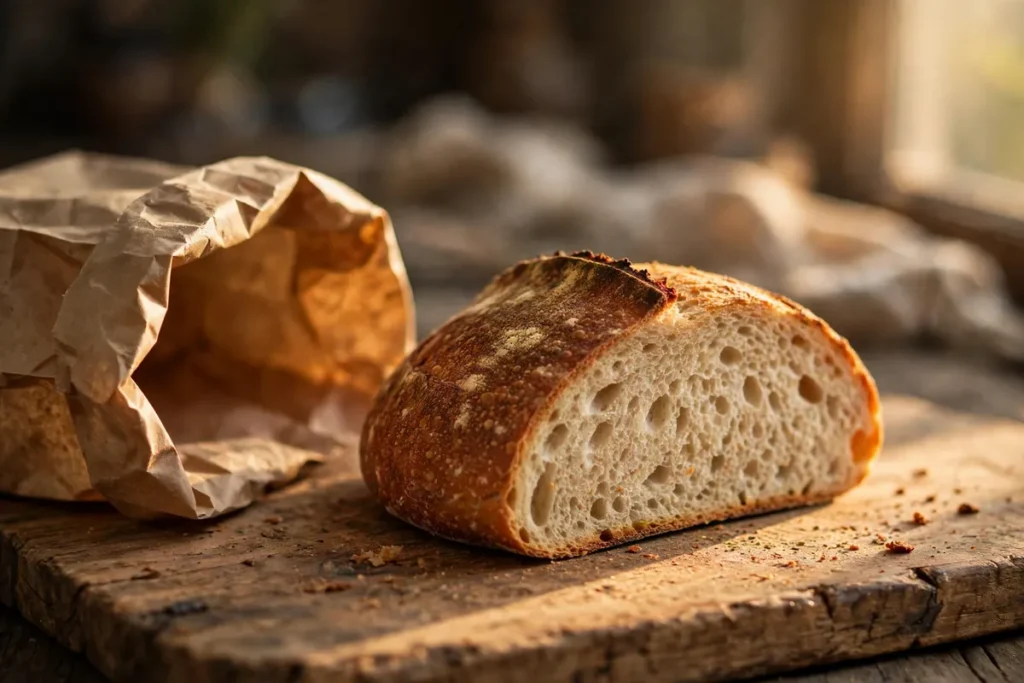
Day 1: Nothing. Leave it cut-side down on a wooden board, uncovered. The crust stays crisp, the cut face seals itself against the board. This is how bakeries display bread all day.
Days 2–3: Paper bag or a linen bread bag. Both breathe just enough to protect the crust while slowing moisture loss. A bread box works on the same principle — it buffers humidity without sealing it in.
What NOT to do: plastic wrap, zip bags, the fridge. Each one kills the crust or accelerates staling (or both).
Soft bread: sandwich loaves, brioche, rolls
Soft breads have the opposite need: their tender crust is meant to stay soft, so sealing in moisture is correct here. Cool the loaf completely first (bagging warm bread traps steam and makes the crust gummy), then into a plastic bag or airtight bread box.
Well-stored soft loaves hold 3–4 days at room temperature. Enriched doughs (brioche, challah, milk bread) keep best of all — the fat and sugar slow retrogradation noticeably, which is why a brioche still eats well on day 4 while a lean baguette is done by day 2.
Freezing: the 3-month pause button
For anything you won’t eat in 3–4 days, freezing beats every other method — it halts retrogradation essentially completely.
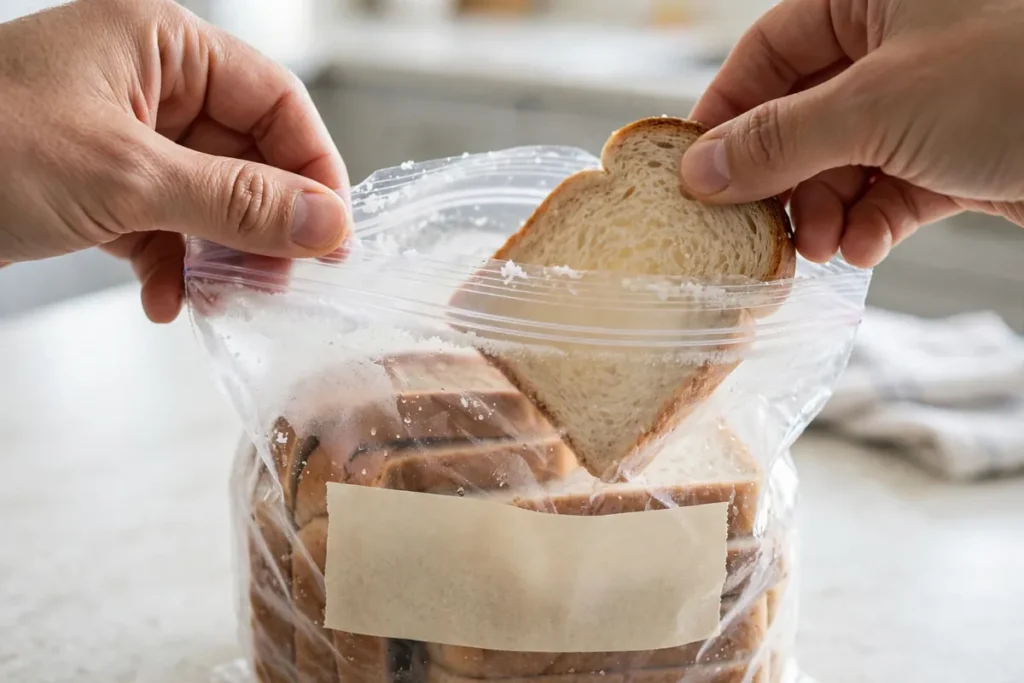
- Slice first. Frozen whole loaves are awkward; frozen slices let you take exactly what you need. (Whole-loaf freezing works too if you’ll eat it all at once — just thaw fully before slicing.)
- Wrap airtight — twice. Plastic wrap pressed directly against the bread, then into a freezer bag with the air pressed out. Freezer burn is dehydration plus off-flavors; the double barrier stops both.
- Label and date. 3 months at 0°F (-18°C) is the quality window.
- Thaw at room temperature, still wrapped — unwrapping early lets condensation form on the surface. Slices go straight into the toaster from frozen.
The same portion-first logic applies to freezing cookie dough — the freezer rewards people who prep before freezing, not after.
Reviving day-old (or day-three) bread
Stale bread isn’t dead bread — retrogradation is partially reversible with heat.
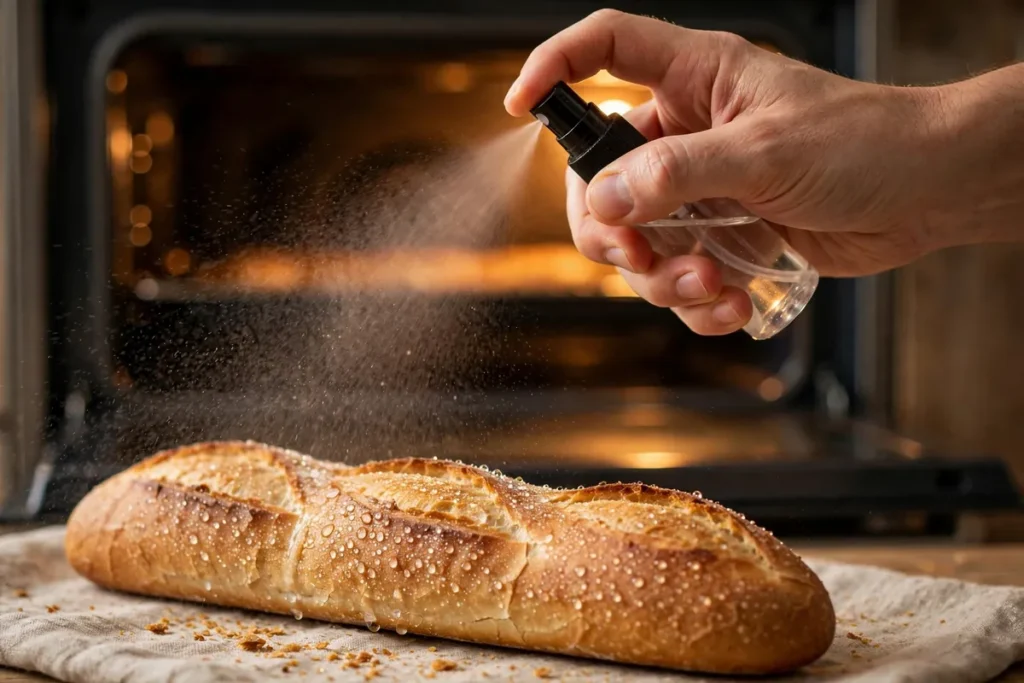
- The oven refresh: Spritz the loaf lightly with water, then bake at 350°F (175°C) for 5–10 minutes (slices: 3–5 minutes). The heat re-gelatinizes the starches and re-crisps the crust. A day-old baguette comes back remarkably well; a three-day-old one becomes genuinely good again.
- The toaster rescue: For slices, toasting is the fastest revival — heat plus browning masks a multitude of staling sins.
- Beyond revival: Truly stale bread has a second career. Cube it for croutons (toss with oil, bake 375°F / 190°C until crisp), blitz into breadcrumbs, or make panzanella, strata, or bread pudding — dishes where stale bread actually outperforms fresh.
Storage mistakes, ranked by damage
- The fridge. Accelerates staling ~3×. The #1 bread-storage sin, and the most common.
- Bagging warm bread. Trapped steam = gummy crust and a mold invitation. Cool completely first — at least 1–2 hours on a rack.
- Plastic on crusty bread. Leathery crust within hours. Paper or linen for anything with a crackle.
- Pre-slicing a whole loaf “for convenience.” Every cut face is a moisture exit. Slice as you eat.
- The microwave “refresh.” Ten seconds of softness followed by bread harder than before — microwaves accelerate retrogradation as the bread cools. Use the oven.
Frequently asked questions
Should you refrigerate homemade bread?
No — never. Starch recrystallization (the main mechanism of staling) runs about three times faster at refrigerator temperatures than at room temperature. Room temp in appropriate wrapping keeps bread fresh days longer than the fridge.
How long does homemade bread last?
Crusty artisan loaves: 2–3 days at room temperature (paper bag, cut-side down). Soft sandwich loaves: 3–4 days airtight. Enriched breads (brioche, challah) keep longest. Frozen sliced and airtight: 3 months with minimal quality loss.
Why does my bread go stale so fast?
Two likely causes: you’re refrigerating it (the #1 accelerator), or you’re comparing it to store-bought bread full of preservatives and conditioners. Homemade bread stales faster by nature — proper room-temp storage and freezing are the honest fixes, not a recipe problem.
Can you freeze homemade bread?
Yes — it’s the best long-term method. Slice first, wrap airtight (plastic wrap + freezer bag), freeze up to 3 months at 0°F (-18°C). Thaw wrapped at room temperature, or toast slices straight from frozen.
How do you refresh stale bread?
Spritz lightly with water and bake at 350°F (175°C) for 5–10 minutes (3–5 for slices). The heat re-gelatinizes starches and re-crisps crust. For slices, the toaster is fastest. Past revival, repurpose: croutons, breadcrumbs, panzanella, bread pudding.
Is it safe to eat week-old bread?
If it shows no mold and was stored properly, yes — staleness is a texture issue, not a safety one. Check carefully for any fuzzy spots (especially in warm, humid kitchens), and when in doubt, throw it out. Mold on soft bread means the whole loaf is compromised, not just the visible spot.
Related troubleshooting: How to Tell When Bread Is Done · Why Is My Sourdough Gummy Inside? · How to Freeze Cookie Dough · Make-Ahead Bread Dough