
The hump is the whole point of a madeleine — that proud dome on the back separating a madeleine from a vaguely shell-shaped sponge. Flat madeleines taste fine but look wrong, and every baker knows it. The encouraging part: the hump isn’t luck. It’s thermal-shock physics, and once you understand the mechanism it becomes repeatable.
Quick diagnosis: No hump means no thermal shock — batter not cold enough, oven not hot enough, or both. Rest the batter at least 2 hours (overnight is better), chill the filled pan, bake at a true 425°F (220°C). Those three together produce the hump nearly every time.
The hump science, in plain terms
The hump is a race between the batter’s center rising and its edges setting. Cold batter hits a very hot oven: baking powder reacts violently and steam erupts — but the edges, touching hot metal, set almost immediately and lock. The center, insulated by surrounding batter, stays fluid longer and keeps rising with nowhere to go but up. Set edges plus still-rising center equals hump.
Everything below widens that differential. Cold batter slows the center’s setting. A hot oven accelerates the edge’s setting. A cold pan adds a head start. Remove any one and the race evens out — flat madeleine.
1. The batter wasn’t rested — the #1 hump killer
Madeleine batter must rest refrigerated a minimum of 1–2 hours; overnight is genuinely better. The rest chills the batter thoroughly (thermal shock needs cold batter — 38°F/3°C, straight from the fridge, not “sat on the counter while the oven preheated”), hydrates the flour for a tender crumb, and thickens the batter so it holds shape in the shells.
How to tell: You mixed and baked within the hour, or rested at room temperature. The batter was pourable-thin rather than thick and spoonable.
The fix: Make the batter the night before and refrigerate covered. Portion it thick, cold, and scoopable. This single change produces more humps than every other fix combined, because most bakers underestimate how cold “cold batter” must be.
2. The oven wasn’t hot enough
Madeleines need an opening blast of 425°F (220°C) — that’s what sets the shell edges fast while the center climbs. At 350°F (175°C), a normal cake temperature, everything heats gently and evenly, the edges never get their head start, and no hump forms. Lukewarm ovens make flat madeleines, full stop.
How to tell: You baked at 350–375°F, they took 12–15 minutes, and browned evenly all over rather than deeply on the ridged shell side.
The fix: Preheat to a verified 425°F (220°C) — check with an oven thermometer, since most home ovens run cool and a “425°F” that’s really 400°F costs you the hump. Bake 8–10 minutes until edges are deep golden and humps set. Some bakers drop to 375°F (190°C) after 4 minutes to finish gently; either way, the opening blast must be genuinely hot. Don’t open the door early — the temperature drop collapses the race.
3. The pan wasn’t cold (or wasn’t prepped right)
The pan is the third leg of the tripod. A room-temperature pan starts warming the batter edges before the oven gets involved, narrowing the differential. The classic French technique freezes the buttered, floured pan while the oven preheats.
How to tell: You buttered the pan at room temperature and filled immediately, or madeleines stuck and tore.
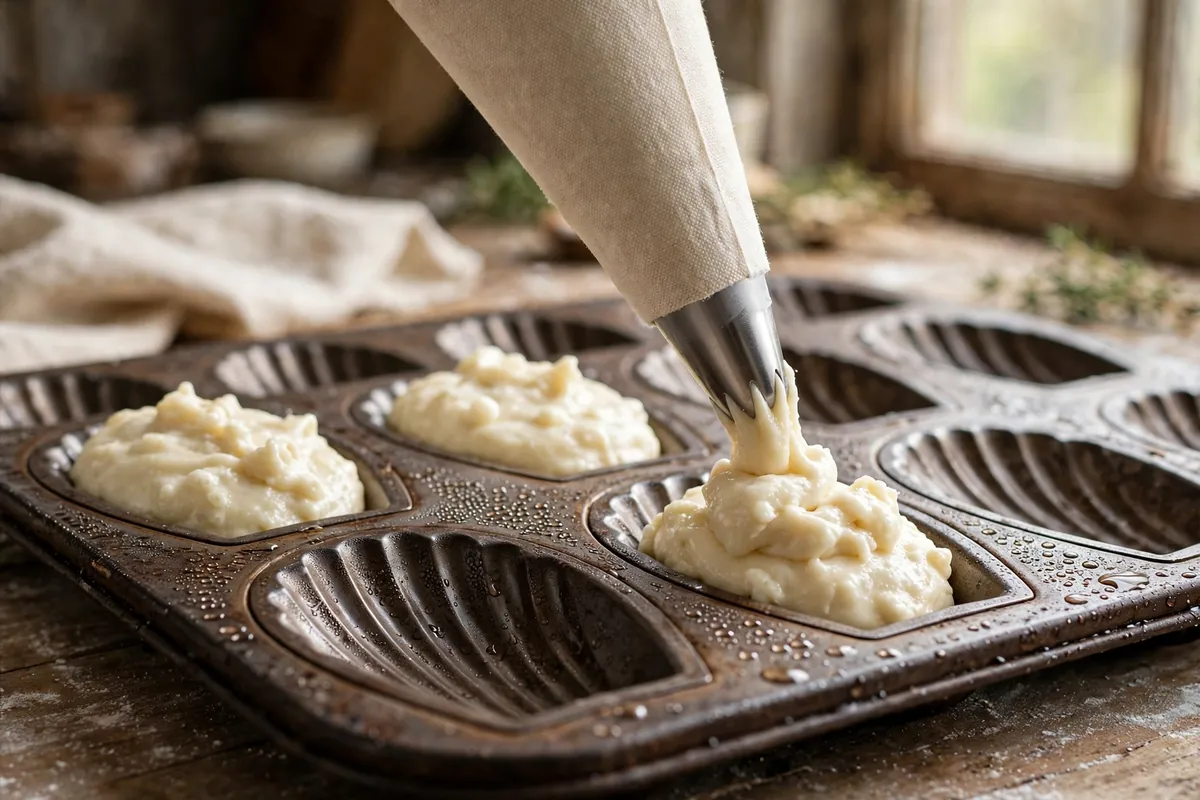
The fix: Butter every shell with soft butter — a pastry brush reaches the ridges — dust with flour, tap out excess, freeze 15–20 minutes. Pipe the cold batter into the cold shells (fill ¾ full, never to the brim — overfilled shells spill over and the hump has no room) and get the pan into the hot oven immediately. Cold batter, cold pan, hot oven: the trinity. Traditional tinned steel transfers heat faster than nonstick and gives a slightly better hump.
4. The baking powder was dead
The hump is a leavening event, and leavening needs live leavener. Baking powder loses potency within 6–12 months of opening, faster in humid kitchens. Weak powder means weak oven spring, and weak oven spring means no hump regardless of temperature.
How to tell: The powder is of unknown age, the madeleines are dense as well as flat, and other bakes have been flat lately too.
The fix: Test it — a teaspoon in hot water should fizz vigorously; a lazy fizzle means replace. Write the opening date on the tin. Madeleines use about 1 teaspoon per 100g flour; don’t increase it to compensate for dead powder (metallic taste) — replace the powder instead.
5. You overmixed — or added the butter too hot
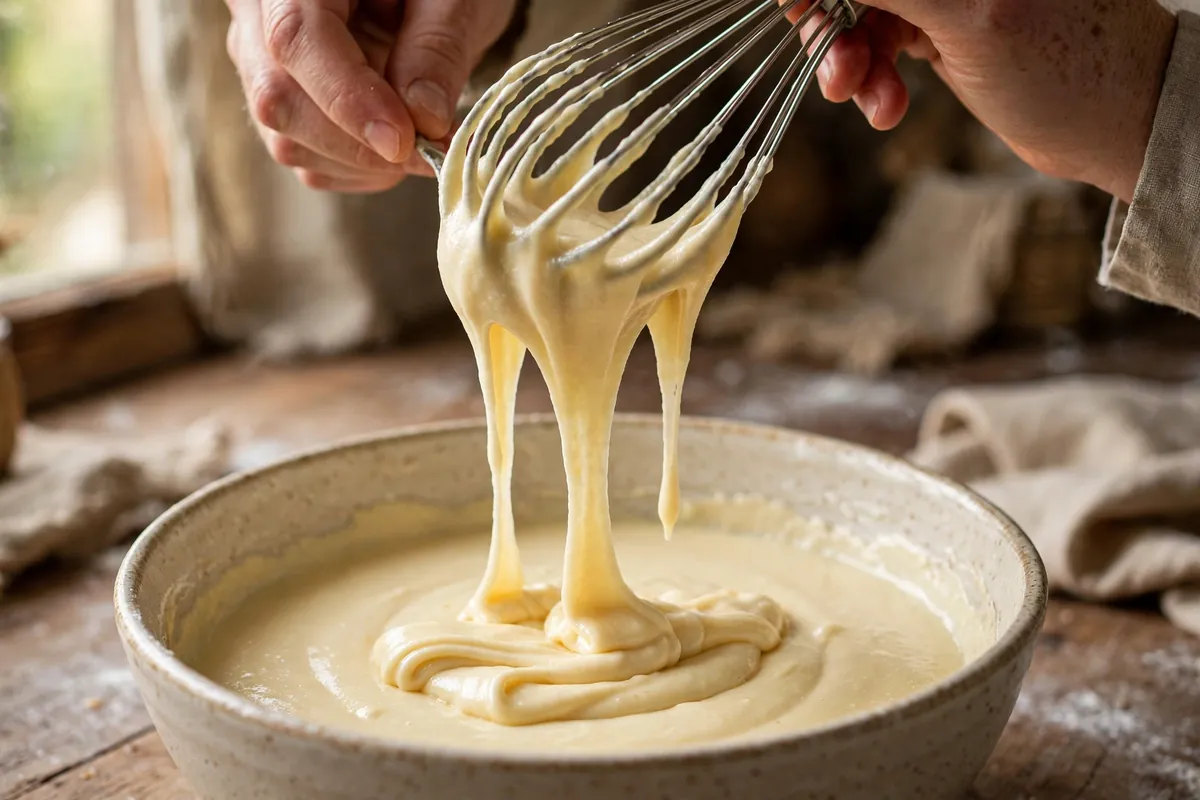
Overmixing develops gluten, and gluten is elastic: it resists the upward push forming the hump and toughens the famously tender crumb. Mix only until the flour disappears. Related: the classic beurre noisette (brown butter) must cool to lukewarm before folding in — hot butter deflates the whipped eggs and partially cooks the flour, both flattening the rise.
How to tell: The batter was smooth and stretchy rather than thick and soft, or you poured in sizzling butter and watched the batter deflate.
The fix: Fold with a spatula, minimal strokes, stop when no dry flour remains. Brown the butter for its signature nutty depth, then cool 10 minutes before folding in. Whip eggs and sugar to ribbon stage — thick, pale, falling in ribbons — since that trapped air is half the hump’s lift.
The hump checklist
Night before: mix batter, refrigerate overnight. Bake day: butter and flour the pan, freeze 15 minutes. Oven to verified 425°F (220°C). Fill cold shells ¾ full with cold batter, bake immediately, 8–10 minutes, no peeking. The hump was never luck — just temperature differential, and now you control all three sides of it.
FAQ
Can I still eat flat madeleines?
Absolutely — same delicious buttery cake, minus the dome. Dip in chocolate, sandwich with jam or lemon curd, or serve with berries and cream. The hump is presentation and tradition, not flavor or safety.
Do I really need to rest madeleine batter overnight?
Overnight is ideal; 2 hours minimum refrigerated works. The rest must be cold — room-temperature resting hydrates flour but doesn’t chill the batter, and without cold batter there’s no thermal shock, no hump. Never skip the chill.
What temperature do I bake madeleines at?
425°F (220°C), verified with an oven thermometer — the opening blast sets edges fast while the center rises. Bake 8–10 minutes until deep golden. At 350°F the edges never get their head start and the hump won’t form.
Why do recipes call for brown butter in madeleines?
Flavor — browned milk solids give the signature nutty, caramel depth. It doesn’t directly affect the hump, but the butter must cool to lukewarm before folding in; hot butter deflates whipped eggs and flattens the rise.
Can I fix madeleines that already baked flat?
No — the hump forms in the oven’s first minutes from thermal shock and can’t be retrofitted. Repurpose them: chocolate-dipped, sandwiched with curd, or as a trifle base. Put the fix into the next batch’s rest, pan chill, and oven temp.
Why are my madeleines dense as well as flat?
Dense plus flat points to dead baking powder or deflated eggs. Test the powder in hot water (should fizz vigorously), whip eggs and sugar to full ribbon stage, and fold flour gently — overmixing builds gluten that resists the rise.
Related troubleshooting: Why Did My Cupcakes Overflow? Batter Fill Levels Explained · Why Is My Cake Dry? Moisture Science for Home Bakers · Why Did My Cinnamon Rolls Unravel? Shaping and Proofing Fixes