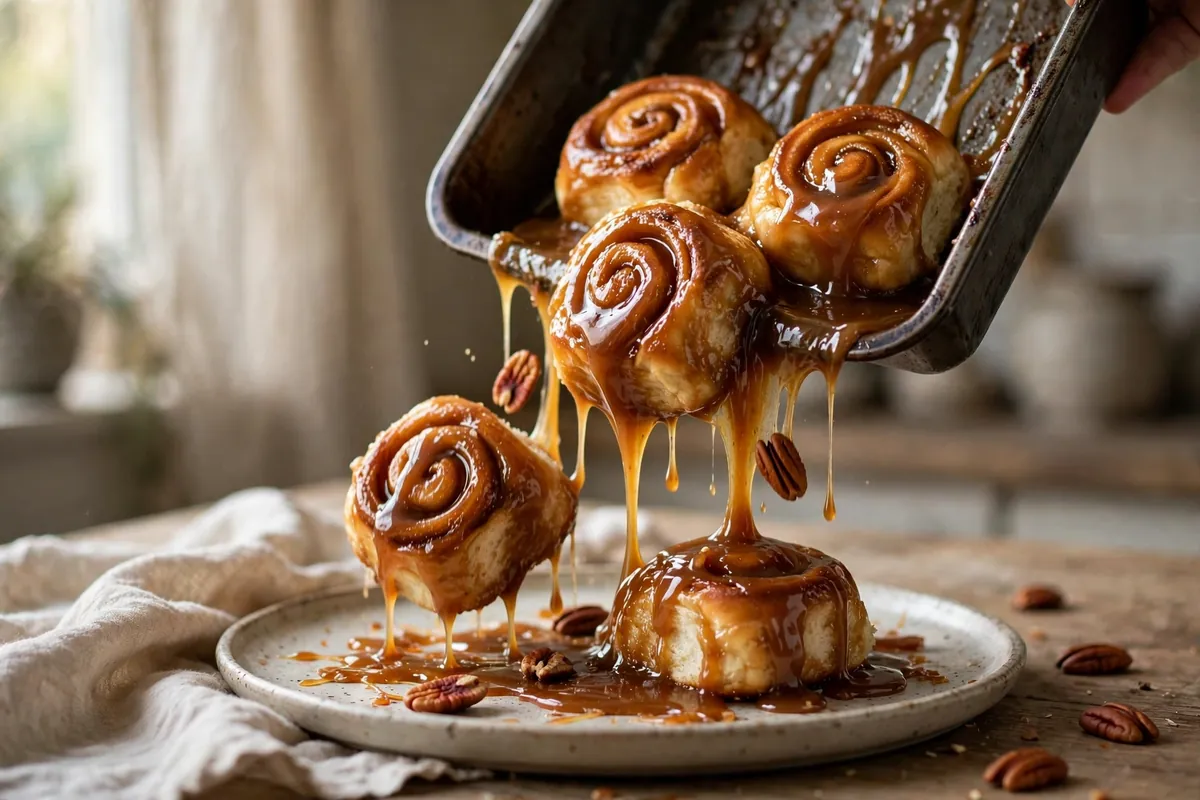
Sticky buns are a high-wire act: caramelizing sugar on the bottom, enriched dough on top, one oven cooking both at once. Burnt caramel and raw centers are the same problem in two costumes — the outside browning faster than the inside bakes through.
Quick diagnosis: Burnt bottoms mean your oven runs hot or your pan is too dark — drop to a true 350°F (175°C) and use a light-colored metal pan. Raw centers mean the rolls were overcrowded or underbaked — give them space, bake 25–30 minutes until the centers hit 190°F (88°C), and flip the pan within 5 minutes of baking.
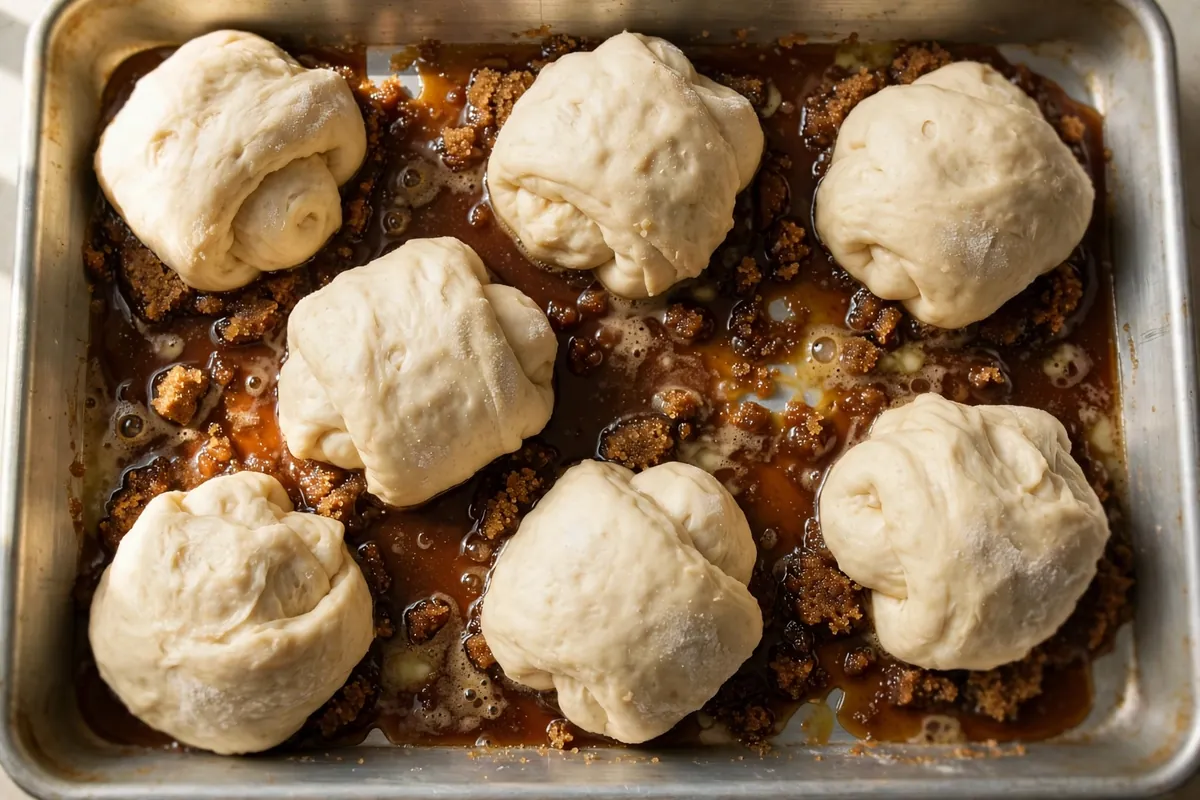
My baseline. Dough: 500g flour, 7g instant yeast, 60g sugar, 60g soft butter, 1 egg, 240ml warm milk, 8g salt (see Why Didn’t My Bread Rise? if it won’t cooperate). Topping: 115g butter melted with 200g brown sugar and 60ml honey, pinch of salt — stirred just until dissolved and gently bubbling, NOT dark caramel. Pour into a buttered 9×13-inch light metal pan, add pecans, arrange rolls cut-side up with breathing room, proof 30–45 minutes until puffy, bake at 350°F (175°C) for 25–30 minutes.
1. The sugar burned — your caramel went too far, twice
Burnt topping has two crime scenes: stovetop and oven. On the stovetop, cooks treat the butter-sugar mix like real caramel and cook it to amber — but it spends 25+ minutes in the oven, so it must go in undercooked. In the oven, dark nonstick or glass pans run hotter on the bottom than light metal, scorching the topping while the rolls still bake.
How to tell: Bitter or acrid rather than sweet and buttery, dark brown to black in spots, scorched smell when you open the oven.
The fix: Stovetop: melt butter and sugar just until dissolved and gently bubbling — 2–3 minutes, no darker than light tan. Oven: verify a true 350°F (175°C), use light-colored metal (dark pans burn the topping — see Baking Pan Materials), and tent with foil if the tops brown too fast.
2. Raw centers — the rolls insulated each other
Twelve rolls crammed in a 9×13 pan are one giant dough mass; heat travels far to reach the middle. Rolls touching tightly before proofing can’t expand outward — centers stay dense and doughy while tops overbrown.
How to tell: Middle rolls gummy or tasting of raw flour while outer rolls are done; rolls look squashed and tall — no room to spread.
The fix: Space rolls 1 inch apart — they’ll touch after proofing, fine. Bake until middle-roll centers hit 190°F (88°C) on an instant-read thermometer; it overrules the clock. Tops done but centers not? Tent with foil and keep baking. Thermometer-checked buns were perfect every time; timer-only were a lottery.
3. You didn’t flip fast enough — the caramel became cement
The topping is molten sugar; the moment the pan leaves the oven it starts setting. Wait 15 minutes and it welds the rolls to the pan — you’ll tear the buns freeing them.
How to tell: Rolls stuck to the pan, topping left behind as a hard sheet, buns torn on serving.
The fix: Flip within 5 minutes — set a timer. Run a thin knife around the edge, place a platter over the pan, invert in one motion. Scrape any stuck topping over the buns. Wear oven mitts; hot caramel is unforgiving. (Related: Why Did My Cinnamon Rolls Unravel?.)
4. The proof was wrong — under-proofed buns bake up dense, over-proofed collapse
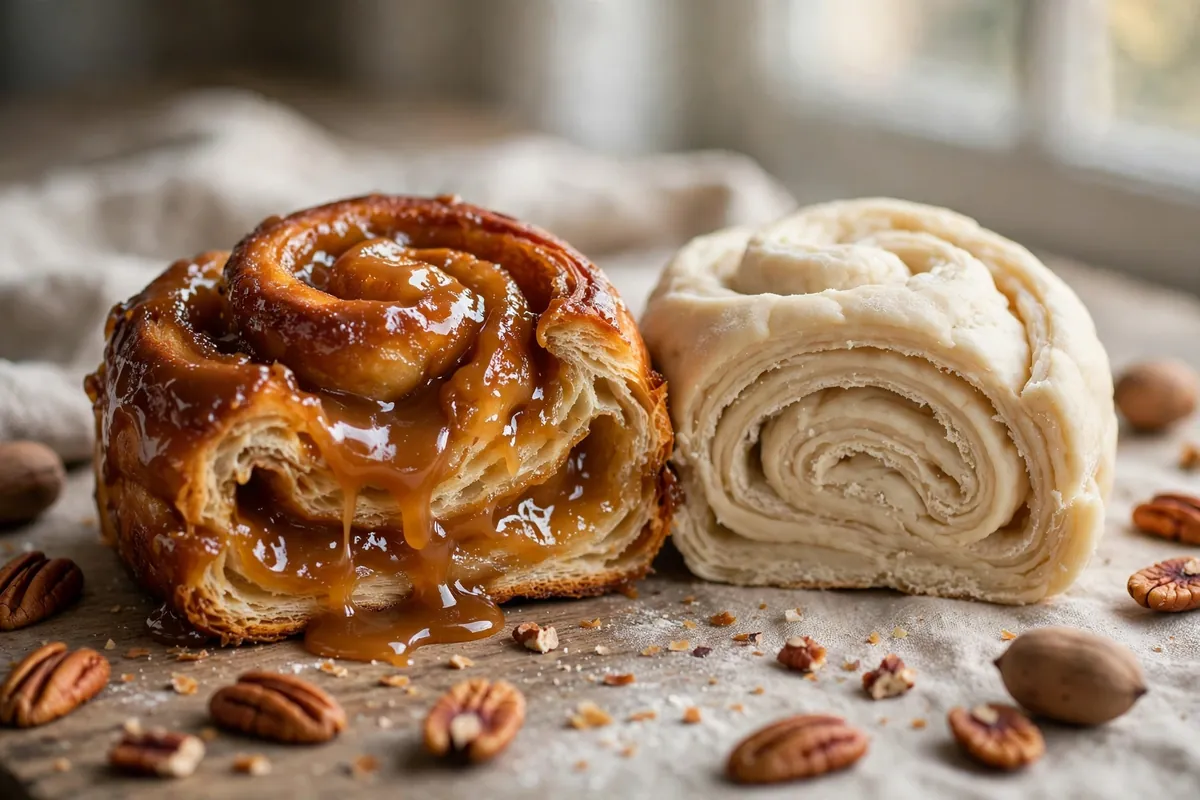
After shaping, proof 30–45 minutes in a warm spot until puffy. Under-proofed rolls bake dense — tight crumb reads as doughy even when baked through. Over-proofed rolls collapse into flat, gummy disks.
How to tell: Under-proofed: small going in, tight bready crumb. Over-proofed: huge and jiggly going in, deflated in the oven, sour yeasty smell.
The fix: Poke test, not clock: springs back immediately = 15 more minutes; slow partial fill = ready; indent stays and roll looks slack = over-proofed (bake anyway — the caramel forgives). Proof at 75–80°F (24–27°C); cold kitchens double the time.
5. The filling leaked and burned — too much, too wet, too loose
Escaped filling lands on the hot topping and scorches — black bitter streaks between buns are leaked filling, not failed caramel. It leaks when the filling is too thick, the roll too loose, or the log unsealed.
How to tell: Dark burnt streaks between rolls, filling oozing out the sides, rolls partially unwound.
The fix: Spread filling thin — 2–3 tablespoons soft butter, light even cinnamon sugar, ½-inch border on the far edge. Roll tight, seal the seam with water, slice with floss or a sharp serrated knife, place seam-side down.
Frequently asked questions
Can I fix burnt sticky buns?
Partially. Scrape off black, bitter topping — burnt sugar’s acrid flavor can’t be rescued. If just dark, serve as intended; the caramel still shines. Scorched batches become bread pudding: cube, soak in custard, bake.
What if the caramel hardened in the pan and the buns are stuck?
Return the pan to a warm 200°F (95°C) oven for 5 minutes to re-melt the sugar, then flip immediately. Never chisel at cold caramel.
Can I make sticky buns ahead? Overnight?
Yes. Assemble in the caramel-lined pan, cover, refrigerate overnight (up to 12 hours). In the morning, rest 45–60 minutes at room temperature until puffy, then bake. The cold retard improves flavor. (See Make-Ahead Bread Dough.)
Why did my sticky buns stick to the pan?
Three reasons: you didn’t butter the pan before adding the topping, you waited too long to flip, or you used a pan with a damaged nonstick coating. Butter the pan generously, flip within 5 minutes, and the buns release cleanly.
Is it safe to eat sticky buns with doughy centers?
Raw flour can carry bacteria — bake until centers reach 190°F (88°C). When in doubt, bake 5 minutes more under foil.
Can I use a glass pan for sticky buns?
You can, but drop the oven temperature by 25°F (to 325°F / 165°C) — glass holds heat longer and runs hotter on the bottom, which burns the sugar topping. Light metal is still the best choice.
Related troubleshooting: Why Did My Cinnamon Rolls Unravel? · Why Didn’t My Bread Rise? · Baking Pan Materials: Which Pan for What