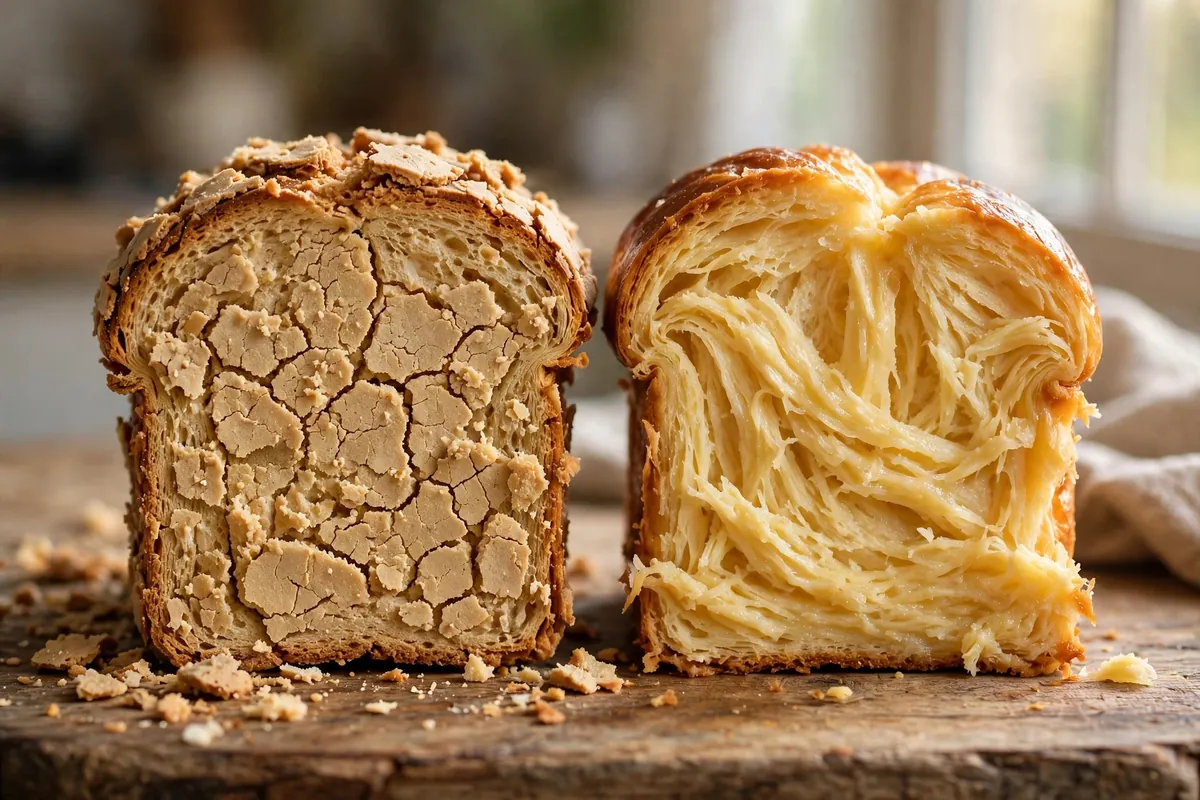
You did the hard part — the long knead, the butter worked in piece by piece, the slow rise. Then the loaf came out dry and cottony, nothing like the buttery, pull-apart brioche you were promised. Dry brioche is frustrating because the ingredient list looks rich — but richness on paper and moisture in the crumb are different things.
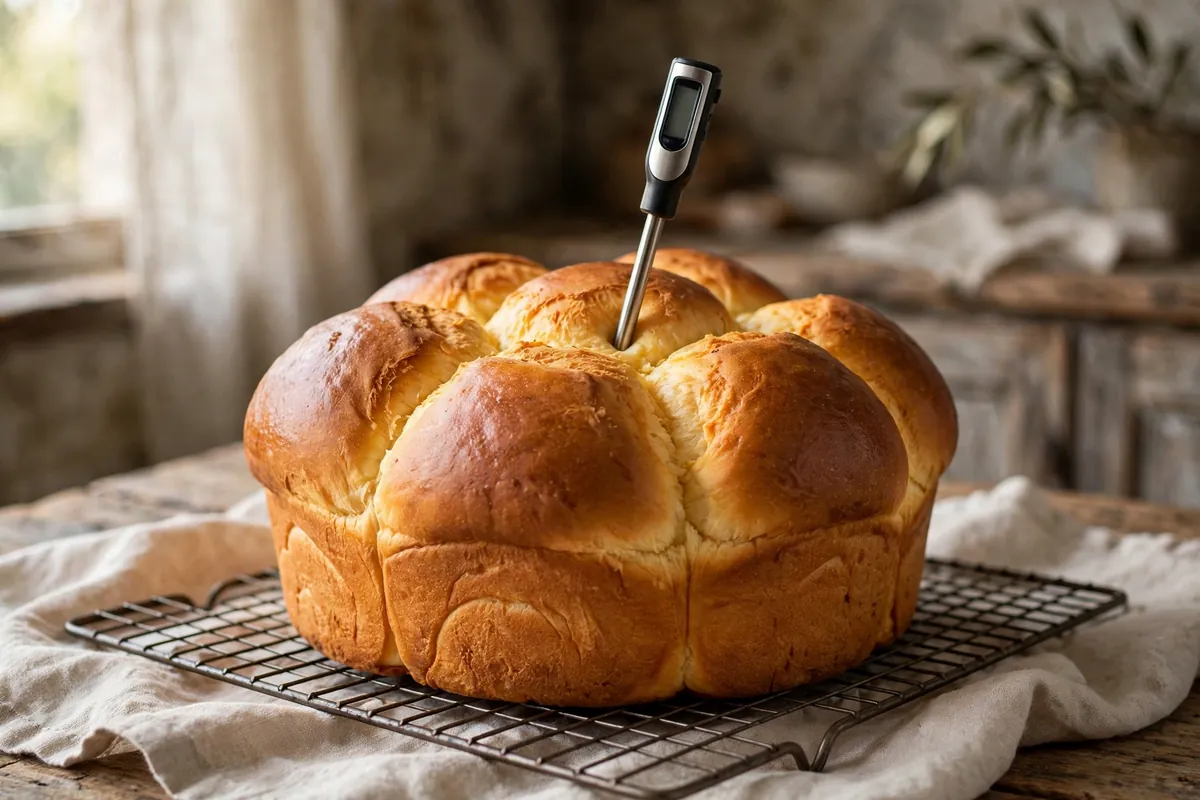
Quick diagnosis: Dry brioche is almost always overbaked (cause #1) — enriched doughs dry out fast past 190°F (88°C) internal — or under-kneaded so the butter leaked out instead of staying emulsified in the crumb (cause #2). Check your thermometer first.
Brioche is roughly half butter by flour weight, plus eggs and sugar — tender only if the gluten holds the fat and you stop the bake before the moisture escapes.
1. You overbaked it — the #1 killer of enriched doughs
A lean artisan loaf is done at 200–210°F (93–99°C) internal. Brioche is done at 190°F (88°C). That ten-degree gap is enormous in an enriched dough: butter and egg proteins tighten and squeeze out moisture fast past their set point. Five extra minutes that would barely register on a baguette turns brioche cottony.
How to tell: The crust is deeply browned, the crumb is dry all the way through, and you baked by time or color instead of temperature.
The fix: Bake at 350–375°F (175–190°C) and start checking early — a loaf-pan brioche is often done at 25–30 minutes. Pull it the moment the center reads 190°F (88°C), tent with foil if the top browns first, and remember carryover adds a few degrees on the counter. Switching from “bake until golden” to “bake until 190°F” fixes more dry brioche than every other change combined. (Same thermometer-first habit works for lean loaves: How to Tell When Bread Is Done.)
2. The gluten was underdeveloped — so the butter leaked out
Brioche needs a fully developed gluten network before the butter goes in, and more kneading after. Gluten is the scaffolding that holds fat suspended in the crumb. If it’s weak, butter melts during baking and runs out instead of staying emulsified — dry crumb, sometimes a greasy pan.
How to tell: Butter visibly leaked into the pan, the crumb is dry but greasy at the bottom, and the dough tore instead of stretching thin when tested.
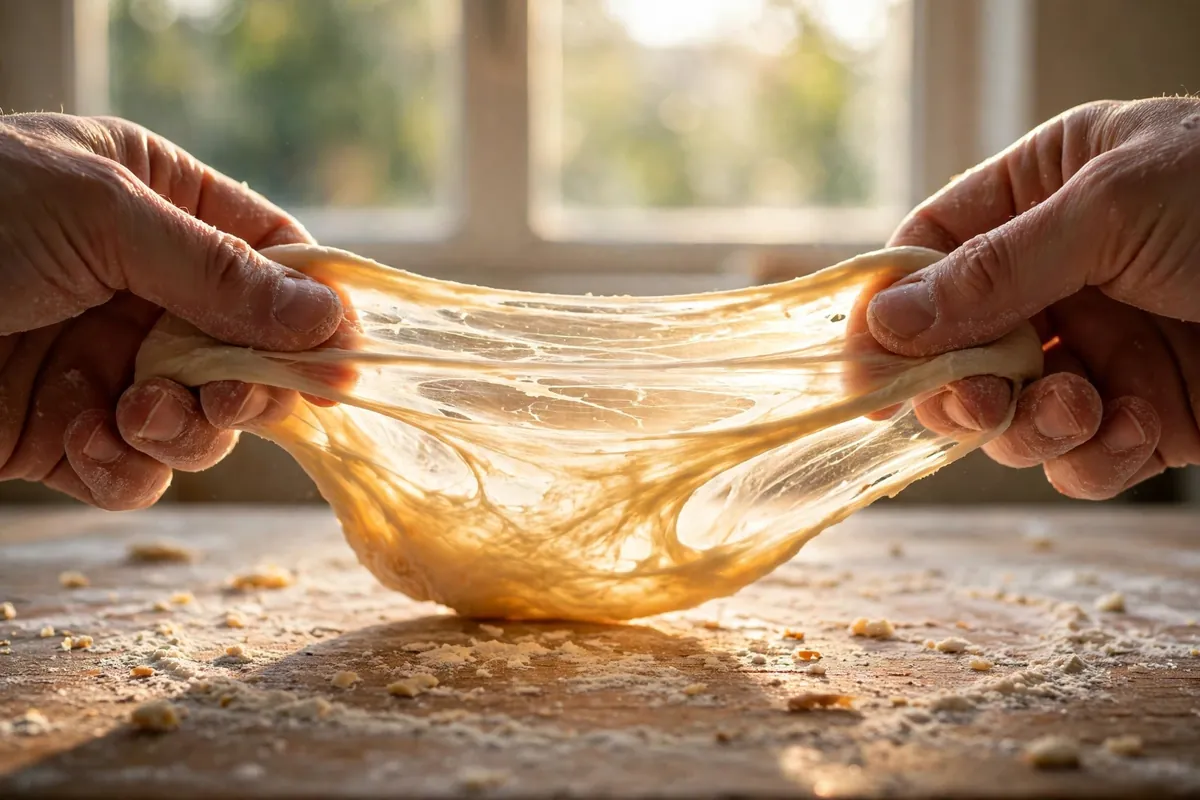
The fix: Knead the base dough (flour, eggs, sugar, yeast, salt, milk) to a full windowpane first — a translucent membrane that stretches without tearing — then add soft (not melted, not cold) butter a tablespoon at a time. The dough will look broken halfway through; that’s normal. Keep going — 25 to 30 minutes in a stand mixer is typical — until smooth, elastic, and passing the windowpane again. Testing the windowpane twice, before and after the butter, stopped my brioche leaking entirely.
3. There wasn’t enough fat — the enrichment was too lean
True brioche runs 50% butter to flour by weight — 250g butter per 500g flour. Many “brioche” recipes cut that to 25–30%, and at that point you’re baking a slightly rich sandwich bread. It will never have shreddable, buttery tenderness no matter how perfect your technique is.
How to tell: The recipe’s butter was under ~40% of flour weight, the dough was quick and easy to knead, and the crumb is bread-like rather than cake-like.
The fix: Check the ratio before blaming technique: for 500g flour, use at least 200g butter (40%), ideally 250g (50%). Don’t cut the butter to lighten the recipe — in brioche, the butter is the moisture system. Use real butter, not oil: its milk solids and solid-at-room-temperature structure are part of what makes the crumb tender. (More on when fat and flour choices matter: Bread Flour vs All-Purpose: When It Actually Matters.)
4. The oven ran too hot — set crust, dry center
Brioche’s sugar and milk solids brown fast. In an oven running hot — most home ovens are 15–25°F off — the crust sets and darkens before the center finishes, so you either pull a pale-centered loaf or leave it in until the whole thing dries out.
How to tell: The top browned deeply well before the timer ended and the center is dry even though the loaf looked done early.
The fix: Verify with an oven thermometer and bake at a true 350°F (175°C). Tent loosely with foil once the top reaches the color you want, usually around the two-thirds mark, and use the lower-third rack so bottom heat drives the center done.
5. You sliced too soon — or stored it wrong
Brioche finishes setting as it cools. Slicing warm lets steam escape that would otherwise settle back into the crumb as moisture. And enriched breads stale faster than lean ones uncovered — a brioche left out is noticeably drier by morning.
How to tell: The loaf seemed fine at first and dried out over hours, or you cut the first slice warm and the crumb felt gummy, then dry.
The fix: Cool completely — a full 2 hours — before slicing. Store cut-side down on day one, then sealed in a bag or bread box; skip the refrigerator, which accelerates staling. Brioche freezes beautifully up to 3 months: slice first, wrap tight, refresh at 300°F (150°C) for 5 minutes. (Full playbook: How to Store Homemade Bread So It Stays Fresh for Days.)
The checklist for next time
50% butter to flour. Full windowpane before and after the butter goes in. True 350°F (175°C) oven. Pull at 190°F (88°C) internal. Cool 2 hours before slicing. And if you want to split the work, a slow fridge ferment improves both flavor and texture — timelines are in Make-Ahead Bread Dough: Fridge Fermentation Timelines.
FAQ
Is dry brioche safe to eat?
Yes — dryness is a texture defect, not a safety issue. As long as the loaf baked through with no raw center and was stored normally, it’s fine. Repurpose it as French toast, bread pudding, or breadcrumbs, where dryness becomes an advantage.
Can I fix brioche that’s already baked dry?
You can’t restore the original tender crumb, but you can make it delicious. Brush slices with warm simple syrup and heat briefly, use thick slices for French toast (dry crumb absorbs custard beautifully), or cube it for bread pudding. Warming slices also perceptibly softens a dry crumb.
How much butter should brioche actually have?
At least 40% of flour weight; 50% is the classic benchmark — 250g butter per 500g flour. Below 40% you’re making enriched sandwich bread, and no technique produces true brioche tenderness. The fat is the moisture system — don’t cut it.
What internal temperature is brioche done at?
190°F (88°C) — notably lower than lean breads at 200–210°F (93–99°C). Enriched doughs dry out fast past 190°F as egg and butter proteins tighten and expel moisture. Start checking early and tent with foil if the top browns first.
Why did butter leak out of my brioche while baking?
Weak gluten. The dough must pass the windowpane test before the butter goes in and after it’s incorporated — about 25–30 minutes of mixer kneading total. Add butter soft, a tablespoon at a time; don’t stop when the dough looks broken midway, since it comes back together.
Can I use oil instead of butter in brioche?
You can, but it won’t be brioche in texture — oil gives a soft but slicker, less shreddable crumb. Butter’s milk solids add the signature flavor and help the crumb set tender.
Related troubleshooting: Why Is My Bread Dense? 9 Causes and How to Fix Each One · How to Tell When Bread Is Done · Make-Ahead Bread Dough: Fridge Fermentation Timelines