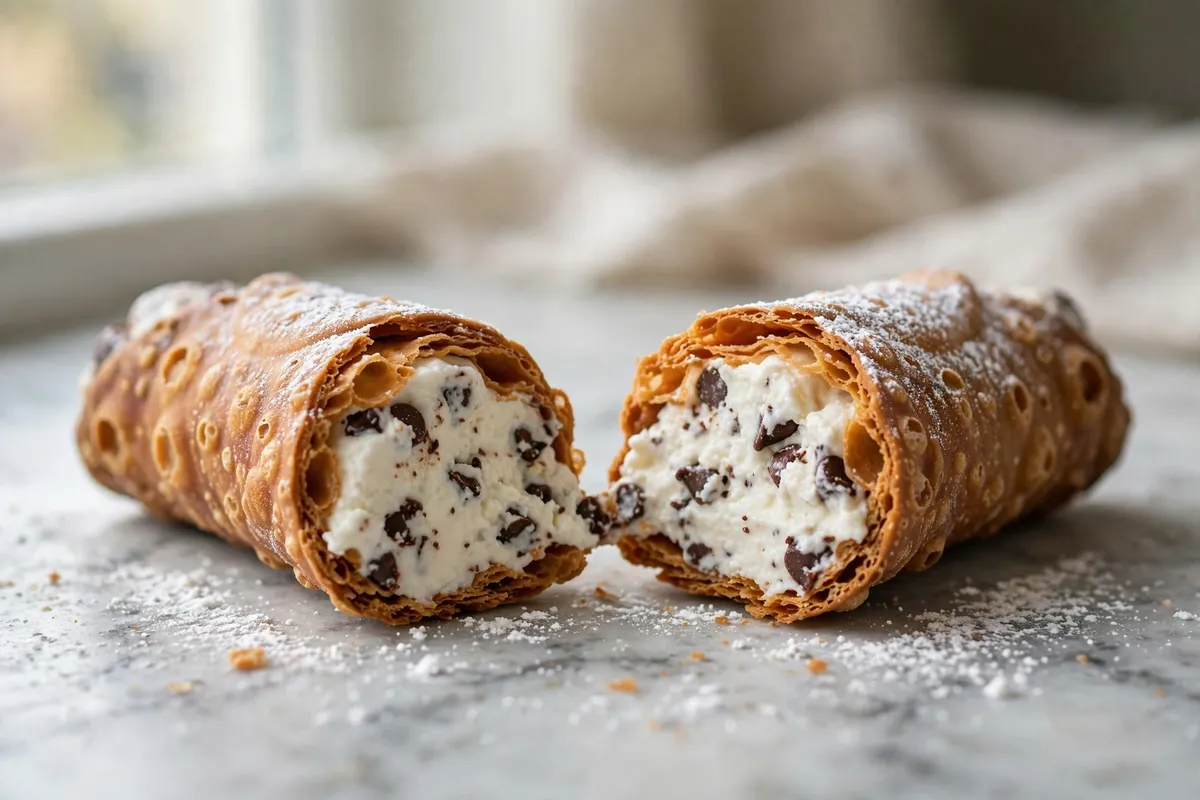
Cannoli has exactly one unforgiving rule, and it explains nearly every failure: the shell and the filling are enemies until the moment of serving. The shell wants to stay shatteringly crisp; the filling is wet and shares its moisture with everything it touches.
Quick diagnosis: Fill cannoli to order — never more than 1–2 hours before serving (most common fix). Drain whole-milk ricotta 8–24 hours in the fridge until it holds its shape on a spoon, fry shells at 360°F (182°C) until deeply golden, and store shells airtight at room temperature completely separate from the filling.
My tested baseline: shells from 250g flour, 30g sugar, 30g cold butter, 1 egg, 60ml Marsala, pinch of salt — rested 1 hour, rolled to 2mm, wrapped on tubes, fried at 360°F (182°C) about 2 minutes until golden. Filling: 500g whole-milk ricotta drained overnight, 100g powdered sugar, vanilla, cinnamon, 60g mini chocolate chips. Fill from both ends just before serving.
1. You filled them too early — moisture migration is relentless
This is the number one cannoli failure worldwide. Ricotta filling is roughly 70% water, and the moment it touches the shell, osmosis starts: water moves into the crisp pastry, starch softens, and within 2–3 hours your shattering shell is chewy. Refrigeration slows it but doesn’t stop it — and the fridge’s humidity attacks the shell from the outside too.
How to tell: The cannoli were crisp when filled and soft by serving time; the shell bends instead of cracking; the filling looks fine but the pastry is leathery.
The fix: Fill to order — pipe the filling in no more than 1–2 hours before serving; 30 minutes is ideal. In Sicilian pasticcerie, shells sit in the case and get filled while you watch. That’s not theater, it’s engineering.
2. The shells weren’t crisp enough to start with — frying temperature and thickness
A shell that’s pale, thick, or under-fried starts its short life already halfway to soggy. Proper cannoli shells are rolled thin (about 2mm — you should almost see through the dough), fried at a true 360°F (182°C), and come out deeply golden with a blistered surface. That blistered, fully-dehydrated crust is what resists moisture.
How to tell: The shells were never shatteringly crisp even fresh from the fryer; they’re pale blonde rather than golden; they feel thick and bready when you bite them.
The fix: Roll thinner than feels safe — the dough puffs and blisters in the oil. Keep the oil at a true 360°F (182°C) and fry 2–3 shells at a time so the temperature doesn’t crash (the same discipline as Churros, where oil heat makes or breaks the crust). Drain upright on a rack, not on paper towels where steam gets trapped.
3. Your ricotta wasn’t drained — the filling was water from the start
Supermarket ricotta sits in whey, and even “drained” tubs weep liquid. Undrained ricotta makes a filling that’s soupy enough to leak out the ends and soak the shell from the inside in minutes. No shell, however perfectly fried, survives a wet filling.
How to tell: Liquid pools in the filling bowl; the filling slumps off a spoon instead of holding a peak; whey leaks from the cannoli ends onto the plate.
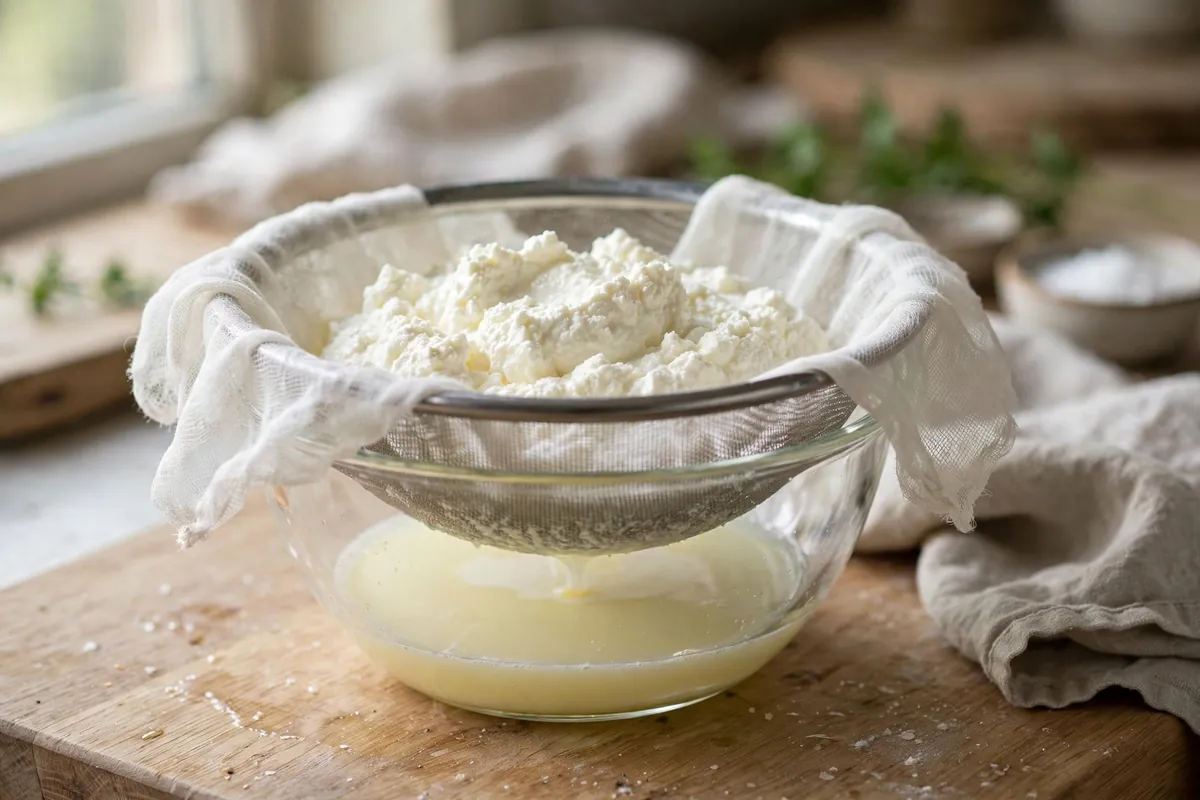
The fix: Drain 500g of whole-milk ricotta in a cheesecloth-lined sieve over a bowl, refrigerated, 8–24 hours. You’ll be shocked how much whey comes out — often 100ml+. The drained ricotta should hold its shape on a spoon. Then beat in powdered sugar, not granulated: it dissolves completely and its cornstarch absorbs residual moisture.
4. The filling broke or wept — overmixed or over-sugared
Ricotta filling can go from thick to weepy if it’s beaten aggressively (the curds break and release whey) or if granulated sugar is used (it draws water out of the ricotta over time — the same osmosis that softens the shell). A filling that was perfect at noon can be leaking by dinner.
How to tell: The filling looked good when made but wept liquid after sitting; it’s grainy and wet rather than smooth and thick.
The fix: Fold, don’t beat. Stir the sugar, vanilla, and cinnamon into the drained ricotta gently, just until combined, then fold in the chips. Make the filling the day you serve it and keep it refrigerated. Fill the shell completely from both ends — air pockets inside become soggy spots.
5. You stored them assembled — the overnight cannoli mistake
Filled cannoli do not keep — overnight in the fridge, the shell absorbs moisture from the filling inside and the humid air outside. By morning you have a soft tube of sweet cheese. Same moisture-barrier lesson as Soggy Bottom Pie.
How to tell: Yesterday’s crisp cannoli are today’s sad, soft ones; the shells taste stale-damp rather than fried-crisp.
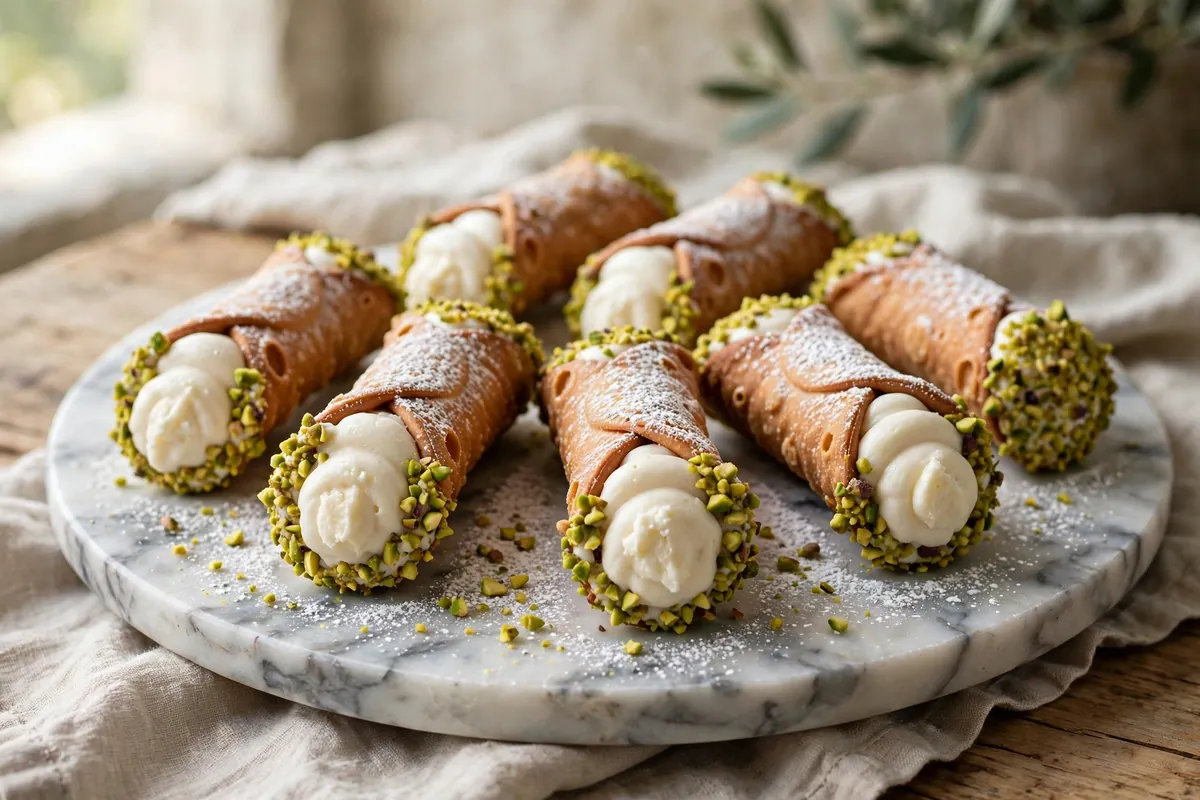
The fix: Store components separately, always. Shells: airtight at room temperature, up to 5 days. Filling: refrigerated, sealed, up to 3 days. Assemble within 2 hours of serving.
6. The chocolate lining — the professional defense
If you need filled cannoli to survive a long party, brush the inside of each cooled shell with melted dark chocolate and let it set — a moisture barrier that buys hours of crispness (and tastes excellent). Melt it carefully using the dry-kitchen protocol in How to Fix Seized Chocolate — one drop of water in the brush bowl would be an ironic disaster.
How to tell you need this: Even fill-to-order cannoli soften within the hour; you live somewhere humid; you’re serving outdoors.
The fix: The chocolate lining adds 10 minutes of work and transforms the holding time. Use dark chocolate, thin coat, fully set before filling. Your guests will think it’s just delicious — which it is.

Frequently asked questions
Are soggy cannoli safe to eat?
Yes — sogginess is a texture failure. The one safety note: ricotta filling is perishable, so filled cannoli shouldn’t sit at room temperature more than 2 hours.
Can I re-crisp cannoli shells that went soft?
Empty shells, yes: 10 minutes in a 300°F (150°C) oven on a rack drives the moisture out. Filled cannoli, no — re-crisp the shells, then fill and serve immediately.
Can I bake cannoli shells instead of frying?
You can, but they won’t be cannoli shells — more like crisp pastry tubes. The blistered, shattering texture comes from deep frying. If you bake them, the fill-to-order rule matters even more.
Why did my shells blister unevenly or burn on one side?
The oil temperature was off or the shells weren’t fully submerged and turned. Keep it at 360°F (182°C), don’t crowd the pot, and turn each shell once. Dark spots also come from sugar in the dough caramelizing — that’s flavor, not failure, as long as it’s golden-brown, not bitter-black.
Sheep’s milk vs. cow’s milk ricotta — does it matter?
Enormously, and it’s the single biggest upgrade available. Sheep’s milk ricotta is naturally thicker, drier, sweeter, and richer — it’s what Sicilian pasticcerie use, and it needs far less draining. If you can find it, use it; your filling problems mostly disappear.
Related troubleshooting: Soggy Bottom Pie: Causes and Fixes · Churros Troubleshooting · Choux Pastry Collapse: Why Your Éclairs Fell