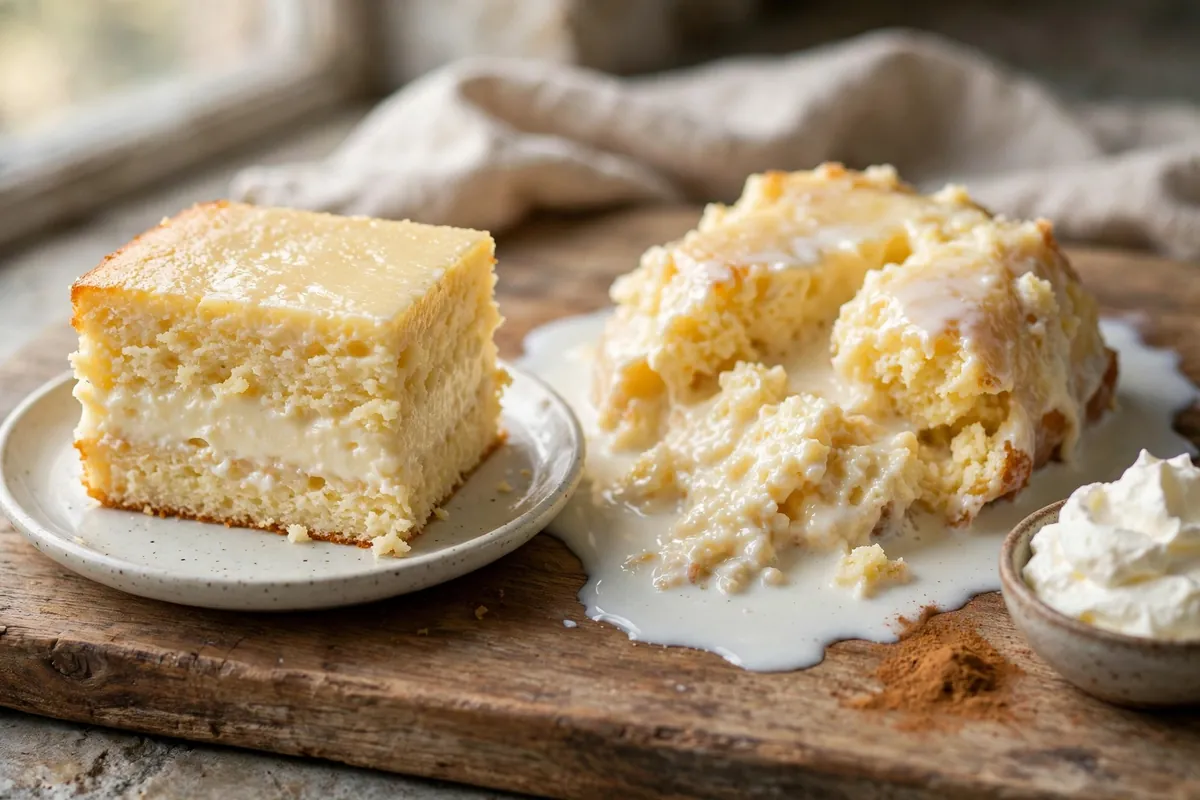
Tres leches should slice like a cloud and eat like custard — moist to the center, holding its shape, no puddle underneath. When it fails, it’s a sweet, milky swamp. Every waterlogged tres leches traces back to one of five failures: the wrong sponge, too much soak, a rushed pour, not enough rest, or a sugar-heavy soak mix.
Quick diagnosis: Your tres leches is soggy because the sponge was too dense to absorb the milk (a proper whipped-egg sponge is cause #1), or you used too much soak for the pan. Bake a true sponge, measure about 3½–4 cups of milk mixture for a 9×13-inch cake, pour it in two stages, and rest at least 4 hours — overnight is better.
My tested baseline, 9×13-inch (23×33 cm): 6 large room-temperature eggs, 200g (1 cup) sugar, 1 teaspoon vanilla, 180g (1½ cups) flour sifted with 1½ teaspoons baking powder and ¼ teaspoon salt, 80ml (⅓ cup) whole milk. Whip eggs and sugar 8–10 minutes to thick ribbon stage — ribbons that sit on the surface for 3 seconds. Fold in the dries in three additions, then the milk. Bake at 350°F (175°C) for 25–30 minutes, until springy and a toothpick comes out clean. Soak: one 12-oz can evaporated milk, one 14-oz can sweetened condensed milk, 1 cup (240ml) heavy cream — roughly 4 cups total.
1. You baked the wrong cake — a dense crumb can’t absorb the soak
This is the #1 cause, and it’s structural. A proper tres leches sponge is an egg-foam cake — open, springy crumb that drinks the milk. A butter cake, pound cake, or under-whipped sponge has a tight crumb with nowhere for liquid to go: the milk pools in the pan, the bottom disintegrates, the top stays dry.
How to tell: The cake felt heavy before soaking; slices show a tight, even crumb rather than an airy sponge; milk pools in the pan corners within an hour of pouring.
The fix: Whip to a true ribbon stage — don’t stop at “frothy.” Stop folding the moment the last flour streak disappears; every extra stroke deflates the foam and tightens the crumb. (Same foam-structure logic as Why Did My Pavlovas Crack? Meringue Shell Science.)
2. You drowned it — the soak volume exceeded what the pan could hold
Even a perfect sponge has a finite appetite. A 9×13 holds about 3½–4 cups of milk mixture; past that, the excess pools at the bottom and turns the lower third into porridge. Some recipes call for 5+ cups — “more milk” feels generous, but the cake can only drink so much.
How to tell: A pool of milk in the pan that never absorbs, even overnight; bottom slices translucent and falling apart while the top looks fine.
The fix: Stick to about 4 cups for a 9×13; reserve extra for pouring at the table. Pour in two stages — half, wait 20 minutes, then the rest; the second absorbs far better than one flood.
3. You poured it wrong — hot cake, no holes, all at once
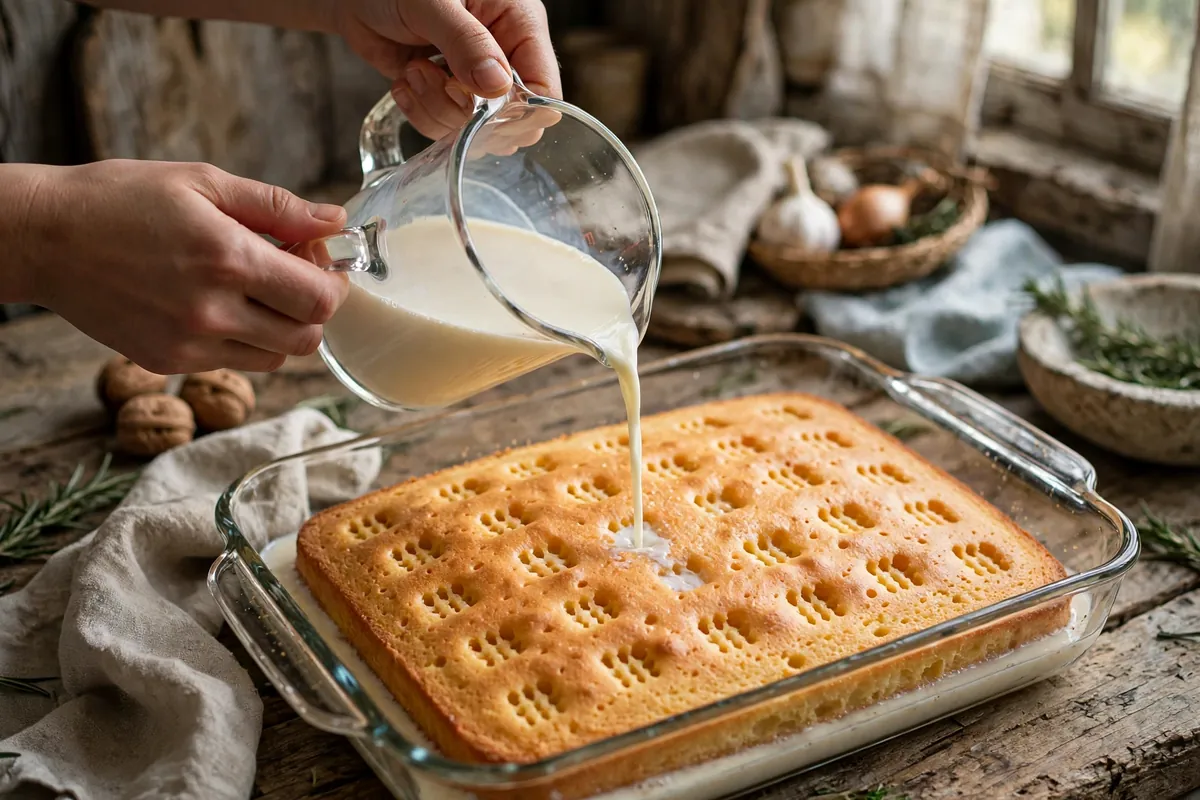
A hot sponge is full of steam — pour cold milk over it and the condensing steam collapses the crumb before the milk soaks in. No holes means the milk sheets off instead of wicking down, and dumping the whole batch at once overwhelms the crumb.
How to tell: The top looks pale and washed-out, the soak ran off into the pan corners, and the interior is unevenly soaked — wet patches next to dry ones.
The fix: Cool the cake completely — 30–40 minutes on a rack, still in the pan. Poke all over with a fork, holes an inch apart, nearly to the bottom. Pour slowly in a thin stream across the whole surface, pausing halfway. Room-temperature soak on a cool cake is the sweet spot. (Same even-absorption principle as Overbaked Cake? 5 Rescue Methods That Actually Work.)
4. You cut it too soon — the milk needs time to become the cake
Tres leches isn’t done when the milk disappears from the surface. The liquid needs hours to distribute through the crumb and set around the starches — that’s what turns “wet cake” into “custardy cake.” Cut at two hours and you’ll get weeping slices.
How to tell: The cake looked fine in the pan but released a puddle on the plate within minutes of slicing; the crumb near the cut looks wet rather than custardy.
The fix: Rest covered in the fridge at least 4 hours — overnight is genuinely better; my overnight cakes sliced with zero weeping, 2-hour cakes always shed liquid. Serve cold, not room temperature. Cut early? Return the pan to the fridge uncovered for an hour — it firms up noticeably.
5. Your soak mix was too heavy on condensed milk
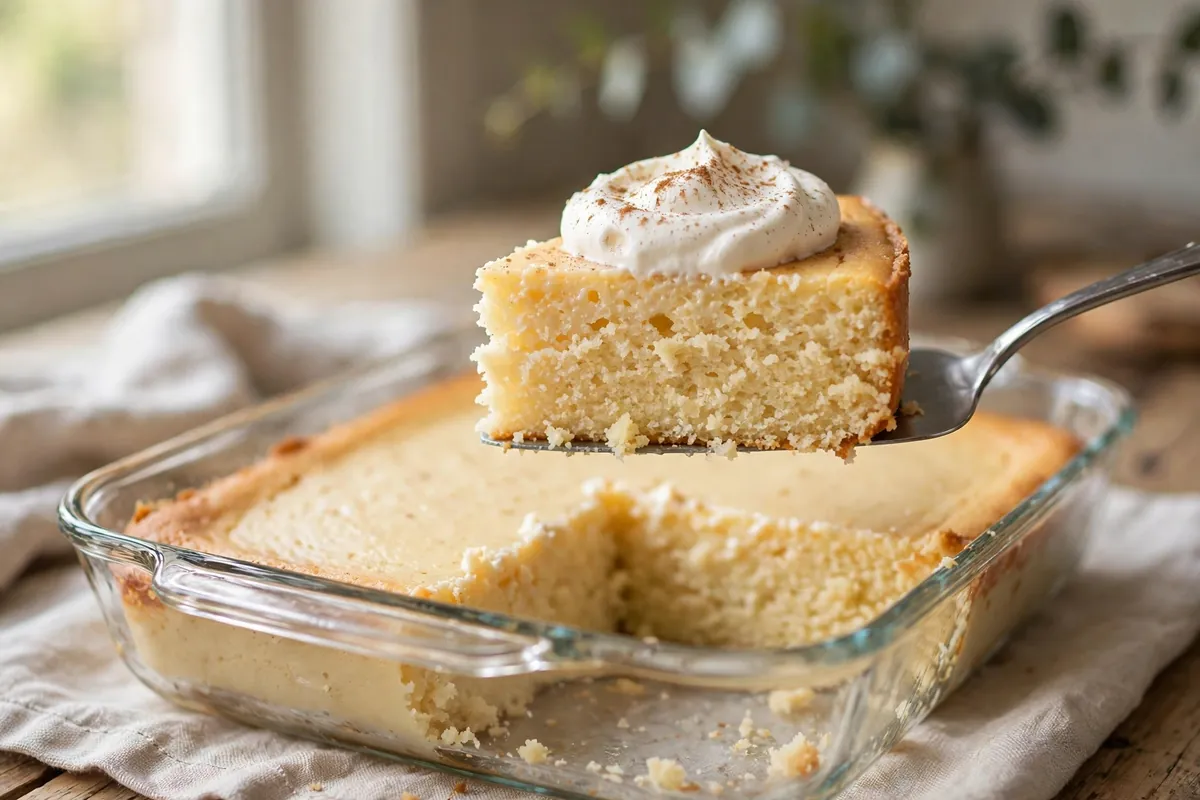
Sweetened condensed milk is the flavor backbone, but it’s dense sugar syrup — slow to absorb. A soak that’s mostly condensed milk coats the crumb instead of soaking in, giving a gummy, cloying layer. The evaporated milk and cream carry liquid deep; the condensed milk is the seasoning.
How to tell: The cake tastes intensely sweet but the center still seems under-soaked; the crumb is sticky and almost candied rather than milky.
The fix: Keep one can of condensed milk balanced by the evaporated milk and cream. Want it sweeter? Sweeten the whipped cream topping instead of the soak. (For the broader moisture picture, see Why Is My Cake Dry? Moisture Science for Home Bakers.)
Frequently asked questions
Can I fix a tres leches that’s already soggy?
Partly. Pour off pooled liquid; refrigerate uncovered 2–3 hours to firm the crumb. If the bottom has disintegrated, scoop the salvageable cake into glasses with whipped cream and fruit as a tres leches trifle. Nobody will know it was a rescue.
Is soggy tres leches safe to eat?
The sogginess itself is harmless — just excess milk. The risk is temperature: the soak is dairy, so refrigerate the cake and don’t leave it out more than 2 hours. Sat out all afternoon at a party? Discard it.
Why is my tres leches dry in the middle instead?
Usually too little soak, or a cake that wasn’t poked enough for the milk to reach the center. Next time, poke deeper holes and pour in two stages. Rescue a dry one by warming a cup of soak mixture and spooning it over individual slices.
Can I use a boxed cake mix for tres leches?
You can — many bakeries do. Pick plain white or yellow mix and reduce the soak by half a cup, since box mixes absorb less. Add the milk in stages and stop when the surface stays glossy instead of pooling.
Can I make tres leches two days ahead?
Yes — it improves on day two as the soak fully sets. Keep covered in the fridge up to 3 days. Add whipped cream on serving day, or it weeps into the cake. Freezing is a last resort; thawed tres leches is never as good.
Why did my tres leches crack on top?
The sponge overbaked — the top dried hard, then cracked as the interior absorbed liquid and expanded. Bake to just-done (toothpick clean, top springy) rather than deeply golden.
Related troubleshooting: How to Fix a Split Custard (And Why It Curdled) · Why Is My Banana Cake Gummy? Mixing and Moisture Fixes