Make-Ahead Bread Dough: Fridge Fermentation Timelines
Quick diagnosis: Shape your dough, then refrigerate it — most doughs happily wait 12–48 hours at 38–40°F (3–4°C), and the slow cold ferment actually improves flavor. Bake straight from the fridge (cold dough scores cleaner). Reduce yeast slightly for retards over 24 hours, and never refrigerate dough that’s already fully proofed.
The best bread trick I know isn’t a recipe — it’s a schedule. Cold fermentation, or “retarding” the dough in the fridge, lets you split bread-making across two days: mix and shape today, bake fresh tomorrow morning. The bonus nobody tells beginners: the bread tastes better. Those long, slow hours in the cold build the complex, slightly tangy flavors that make bakery bread taste like bakery bread.
Why the fridge works (the 60-second science)
Yeast is temperature-driven. At room temperature (75–80°F / 24–27°C), it’s racing; at fridge temperature (38–40°F / 3–4°C), it crawls — roughly 10–15 times slower. But the enzymes in the flour keep working steadily in the cold, breaking starches into sugars and developing flavor compounds the whole time. That’s the magic of retarding: fermentation slows to a near-standstill while flavor keeps building.
This is also why the fridge is forgiving. A dough that would over-proof in 45 minutes on a warm counter can sit safely for a day or more in the cold. Time becomes your ingredient instead of your enemy.
When to refrigerate: the two windows
You have two good moments to send dough to the fridge. Pick one — don’t do both, or you’ll over-ferment.
Window 1 — After bulk fermentation, before shaping (my preference for wet doughs). Let the dough complete its first rise at room temperature, then refrigerate the whole mass 12–24 hours. Shape cold the next day (cold dough is less sticky and easier to handle), then give it a final proof at room temperature before baking.
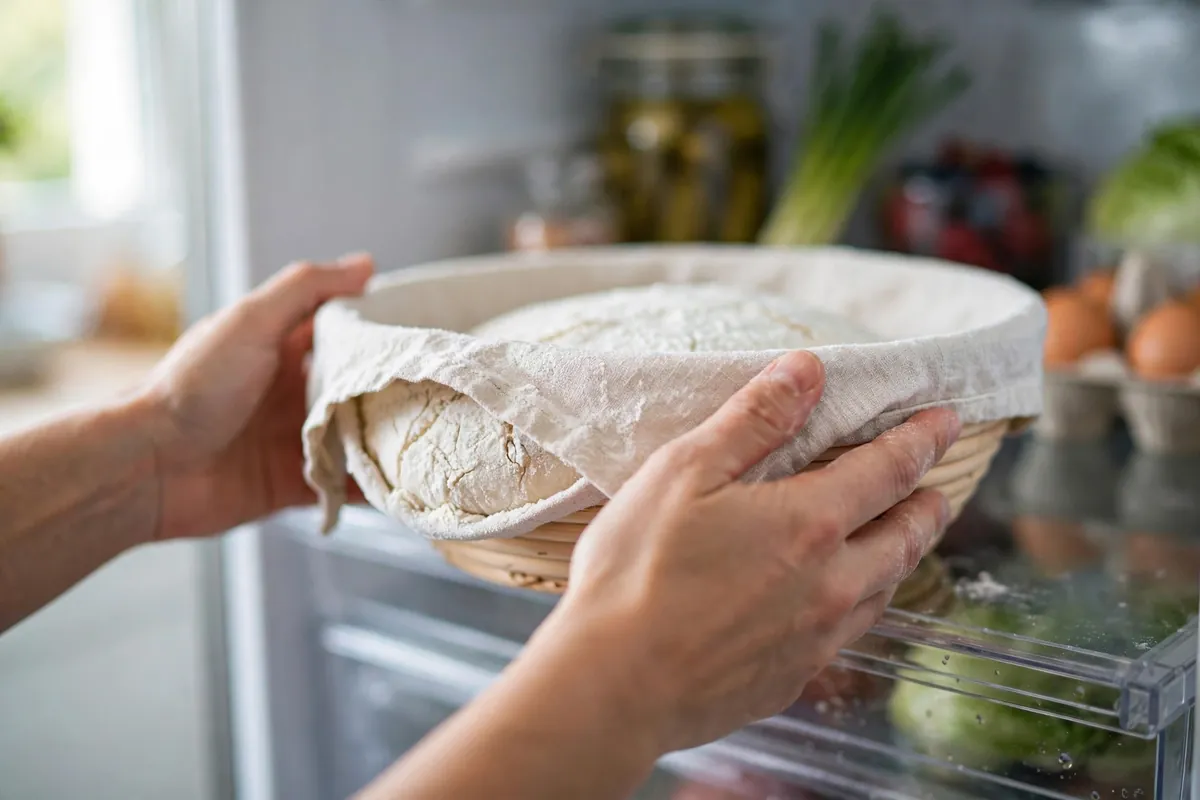
Window 2 — After shaping (my preference for most breads). Shape the loaves, place them in their proofing baskets or pans, cover well, and refrigerate 8–48 hours. Bake straight from the fridge — no warm-up needed. This is the simplest path and the one I recommend to beginners: shape today, bake tomorrow.
Window 2 wins for one reason: cold dough scores beautifully. A lame or sharp knife glides through firm, cold dough and the cuts stay open in the oven, giving you those dramatic ears and blooms. Room-temperature dough drags and seals back up.
The timeline table: how long each dough can wait
These are safe, tested ranges at 38–40°F (3–4°C). “Peak flavor” is where I’d aim; “maximum” is the edge before quality drops.
| Dough type | In the fridge | Peak flavor | Maximum | Notes |
|---|---|---|---|---|
| Lean artisan / sourdough | 12–36 hrs | 18–24 hrs | 48 hrs | The classic retard candidate; flavor deepens beautifully |
| Sandwich / pan loaves | 8–24 hrs | 12–18 hrs | 36 hrs | Watch for over-proofing past 24 hrs |
| Pizza dough | 24–72 hrs | 48 hrs | 5 days | Longer = more complex, leopard-spotted crust |
| Brioche / enriched dough | 8–24 hrs | 12–18 hrs | 48 hrs | Butter firms up; needs a longer bake from cold |
| Cinnamon rolls / sweet dough | 8–16 hrs | 12 hrs | 24 hrs | Sugar accelerates things even in the cold |
| Focaccia | 12–48 hrs | 24 hrs | 72 hrs | Dimple cold, bake cold — works brilliantly |
Past the maximum, two things go wrong: the yeast exhausts its food and the gluten network starts breaking down (protease enzymes don’t sleep), giving you a slack, sticky dough that bakes up flat. If your dough smells strongly of alcohol and collapses when touched, it’s gone too far — bake it anyway as focaccia rather than binning it.
Adjusting the recipe for a cold retard
Three small tweaks make retarding foolproof:
- Reduce the yeast for long retards. For anything over 24 hours, cut yeast by a third to a half (e.g., from 2% to 1–1.25% of flour weight, or from 2¼ tsp to 1–1½ tsp per 500g flour). Less yeast means a slower, more controlled cold ferment with no risk of exhaustion. Sourdough needs no adjustment — the culture self-regulates.
- Use cold water in the mix. If you know the dough is heading for the fridge, mix with cool water (65–70°F / 18–21°C) so it enters the cold already calm rather than racing.
- Salt stays at 2%. Don’t reduce salt to “help” the yeast — salt controls fermentation pace and builds flavor. The full 10g per 500g flour stands.

Baking straight from the fridge
This surprises beginners, but yes: no warm-up needed. Cold dough goes directly into the hot oven, and it’s actually advantageous:
- Score cold. The firm surface takes clean, confident cuts (see Bread Crust Too Hard or Too Soft for scoring’s effect on crust).
- Better oven spring. The cold exterior sets slightly slower relative to the interior’s expansion — actually, the real mechanism: the dough hits the hot oven while still cool inside, so the yeast gets a final burst of activity before dying, boosting spring.
- Add 5–10 minutes to the bake time for large loaves, since you’re starting from 40°F instead of 75°F. Trust the thermometer, not the clock: lean loaves are done at 200–210°F (93–99°C) internal.
The one exception: enriched doughs like brioche bake more evenly with a 20–30 minute counter rest while the oven preheats. The butter needs a head start or the center stays doughy.
The mistakes that wreck a retard
- Refrigerating fully-proofed dough. The fridge slows yeast; it doesn’t stop it. Dough that was ready to bake will over-proof in the cold within hours. Refrigerate at 75–80% of the final proof, not 100%.
- Uncovered dough. The fridge is a desert — uncovered dough forms a dry skin that never browns properly and can tear during oven spring. Cover airtight: plastic wrap pressed to the surface, or a damp towel plus a bag.
- A warm fridge. Above 42°F (5.5°C), fermentation runs faster than these timelines assume. Keep a fridge thermometer — most home fridges drift warmer than their dials claim.
- Retarding twice. Fridge after bulk AND after shaping = over-fermented. Pick one window.
- Baking an over-retarded dough as a loaf. If it collapsed and smells boozy, pivot: flatten it into a focaccia, dimple with oiled fingers, and bake hot. You’ll never know it was a rescue.

Frequently asked questions
Can I refrigerate bread dough overnight?
Yes — that’s the ideal use case. Shape your loaves in the evening, refrigerate 8–16 hours, and bake straight from the fridge in the morning. Most doughs are at peak flavor in this window, and cold dough scores more cleanly than room-temperature dough.
How long can bread dough stay in the fridge?
12–48 hours for most doughs at 38–40°F (3–4°C); pizza dough up to 5 days. Past that, yeast exhausts its food and enzymes weaken the gluten, producing slack dough that bakes flat. Reduce yeast by a third for retards over 24 hours.
Should bread dough come to room temperature before baking?
No — bake it cold. Cold dough scores cleanly, gets good oven spring, and needs only 5–10 extra minutes in the oven. The sole exception is rich brioche-style dough, which benefits from 20–30 minutes on the counter while the oven preheats.
Can you put dough in the fridge during the first rise?
You can, but it’s the less predictable window — judging when a cold bulk ferment is “done” is harder than judging a shaped loaf. If you do, give it 12–24 hours, then shape cold and proof at room temperature until ready (use the poke test: slow spring-back with a slight indent means bake).
Is cold-fermented bread healthier?
Cold fermentation does break down more starches and can modestly lower the bread’s glycemic impact, but the difference is small and I won’t oversell it. The real, reliable payoff is flavor — deeper, more complex, faintly tangy — and scheduling freedom.
My retarded dough didn’t rise in the fridge — is it dead?
Almost certainly not. Proper cold fermentation shows little visible rise — that’s normal and expected. The dough should feel alive and slightly puffy, not doubled. It does its real rising in the oven (oven spring). Only worry if it smells strongly of alcohol and collapses at a touch — that’s over-fermentation, not under.
Related troubleshooting: Why Didn’t My Bread Rise? · Why Is My Bread Dense? · How to Tell When Bread Is Done