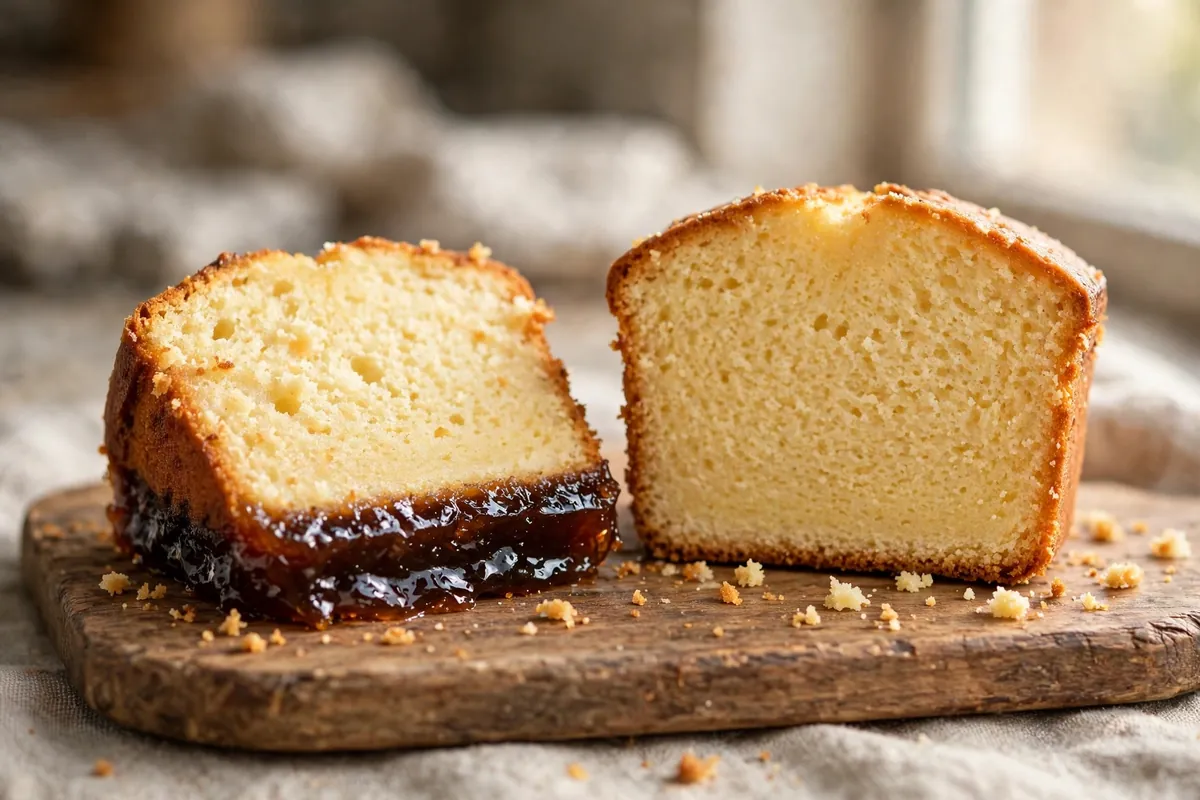
A perfect pound cake crumb is fine, even, velvety — slicing cleanly, feeling light for its richness. Gummy pound cake is the opposite: wet streaks, a gluey band near the bottom, a crumb that clumps. It almost always traces to one of six causes — most commonly a center that never finished baking, hidden by a browned crust. (Top splitting, not texture? Why Did My Pound Cake Crack on Top? Rich Batter Fixes.)
Quick diagnosis: The center underbaked — dense batter insulates, so the crust browns long before the middle sets. Or you overmixed after adding flour (gluten = gumminess), used too deep a pan, or sliced it warm. Bake to 200–210°F (93–99°C) internal, mix flour in gently, cool fully before slicing.
My tested baseline: 250g each of unsalted butter, sugar, eggs (about 5), and all-purpose flour — the classic equal-weight pound — plus 1 tsp baking powder, ½ tsp salt, 1 tsp vanilla, 2 tbsp milk. Cream butter and sugar 4–5 minutes until pale. 9×5-inch loaf pan, greased and floured, filled no more than ⅔. Bake at 325°F (165°C) for 60–75 minutes.
1. The center never finished baking — dense batter lies about doneness
The cause behind most gummy pound cakes. Pound batter is heavy, and it insulates its own center: the crust sets and browns at 45 minutes while the middle is still a slow-cooking custard. Pull it when the top “looks done” and the interior collapses into a gummy layer as it cools.
How to tell: Wet, translucent streak through the middle or bottom; crumb sticks to the knife; center tastes doughy while edges are fine.
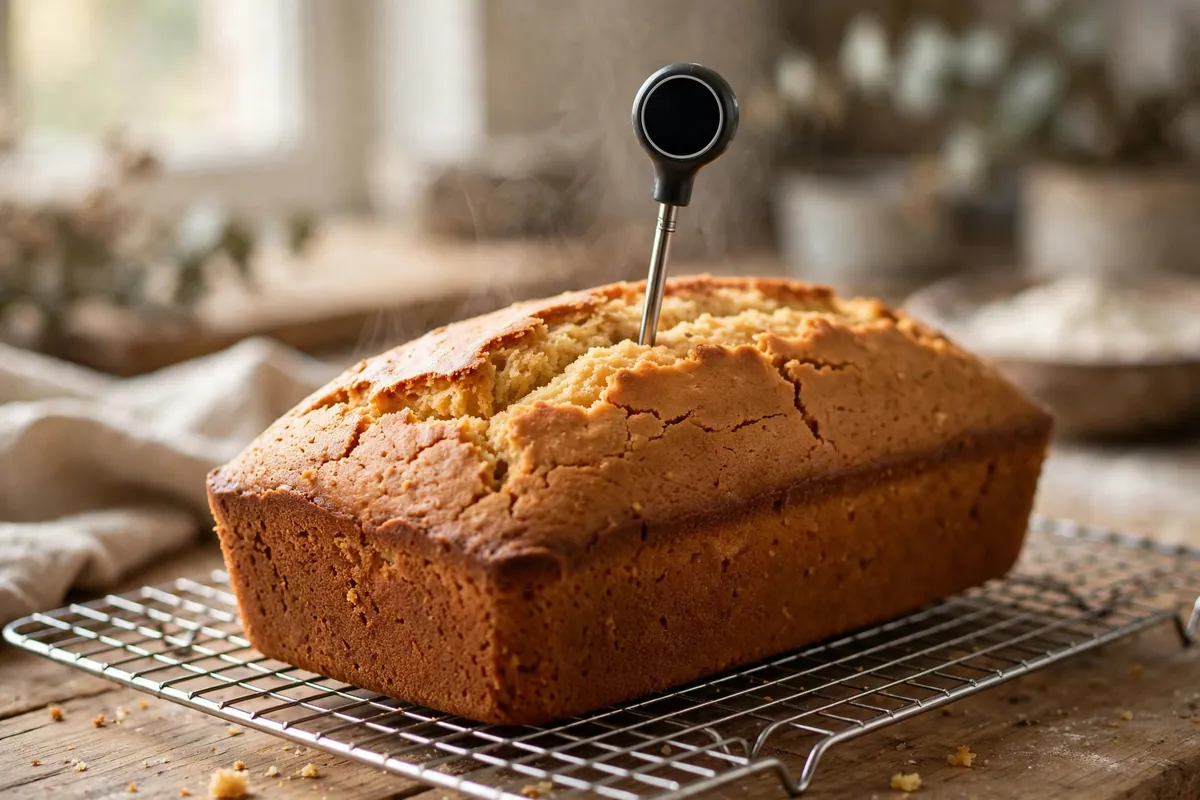
The fix: Bake by temperature, not color: a center probe should read 200–210°F (93–99°C), and the skewer should come out truly clean and dry. Start checking at 60 minutes but expect 70–75. Top browning early? Tent with foil and keep baking — color is not doneness. (Also the classic cause of Why Did My Cake Sink in the Middle? 7 Causes, Tested Fixes.)
2. You overmixed after the flour went in — gluten makes gumminess
Pound cake wants long, vigorous creaming of butter and sugar — but the moment flour enters, the rules flip. Every extra stroke develops gluten, and gluten in rich batter doesn’t make it chewy; it makes it tough and gluey, reading exactly like underbaking even in a fully baked cake.
How to tell: Uniformly dense and slightly rubbery edge to edge, not streaky-wet in the center.
The fix: Add flour in three additions, alternating with the milk, on the lowest speed just until each disappears — then stop. Finish with a spatula. The batter should look slightly uneven rather than perfectly smooth; perfectly smooth means overmixed. (Same gluten discipline as Why Is My Banana Cake Gummy? Mixing and Moisture Fixes.)
3. Your pan was the wrong size — batter too deep never sets
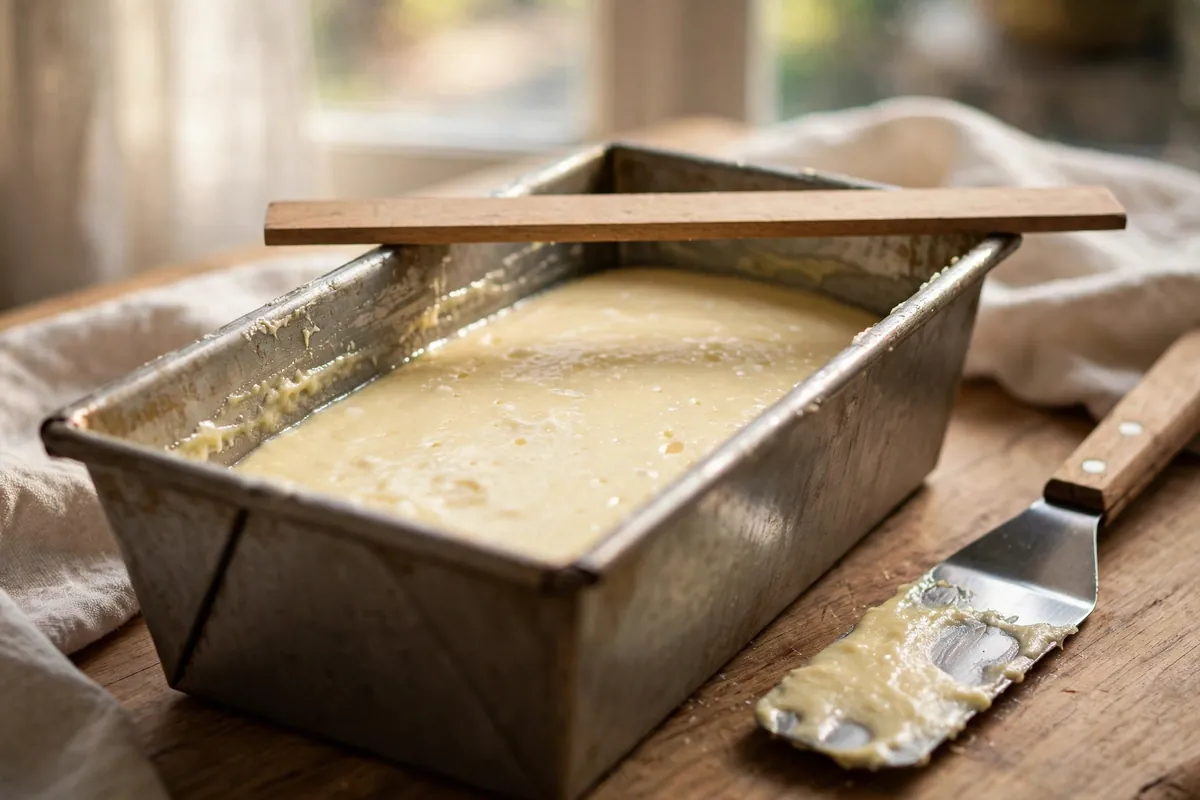
A 9×5-inch pan filled ⅔ bakes through in about 70 minutes. The same batter in an 8×4-inch pan sits significantly deeper, and the center can stay 20°F cooler than the crust at normal pull time. Too deep, and no reasonable bake time fixes it without burning the outside.
How to tell: Gummy band at the very bottom center; excessive doming; long bake with a still-pale top when you pulled it.
The fix: Use the pan the recipe was built for — usually 9×5-inch, filled no more than ⅔, batter at least an inch below the rim. With only a smaller pan, split the batter between two pans rather than overfilling one. (Pan geometry changes everything — see Glass vs Metal vs Dark Pans: What Changes in Your Bake.)
4. The oven ran hot — the crust set before the interior could
The mirror image: an oven running 25°F hot browns the crust fast, sealing the loaf while the center is still raw batter. Steam gets trapped, the interior effectively steams instead of baking, and you get a gummy core under a perfect crust. Dark pans make it worse.
How to tell: Deep brown crust at 50 minutes with a raw, wet center; the top cracked hard and early.
The fix: Verify a true 325°F (165°C) with an oven thermometer — pound cake wants gentle heat. If your oven runs hot, drop to 315°F (160°C) and extend the time. Light-colored metal browns slowest and gives the center the most time; in dark or glass pans, reduce 25°F as standard.
5. Too much liquid for the flour — the ratios drifted
The traditional pound is equal weights of butter, sugar, eggs, and flour — engineered so the structure supports the fat. Every “moist pound cake” addition — extra milk, a cup of sour cream, another egg — tips that balance. A little enrichment is fine; a lot overwhelms the flour, and the excess moisture never bakes out.
How to tell: Generous wet additions beyond the classic four; batter looked thin or pourable rather than thick and scoopable; uniformly damp crumb, not streaky.
The fix: Weigh the four core ingredients and keep them close to equal. Added sour cream or yogurt? Keep it to 60–80g and reduce the milk. Pound batter should plop off the spatula in thick ribbons, not pour. Rich batter forgives fat but not water — butter is fine, extra milk is the risk.
6. You sliced it warm — the crumb hadn’t set yet
Fresh from the oven, the crumb is fragile — starches gelatinized but not set, steam still migrating out. Slice at 20 minutes and the knife drags through semi-set crumb, compressing it into a gummy smear that looks exactly like underbaking. The cake was fine; the slicing wasn’t.
How to tell: First slices looked gummy but the loaf improved as it sat; damage at the cut faces, not through the crumb.
The fix: Cool in the pan 15 minutes, turn out, and cool at least 1 hour — fully room temperature — before slicing. Use a long serrated knife with a gentle sawing motion, not a chef’s knife pressed straight down.
Frequently asked questions
Is gummy pound cake safe to eat?
If the center baked through — no raw streaks, just dense and moist — yes, completely safe. Raw, doughy pockets? Toast the slices to golden; they’re safe and genuinely delicious.
Can I fix a gummy pound cake after baking?
You can’t re-bake it — the oven dries the outside without fixing the inside. But repurpose it: toast thick slices in butter until crisp-edged, cube it for trifle, or make pound cake bread pudding.
Why is only the bottom of my pound cake gummy?
The classic underbake-plus-deep-pan signature: the bottom center is the last place heat reaches. Verify pan size, bake to 200–210°F (93–99°C) internal, and center the oven rack so heat circulates underneath.
How do I know pound cake is done without a thermometer?
Three checks together: a skewer comes out clean and dry, the top springs back when lightly pressed, and the edges just start pulling from the pan. Any one alone can lie; all three rarely do.
Can I freeze pound cake?
Yes — up to 2 months. Cool completely, wrap tightly in plastic then foil, thaw unwrapped at room temperature. Freeze unsliced for best texture, or pre-slice with parchment between slices.
Related troubleshooting: Why Did My Pound Cake Crack on Top? Rich Batter Fixes · Why Is My Banana Cake Gummy? Mixing and Moisture Fixes · Why Did My Cake Sink in the Middle? 7 Causes, Tested Fixes